
Dearborn is considered moderately priced in 2026, with median home values at $189,400 and typical rent around $1,205 per month. The main exposure is the combination of car-dependent commuting patterns and seasonal heating costs rather than day-to-day price pressure.
Maya pulls into her driveway after her first full week in Dearborn, groceries in the back seat, gas receipt still on the passenger seat. The rent was reasonable compared to what she’d seen closer to Detroit, and the tree-lined block felt right. But between filling the tank twice, cranking the heat during that cold snap, and realizing her favorite coffee shop was a ten-minute drive instead of a walk, she’s starting to understand that the sticker price doesn’t tell the whole story.
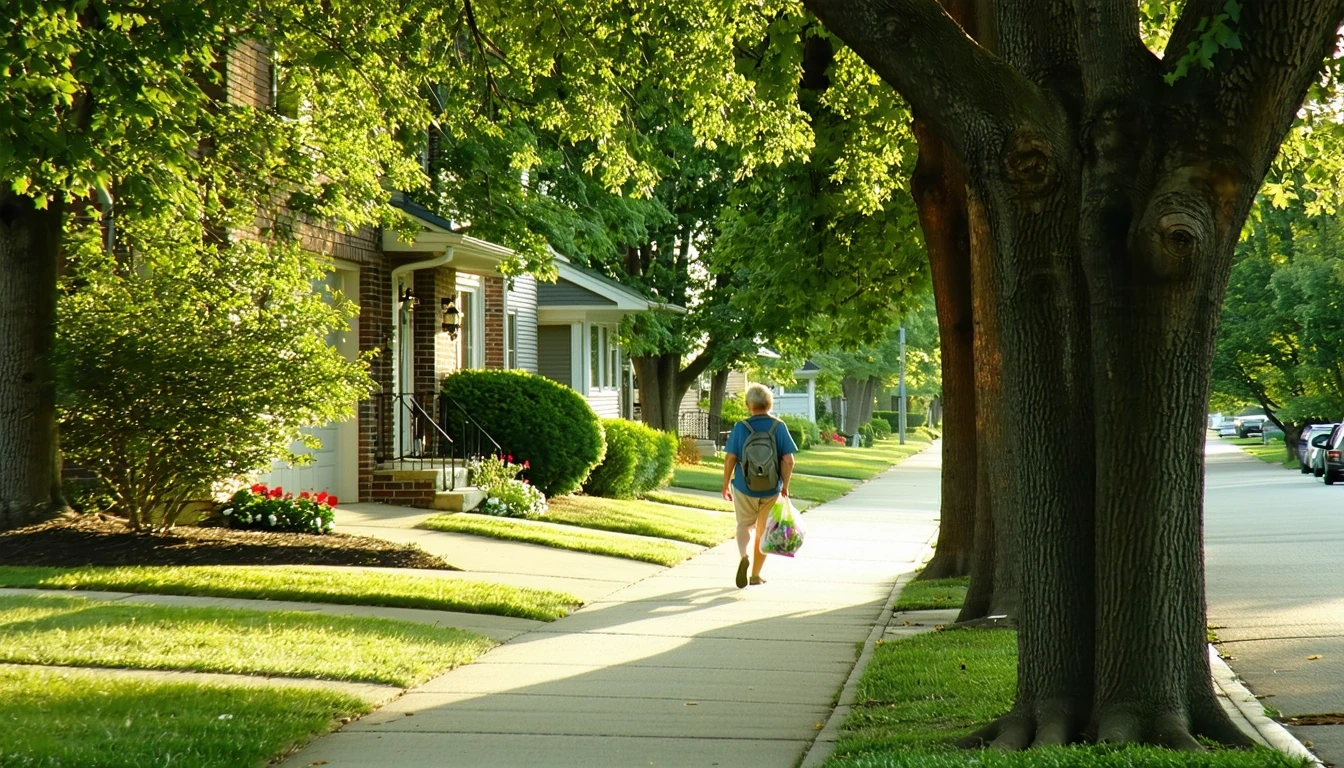
Overall Cost of Living Snapshot
Dearborn’s cost structure sits just below the national baseline, with a regional price parity index of 98. Housing represents the largest single expense, but the city’s cost profile is shaped more by how people move through space and manage seasonal extremes than by premium pricing. Median household income stands at $64,600 per year, and the unemployment rate is 5.5%, reflecting a stable but not booming local economy.
The primary cost driver is housing, particularly for those entering ownership. The secondary driver is transportation, where car dependency creates recurring fuel and maintenance exposure despite the presence of rail transit. Utilities form the third pressure point, with cold winters driving natural gas consumption and electricity rates slightly above regional norms.
Compared to the broader Detroit metro area, Dearborn offers a middle path: less expensive than inner-ring suburbs with premium school districts, but not as low-cost as outer exurban areas. The value proposition hinges on proximity to employment centers and the ability to access walkable pockets without fully escaping car reliance.
Driver verdict: Housing entry cost dominates upfront, but transportation and heating exposure determine whether the city feels affordable month to month. Surprises come from the gap between walkable infrastructure in certain corridors and the practical need for a vehicle to manage work, errands, and family logistics efficiently.
Housing Costs (Primary Driver)
Dearborn’s housing market is anchored by a median home value of $189,400, positioning it as accessible for buyers with stable income and down payment capacity. Median gross rent is $1,205 per month, which includes a mix of single-family rentals, older apartment stock, and newer developments near commercial corridors.
For renters, the $1,205 baseline reflects a functional unit in a neighborhood with reasonable access to schools and parks, though proximity to walkable errands corridors or rail stations can push that figure higher. Renting offers flexibility and insulates tenants from property tax increases, insurance volatility, and maintenance shocks, but it also means no equity accumulation and exposure to lease renewal adjustments.
Ownership at $189,400 translates to a mortgage payment that is manageable for households earning near or above the median income, but the total cost of ownership extends well beyond the monthly note. Property taxes, homeowners insurance, and maintenance on older housing stock—common in Dearborn—add layers of recurring and unpredictable expense. Homes built in earlier decades may require furnace upgrades, window replacements, or roof work, all of which hit harder in a climate with cold winters.
The city functions as a long-term ownership market rather than a rental-first or transitional hub. Buyers who plan to stay five years or more and can absorb maintenance cycles will find the entry cost reasonable. Renters who prioritize mobility or are testing the metro area may find the rental stock adequate but not abundant, particularly for larger units or single-family homes.
| Housing Type | Cost Anchor | What That Buys You |
|---|---|---|
| Median Home Value | $189,400 | Single-family home, older stock, maintenance exposure, equity-building path |
| Median Gross Rent | $1,205/month | Apartment or rental home, flexibility, no maintenance burden, no equity |
Conclusion: Dearborn is a buying city for households with stable income and a multi-year horizon. Renting works for those prioritizing flexibility, but the rental market is not deep enough to support high turnover or luxury-seeking tenants.
Utilities & Energy Risk
Electricity in Dearborn is priced at 19.94¢ per kilowatt-hour, which sits above the national median and reflects Michigan’s energy mix and infrastructure costs. For a household using around 1,000 kWh per month—typical for a home with standard appliances, lighting, and moderate air conditioning use—the illustrative monthly cost before fees and taxes would be near $199. Actual bills will vary based on home size, insulation quality, and whether electric heating or cooling dominates usage.
Natural gas is priced at $10.66 per thousand cubic feet (MCF), or roughly $10.66 per 100 therms. During heating months, which stretch from late fall through early spring in this climate, a home may use 1 MCF or more per month depending on furnace efficiency, insulation, and thermostat settings. Cold snaps—like the current 11°F temperature with a feels-like of 2°F—push usage higher and create bill volatility that is difficult to predict or control.
The combination of cold winters and older housing stock makes heating the dominant utility expense for most of the year. Homes with poor insulation, single-pane windows, or aging furnaces face significantly higher gas consumption. Unlike electricity, which remains relatively stable month to month, natural gas costs swing with weather intensity and seasonal demand, creating budget uncertainty from November through March.
Risk classification: Moderate to major. Utility costs are not a minor line item in Dearborn. Heating exposure is the primary driver, and households in older homes or those unable to invest in efficiency upgrades will feel the impact most sharply. Renters in units with included heat gain insulation from this volatility, while owners bear the full exposure.
Groceries & Daily Costs
Grocery costs in Dearborn track closely with the regional baseline, reflecting the city’s near-national price parity index of 98. Derived estimates based on regional adjustment suggest that staple items like bread, chicken, eggs, and milk are priced in line with what shoppers would encounter across much of the Midwest. Ground beef, cheese, and rice follow similar patterns, with no significant premium or discount compared to nearby communities.
The practical impact of grocery costs depends less on per-item pricing and more on access and shopping patterns. Dearborn’s food and grocery infrastructure is concentrated along commercial corridors, with grocery density exceeding high thresholds in certain areas. This means that some neighborhoods offer multiple options within a short drive, while others require longer trips or reliance on smaller, less competitively priced stores.
For households with flexible schedules and access to a vehicle, grocery shopping is a manageable weekly task with competitive pricing available at larger chains. For those relying on walkability or transit, the corridor-clustered pattern means that proximity to a full-service grocery store is not universal. This creates a time-versus-cost tradeoff: driving to a larger store saves money per item but adds fuel and time; walking to a closer, smaller store reduces transportation cost but may result in higher per-unit prices or limited selection.
Daily costs beyond groceries—personal care items, household supplies, occasional takeout—are similarly aligned with regional norms. Dearborn does not impose a premium for everyday goods, but it also does not offer the deep discount environment of larger exurban retail clusters. The cost pressure here is moderate and predictable, shaped more by household size and dietary preferences than by local price inflation.
Transportation Reality
Transportation in Dearborn operates on a dual structure: rail transit is present and functional, but car dependency remains the norm for most households. The city’s pedestrian infrastructure is substantial in certain areas, with a pedestrian-to-road ratio that exceeds high thresholds, creating walkable pockets where sidewalks, crossings, and mixed-use development support foot traffic. Cycling infrastructure exists but is limited to some areas, with bike-to-road ratios in the medium band.
Despite this infrastructure, the practical reality for most residents is that a vehicle is necessary. Work commutes, grocery runs, school drop-offs, and errands outside the walkable corridors require a car. Gas is currently priced at $2.83 per gallon, which is moderate but not negligible when compounded over weekly or monthly driving. A household commuting 25 miles round trip daily in a vehicle averaging 25 miles per gallon would use roughly 20 gallons per month for commuting alone, translating to an illustrative fuel cost of around $57 before accounting for additional errands, weekend trips, or multi-vehicle households.
The presence of rail transit provides an alternative for those whose destinations align with the transit network, but coverage is not comprehensive. Households able to structure their lives around rail access—living near a station, working along the line, and managing errands within walking distance—can significantly reduce transportation costs. For everyone else, the car remains the primary tool, and the associated costs—fuel, insurance, maintenance, registration—form a recurring and unavoidable expense layer.
Transportation exposure in Dearborn is not about whether you can get by without a car in theory; it’s about whether your specific household pattern allows it in practice. The infrastructure exists to support less car-dependent living in limited areas, but the city’s layout and the distribution of jobs, services, and schools mean that most people will default to driving most of the time.
Cost Exposure Profiles
Cost exposure in Dearborn is determined by the interaction of housing tenure, transportation patterns, and home efficiency rather than by income sufficiency alone. The city’s structure creates distinct exposure levels depending on how households navigate these variables.
Low-exposure situations: A renter in a newer or well-maintained unit near a rail station, with a short commute or the ability to work remotely, faces minimal transportation costs and is insulated from heating volatility if utilities are included or the unit is energy-efficient. Access to walkable errands corridors further reduces the need for frequent driving. This profile keeps recurring costs predictable and avoids the maintenance and tax exposure that comes with ownership.
High-exposure situations: A homeowner in an older single-family home with a long car commute, multiple vehicles, and high heating needs due to poor insulation or an aging furnace faces compounding cost layers. Mortgage and property taxes form the baseline, but natural gas bills during winter months, fuel costs for commuting, and unpredictable maintenance needs create volatility and limit financial flexibility. This profile is sustainable for households with stable, above-median income and the ability to absorb shocks, but it leaves little room for error.
The difference between these profiles is not about who can or cannot afford Dearborn; it’s about which cost structures dominate and how much control a household has over them. Renters trade equity for predictability. Owners trade flexibility for long-term value but absorb more risk. Commuters trade time and fuel cost for housing affordability or job access. The city rewards those who can align their housing, work, and transportation choices, and penalizes those who cannot.
Frequently Asked Questions
Is Dearborn more affordable than nearby Detroit in 2026? Dearborn’s median home value of $189,400 is generally lower than many inner Detroit neighborhoods that have seen revitalization, but higher than outer areas. Rent and ownership costs depend heavily on proximity to specific corridors and transit access.
What does a typical cost profile look like in Dearborn? Housing dominates, followed by transportation (fuel, insurance, maintenance) and utilities, especially heating during winter months. Grocery and daily costs are moderate and align with regional norms.
Do utilities cost more in Dearborn than nearby areas? Electricity at 19.94¢/kWh is slightly above regional averages, and natural gas at $10.66/MCF reflects Michigan pricing. The bigger factor is home efficiency and heating exposure during cold months, which can vary widely between properties.
What costs tend to surprise newcomers in Dearborn? Heating bills during winter and the practical need for a car despite walkable pockets and rail transit. Many assume proximity to Detroit means full transit coverage, but most households still rely on vehicles for daily logistics.
Are property taxes higher in Dearborn than surrounding suburbs? Property tax rates vary across Wayne County municipalities. Dearborn’s rates are competitive with similar inner-ring suburbs but higher than outer exurban areas. The effective burden depends on assessed home value and local millage rates.
Can you live in Dearborn without a car? It’s possible in specific areas near rail stations and walkable corridors, but most households find a vehicle necessary for work commutes, errands, and family logistics. The infrastructure supports car-light living in pockets, not car-free living citywide.
How much does commuting cost in Dearborn? At $2.83/gal, a 25-mile round-trip commute in a 25-MPG vehicle costs roughly $57 per month in fuel alone, before insurance, maintenance, or parking. Longer commutes or multi-vehicle households face significantly higher exposure.
Is Dearborn a good place for renters or buyers? Dearborn favors buyers with a multi-year horizon and the ability to manage maintenance and heating costs. Renters can find reasonable options but face a less competitive rental market and fewer large-unit or single-family rental choices.
How this article was built: In addition to public economic data, this article incorporates location-based experiential signals derived from anonymized geographic patterns—such as access density, walkability, and land-use mix—to reflect how day-to-day living actually feels in Dearborn, MI.
—