
Seventy-four out of 100 residents say they’re happy in Davie—a number that reflects the town’s ability to deliver suburban comfort, green space, and family infrastructure while staying close to the energy of Fort Lauderdale and Miami. But that same score also hints at the tension underneath: Davie works beautifully for those who want space, parks, and a slower pace with metro access, and it can feel limiting for anyone craving walkable urban texture, vibrant nightlife, or car-free convenience.
This is a place where the vibe depends heavily on what you’re trading up for—and what you’re willing to leave behind.
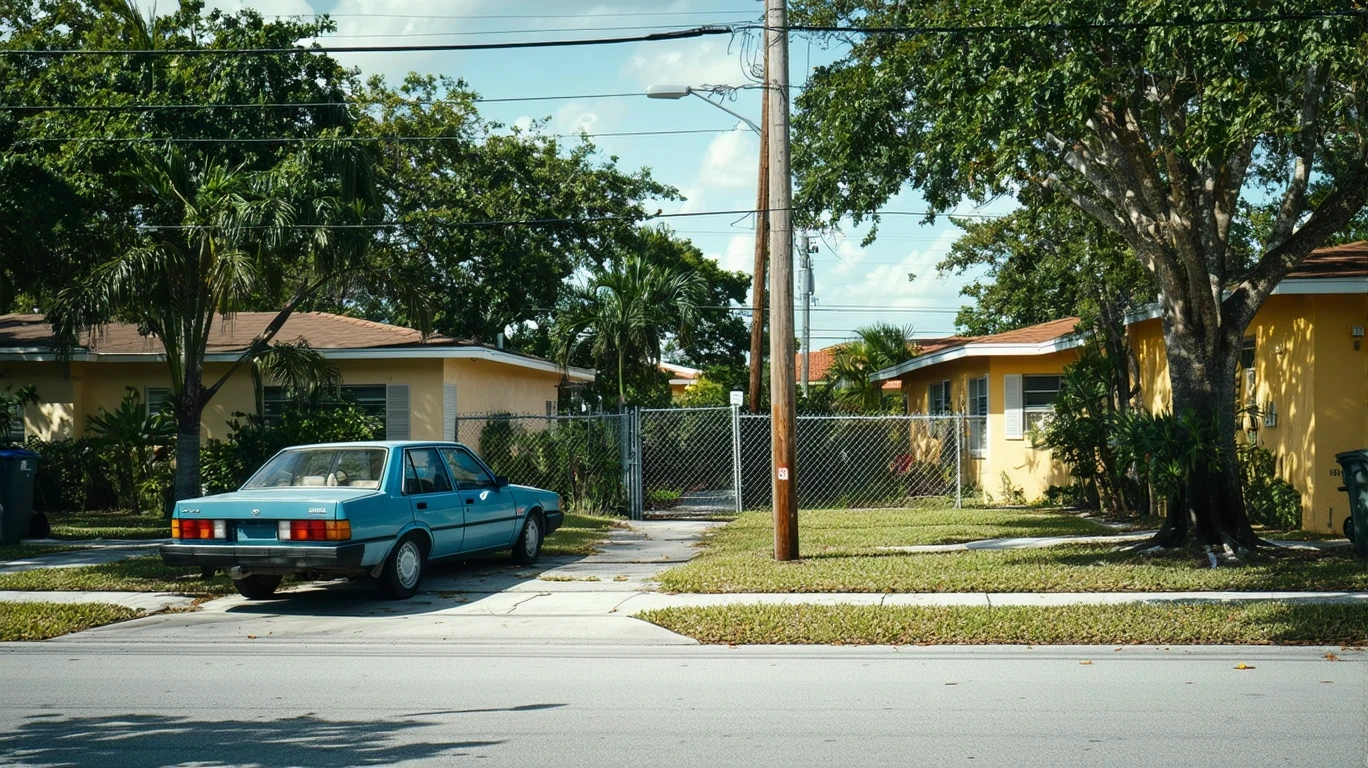
What Davie Feels Like: The Emotional Landscape
Davie sits in a sweet spot for families, outdoor enthusiasts, and professionals who commute into the metro but want to come home to something quieter. The town is known for its abundant parks, well-maintained trails, and a genuine sense of space—qualities that feel rare this close to a major urban corridor. Schools and playgrounds are woven throughout the community, and the presence of Nova Southeastern University adds a layer of institutional energy and youthful activity that keeps the town from feeling too sleepy.
But Davie’s suburban structure also means that daily life is shaped by corridors, not neighborhoods. Grocery stores, restaurants, and services cluster along major roads rather than within walking distance of most homes. Some pockets offer pedestrian-friendly infrastructure, but the overall texture leans car-dependent. For households that value the ability to walk out the door and run errands on foot, that can feel like a daily friction point.
Public transit exists—bus service is present and functional—but it’s not the kind of system that replaces car ownership. Biking infrastructure appears in some areas, though it’s not consistent across the town. The result is a place where you can live an active, outdoor-oriented lifestyle, but you’ll likely drive to get there.
Social Media Buzz in Davie
In online spaces where Davie residents gather, the conversation tends to circle around a few recurring themes: pride in the town’s green space and family-friendly feel, frustration with traffic and growth pressure, and a protective instinct about preserving the town’s character as development accelerates.
“We moved here for the parks and the schools, and honestly, it’s delivered. My kids are outside every day, and that matters more than I thought it would.”
“It’s a great place to raise a family, but if you’re looking for walkable coffee shops and a downtown vibe, you’re going to be disappointed. This is drive-to-everything suburbia.”
“The college brings some energy, but it’s not like living in a college town. It’s more like living near a campus that happens to be here.”
There’s also a thread of ambivalence about change. Long-time residents often express concern that new development is shifting the town’s identity, while newcomers tend to focus on convenience and access. Neither group is wrong—they’re just experiencing different versions of the same place.
Local News Tone
Coverage of Davie tends to frame the town through the lens of growth, infrastructure adaptation, and community identity. Headlines and story angles often reflect these timeless tensions:
- “Community Debates What Growth Should Look Like”
- “New Amenities Arrive as Town Identity Evolves”
- “Residents Weigh Convenience vs Quiet”
- “Parks and Green Space Remain Central to Town Appeal”
- “Traffic and Commute Times Shape Daily Routines”
The tone is rarely alarmist, but it’s also rarely celebratory. Instead, it tends to reflect a town in transition—one that’s trying to hold onto what made it appealing in the first place while absorbing the pressures of a growing metro region.
Review-Based Public Perception
On platforms like Google, Yelp, and neighborhood forums, Davie earns praise for exactly what it’s designed to deliver: space, safety, parks, and proximity. Families consistently highlight the quality of playgrounds, the accessibility of outdoor recreation, and the sense that kids can grow up with room to move.
But the same reviews often note that variety and spontaneity are harder to come by. Dining options tend to be chain-heavy, and the kinds of independent coffee shops, bookstores, or boutiques that create neighborhood texture are sparse. For people who wanted suburban predictability, that’s fine. For those who thought they’d get a blend of suburban comfort and urban walkability, it’s a letdown.
Newer planned areas tend to feel polished and family-oriented, while older pockets offer more character and shade but sometimes less consistency in upkeep. The difference isn’t dramatic, but it’s noticeable depending on where you land.
Healthcare access is solid for routine needs—clinics and pharmacies are present throughout the town—but there’s no hospital within city limits. For everyday care, that’s not an issue. For households managing complex medical needs or wanting proximity to emergency services, it’s a gap worth noting.
Comparison to Nearby Cities
| Dimension | Davie | Fort Lauderdale | Pembroke Pines |
|---|---|---|---|
| Overall Vibe | Suburban, family-oriented, green space abundant | Urban, energetic, beach-adjacent, nightlife-rich | Planned suburban, family-focused, newer feel |
| Walkability | Corridor-clustered, some walkable pockets | Downtown walkable, beach areas pedestrian-friendly | Car-dependent, limited pedestrian texture |
| Transit Access | Bus service present, no rail | Bus and rail options, better metro connectivity | Bus service, limited rail proximity |
| Family Appeal | Strong schools, parks, playgrounds | Urban amenities, fewer parks, higher density | Highly family-oriented, planned communities |
| Nightlife & Dining | Limited, chain-heavy | Vibrant, diverse, independent venues | Moderate, suburban dining options |
If you’re drawn to Davie, you’re likely prioritizing space, parks, and a slower pace over walkability and nightlife. Fort Lauderdale offers the opposite tradeoff: more energy, more variety, more density, and less green space. Pembroke Pines sits closer to Davie in character but leans even more suburban and planned, with less of the college-town edge that Nova Southeastern brings.
None of these is objectively better—they’re just optimized for different priorities. Davie works best for households that want suburban comfort with metro proximity, not urban immersion.
What Locals Are Saying
“I love that my kids can bike to the park and I don’t have to worry. That’s worth the drive to get groceries.”
“It’s quiet, it’s safe, and it’s close enough to Fort Lauderdale that I don’t feel isolated. But I do wish there were more local spots—places that felt like ‘ours,’ not just chains.”
“The college adds some life, but it’s not like living in Gainesville or Tallahassee. It’s more background than foreground.”
“If you need a hospital nearby, you’ll have to drive. For routine stuff, we’re fine, but it’s something to know going in.”
“Traffic is real. If you’re commuting into Miami or Fort Lauderdale during rush hour, plan accordingly. It’s not a dealbreaker, but it’s not nothing.”
“We moved here from a walkable neighborhood up north, and the adjustment was harder than I expected. Everything requires a car, and that changes how you move through your day.”
“Honestly, it’s exactly what we wanted: space, good schools, parks everywhere, and still close to the beach and the city when we want it.”
Does Davie Feel Like a Good Fit?
Davie tends to work beautifully for families seeking strong infrastructure, abundant green space, and a suburban rhythm with metro access. It’s a place where outdoor lifestyle and day-to-day predictability align, and where proximity to Fort Lauderdale and Miami means you’re never far from urban energy when you want it.
But it tends to frustrate households that prioritize walkability, transit access, or spontaneous neighborhood texture. The town’s structure rewards car ownership and planning, not improvisation or pedestrian freedom.
If you’re drawn to the idea of suburban comfort with parks, schools, and space—and you’re comfortable driving to access variety and services—Davie delivers that experience consistently. If you’re hoping for a blend of suburban ease and urban walkability, the reality may feel more limiting than the proximity suggests.
For a clearer sense of what day-to-day costs look like, or to explore what it takes to live comfortably here, those guides offer a more granular view. And if you’re weighing housing tradeoffs, that’s where the financial texture becomes visible.
How this article was built: In addition to public economic data, this article incorporates location-based experiential signals derived from anonymized geographic patterns—such as access density, walkability, and land-use mix—to reflect how day-to-day living actually feels in Davie, FL.
The perspectives shown reflect commonly expressed local sentiment and recurring themes in public discussion, rather than individual accounts.