
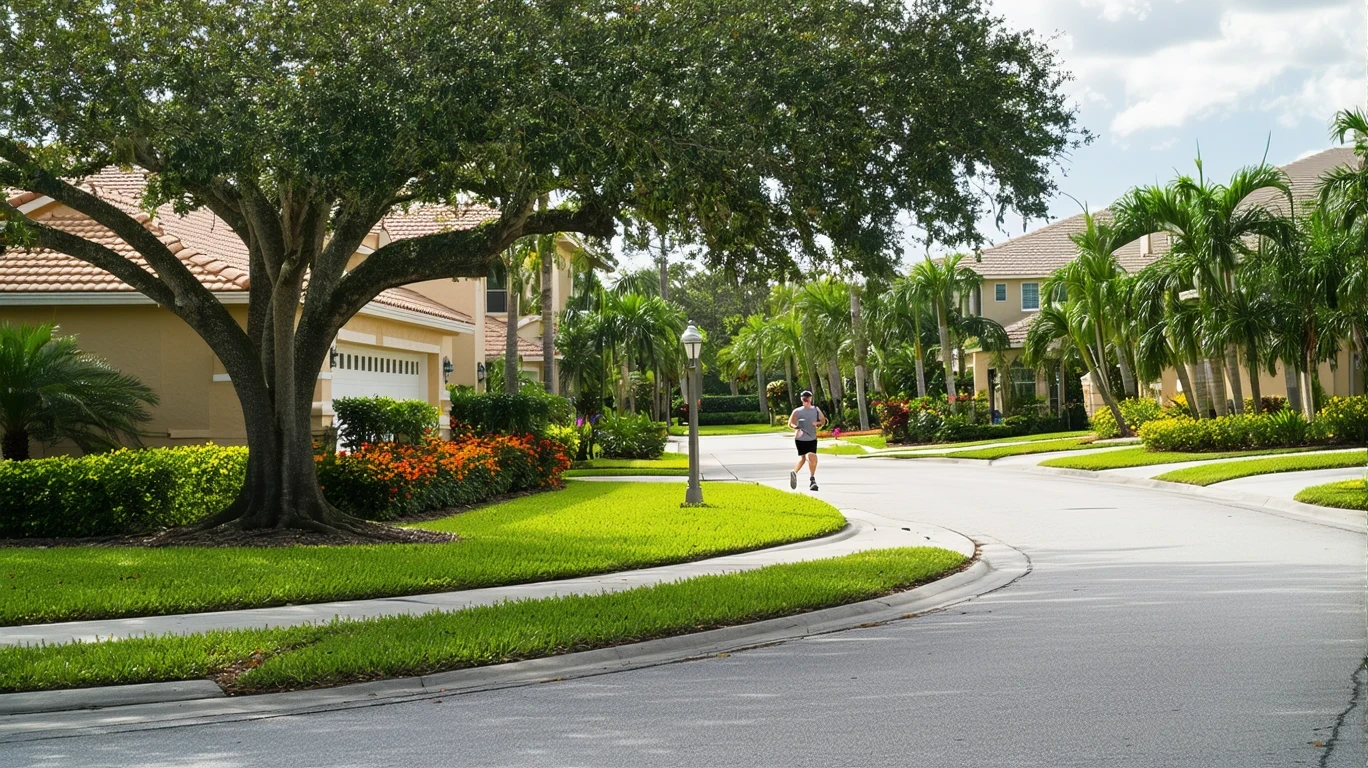
Davie and Miami sit within the same South Florida metro, share the same subtropical heat, and pull from overlapping job markets—yet the way cost pressure lands on households in 2026 couldn’t feel more different. Davie offers suburban space, strong family infrastructure, and predictable housing stock, but demands car ownership and front-loads costs into rent. Miami delivers urban density, rail transit, hospital access, and lower rent, but concentrates pressure into home values, commute friction, and neighborhood variability. The decision isn’t about which city costs less overall—it’s about which cost structure aligns with how your household actually functions day to day.
Both cities share identical utility rates and gas prices, but diverge sharply in housing form, mobility infrastructure, and access patterns. Davie’s corridor-clustered errands and bus-only transit create a car-dependent lifestyle even in walkable pockets. Miami’s rail service, broadly accessible food and grocery options, and more vertical building profile support car-light living in some neighborhoods but expose households to longer commutes and tighter housing competition. For families prioritizing schools and playgrounds, Davie’s infrastructure is unmatched. For single adults or couples navigating unpredictable schedules, Miami’s transit and density offer more flexibility. Neither city is universally cheaper—each simply organizes cost pressure differently.
This comparison explains where housing, utilities, groceries, transportation, and daily logistics costs show up in each city, how those costs behave for different household types, and which tradeoffs matter most when choosing between suburban predictability and urban access in South Florida.
Housing Costs
Housing is the primary cost driver in both cities, but the pressure points differ sharply. Davie’s median gross rent sits at $1,805 per month, while Miami’s median rent is $1,494 per month—a meaningful gap that reflects Davie’s suburban rental stock and Miami’s wider range of apartment types and neighborhood conditions. For renters, Davie’s higher baseline buys more predictable access to single-family homes, townhomes, and newer apartment complexes near schools and parks. Miami’s lower median reflects both older urban apartments and newer high-rises, with rent varying significantly by proximity to transit, employment centers, and waterfront areas.
For buyers, the calculus flips. Miami’s median home value reaches $433,900, compared to Davie’s $405,100. That $28,800 difference represents a higher entry barrier in Miami, where competition for single-family homes in stable neighborhoods is intense and condo inventory dominates in many areas. Davie’s home values reflect suburban lot sizes, newer construction, and family-oriented subdivisions, but the lower price doesn’t eliminate affordability pressure—it simply shifts it into property taxes, HOA fees, and ongoing maintenance on larger homes. Miami’s housing stock skews more vertical, with average building levels exceeding high thresholds, meaning buyers often face condo fees, special assessments, and shared infrastructure costs instead of yard upkeep.
Renters prioritizing space and stability may find Davie’s higher rent easier to manage if it eliminates the need for frequent moves or neighborhood compromises. Families seeking ownership in Davie benefit from strong school density and playground access, but must account for the full cost of maintaining a suburban home in Florida’s heat and humidity. In Miami, renters gain access to lower baseline costs and transit-adjacent living, but face more variability in unit quality, noise, and neighborhood safety. Buyers in Miami must weigh higher home values against the ability to live car-light in some areas, reducing transportation exposure over time.
| Housing Type | Davie | Miami |
|---|---|---|
| Median Gross Rent | $1,805/month | $1,494/month |
| Median Home Value | $405,100 | $433,900 |
| Rental Stock Character | Suburban single-family and townhomes, newer complexes | Urban apartments, condos, high-rises with variable quality |
| Ownership Pressure | Moderate entry, ongoing maintenance on larger homes | Higher entry, condo fees and shared infrastructure |
The housing takeaway is conditional: renters sensitive to monthly cash flow may prefer Miami’s lower rent, especially if they can tolerate neighborhood variability or benefit from transit access. Renters prioritizing predictability, space, and family amenities will find Davie’s higher rent easier to justify. Buyers face a tradeoff between Miami’s higher entry barrier and urban access versus Davie’s more moderate home values and suburban infrastructure. Families with school-age children experience less friction in Davie, where both schools and playgrounds meet density thresholds. Single adults and couples may find Miami’s more vertical, mixed-use neighborhoods reduce the need for car ownership, offsetting higher home values with lower transportation costs over time.
Utilities and Energy Costs
Both cities face identical utility rates—15.70¢/kWh for electricity and $32.82/MCF for natural gas—but the way those rates translate into household exposure differs based on housing form, building age, and cooling season intensity. South Florida’s extended cooling season dominates utility budgets in both cities, with air conditioning running from late spring through early fall and often into winter during heat spikes. Heating costs are negligible in both locations, meaning natural gas exposure is minimal unless a household uses gas for cooking or water heating. The primary driver of utility volatility is home size, insulation quality, and whether the unit is part of a larger building or a standalone structure.
In Davie, the prevalence of single-family homes and townhomes means households bear the full cost of cooling larger square footage, often with older HVAC systems in pre-2010 construction. Newer subdivisions offer better insulation and more efficient systems, but the suburban housing stock skews toward detached homes with higher baseline usage. Families in Davie managing 1,500+ square feet can expect cooling to dominate summer bills, with limited ability to reduce exposure beyond thermostat discipline and shade management. Apartments in Davie’s mixed-height buildings offer more predictable utility costs due to shared walls and smaller footprints, but these units represent a smaller share of the rental market.
Miami’s more vertical urban form introduces different dynamics. High-rise apartments and mid-rise condos benefit from shared walls, reducing cooling load per unit, but older buildings in dense neighborhoods may lack modern insulation or efficient HVAC. Households in Miami’s urban core often face lower per-unit cooling costs than suburban counterparts, but condo fees may bundle water, trash, or common-area utilities, shifting predictability without eliminating exposure. Single-family homes in Miami’s outer neighborhoods face similar cooling pressure to Davie, but the concentration of apartments and condos in the city means more households experience moderate, predictable utility bills rather than high seasonal swings.
Utility cost exposure varies significantly by household size and housing type. Single adults or couples in Miami apartments may see minimal utility volatility, especially in newer buildings with efficient systems. Families in Davie’s single-family homes face higher baseline costs and more pronounced summer spikes, but gain control over usage patterns and the ability to invest in efficiency upgrades like programmable thermostats, attic insulation, or shade trees. Renters in both cities have limited control over building efficiency, making housing age and construction quality a more important factor than rate differences.
Utility takeaway: Households prioritizing predictable, lower utility costs will find Miami’s apartment-heavy stock and more vertical form reduce exposure, especially for smaller households. Families in Davie managing larger homes must plan for higher cooling costs and more seasonal volatility, but gain the ability to control usage and invest in long-term efficiency. The primary cost driver in both cities is housing form and building age, not rate differences—meaning the decision hinges on whether a household values space and control (Davie) or predictability and lower baseline usage (Miami).
Groceries and Daily Expenses
Grocery and everyday spending pressure in Davie and Miami reflects differences in access density, store concentration, and household shopping patterns rather than dramatic price gaps. Both cities fall within the same regional price parity index, meaning staple prices for bread, milk, eggs, and produce remain similar across the metro. The meaningful difference lies in how grocery infrastructure is distributed and how that distribution affects convenience spending, bulk shopping habits, and reliance on prepared foods.
Davie’s grocery landscape is corridor-clustered, with food and grocery options concentrated along major roads rather than dispersed throughout residential neighborhoods. This pattern encourages car-based shopping trips to big-box stores, warehouse clubs, and chain supermarkets, where bulk buying reduces per-unit costs but requires upfront cash flow and storage space. Families in Davie benefit from this structure if they can plan weekly or bi-weekly trips and have pantry space to store bulk purchases. The tradeoff is less walkable access to corner stores or neighborhood markets, meaning last-minute grocery runs or small top-ups require driving, adding time friction and potential convenience spending at gas stations or drive-throughs.
Miami’s broadly accessible food and grocery density means more households live within walking or short driving distance of supermarkets, bodegas, and specialty stores. This access reduces the need for large, infrequent shopping trips and allows for more flexible, just-in-time purchasing. Single adults and couples in Miami’s denser neighborhoods can walk to groceries, reducing car dependency and enabling smaller, more frequent purchases that match actual consumption. The tradeoff is higher exposure to convenience spending—coffee shops, takeout, and prepared foods become more accessible and more tempting when errands are walkable. Families in Miami managing larger grocery volumes may still prefer car-based trips to big-box stores, but the option to supplement with neighborhood markets reduces the penalty for running out of staples mid-week.
Dining out and prepared food spending differs more by lifestyle than by city-level price structure. Miami’s higher density of restaurants, food trucks, and delivery options increases the frequency of convenience meals, especially for households with unpredictable schedules or long commutes. Davie’s suburban layout reduces spontaneous dining but doesn’t eliminate it—chain restaurants and drive-throughs are plentiful along corridors, and families may lean on takeout after school activities or weekend errands. The key difference is that Miami’s walkable food access makes dining out feel more integrated into daily routines, while Davie’s car-dependent errands make dining out feel more like a deliberate choice.
Grocery takeaway: Families with storage space, predictable schedules, and the ability to plan bulk shopping trips will find Davie’s corridor-clustered grocery infrastructure reduces per-unit costs, though it requires car ownership and time discipline. Single adults and couples in Miami benefit from broadly accessible grocery and food options that reduce car dependency and allow for flexible, smaller purchases, but must manage exposure to convenience spending and prepared food creep. Households sensitive to time friction and last-minute errands will find Miami’s density reduces logistical complexity, while those prioritizing bulk savings and lower per-unit costs will find Davie’s big-box access more efficient—if they can absorb the upfront cash flow and storage requirements.
Taxes and Fees
Property taxes, sales taxes, and recurring local fees shape ongoing cost exposure in both cities, but the structure and predictability differ based on housing type and ownership status. Florida has no state income tax, meaning property taxes and consumption taxes carry more weight in household budgets. Both Davie and Miami fall under Broward and Miami-Dade counties respectively, with property tax rates determined by county, city, and special district levies. Homeowners in both cities face annual property tax bills that reflect assessed home values, millage rates, and exemptions like homestead, but the effective burden varies based on home price, length of ownership, and whether the property is owner-occupied or rental.
Davie’s median home value of $405,100 translates into a moderate property tax baseline for owners, though the suburban housing stock means many properties carry higher assessed values than the median, especially in newer subdivisions with larger lots. Homeowners in Davie benefit from Florida’s Save Our Homes cap, which limits annual assessment increases to 3% for homesteaded properties, providing predictability for long-term residents. New buyers or recent movers face higher initial assessments based on purchase price, front-loading tax exposure in the first few years. HOA fees are common in Davie’s planned communities, often bundling landscaping, shared amenities, and trash service, but adding $100–$400+ per month in predictable, non-deductible costs.
Miami’s higher median home value of $433,900 increases property tax exposure for owners, but the prevalence of condos and co-ops shifts some costs into monthly condo fees rather than direct tax bills. Condo owners in Miami face both property taxes on their unit’s assessed value and monthly fees that cover building maintenance, insurance, and shared utilities. These fees can range widely—from $200/month in older buildings to $800+ in luxury high-rises—and are subject to special assessments for major repairs or reserve shortfalls. Renters in both cities don’t pay property taxes directly, but landlords pass through a portion of tax costs in rent, meaning property tax increases eventually affect rental affordability even if they don’t show up as a line item.
Sales tax in Florida is 6% statewide, with local surtaxes bringing the effective rate to around 7% in Broward County (Davie) and 7% in Miami-Dade County (Miami). This affects all retail purchases, dining, and many services, meaning households with higher consumption spending feel more sales tax pressure. Families managing larger grocery and household goods volumes pay more in absolute sales tax, though groceries are exempt in Florida. Discretionary spending—dining out, entertainment, home goods—carries the full sales tax burden, making consumption habits a meaningful driver of tax exposure in both cities.
Recurring city-specific fees differ by municipality and housing type. Davie homeowners may face separate bills for trash collection, stormwater management, and fire assessments, depending on whether these services are bundled into property taxes or billed separately. Miami’s fee structure varies by neighborhood, with some areas bundling services into property taxes and others charging separately for trash, recycling, and parking permits. Renters in both cities typically see these costs embedded in rent or charged as separate monthly fees by landlords, reducing transparency but not eliminating exposure.
Taxes and fees takeaway: Homeowners in Davie face moderate property tax exposure with predictable increases for long-term residents, but must account for HOA fees and separate service charges that add ongoing, non-deductible costs. Homeowners in Miami face higher property tax baselines due to elevated home values, plus condo fees and special assessment risk for those in shared buildings. Renters in both cities experience tax and fee pressure indirectly through rent, but have less control over increases. Households planning to stay several years benefit more from Florida’s homestead protections in both cities, while recent movers and short-term residents face higher initial tax exposure. The primary difference is structure—Davie’s costs are more predictable and tied to suburban homeownership, while Miami’s costs are more variable and tied to condo ownership and urban density.
Transportation & Commute Reality
Transportation costs in Davie and Miami differ not in gas prices—both cities see $2.77/gal—but in how mobility infrastructure shapes car dependency, commute friction, and time costs. Davie’s bus-only transit and corridor-clustered errands make car ownership effectively mandatory for most households, even in areas with moderate pedestrian infrastructure. Miami’s rail transit, higher bike-to-road ratios, and broadly accessible daily errands create viable car-light or car-free options in some neighborhoods, though nearly half of Miami workers face long commutes, signaling that job access remains uneven across the city.
Davie’s experiential signals show walkable pockets with a high pedestrian-to-road ratio, but the city’s overall mobility texture still leans car-dependent. Bus service exists, but frequency and coverage are limited compared to rail-enabled cities, meaning households relying on transit face longer trip times and reduced schedule flexibility. Cycling infrastructure is present in some pockets, but the bike-to-road ratio sits in the medium band, indicating that cycling is viable for recreation or short trips but not a primary commuting mode for most residents. For families managing school drop-offs, grocery runs, and extracurricular activities, car ownership is non-negotiable. Single adults or couples without children may reduce car usage slightly in Davie’s more walkable neighborhoods, but the corridor-clustered errands pattern means most daily needs still require driving.
Miami’s rail transit—Metrorail and Metromover—provides a structural alternative to car ownership in neighborhoods near stations, particularly in the urban core, Brickell, and areas along the rail corridors. The city’s higher bike-to-road ratio and notable cycling infrastructure mean more residents can bike for errands or short commutes, though safety and weather remain barriers. Miami’s broadly accessible food and grocery density supports car-light living for households willing to prioritize proximity to transit and walkable amenities. However, Miami’s commute data reveals significant friction: the average commute is 28 minutes, and 47% of workers face long commutes, suggesting that job centers are concentrated and many residents live far from work. Only 8% of Miami workers work from home, meaning most households must navigate commute costs and time loss daily.
For car-dependent households in both cities, gas prices are identical, but the frequency and distance of trips differ. Davie’s suburban layout and corridor-based errands mean households drive more often for groceries, appointments, and recreation, even if individual trip distances are moderate. Miami’s density reduces trip frequency for some households, but those living in outer neighborhoods or commuting to jobs outside the urban core may drive as much or more than Davie residents. The key difference is optionality: Miami offers transit and walkability as viable alternatives in some areas, while Davie does not.
Transportation takeaway: Households in Davie must plan for car ownership, insurance, maintenance, and frequent driving as non-negotiable costs, even in walkable pockets. Families managing multiple daily trips will find Davie’s suburban layout increases time and fuel costs, though the predictability of car-based logistics may feel simpler than navigating transit schedules. Households in Miami gain access to rail transit and walkable neighborhoods that can reduce or eliminate car ownership in some cases, but must weigh this against long commute exposure for nearly half the workforce and the need to prioritize housing near transit to realize savings. Single adults or couples in Miami’s urban core can live car-free or car-light more easily than in Davie, but families with children or jobs in outer areas will still rely on cars, facing the same fuel costs plus urban parking friction.
Cost Structure Comparison
Housing pressure dominates both cities, but the entry barrier and ongoing obligations differ sharply. Davie front-loads cost into higher rent, making monthly cash flow tighter for renters but offering more predictable suburban housing stock. Miami’s lower rent provides breathing room for renters, but higher home values create a steeper entry barrier for buyers, and condo fees add ongoing, variable costs for owners. Families prioritizing space and stability may find Davie’s housing structure easier to navigate, while single adults and couples managing tighter budgets may prefer Miami’s lower rental baseline, especially if they can tolerate neighborhood variability.
Utilities introduce similar seasonal volatility in both cities due to identical rates and subtropical cooling demands, but housing form determines exposure. Davie’s single-family homes and townhomes increase per-household cooling costs, especially in older construction. Miami’s more vertical, apartment-heavy stock reduces per-unit cooling load for many households, though older buildings in dense neighborhoods may lack efficiency. Families in Davie managing larger homes face higher utility baselines and more pronounced summer spikes, while smaller households in Miami apartments experience more predictable, lower utility costs.
Daily living and groceries reflect access patterns more than price differences. Davie’s corridor-clustered grocery infrastructure favors bulk shopping and big-box access, reducing per-unit costs for families with storage space and planning discipline. Miami’s broadly accessible food and grocery density supports flexible, just-in-time purchasing and walkable errands, reducing car dependency but increasing exposure to convenience spending and prepared food creep. Households sensitive to time friction and last-minute errands will find Miami’s density reduces logistical complexity, while those prioritizing bulk savings and lower per-unit costs will find Davie’s big-box access more efficient.
Transportation patterns matter more in this comparison than in many city pairings. Davie’s car dependency is structural—bus-only transit and corridor-based errands make car ownership mandatory for nearly all households, adding insurance, maintenance, and fuel costs as non-negotiable line items. Miami’s rail transit and walkable neighborhoods create viable car-light options for some households, particularly single adults and couples in the urban core, but long commute exposure for 47% of workers means many Miami residents still rely on cars and face time costs in addition to fuel expenses. Families in both cities will likely own cars, but Miami households near transit can reduce usage frequency, while Davie households cannot.
The better choice depends on which costs dominate your household’s structure and which tradeoffs you can absorb. Households sensitive to monthly cash flow and car ownership costs may prefer Miami’s lower rent and transit optionality, especially if they can prioritize housing near rail lines. Households sensitive to housing stability, family infrastructure, and predictable logistics may prefer Davie’s higher rent and car-dependent layout, especially if they value space, schools, and suburban predictability over urban access. For renters, the decision hinges on whether lower baseline costs (Miami) or more predictable housing stock (Davie) matters more. For buyers, the decision hinges on whether higher entry barriers (Miami) or ongoing maintenance on larger homes (Davie) feels more manageable. Neither city is cheaper overall—each simply organizes cost pressure differently, and the right fit depends on how your household actually functions day to day.
How the Same Income Feels in Davie vs Miami
Single Adult
For a single adult, Miami’s lower rent and transit access create more flexibility in housing choice and reduce the need for car ownership, freeing up cash flow for discretionary spending or savings. Davie’s higher rent and mandatory car ownership front-load fixed costs, leaving less room for flexibility but offering more predictable suburban routines and less neighborhood variability. In Miami, the tradeoff is between lower baseline costs and higher exposure to convenience spending, long commutes, and urban friction. In Davie, the tradeoff is between higher fixed costs and more control over logistics, space, and predictability.
Dual-Income Couple
A dual-income couple in Miami can leverage transit and walkability to reduce transportation costs if both partners work near rail lines, but long commute exposure for one or both partners can erode time flexibility and increase stress. Davie’s car dependency means both partners likely own vehicles, increasing insurance and maintenance costs, but the suburban layout reduces time friction for errands and offers more housing options with space for home offices or storage. In Miami, the couple gains access to urban amenities and lower rent, but must manage commute logistics and neighborhood tradeoffs. In Davie, the couple pays more in rent and transportation but gains predictability and space.
Family with Kids
For families, Davie’s strong school and playground density, combined with predictable suburban housing stock, reduces logistical complexity and provides stable infrastructure for child-rearing, though higher rent and car dependency increase fixed costs. Miami’s lower rent offers more breathing room in monthly budgets, but families must navigate variable school access, lower playground density, and longer commutes for working parents, increasing time costs and reducing schedule flexibility. In Davie, the non-negotiable costs are higher rent and car ownership, but the payoff is less friction in daily logistics and stronger family infrastructure. In Miami, the non-negotiable costs are commute time and housing search complexity, but the payoff is lower rent and potential transit access for older children.
Decision Matrix: Which City Fits Which Household?
| Decision factor | If you’re sensitive to this… | Davie tends to fit when… | Miami tends to fit when… |
|---|---|---|---|
| Housing entry + space needs | Monthly rent, predictability, family space | You can absorb higher rent for suburban stability and family-oriented housing stock | You prioritize lower rent and can tolerate neighborhood variability or condo living |
| Transportation dependence + commute friction | Car ownership costs, commute time, transit access | You accept car dependency and value predictable suburban logistics over transit optionality | You can live near rail lines or work in the urban core and benefit from car-light living |
| Utility variability + home size exposure | Cooling costs, seasonal spikes, building efficiency | You manage a larger home and can invest in efficiency or accept higher summer bills | You live in an apartment or condo and prioritize lower baseline cooling costs and predictability |
| Grocery strategy + convenience spending creep | Bulk savings, walkable errands, time friction | You plan bulk shopping trips and have storage space to reduce per-unit costs | You value walkable grocery access and flexible, just-in-time purchasing over bulk savings |
| Fees + friction costs (HOA, services, upkeep) | Ongoing non-deductible costs, special assessments | You prefer predictable HOA fees and suburban service structures over condo fee variability | You accept condo fees and special assessment risk in exchange for lower maintenance responsibility |
| Time budget (schedule flexibility, errands, logistics) | Commute time, errand frequency, household coordination | You value predictable car-based logistics and shorter errand loops over transit schedules | You can absorb longer commutes or prioritize walkable errands and transit access over driving |
Lifestyle Fit
Davie and Miami offer sharply different lifestyle textures despite their proximity. Davie’s suburban character, strong family infrastructure, and integrated green space make it a natural fit for families prioritizing schools, playgrounds, and predictable routines. The city’s park density exceeds high thresholds, and water features are present, offering outdoor recreation options that support active family life. Walkable pockets exist, but the overall mobility texture remains car-dependent, meaning households must plan around driving for most errands, appointments, and activities. The corridor-clustered grocery and retail layout encourages weekly shopping trips and reduces spontaneous errand runs, which can feel efficient for planners but restrictive for households with unpredictable schedules.
Miami’s urban density, rail transit, and more vertical building profile create a faster-paced, more logistically complex environment. The city’s broadly accessible food and grocery options, notable cycling infrastructure, and hospital presence support a more spontaneous, walkable lifestyle in some neighborhoods, particularly in the urban core and areas near Met