

Danville and Versailles sit just miles apart in Kentucky’s Bluegrass region, both part of the Lexington metro area, yet they present distinctly different cost structures for households weighing a move in 2026. The Harpers—a fictional family of four—spent weeks debating these two cities, drawn to Danville’s lower entry costs and Versailles’s perceived polish, but unsure which trade-offs mattered most. Their indecision reflects a common tension: both cities offer access to the same regional amenities, yet the way costs show up—front-loaded in housing, spread across transportation, or concentrated in daily logistics—varies enough to reshape household budgets and routines. This comparison explains where cost pressure concentrates differently between Danville and Versailles, helping households understand which city fits their financial structure and lifestyle priorities.
The decision isn’t about finding the “cheaper” option overall. It’s about understanding which costs dominate your household, how predictable or volatile those costs become in each city, and whether the trade-offs align with your income stability, commute needs, and day-to-day routines. For families like the Harpers—two working parents, two school-age kids, and a tight but stable income—the difference between a $181,500 median home in Danville and a $258,000 median home in Versailles isn’t just a number. It’s the difference between manageable mortgage payments and stretched monthly obligations, between flexibility for unexpected expenses and constant vigilance over every line item.
Both cities share the same regional price environment, with identical utility rates and fuel costs, but their housing markets, commute patterns, and infrastructure create divergent cost experiences. Danville offers lower housing entry barriers and walkable pockets that reduce car dependence for some errands, while Versailles commands higher home prices and rents without clear data on transit or pedestrian infrastructure. The Harpers’ debate—and your decision—hinges on which pressures you’re most exposed to and which trade-offs you’re willing to accept.
Housing Costs: Entry Barriers and Ongoing Obligations
Housing costs create the starkest difference between Danville and Versailles, with Versailles commanding a median home value of $258,000 compared to Danville’s $181,500. For renters, the gap persists: Versailles’s median gross rent of $935 per month runs $170 higher than Danville’s $765 per month. These aren’t minor variations—they represent fundamentally different entry barriers and ongoing obligations that reshape household budgets before any other cost is considered.
For first-time buyers, the difference translates directly into down payment requirements, mortgage approval thresholds, and monthly principal-and-interest obligations. A household stretching to afford Versailles faces not only a higher monthly payment but also reduced flexibility for maintenance, repairs, and unexpected expenses. Renters in Versailles encounter similar pressure: the higher baseline rent leaves less room for discretionary spending, emergency savings, or absorbing rent increases at lease renewal. Danville’s lower housing costs don’t eliminate financial pressure, but they create more breathing room for households managing tight budgets or building savings.
The housing stock in each city also shapes cost predictability. Danville’s mixed building character—captured in its moderate building height profile—suggests a range of housing types, from older single-family homes to smaller multi-unit buildings, each with different maintenance and utility exposure. Versailles lacks detailed infrastructure data, but higher home values often correlate with newer construction, larger lot sizes, and suburban layouts that increase heating, cooling, and upkeep costs. The Harpers, for instance, found that Danville’s housing options included older homes with character but higher utility variability, while Versailles offered newer builds with better insulation but steeper mortgage payments.
| Housing Type | Danville | Versailles |
|---|---|---|
| Median Home Value | $181,500 | $258,000 |
| Median Gross Rent | $765/month | $935/month |
These differences matter most for households at different life stages. Young professionals or single adults may find Danville’s lower rent allows them to save for a down payment or absorb income volatility without immediate crisis. Families with kids face a more complex calculation: Danville’s lower entry costs free up cash for childcare, groceries, and school expenses, but its limited family infrastructure—reflected in lower school and playground density—may require more driving or reliance on private services. Versailles’s higher costs may feel justified if its infrastructure reduces friction in daily logistics, but without clear data on schools, parks, or transit, that trade-off remains speculative.
Housing Takeaway: Danville’s lower housing costs reduce entry barriers and ongoing obligations, making it more accessible for households prioritizing cash flow flexibility and lower monthly commitments. Versailles’s higher costs demand stronger income stability and tolerance for front-loaded financial pressure, with the assumption—but not the guarantee—that infrastructure or housing quality offsets the difference. Households sensitive to housing entry costs or managing tight budgets will feel less pressure in Danville, while those with higher incomes and a preference for newer housing stock may accept Versailles’s premium without strain.
Utilities and Energy Costs: Predictability vs. Seasonal Exposure
Utility costs in Danville and Versailles operate under identical rate structures—13.62¢ per kWh for electricity and $19.61 per MCF for natural gas—but the way those costs translate into monthly bills depends on housing type, home age, and household routines. Kentucky’s humid subtropical climate drives moderate heating and cooling needs, with warm, sticky summers requiring consistent air conditioning and cold winters demanding steady heating. Neither city escapes seasonal cost swings, but the magnitude of those swings depends on insulation quality, square footage, and thermostat discipline.
Danville’s mixed building character suggests a range of utility exposure. Older single-family homes with minimal insulation or aging HVAC systems amplify seasonal volatility, particularly during summer cooling months when humidity compounds heat stress. Apartments and smaller multi-unit buildings in Danville’s walkable pockets may experience lower baseline usage due to shared walls and reduced square footage, offering more predictable bills for renters or smaller households. Versailles’s higher home values often correlate with newer construction and larger floor plans, which can mean better insulation but also more space to heat and cool. A 2,500-square-foot home in Versailles may run lower per-square-foot costs than an older Danville home, but the total usage—and total bill—can still run higher simply due to size.
Household size and daily routines amplify these differences. A single adult working from home in Danville may face higher cooling costs during summer afternoons, especially in an older rental with poor airflow. A family of four in Versailles, managing multiple schedules and constant appliance use, may see utility bills rise steadily even in a well-insulated home. The predictability of those bills depends less on the rate structure—which is identical—and more on the household’s ability to control usage through behavioral changes, programmable thermostats, or energy-efficient upgrades.
Both cities benefit from Kentucky’s relatively moderate energy rates compared to national averages, but neither offers immunity from seasonal spikes. Households in older housing stock, regardless of city, should anticipate higher summer cooling exposure and budget for variability. Those in newer builds gain predictability but may trade it for higher baseline costs driven by square footage. The Harpers, for instance, found that Danville’s older homes required more aggressive thermostat management to avoid summer bill creep, while Versailles’s newer options offered steadier bills but at a higher baseline due to larger living spaces.
Utility Takeaway: Danville and Versailles share identical utility rate structures, so differences in cost exposure stem from housing stock, home size, and household behavior rather than pricing. Danville’s mixed building character creates more variability—lower costs in smaller, newer units, higher volatility in older single-family homes. Versailles’s higher home values suggest larger, newer builds with better insulation but higher total usage. Households prioritizing predictability should focus on housing age and size, not city choice. Those managing tight budgets or living in older homes will face more seasonal volatility in either city, with summer cooling driving the largest swings.
Groceries and Daily Expenses: Price Sensitivity and Access Patterns
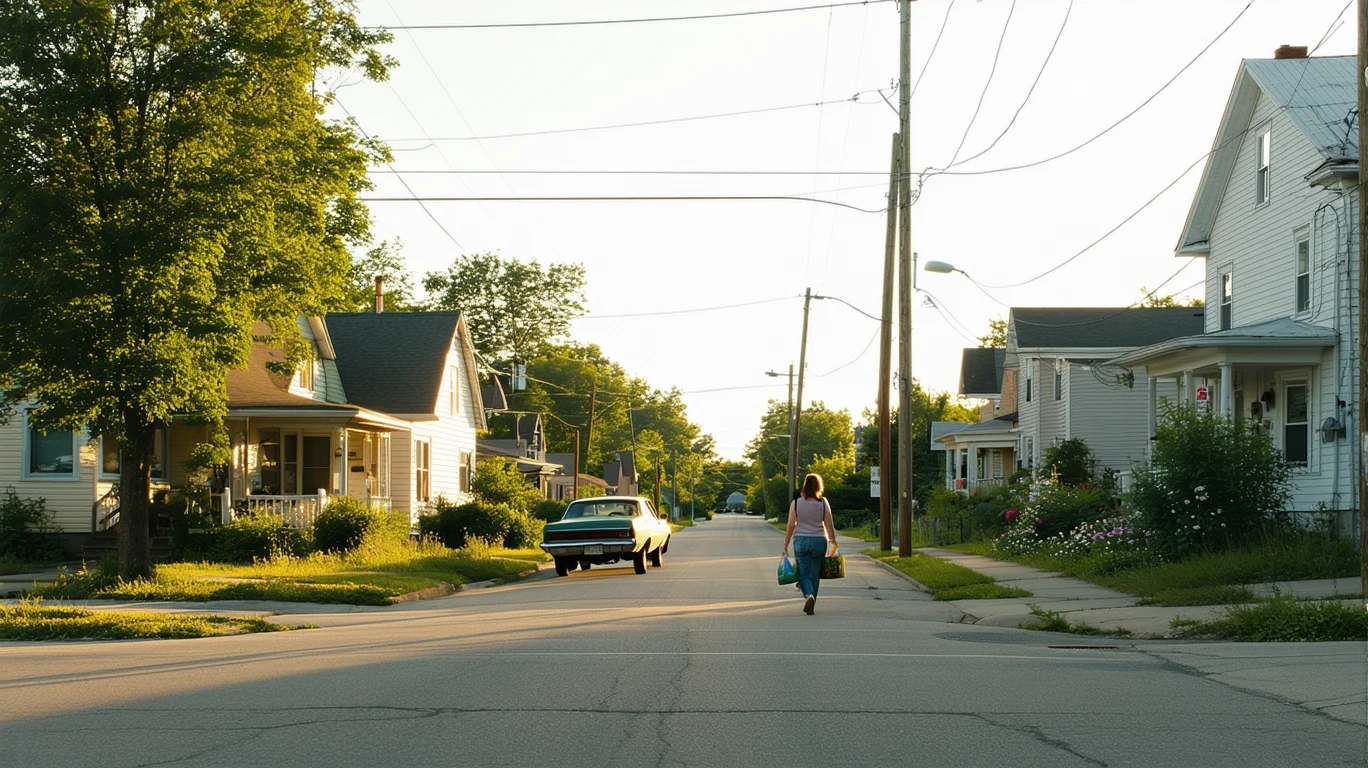
Grocery and everyday spending pressure in Danville and Versailles reflects identical regional pricing—both cities fall under the same 93 regional price parity index—but access patterns and household routines shape how that pressure feels. Danville’s corridor-clustered food and grocery density means that staples are available but may require intentional trips to specific areas rather than quick stops on the way home. Versailles lacks detailed infrastructure data, leaving its grocery access patterns less clear, but higher home values often correlate with suburban layouts where big-box stores and chain grocers dominate, requiring car trips for most shopping.
For staples like bread, milk, eggs, and chicken, both cities reflect the same baseline pricing environment. A loaf of bread runs around $1.66 per pound, a dozen eggs $2.66, and ground beef $6.08 per pound. These are derived estimates based on national baselines adjusted for regional price parity, not observed local prices, but they illustrate the cost floor households face regardless of city. The real differentiation comes from how households shop: frequent small trips to neighborhood stores, weekly bulk runs to discount grocers, or convenience-driven stops at higher-priced options.
Danville’s walkable pockets and corridor-clustered grocery density suggest that some households—particularly those living near downtown or established neighborhoods—can manage errands without constant car dependence, reducing the friction cost of picking up a few items. Families managing larger grocery volumes, however, may still default to car trips for efficiency, especially when buying in bulk or juggling multiple stops. Versailles’s suburban character likely requires more consistent car use for groceries, which doesn’t increase the price of food but does add time, fuel, and logistical complexity to the weekly routine.
Dining out and convenience spending introduce another layer of differentiation. Danville’s moderate food establishment density suggests a mix of local diners, fast-casual chains, and coffee shops, with options concentrated along main corridors rather than evenly distributed. Households prone to convenience spending—grabbing takeout after work, stopping for coffee on the way to errands—may find that Danville’s layout either limits temptation (fewer options nearby) or requires intentional detours (driving to specific areas). Versailles’s infrastructure remains less documented, but suburban layouts often cluster dining and retail along highway corridors, making convenience spending easier for those already driving but less accessible for spontaneous stops.
Price sensitivity matters most for households managing tight budgets or feeding multiple people. A single adult with flexible eating habits may absorb grocery costs without strain, adjusting between cooking at home and occasional dining out based on schedule and preference. A family of four, buying in volume and managing school lunches, after-school snacks, and weekend meals, feels grocery pressure more acutely. The Harpers, for instance, found that their weekly grocery bill didn’t vary much between cities—staples cost the same—but Danville’s layout reduced their reliance on convenience stops, while Versailles’s suburban spread made it easier to default to takeout when schedules collided.
Grocery Takeaway: Danville and Versailles share identical regional pricing for groceries and everyday goods, so cost differences stem from access patterns and household routines rather than prices. Danville’s corridor-clustered density offers some walkable access for smaller trips but still requires car use for bulk shopping. Versailles’s suburban character likely demands more consistent driving, adding time and fuel costs to the grocery routine. Households sensitive to convenience spending may find Danville’s layout limits temptation, while those prioritizing efficiency may prefer Versailles’s big-box access. Families managing large grocery volumes will feel similar price pressure in both cities, with the primary difference being logistical friction rather than checkout totals.
Taxes and Fees: Predictability and Structural Differences
Taxes and local fees in Danville and Versailles operate under Kentucky’s statewide tax framework, but city-specific property tax rates, assessment practices, and recurring fees create divergent cost experiences for homeowners and renters. Property taxes represent the most significant variable, with rates and assessment methodologies differing between jurisdictions even within the same county. Homeowners in Versailles, facing higher median home values, encounter larger absolute property tax bills even if effective rates remain similar, simply because the taxable base is higher. Danville’s lower home values reduce that baseline exposure, offering homeowners more predictable annual obligations and less sensitivity to assessment increases.
For renters, property taxes remain indirect but still influential. Landlords in Versailles, managing higher property values and correspondingly higher tax bills, may pass those costs through to tenants via rent increases at lease renewal. Danville’s lower property values reduce that pass-through pressure, though rent increases can still occur due to market demand, maintenance costs, or landlord discretion. The predictability of those increases depends more on lease terms and local rental market dynamics than on tax policy alone, but the structural difference in property tax exposure creates a baseline advantage for Danville renters.
Recurring city-specific fees—trash collection, water and sewer, stormwater management—vary by jurisdiction and service structure. Some cities bundle these fees into property tax bills, while others bill separately, creating different cash flow rhythms for homeowners. Danville and Versailles may also differ in their reliance on special assessments for infrastructure improvements, sidewalk repairs, or neighborhood upgrades, with costs distributed across affected properties. Homeowners planning to stay several years should anticipate these fees as part of total ownership cost, not as one-time surprises.
Sales taxes in Kentucky apply uniformly at the state level, so neither city gains an advantage in everyday consumption taxes. However, local option taxes or special district fees—common in some Kentucky municipalities—can add incremental costs to specific purchases or services. Without detailed local tax data in the input feed, these differences remain speculative, but households should verify local tax structures during the home search process to avoid unexpected obligations.
Tax and Fee Takeaway: Versailles’s higher home values translate directly into higher absolute property tax bills for homeowners, even if effective rates remain similar to Danville. Danville’s lower property values reduce baseline tax exposure and create more predictable annual obligations, benefiting both homeowners and renters (who face less pass-through pressure). Households planning to stay long-term should prioritize understanding local assessment practices, special district fees, and recurring service charges, as these costs compound over time and vary more by jurisdiction than by statewide policy. Renters in Danville face less indirect tax pressure, while Versailles homeowners must budget for higher ongoing obligations tied to property value.
Transportation & Commute Reality
Transportation costs in Danville and Versailles reflect identical fuel pricing—$2.55 per gallon—but commute patterns and car dependence diverge based on infrastructure and regional connectivity. Danville reports an average commute time of 18 minutes, with 22.1% of workers facing long commutes and only 6.6% working from home. These figures suggest that most Danville residents rely on cars for work trips, with a meaningful minority facing extended drives to Lexington or other regional employment centers. Versailles lacks detailed commute data, but its proximity to Lexington and higher median income suggest that many residents commute to higher-paying jobs in the metro core, likely requiring similar or longer drive times.
Danville’s walkable pockets and moderate pedestrian-to-road ratio indicate that some errands—grabbing coffee, picking up groceries, walking to a park—can happen without a car for households living in established neighborhoods. However, the city’s corridor-clustered food and grocery density means that most shopping, dining, and services still require driving, especially for families managing multiple stops or buying in bulk. The presence of bike infrastructure in some areas offers an alternative for short trips, but Kentucky’s climate—hot, humid summers and cold, wet winters—limits year-round cycling for most households.
Versailles’s infrastructure remains less documented, but suburban layouts typically demand consistent car use for work, errands, and recreation. Without clear data on transit options, walkability, or bike infrastructure, Versailles likely requires two-car households for families with multiple working adults or school-age kids managing extracurriculars. The Harpers, for instance, found that Danville’s layout allowed one parent to walk to a nearby coffee shop or park on weekends, reducing the need for constant car juggling, while Versailles’s spread required both cars in near-constant rotation.
Fuel costs remain identical between cities, so the primary differentiation comes from miles driven and trip frequency. Households in Danville with shorter commutes or walkable access to some errands may log fewer miles per week, reducing fuel expenses and vehicle wear. Those in Versailles, managing longer commutes or more dispersed errands, face higher cumulative fuel costs and more frequent maintenance cycles. The time cost of commuting also matters: 18 minutes each way in Danville leaves more time for household logistics, meal prep, or family routines compared to a 30- or 40-minute commute to Lexington from Versailles.
Transportation Takeaway: Danville’s shorter average commute and walkable pockets reduce car dependence for some households, particularly those living near established neighborhoods and working locally. Versailles’s higher incomes suggest more residents commute to Lexington for work, likely requiring longer drive times and higher cumulative fuel costs. Both cities demand car ownership for most households, but Danville’s infrastructure offers marginal relief for errands and short trips, while Versailles’s suburban character likely requires more consistent driving. Households sensitive to commute time or managing single-car logistics may find Danville’s layout more forgiving, while those prioritizing proximity to Lexington jobs may accept Versailles’s longer commutes as necessary.
Cost Structure Comparison
Housing dominates the cost experience in both Danville and Versailles, but the magnitude of that pressure differs sharply. Versailles’s higher median home values and rents create front-loaded financial obligations that demand stronger income stability and reduce flexibility for other expenses. Danville’s lower housing costs don’t eliminate financial pressure, but they create more breathing room for households managing tight budgets, building savings, or absorbing unexpected expenses. For renters, the $170 monthly difference in median rent compounds over time, affecting lease renewal decisions and long-term housing stability.
Utilities introduce similar seasonal volatility in both cities, driven by identical rate structures and Kentucky’s humid subtropical climate. The primary differentiation comes from housing stock: older homes in Danville amplify summer cooling exposure, while larger, newer builds in Versailles increase baseline usage despite better insulation. Households in either city should anticipate seasonal bill swings, with summer months driving the largest increases. Predictability depends more on home age, size, and thermostat discipline than on city choice.
Groceries and daily expenses reflect identical regional pricing, so cost differences stem from access patterns and household routines rather than checkout totals. Danville’s corridor-clustered grocery density and walkable pockets reduce car dependence for some errands, while Versailles’s suburban layout likely requires more consistent driving. Families managing large grocery volumes face similar price pressure in both cities, with the primary difference being logistical friction—time spent driving, fuel costs, and the temptation of convenience spending—rather than food prices.
Transportation patterns matter more in Versailles, where higher incomes and proximity to Lexington suggest longer commutes and more dispersed errands. Danville’s shorter average commute and walkable infrastructure offer marginal relief for households working locally or living near established neighborhoods, but most residents still rely on cars for daily logistics. The time cost of commuting—18 minutes in Danville versus potentially 30 or 40 minutes from Versailles to Lexington—affects household routines, meal planning, and family schedules as much as fuel expenses.
The better choice depends on which costs dominate your household and how much flexibility you need to absorb volatility. Households sensitive to housing entry barriers, managing tight budgets, or prioritizing cash flow flexibility will find Danville’s lower costs reduce financial strain across multiple categories. Those with higher incomes, tolerance for front-loaded housing obligations, and a preference for newer builds may accept Versailles’s premium without feeling stretched. The decision is less about total cost and more about where pressure concentrates and whether your income structure can absorb it without constant vigilance.
How the Same Income Feels in Danville vs Versailles
Single Adult
For a single adult, housing costs become the first non-negotiable expense, and Danville’s lower rent creates immediate flexibility for discretionary spending, emergency savings, or absorbing income volatility. Versailles’s higher rent reduces that cushion, making lease renewals more stressful and limiting the ability to save for a down payment or career transition. Commute friction matters less for singles without school or childcare logistics, but Danville’s walkable pockets offer marginal relief for errands, reducing the need for constant car use. Versailles’s suburban layout demands more driving, adding time and fuel costs to the weekly routine without clear lifestyle benefits.
Dual-Income Couple
Dual-income couples face more predictable cash flow but also more complex logistics, and housing costs still dominate the budget in both cities. Versailles’s higher home values and rents demand stronger combined income stability, with less room for one partner to reduce hours, change careers, or absorb a job loss. Danville’s lower housing costs create more flexibility for career transitions, further education, or building savings, but the city’s limited family infrastructure may matter less for couples without kids. Transportation becomes a shared burden: Danville’s shorter commutes and walkable errands reduce the need for constant car juggling, while Versailles’s spread likely requires two cars in near-constant use, adding fuel and maintenance costs to the monthly rhythm.
Family with Kids
Families with kids face the most complex cost structure, where housing, transportation, and daily logistics intersect in ways that amplify pressure. Danville’s lower housing costs free up cash for childcare, groceries, and school expenses, but the city’s limited family infrastructure—reflected in lower school and playground density—may require more driving to access parks, extracurriculars, or social opportunities. Versailles’s higher costs demand stronger income stability and reduce flexibility for unexpected expenses, but the assumption is that infrastructure or school quality offsets the difference—an assumption that remains unverified without detailed data. Transportation friction intensifies for families: Danville’s walkable pockets offer some relief for quick errands, while Versailles’s suburban layout requires constant car use for school drop-offs, grocery runs, and weekend activities, turning time cost into a hidden but persistent pressure.
Decision Matrix: Which City Fits Which Household?
| Decision factor | If you’re sensitive to this… | Danville tends to fit when… | Versailles tends to fit when… |
|---|---|---|---|
| Housing entry + space needs | You prioritize lower down payments, manageable monthly obligations, and cash flow flexibility. | You need lower entry barriers and more breathing room for savings or unexpected expenses. | You have stronger income stability and prefer newer builds or larger homes despite higher costs. |
| Transportation dependence + commute friction | You value shorter commutes, walkable errands, and reduced car dependence for daily logistics. | You work locally or live near established neighborhoods with walkable access to some errands. | You commute to Lexington for higher-paying work and accept longer drive times as necessary. |
| Utility variability + home size exposure | You need predictable bills and lower baseline usage, or you’re managing an older home with poor insulation. | You choose smaller, newer units with shared walls and lower square footage to reduce seasonal volatility. | You prioritize larger, newer builds with better insulation despite higher total usage and baseline costs. |
| Grocery strategy + convenience spending creep | You want to limit impulse spending and reduce the friction cost of frequent small trips. | You benefit from corridor-clustered density that limits convenience temptation and allows some walkable access. | You prefer big-box efficiency and accept that suburban layouts require more consistent driving for all shopping. |
| Fees + friction costs (HOA, services, upkeep) | You need predictable annual obligations and lower baseline property tax exposure. | You gain from lower property values that reduce absolute tax bills and pass-through pressure for renters. | You accept higher property tax bills tied to higher home values and budget for ongoing obligations. |
| Time budget (schedule flexibility, errands, logistics) | You need shorter commutes and less driving friction to manage household routines and family schedules. | You benefit from 18-minute average commutes and walkable pockets that reduce constant car juggling. | You tolerate longer commutes and more dispersed errands in exchange for proximity to Lexington jobs. |
Lifestyle Fit: Regional Character and Daily Rhythms
Danville and Versailles both sit in Kentucky’s Bluegrass region, offering access to rolling hills, horse farms, and the cultural and economic pull of nearby Lexington. Danville’s walkable pockets and mixed building character suggest an established downtown core with local shops, diners, and community gathering spaces, creating opportunities for spontaneous errands or weekend strolls without constant car use. The presence of parks and water features—reflected in moderate green space access—offers families and outdoor enthusiasts options for recreation, though the city’s limited family infrastructure may require more driving to access playgrounds, youth sports, or school-related activities.
Versailles’s higher home values and proximity to Lexington suggest a more suburban, commuter-oriented lifestyle, with residents likely balancing local community ties with frequent trips to the metro core for work, dining, and entertainment. Without detailed infrastructure data, Versailles’s walkability and transit options remain unclear, but suburban layouts typically prioritize car access over pedestrian convenience. The Harpers found that Danville’s downtown felt more accessible for casual errands—grabbing coffee, browsing a bookstore, meeting friends for lunch—while Versailles required more intentional planning for similar outings, often defaulting to Lexington for variety.
Both cities benefit from Kentucky’s moderate climate, with warm summers and cold winters that shape outdoor routines and utility exposure. Danville’s current temperature sits at 41°F, reflecting typical late-fall or early-spring conditions that allow for comfortable outdoor activity without extreme heat or cold. Summer months bring humid, sticky heat that drives air conditioning use and limits midday outdoor time, while winter cold requires steady heating but rarely reaches the prolonged freezing conditions seen in northern climates. Versailles experiences nearly identical weather patterns, so lifestyle differences stem from infrastructure and community character rather than climate.
Quick Facts:
- Danville’s unemployment rate of 5.1% suggests a moderately tight labor market with regional employment opportunities, though many residents commute to Lexington for work.
- Versailles’s unemployment rate of 3.9% reflects stronger local job market conditions, likely driven by proximity to Lexington and higher-income employment sectors.
Lifestyle fit ultimately depends on whether you prioritize local walkability and lower housing costs or accept higher costs in exchange for proximity to Lexington and suburban space. Danville’s infrastructure supports some car-free errands and shorter commutes for those working locally, while Versailles demands more consistent driving but offers access to higher-paying regional jobs. Families with kids may find Danville’s lower costs offset its limited family infrastructure, while those prioritizing school quality or extracurricular access may prefer Versailles despite higher expenses. The Harpers, after weeks of debate, chose Danville, valuing the lower housing entry barrier and walkable downtown over Versailles’s polish and proximity to Lexington—a decision driven by their tight budget and preference for local community over regional convenience.
Frequently Asked Questions
Is Danville or Versailles cheaper for renters in 2026?
Danville offers lower median rent—$765 per month compared to Versailles’s $935 per