
Is Cypress the kind of place you grow roots—or just pass through? That question tends to surface quickly for anyone weighing a move here. Cypress sits northwest of Houston, close enough to tap into metro opportunity but far enough to feel distinctly suburban. The emotional tone here reflects a tradeoff many recognize immediately: abundant green space and residential calm in exchange for car dependency and sparse walkable errands. People who thrive here tend to value outdoor access, quiet streets, and room to breathe. Those who feel friction often wanted spontaneous neighborhood activity, dense dining and shopping options, or easy transit access—things Cypress wasn’t designed to deliver.
The city’s vibe isn’t about proving happiness or declaring satisfaction. It’s about alignment. Cypress rewards certain priorities and quietly penalizes others. Understanding which side of that line you fall on matters more than any general verdict.
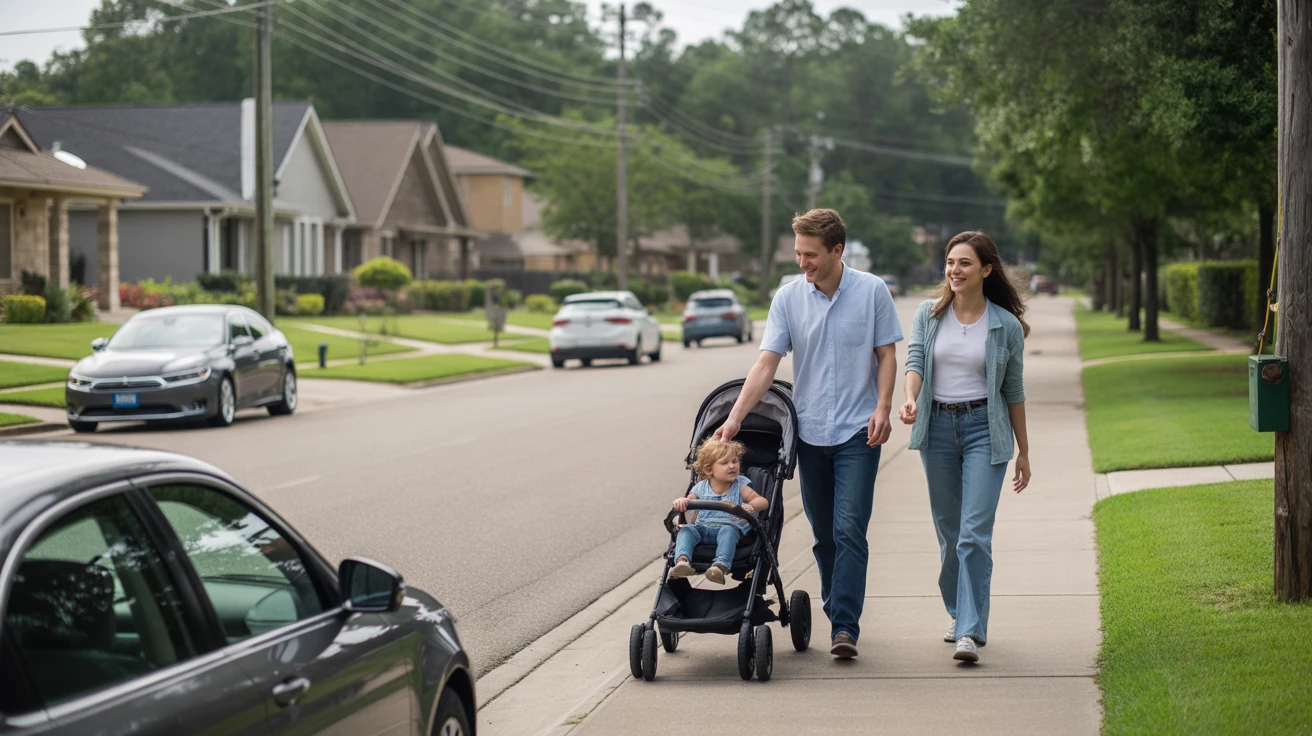
What Defines the Emotional Tone in Cypress
Cypress carries the emotional texture of a place caught between suburban stability and growth-driven change. Long-time residents often describe a protective affection for the area’s parks, trails, and family-friendly reputation. Newcomers frequently arrive expecting convenience to match the space—then adjust expectations when they realize errands require planning and driving. The tension isn’t hostile; it’s more like a quiet recalibration.
What tends to feel rewarding here: easy access to well-maintained parks and water features, a strong sense of residential order, and the ability to find larger homes and yards without feeling isolated from Houston. What tends to feel limiting: the need to drive nearly everywhere for groceries, dining, and services, combined with transit options that don’t meaningfully reduce car dependency. The area supports walking in pockets—particularly where pedestrian infrastructure exceeds typical suburban ratios—but those pockets don’t connect into a walkable daily routine.
People who feel “at home” in Cypress often prioritize outdoor recreation, value predictability in their surroundings, and don’t mind trading spontaneity for space. Those who feel restless tend to crave urban texture, walkable errands, or the ability to skip the car for routine tasks. The city doesn’t try to be both things. It leans into what it does well and lets the rest sort itself out.
Social Media Buzz in Cypress
Public discussion in Cypress—across platforms like Facebook groups, Reddit threads, and local X (Twitter) conversations—tends to cluster around a few recurring emotional themes. Pride in parks and green space shows up frequently, often framed as a defining advantage. Annoyance with traffic along major corridors surfaces just as often, particularly during peak commute hours. There’s also a thread of protectiveness when outsiders generalize Cypress as “just another Houston suburb,” with locals quick to point out the area’s distinct character and outdoor amenities.
Growth generates mixed feelings. Some residents celebrate new retail and dining options as overdue additions. Others express fatigue with construction, crowding, and the sense that the area’s quiet identity is shifting faster than they’d prefer. The tone isn’t angry—it’s more like cautious observation, with people watching to see whether growth enhances convenience or just adds congestion.
“It’s a great place if you love being outside and don’t mind driving everywhere. If you’re looking for walkable coffee shops and spontaneous plans, you’ll feel the limits pretty fast.”
“The parks here are honestly some of the best I’ve seen in the Houston area. That’s the tradeoff—you get space and green, but you’re not walking to dinner.”
“Growth is fine, but I hope we don’t lose what made people move here in the first place. It’s supposed to feel different from the inner loop.”
Local News Tone
Local coverage of Cypress tends to frame the area through the lens of growth, infrastructure, and community identity. The tone is generally constructive but not uncritical. Stories often explore how the area is evolving—what’s being added, what’s being debated, and how residents are responding to change. There’s less focus on crisis or conflict and more on transition and adaptation.
Simulated topic buckets that reflect common coverage themes include:
- “Community Debates What Growth Should Look Like”
- “New Retail and Dining Options Arrive as Residents Weigh Convenience”
- “Parks and Trails Remain Central to Cypress Identity”
- “Traffic and Commute Times Shape Daily Routines”
- “Families Drawn to Space, But School and Playground Density Varies”
The framing tends to acknowledge tradeoffs rather than declare outcomes. Growth brings amenities but also congestion. Space offers comfort but demands driving. The area attracts families, yet infrastructure doesn’t always match density expectations. Local coverage reflects the same tension residents describe: Cypress is changing, and whether that feels like progress depends on what you came here for.
Review-Based Public Perception
On platforms like Google Reviews, Yelp, and Nextdoor-style community boards, Cypress earns praise and criticism that align closely with its structural character. People who arrived expecting suburban comfort, outdoor access, and residential predictability tend to leave positive feedback. Those who expected walkable errands, diverse dining, or easy transit access often express disappointment—not because Cypress failed, but because it wasn’t built for those priorities.
Positive reviews frequently highlight the quality and abundance of parks, the sense of safety and order in residential areas, and the ability to find larger homes with yards. Families with young children often describe Cypress as a strong fit, particularly if they value outdoor play and don’t mind driving to activities. The area’s proximity to Houston also earns appreciation, especially for commuters who want suburban space without feeling completely disconnected from metro employment and culture.
Critical reviews tend to focus on day-to-day costs tied to car dependency, limited walkable dining and shopping, and the sense that errands require more planning than expected. Some reviewers note that newer planned areas feel more polished and connected, while older pockets can feel less cohesive. Others mention that while parks are plentiful, school and playground density doesn’t always match family-oriented expectations—a gap that becomes more visible as the area grows.
Neutral or mixed reviews often acknowledge the tradeoff explicitly: “Great if you know what you’re getting, but not for everyone.” Expectation matching matters here more than in places with broader appeal. Cypress rewards alignment and quietly penalizes misalignment.
Comparison to Nearby Cities
| Aspect | Cypress | Katy | Spring |
|---|---|---|---|
| Overall Vibe | Residential calm, park-focused, car-dependent | More retail density, family-oriented, growth-driven | Quieter, more wooded, less commercial activity |
| Walkability | Pockets of pedestrian infrastructure, limited errands access | Slightly more walkable retail clusters | Minimal walkable errands, very car-dependent |
| Green Space | Abundant parks, water features, high density | Parks present, but less defining | Natural wooded character, fewer formal parks |
| Dining & Shopping | Sparse, requires driving | More developed, easier access | Very limited, more drive required |
| Family Appeal | Strong for outdoor-focused families, school density varies | High family density, more school options | Quiet family appeal, fewer amenities |
Comparing Cypress to nearby Katy and Spring helps clarify what kind of suburban experience you’re choosing. Katy offers more retail and dining density, making errands slightly easier and giving the area a more developed feel. Families who prioritize school options and walkable shopping clusters may find Katy a better fit. Spring leans even quieter and more wooded, with less commercial activity and fewer formal parks. It appeals to those seeking maximum residential calm and natural surroundings, even if that means driving farther for services.
Cypress sits between the two. It offers more green space and park access than Katy, but less retail convenience. It feels more developed and connected than Spring, but less spontaneous and walkable than either inner Houston neighborhoods or denser suburbs. If you value outdoor recreation and don’t mind planning errands around driving, Cypress delivers. If you want walkable variety or prefer a more wooded, secluded feel, Katy or Spring might align better.
What Locals Are Saying
“We moved here for the parks and the space, and we got exactly that. Our kids spend hours outside, and we’re close enough to Houston for work and weekend plans. The tradeoff is that we drive everywhere, but we knew that going in.”
“I thought I’d adjust to the car dependency, but it’s harder than I expected. I miss being able to walk to a coffee shop or grab groceries on foot. The parks are great, but they don’t replace daily convenience.”
“Cypress feels like a place where people are raising families and building routines. It’s not spontaneous or exciting, but it’s stable and predictable. That’s exactly what we needed.”
“The growth is a double-edged sword. We’re finally getting more restaurants and stores, but traffic is getting worse and the area feels more crowded. I hope we don’t lose the quiet that made us move here.”
“If you work remotely or have a flexible schedule, Cypress is fantastic. You get space, green, and access to Houston without the inner-city intensity. If you’re commuting daily, the drive can wear you down.”
“I’ve lived here for over a decade, and it’s changed a lot. Some of that’s good—better amenities, more options. But it also feels less like a tight-knit community and more like a pass-through suburb now.”
“The parks are honestly the best part. We use the trails constantly, and the water features make it feel different from other suburbs. But you have to be okay with driving for everything else.”
Does Cypress Feel Like a Good Fit?
Cypress doesn’t try to be all things. It rewards outdoor-oriented households, families who value space and residential order, and commuters willing to trade walkability for proximity to Houston. It tends to frustrate those seeking spontaneous neighborhood activity, dense errands access, or meaningful transit options. The city’s emotional profile reflects that tradeoff clearly: abundant green space and residential calm, paired with car dependency and sparse walkable amenities.
This tends to work for people who prioritize parks, trails, and room to breathe—who see driving as a reasonable cost for suburban comfort. It tends to frustrate those who wanted quality of life factors tied to walkable errands, diverse dining, or the ability to skip the car for daily tasks. Alignment matters more than any general verdict. If your priorities match what Cypress delivers, the fit feels natural. If they don’t, the friction shows up quickly.
Understanding housing tradeoffs and how the area’s structure shapes daily routines helps clarify whether Cypress aligns with your expectations—or whether a different suburb might serve you better.
How this article was built: In addition to public economic data, this article incorporates location-based experiential signals derived from anonymized geographic patterns—such as access density, walkability, and land-use mix—to reflect how day-to-day living actually feels in Cypress, TX.
The perspectives shown reflect commonly expressed local sentiment and recurring themes in public discussion, rather than individual accounts.