
How much is enough to feel at ease? In Cypress, the answer depends less on hitting a specific number and more on whether your income can absorb the rhythms of suburban life here — the summer cooling bills, the drives to errands and schools, the tradeoffs between space and cost. Comfort isn’t universal. It’s shaped by how well your earnings match the structure of daily life in this part of the Houston metro.
This article explains how income pressure works in Cypress, which households feel it most, and how to judge whether your financial situation aligns with what living here actually requires.
What “Living Comfortably” Means in Cypress
Comfort in Cypress means your income covers fixed costs without constant recalculation, absorbs seasonal swings in utility bills, and leaves room for the occasional unplanned expense. It means you’re not choosing between air conditioning and groceries in July, or skipping car maintenance because gas ate into your margin.
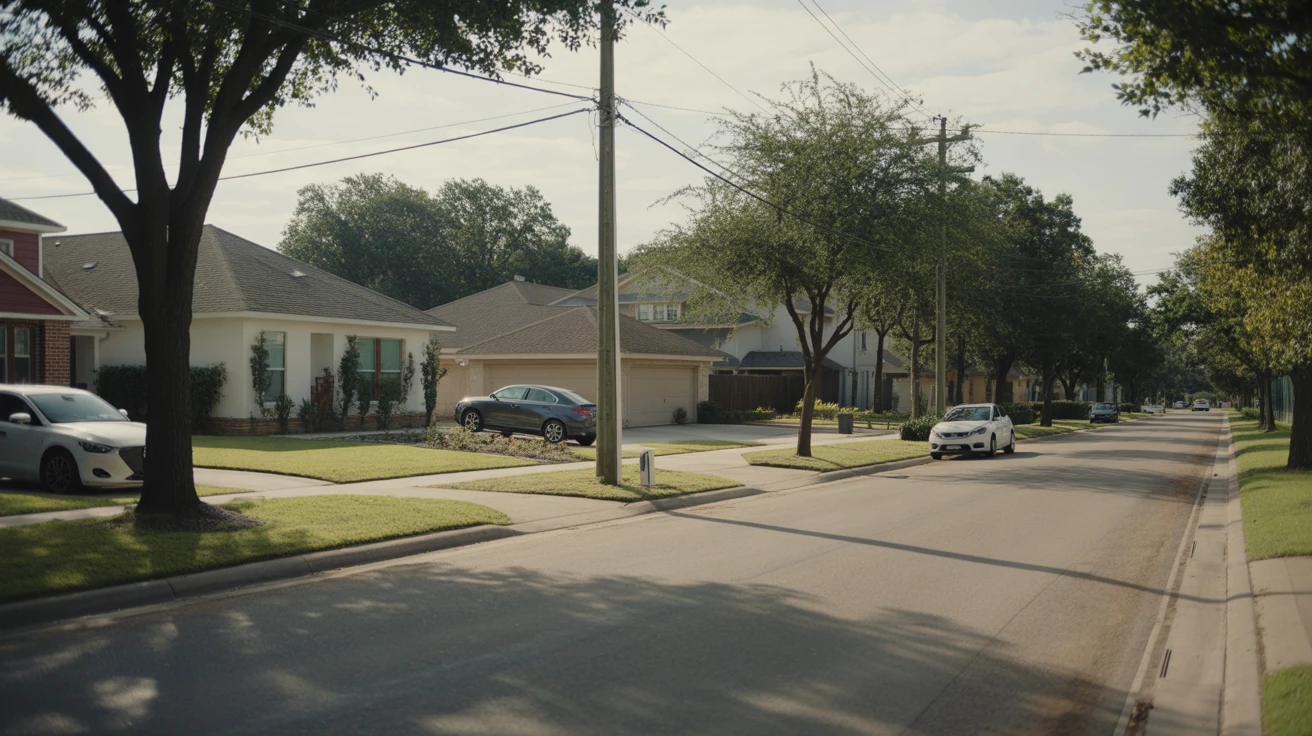
Locally, comfort also means accepting car dependency as the default. Cypress sits in a region where most daily needs — groceries, schools, healthcare — require driving. Walkable pockets exist, but they don’t eliminate the need for a reliable vehicle and the budget to keep it running. Households that expect transit convenience or walkable errands will find that expectation misaligned with how the area functions.
Climate shapes expectations too. Extended heat means air conditioning isn’t optional — it’s a fixed cost that peaks hard in summer and eases only briefly in winter. Homes here are built for cooling, and electricity usage reflects that. Comfort means budgeting for that reality, not hoping it won’t apply to you.
Space is another part of the equation. Cypress offers suburban layouts with yards and room to spread out, but that space comes with higher utility usage, maintenance responsibilities, and often longer distances to daily destinations. Comfort here isn’t about minimalism or walkable convenience — it’s about having enough income to sustain a car-dependent, climate-controlled, space-oriented lifestyle without strain.
Where Income Pressure Shows Up First
Housing is the largest fixed cost for most households, and in Cypress it typically means single-family homes with yards, garages, and square footage that exceeds what you’d find in denser urban areas. That space costs more to cool, more to maintain, and more to furnish. Renters face similar tradeoffs — suburban layouts mean fewer small, affordable units and more multi-bedroom options designed for families or roommates.
Utilities add volatility. Electricity rates in Cypress sit at 16.04¢ per kilowatt-hour, and natural gas runs $30.71 per thousand cubic feet. Those rates are moderate, but usage isn’t. Summer heat drives air conditioning loads well above national averages, and even well-insulated homes see bills climb when temperatures stay in the 90s for weeks. Households that underestimate cooling costs often feel the squeeze by mid-summer.
Transportation pressure is structural, not optional. Cypress functions as a car-dependent suburb. Errands accessibility is sparse — food establishment density falls below typical thresholds, and grocery density sits in the middle band. That means longer trips, fewer nearby options, and more planning required to avoid backtracking. Bus service exists, but it doesn’t replace the need for a personal vehicle for most households. Gas prices currently sit at $2.49 per gallon, but the real cost is cumulative: fuel, insurance, maintenance, and the time spent behind the wheel.
For families, pressure compounds quickly. School and playground density both fall below typical thresholds, meaning parents often drive farther to access quality schools or activities for children. Childcare, extracurriculars, and medical appointments all require coordination and mileage. Dual-income families face the added complexity of managing logistics across two work schedules, and single parents carry that burden alone.
How the Same Income Feels Different by Household
Income pressure in Cypress doesn’t distribute evenly. Households at similar earnings levels experience very different financial friction depending on size, structure, and expectations.
Single adults face lower fixed costs but still absorb the full weight of car dependency and utility exposure. A one-bedroom apartment or small rental still requires cooling in summer, and errands still require driving. Walkable pockets offer limited relief — you might walk within a neighborhood, but you’ll still drive to the grocery store, the clinic, or work. Singles with flexible schedules and modest space needs often find Cypress manageable, but those expecting urban convenience or transit access will feel the mismatch quickly.
Couples benefit from shared costs and often dual incomes. Splitting rent, utilities, and transportation expenses creates more breathing room, and two earners can absorb seasonal swings or unexpected repairs without derailing the month. Couples without children also avoid the logistics burden that dominates family budgets here. That said, car dependency still applies — most couples in Cypress operate two vehicles, doubling fuel, insurance, and maintenance costs.
Families face compounding pressure from multiple directions. Larger homes mean higher cooling and heating costs. Monthly expenses multiply with each child — groceries, clothing, activities, medical visits. Limited family infrastructure means more driving to access schools, playgrounds, and pediatric care. Families with one income carry the full load on a single earner, and even dual-income families often find that logistics costs — time, fuel, coordination — eat into any financial advantage. Families that thrive here tend to have stable, above-median income and the flexibility to manage a car-dependent, time-intensive routine.
The Comfort Threshold (Qualitative)
The comfort threshold in Cypress isn’t a number — it’s the point where your income stops dictating behavior. It’s when you can run the air conditioning without checking the bill first, when an unexpected car repair doesn’t force you to skip groceries, when you can choose a home based on fit rather than desperation.
Households below this threshold make constant tradeoffs. They drive less to save gas, delay maintenance, keep the thermostat higher than comfortable, or skip outings because the cost adds up. They feel every seasonal swing in utility bills and every uptick in fuel prices. Budgeting becomes a daily exercise, not a monthly one.
Households above the threshold experience Cypress differently. Bills arrive and get paid without stress. Choices expand — you can live closer to work, choose a home with better insulation, or pay for convenience when time matters more than money. Saving becomes plausible, and small luxuries — dining out, weekend trips, hobbies — fit into the month without guilt.
The threshold isn’t the same for everyone. A single adult with modest space needs and no dependents crosses it at a lower income than a family of four managing school logistics and higher utility loads. But the transition is recognizable: it’s when financial pressure stops shaping daily decisions and starts fading into the background.
Why Online Cost Calculators Get Cypress Wrong
Most cost-of-living calculators treat Cypress as a data point — a city with a regional price index, average rent, and typical utility costs. They generate a total, imply a required income, and move on. But totals don’t explain how life actually works here.
Calculators miss the texture of car dependency. They might include a line item for transportation, but they don’t capture the cumulative burden of driving everywhere, the logistics complexity for families, or the time cost of sparse errands accessibility. They don’t explain that walkable pockets exist but don’t reduce your need for a car.
They miss the seasonality of utility costs. A calculator might estimate average monthly electricity usage, but it won’t prepare you for the reality of triple-digit summer heat and the bills that come with it. It won’t explain that cooling dominates household energy use here, or that even efficient homes see sharp seasonal swings.
They miss the lifestyle assumptions embedded in suburban infrastructure. Cypress isn’t built for minimalism, transit commuting, or walkable errands. It’s built for families with cars, homes with yards, and routines that assume driving is the default. Households that arrive expecting something different — denser housing options, transit viability, nearby amenities — feel the mismatch immediately, and no calculator warns them in advance.
People feel surprised after moving because the structure of daily life doesn’t match the summary statistics. The income that looked sufficient on paper doesn’t account for the friction of getting around, the logistics load of managing a family, or the seasonal intensity of cooling costs. Understanding what shapes the cost of living in Cypress requires looking past averages and focusing on how expenses interact with the rhythms of life here.
How to Judge Whether Your Income Fits Cypress
Rather than asking “Is my income high enough?”, ask whether your financial situation aligns with how Cypress actually functions. These questions help clarify fit:
- Can you absorb seasonal utility swings? Summer cooling bills will peak well above winter levels. If a $100–$150 swing in monthly electricity costs would strain your budget, Cypress will feel financially volatile.
- Do you have reliable transportation and the budget to maintain it? Car dependency isn’t optional here. If you’re relying on one aging vehicle, or if fuel and maintenance costs already stretch your budget, the driving burden in Cypress will add pressure.
- How sensitive are you to errands logistics? Sparse food and grocery density means longer trips and fewer nearby options. If you expect to walk to the store or run quick errands on your way home, you’ll find that expectation misaligned with local infrastructure.
- Do you need walkable convenience or transit access? Walkable pockets exist, but they don’t eliminate car dependency. Bus service is present but limited. If you’re moving here without a car, or if you expect to rely on transit for daily needs, Cypress will feel isolating and inconvenient.
- Can you manage family logistics without constant stress? If you have children, limited school and playground density means more driving, more coordination, and more time spent managing schedules. Single parents and dual-income families both face this burden — the question is whether your income and flexibility can absorb it.
- Do you have financial margin for the unexpected? Car repairs, medical bills, and home maintenance don’t wait for payday. If your budget runs tight month to month, the lack of margin will turn small surprises into major disruptions.
If most of these questions raise concerns, your income may not align with the demands of living here — not because the number is too low in absolute terms, but because the structure of life in Cypress requires financial flexibility, transportation stability, and tolerance for car-dependent routines.
FAQs About Living Comfortably in Cypress
Is Cypress affordable for single adults?
It depends on your expectations. Single adults face lower fixed costs than families, but car dependency and utility exposure still apply. If you’re comfortable with driving for most errands, modest space, and managing seasonal cooling bills, Cypress can work. If you expect walkable convenience, transit access, or urban density, you’ll find it misaligned with how the area functions.
Do families need two incomes to live comfortably in Cypress?
Not necessarily, but dual incomes create significantly more breathing room. Families face compounding costs — larger homes, higher utility usage, more driving for schools and activities. A single income can work if it’s stable and above-median, but financial pressure will be constant. Dual incomes allow for more flexibility, margin, and the ability to absorb unexpected expenses without derailing the month.
How much do utility bills really vary by season?
Significantly. Summer cooling dominates electricity usage in Cypress, and bills peak well above winter levels. The gap between your lowest and highest monthly bill can easily exceed $100, depending on home size, insulation, and thermostat settings. Households that underestimate this swing often feel financial strain by mid-summer.
Can you live in Cypress without a car?
Technically yes, but practically no. Bus service exists, but sparse errands accessibility and car-oriented infrastructure make daily life without a vehicle extremely difficult. Grocery stores, clinics, schools, and most jobs require driving. Walkable pockets offer limited relief within neighborhoods, but they don’t replace the need for a car to access essential services. Households without reliable transportation will find Cypress isolating and logistically exhausting.
What’s the biggest financial mistake people make when moving to Cypress?
Underestimating the cumulative cost of car dependency and climate exposure. People see moderate housing costs or utility rates and assume their budget will stretch further than it does. Then they arrive and realize that driving everywhere, cooling a larger home, and managing family logistics in a sparse-accessibility environment adds up quickly. The structure of daily life here requires financial margin, and households that arrive without it feel the pressure immediately.
How this article was built: In addition to public economic data, this article incorporates location-based experiential signals derived from anonymized geographic patterns—such as access density, walkability, and land-use mix—to reflect how day-to-day living actually feels in Cypress, TX.
Cypress can work well for some households — but only if expectations match reality. Comfort here isn’t about hitting a specific income threshold. It’s about whether your earnings, flexibility, and lifestyle preferences align with a car-dependent, climate-intensive, suburban structure. If they do, Cypress offers space, parks, and a manageable rhythm. If they don’t, the friction will show up quickly, and no amount of budgeting will make the mismatch disappear.
Before committing, consider whether your income can absorb the realities outlined here — not just the averages, but the seasonal swings, the driving burden, and the logistics load. If you’re planning a move, understanding pods vs trucks: which move is best for you can help you manage relocation costs effectively. The households that thrive in Cypress are the ones who arrive prepared for what the area actually demands, not what they hoped it would be.