
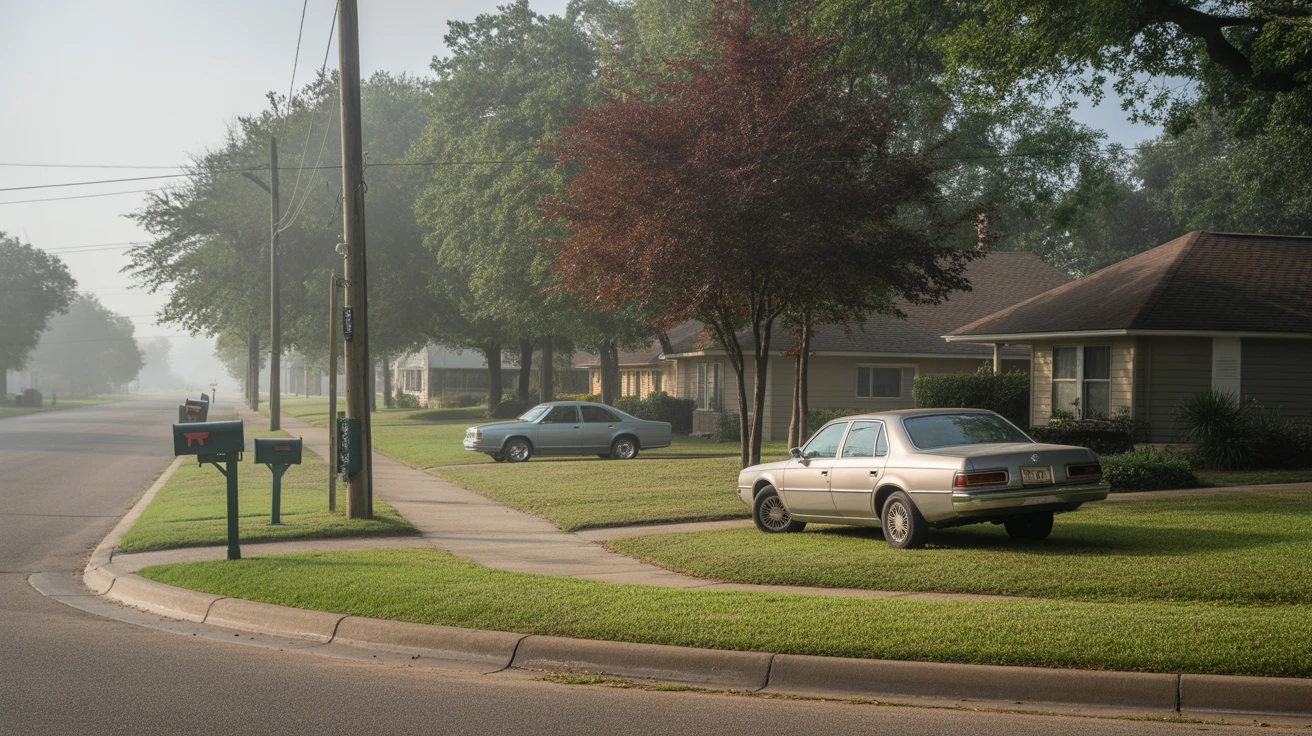
Here’s the myth: Cypress is just “cheaper Houston with a yard.” The reality? These two cities don’t compete on price—they compete on where cost pressure shows up and which households feel it most. Cypress sits northwest of downtown Houston, part of the same metro but operating under a completely different cost structure. Houston offers measurable benchmarks—median home values of $235,000, gross rent at $1,235 per month, and a 27-minute average commute. Cypress, by contrast, reveals its cost character through how people move, shop, and manage daily logistics, not through simple price comparisons.
Both cities share the same utility rates (16.04¢/kWh for electricity, $30.71/MCF for natural gas) and gas prices ($2.49/gallon), so the decision isn’t about unit costs. It’s about housing form, errands friction, commute patterns, and time budgets. Families drawn to green space and lower-density living may find Cypress appealing, but they’ll also navigate sparse grocery and service access that requires intentional planning. Renters and dual-income professionals may prefer Houston’s transit options and shorter average commutes, but they’ll contend with a rental market structure and long-commute exposure affecting 44.1% of workers. In 2026, choosing between these cities means understanding which cost structure aligns with your household’s non-negotiables—not which one costs less overall.
The comparison matters because the same gross monthly income behaves differently depending on whether your day-to-day life requires constant driving, whether your housing includes ongoing fees, and whether your schedule can absorb errands friction. This article breaks down housing, utilities, groceries, transportation, taxes, and lifestyle fit—not to declare a winner, but to explain where each city’s cost pressure concentrates and which households feel those differences most acutely.
Housing Costs: Entry Points and Ongoing Obligations
Houston’s housing market provides clear numeric benchmarks: a median home value of $235,000 and median gross rent of $1,235 per month. These figures define the entry barrier for ownership and the baseline monthly obligation for renters. Cypress housing data is less defined numerically, but the city’s residential character leans toward single-family homes in lower-density neighborhoods, often with homeowners association fees that bundle services like landscaping, trash, and sometimes water. This structural difference means Houston renters face a predictable monthly housing cost, while Cypress homeowners navigate a mix of mortgage, property taxes, insurance, and recurring HOA fees that can vary widely depending on neighborhood and home age.
For first-time buyers, Houston’s $235,000 median home value sets a concrete target for down payment planning and mortgage qualification. Cypress, without a published median, operates more as a market of variability—newer subdivisions with higher HOA fees and modern construction, versus older homes with lower fees but potentially higher maintenance exposure. Renters in Houston encounter a rental market with defined structure, while Cypress rental inventory skews toward single-family homes rather than apartment complexes, often resulting in higher per-unit rent but more space and yard access. The trade-off isn’t about one city being cheaper; it’s about whether your household prioritizes predictable monthly obligations (Houston) or space and outdoor access with variable ongoing fees (Cypress).
Families planning to stay long-term face different cost trajectories. Houston homeowners benefit from a measurable entry point and a rental market that provides fallback options if circumstances change. Cypress homeowners gain access to larger lots and integrated green space but absorb more variability in property taxes, insurance premiums (especially for newer construction in flood-prone areas), and HOA assessments. Single adults and couples may find Houston’s rental market more accessible for short-term flexibility, while families with children may accept Cypress’s higher upfront complexity in exchange for yards, parks, and lower-density living. Neither city offers a universal housing advantage—the fit depends entirely on whether your household is more sensitive to entry cost clarity or ongoing space and amenity access.
Housing Cost Behavior by Household Type
Renters experience more predictable monthly obligations in Houston, where the $1,235 median gross rent reflects a structured apartment market. Cypress renters typically encounter single-family home rentals with higher per-unit costs but more space, making the city less accessible for single adults or couples prioritizing affordability over square footage.
First-time buyers in Houston face a defined $235,000 median home value, which clarifies down payment targets and mortgage planning. Cypress buyers navigate more variability, with newer subdivisions demanding higher HOA fees and older homes requiring more maintenance reserves. The decision hinges on whether the household values numeric clarity or space flexibility.
Families with children may find Cypress’s lower-density character and integrated green space access appealing, but they’ll also manage higher ongoing obligations through HOA fees and property taxes. Houston families gain access to a broader range of housing types (apartments, townhomes, single-family) and a rental market that provides more fallback options if financial circumstances shift.
Housing Takeaway
Houston’s housing cost structure is front-loaded and measurable—renters know the baseline monthly obligation, and buyers know the median entry point. Cypress’s housing pressure is more distributed and variable, with HOA fees, property taxes, and maintenance exposure creating ongoing obligations that differ widely by neighborhood. Households sensitive to predictability and entry cost clarity will find Houston’s structure easier to navigate. Households prioritizing space, yards, and outdoor access may accept Cypress’s variability in exchange for lower-density living and integrated green space.
Utilities and Energy Costs: Same Rates, Different Exposure
Both cities share identical utility rates—16.04¢/kWh for electricity and $30.71/MCF for natural gas—so the cost difference doesn’t come from the unit price. It comes from how much energy households use, which depends on housing stock, home age, square footage, and cooling demands. Houston’s humid subtropical climate drives extended air conditioning use from late spring through early fall, with occasional mild winter heating needs. Cypress experiences the same climate patterns, but the city’s residential character skews toward newer single-family homes with larger square footage, which translates to higher baseline cooling loads even when insulation and HVAC efficiency are better than older Houston housing stock.
Apartment dwellers in Houston benefit from shared wall insulation and smaller conditioned spaces, which naturally limits cooling exposure. Single-family homeowners in both cities face higher utility volatility, but Cypress homes—often larger and with more windows—tend to experience sharper seasonal swings. Older homes in Houston, particularly those built before modern energy codes, may see higher per-square-foot usage, but the smaller average unit size can offset total monthly bills. The trade-off isn’t about which city has cheaper utilities; it’s about whether your household is more exposed to baseline usage driven by square footage (Cypress) or efficiency challenges in older housing stock (Houston).
Households in Cypress also navigate HOA-bundled services more frequently, which can include water, trash, and sometimes sewer—costs that don’t appear on a utility bill but still represent ongoing monthly obligations. Houston renters and homeowners typically manage these services separately, which provides more visibility into individual line items but also more administrative friction. For families managing tight budgets, the ability to see exactly where utility dollars go (Houston) versus having some costs bundled into HOA fees (Cypress) can affect how predictable monthly expenses feel. Neither structure is inherently better; the fit depends on whether your household prefers itemized control or simplified billing with less flexibility.
Energy efficiency programs exist at the state and federal level, and both cities’ residents can access incentives for insulation upgrades, HVAC replacements, and smart thermostat installations. However, the practical impact of these programs depends on home age and ownership status. Cypress homeowners in newer subdivisions may already benefit from modern construction standards, reducing the immediate need for efficiency upgrades. Houston homeowners in older neighborhoods face higher upfront costs to improve efficiency but may see more dramatic reductions in usage once upgrades are complete. Renters in both cities have limited control over structural efficiency improvements, making housing type and age the dominant factors in utility exposure rather than individual behavior changes.
Utility Takeaway
Utility costs in Cypress and Houston are driven by housing form, square footage, and home age rather than rate differences. Cypress households in larger single-family homes face higher baseline cooling loads and more seasonal volatility, while Houston households in older or smaller housing stock experience efficiency challenges but lower total usage. Households sensitive to predictable monthly bills may prefer Houston apartments or smaller homes with itemized utility costs. Households prioritizing space and newer construction may accept Cypress’s higher baseline usage in exchange for better insulation and modern HVAC systems, though larger square footage will still drive higher total bills.
Groceries and Daily Expenses: Access Patterns Shape Spending
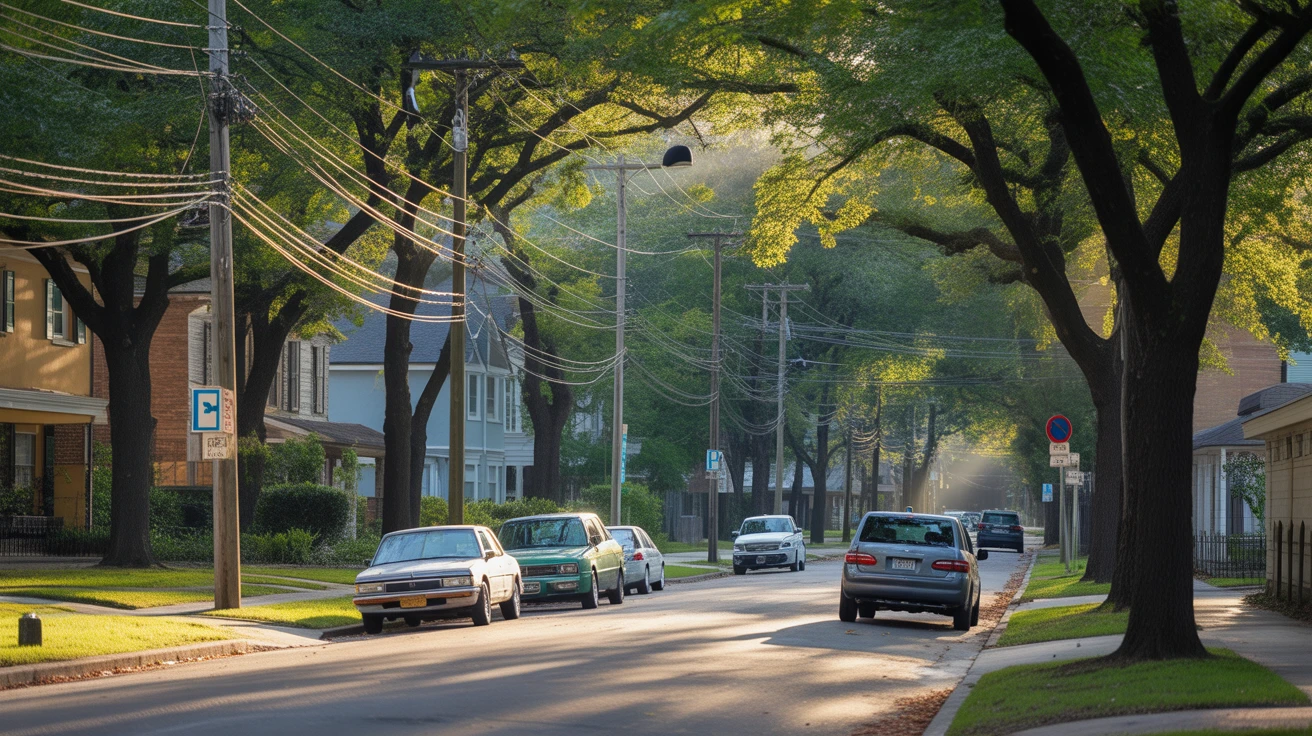
Grocery costs in Cypress and Houston aren’t determined by price differences—both cities operate within the same regional price parity index (100), meaning staple items like bread ($1.83/lb), eggs ($2.71/dozen), and ground beef ($6.69/lb) cost roughly the same at checkout. The real difference lies in how households access groceries and manage daily errands, which directly affects spending patterns, convenience costs, and time budgets. Cypress shows sparse daily errands accessibility, with food establishment density below typical thresholds and grocery density in the medium band. This means residents often drive longer distances to reach full-service grocery stores, which can lead to less frequent shopping trips, more bulk purchasing, and higher reliance on convenience stores or prepared foods when quick errands are needed.
Houston, by contrast, offers broader access to grocery options across neighborhoods, including big-box stores, discount chains, and neighborhood markets. This density doesn’t make groceries cheaper per item, but it does reduce the friction cost of shopping—less driving, more flexibility to compare prices across stores, and easier access to sales or discount options. Families managing larger grocery volumes may find Houston’s access structure more forgiving, allowing them to split shopping trips between discount stores for staples and specialty stores for specific items. Cypress families, navigating sparser access, often consolidate trips to reduce driving time, which can limit price flexibility and increase reliance on single-store shopping.
Dining out and convenience spending follow similar patterns. Cypress’s lower density of food establishments means fewer casual dining options within short driving distance, which can reduce spontaneous restaurant spending but also increase reliance on takeout or delivery when cooking isn’t practical. Houston’s higher concentration of restaurants, coffee shops, and fast-casual options creates more opportunities for convenience spending—grabbing lunch between errands, meeting friends for coffee, or picking up prepared meals on the way home. For single adults and couples, this access can feel like a lifestyle benefit, but it also introduces more spending friction points. Families with children may find Cypress’s sparser dining landscape easier to navigate from a budget discipline perspective, simply because there are fewer temptations within easy reach.
Household size plays a significant role in how these access patterns affect spending. Single adults in Houston benefit from walkable or short-drive access to grocery stores, coffee shops, and prepared food options, making it easier to manage daily errands without extensive planning. Cypress single adults face more planning burden—fewer quick-stop options mean more intentional grocery trips and less flexibility for last-minute meals. Couples in both cities experience similar dynamics, but the time cost of errands in Cypress can add up, especially for dual-income households managing work schedules and household logistics. Families with children in Cypress often batch errands to reduce driving time, which can improve budget discipline but also increases the logistical complexity of managing meal planning, school schedules, and extracurricular activities.
Groceries and Daily Expenses Takeaway
Grocery prices don’t differ meaningfully between Cypress and Houston, but access friction does. Cypress households navigate sparser errands accessibility, which requires more planning, longer driving distances, and less flexibility to compare prices or make quick stops. Houston households benefit from broader grocery and dining access, which reduces time costs but introduces more opportunities for convenience spending. Households sensitive to time budgets and errands logistics may find Houston’s density more forgiving. Households comfortable with car-dependent errands patterns and intentional shopping trips may prefer Cypress’s lower-density structure, which naturally limits spontaneous spending but demands more upfront planning.
Taxes and Fees: Predictability vs. Variability
Texas operates without a state income tax, so both Cypress and Houston residents avoid that particular cost category. However, the state compensates through higher property taxes and local fees, and the way these costs show up differs depending on housing type, ownership status, and neighborhood structure. Houston homeowners face property taxes that fund city services, schools, and infrastructure, with rates varying by county and municipal utility district. Cypress homeowners navigate similar property tax structures but often encounter higher HOA fees that bundle services like trash collection, water, landscaping, and sometimes even street maintenance—costs that Houston homeowners typically manage separately.
For renters, the tax and fee burden is less visible but still present. Houston renters pay property taxes indirectly through rent, and they manage utility and trash billing separately, which provides more control over individual line items. Cypress renters, especially those in single-family homes within HOA-governed neighborhoods, may see some fees bundled into rent or paid separately as HOA dues, depending on lease terms. The structural difference isn’t about total cost—it’s about whether fees are itemized and controllable (Houston) or bundled and predictable (Cypress). Neither approach is universally better; the fit depends on whether your household values transparency and line-item control or simplified billing with less administrative friction.
Sales taxes in Texas apply uniformly across most purchases, so neither city offers an advantage on consumption-based costs. However, local fees—parking, permitting, vehicle registration, and municipal services—can vary. Houston, as a larger city, may impose more parking fees in commercial districts and higher permitting costs for home improvements or business activities. Cypress, operating more as a suburban residential area, typically has fewer parking fees but may require homeowners to navigate HOA approval processes for exterior changes, landscaping, or additions, which introduces administrative friction even if direct costs are lower.
Long-term residents and recent movers experience these costs differently. Homeowners planning to stay several years in Cypress must account for HOA fee increases, special assessments for neighborhood improvements, and property tax adjustments as home values shift. Houston homeowners face similar property tax volatility but manage more individual service contracts (trash, water, landscaping), which provides flexibility to reduce costs by switching providers or adjusting service levels. Recent movers to either city should clarify upfront whether HOA fees are mandatory, what services they cover, and how often assessments occur—these details significantly affect the predictability of monthly obligations.
Taxes and Fees Takeaway
Cypress and Houston share the same state tax structure (no income tax, higher property taxes), but the way fees and services are bundled differs. Cypress homeowners often pay higher HOA fees that cover multiple services, creating predictable monthly costs but less flexibility to adjust individual line items. Houston homeowners manage more services separately, which provides control but increases administrative complexity. Households sensitive to predictability and simplified billing may prefer Cypress’s bundled fee structure. Households prioritizing line-item control and cost flexibility may find Houston’s itemized approach more manageable, especially if they’re comfortable managing multiple service contracts.
Transportation and Commute Reality
Gas prices are identical in both cities at $2.49/gallon, so the transportation cost difference comes from how far people drive, how often, and whether alternatives exist. Houston provides measurable commute data: an average of 27 minutes, with 44.1% of workers experiencing long commutes and only 7.3% working from home. Cypress lacks published commute metrics, but the city’s experiential structure reveals important patterns—walkable pockets exist with a high pedestrian-to-road ratio, yet daily errands accessibility is sparse, and bus service is present but limited to bus-only routes with no rail access. This combination means Cypress residents can walk within certain neighborhoods, but nearly all grocery shopping, medical appointments, and errands require driving.
Houston’s transit landscape includes bus service and, depending on the neighborhood, proximity to light rail lines that connect to downtown and major employment centers. The 27-minute average commute suggests many workers live relatively close to job centers, but the 44.1% long-commute figure indicates significant variability—some neighborhoods offer short drives or transit access, while others require extended highway commutes. For dual-income households, this variability matters. If one partner works downtown with transit access and the other works in a suburban office park, the household may need two cars regardless of where they live. Cypress households face similar dynamics but with less transit flexibility, meaning car ownership is effectively non-negotiable for most working adults.
The sparse errands accessibility in Cypress amplifies transportation costs beyond commuting. Even households with one partner working from home still need to drive for groceries, medical appointments, and school drop-offs. Houston’s broader density of services means more errands can be combined into shorter loops, reducing total miles driven per week even if individual trips feel similar. Over time, this difference compounds—Cypress households may drive an extra 50–100 miles per week simply managing daily logistics, which translates to more fuel costs, more frequent oil changes, and higher vehicle depreciation. The cost isn’t visible in a single gas station receipt, but it accumulates through maintenance schedules and vehicle replacement timelines.
For single adults, Houston’s transit options and denser errands accessibility can reduce the need for a personal vehicle, especially if work and daily services are accessible by bus or rail. Cypress single adults, by contrast, face near-total car dependence, which means higher fixed costs (insurance, registration, maintenance) even if commute mileage is low. Families with children in both cities typically need at least one vehicle, but Cypress families often require two cars earlier in the household lifecycle simply to manage school, activities, and errands logistics. Houston families may delay the second car if transit or carpooling options exist, though the 44.1% long-commute figure suggests many households still operate as two-car families by necessity.
Transportation Takeaway
Transportation costs in Cypress and Houston aren’t determined by gas prices—they’re shaped by commute distance, errands friction, and transit viability. Houston offers measurable commute patterns (27-minute average, but 44.1% long commutes) and some transit flexibility, which can reduce car dependence for certain households. Cypress shows walkable pockets but sparse errands accessibility and bus-only transit, making car ownership effectively mandatory for most adults. Households sensitive to vehicle ownership costs and maintenance exposure may find Houston’s transit options and denser services more forgiving. Households comfortable with car-dependent logistics and longer errands loops may accept Cypress’s transportation structure in exchange for lower-density living and integrated green space access.
Where Cost Pressure Concentrates Differently
Housing dominates the cost experience in both cities, but the pressure shows up differently. Houston provides measurable benchmarks—$235,000 median home value, $1,235 median gross rent—that define entry barriers and ongoing obligations. Cypress operates with more variability, where HOA fees, property taxes, and home age create ongoing obligations that differ widely by neighborhood. Renters face more predictable monthly costs in Houston, while Cypress homeowners navigate bundled fees and larger square footage that increase baseline expenses but also provide more space and outdoor access.
Utilities introduce similar baseline exposure in both cities due to identical rates, but housing form determines actual bills. Cypress’s larger single-family homes drive higher cooling loads and more seasonal volatility, while Houston’s mix of apartments and older homes creates efficiency challenges but lower total usage for smaller units. Households in newer Cypress construction benefit from better insulation, but the square footage still pushes monthly bills higher than comparable Houston apartments. The difference isn’t about which city has cheaper utilities—it’s about whether your household is more exposed to baseline usage driven by home size or efficiency challenges in older housing stock.
Transportation patterns matter more in Cypress, where sparse errands accessibility and bus-only transit make car ownership non-negotiable for most adults. Houston’s denser services and some transit flexibility reduce the need for constant driving, though the 44.1% long-commute figure shows significant variability. Families in Cypress often require two cars earlier in the household lifecycle simply to manage errands and school logistics, while Houston families may delay the second vehicle if transit or carpooling options exist. The cost difference accumulates through maintenance, insurance, and vehicle replacement timelines rather than showing up in a single monthly bill.
Groceries and daily expenses don’t differ by price, but access friction does. Cypress households plan more intentional shopping trips and drive longer distances to reach full-service stores, which limits price flexibility but naturally reduces spontaneous convenience spending. Houston households benefit from broader grocery and dining access, which reduces time costs but introduces more opportunities for unplanned purchases. For families managing tight budgets, Cypress’s sparser landscape can improve spending discipline, while Houston’s density provides more flexibility to compare prices and adjust shopping strategies.
Taxes and fees follow similar state-level structures, but the way services are bundled differs. Cypress homeowners often pay higher HOA fees that cover trash, water, landscaping, and maintenance, creating predictable monthly costs but less flexibility to adjust individual services. Houston homeowners manage more services separately, which provides control but increases administrative complexity. Neither approach is universally better—the fit depends on whether your household values simplified billing with less flexibility or line-item control with more administrative burden.
The decision isn’t about which city costs less overall. It’s about which cost structure aligns with your household’s priorities. Households sensitive to housing entry clarity, transit flexibility, and errands accessibility may find Houston’s measurable benchmarks and denser services easier to navigate. Households prioritizing space, outdoor access, and lower-density living may accept Cypress’s variability, car dependence, and errands friction in exchange for integrated green space and larger homes. For households where predictability and itemized control matter most, Houston’s structure provides more visibility. For households where space and outdoor lifestyle matter most, Cypress’s residential character delivers those benefits—but with higher baseline obligations and more planning burden.
How the Same Income Feels in Cypress vs Houston
Single Adult
In Houston, a single adult navigates a rental market with defined structure and access to transit or short-drive errands, making daily logistics manageable without extensive planning. Housing becomes the primary non-negotiable cost, with median gross rent at $1,235 per month setting the baseline obligation. Flexibility exists in transportation—some neighborhoods allow for bus or rail commuting, reducing vehicle ownership costs. In Cypress, the same income faces sparser errands accessibility and near-total car dependence, which means vehicle ownership, insurance, and maintenance become non-negotiable fixed costs. Housing options skew toward single-family rentals with higher per-unit costs, and the time cost of managing errands adds friction even when cash flow remains stable.
Dual-Income Couple
In Houston, a dual-income couple benefits from denser services and some transit flexibility, which can reduce the need for a second vehicle if work locations align with bus or rail routes. Housing costs remain front-loaded, but the rental market provides fallback options if financial circumstances shift. Errands and groceries require less planning, and the ability to combine trips into shorter loops reduces total driving time. In Cypress, the same couple navigates car-dependent logistics that often require two vehicles earlier in the household lifecycle. Housing offers more space and outdoor access, but HOA fees and larger square footage increase baseline obligations. The time cost of errands becomes more pronounced, especially for couples managing dual work schedules and household logistics without the density of services that Houston provides.
Family with Kids
In Houston, a family with children manages housing costs that are measurable and predictable, with access to a broader range of housing types (apartments, townhomes, single-family). School and activity logistics require at least one vehicle, and the 44.1% long-commute figure suggests many families operate as two-car households. Errands and groceries benefit from denser access, reducing the time cost of managing household logistics. In Cypress, the same family gains access to larger homes, integrated green space, and lower-density neighborhoods, but navigates sparser family infrastructure (school and playground density below thresholds) and limited healthcare access (clinics present, no hospital). Two vehicles become non-negotiable earlier, and the time cost of managing errands, school drop-offs, and activities increases due to longer driving distances and less service density. Flexibility disappears faster in Cypress, but the trade-off delivers more outdoor space and residential character.
Decision Matrix: Which City Fits Which Household?
| Decision factor | If you’re sensitive to this… | Cypress tends to fit when… | Houston tends to fit when… |
|---|---|---|---|
| Housing entry + space needs | Predictable monthly obligations vs. space and outdoor access | You prioritize larger homes, yards, and integrated green space over entry cost clarity | You value measurable rent or purchase benchmarks and flexible housing types |
| Transportation dependence + commute friction | Car ownership costs vs. transit flexibility | You accept car dependence and longer errands loops in exchange for lower-density living | You benefit from shorter average commutes and some transit options to reduce vehicle reliance |
| Utility variability + home size exposure | Baseline usage driven by square footage vs. efficiency challenges | You manage larger homes with higher cooling loads but benefit from newer construction | You prefer smaller units or apartments with lower total usage despite older housing stock |
| Grocery strategy + convenience spending creep | Access friction vs. spontaneous spending opportunities | You plan intentional shopping trips and accept longer driving distances for groceries | You value denser grocery and dining access that reduces time costs but increases spending friction |
| Fees + friction costs (HOA, services, upkeep) | Bundled predictability vs. itemized control | You accept higher HOA fees that bundle services and simplify billing with less flexibility | You prefer managing services separately to control costs and adjust individual line items |
| Time budget (schedule flexibility, errands, logistics) | Planning burden vs. service density | You manage household logistics through batched errands and accept longer driving loops | You benefit from denser services that reduce errands time and allow for more flexible scheduling |
Lifestyle Fit: Green Space vs. Urban Access
Cypress and Houston offer fundamentally different lifestyle textures, and these differences indirectly shape cost exposure. Cypress shows integrated green space access with park density exceeding high thresholds and water features present throughout the area. For families prioritizing outdoor recreation, weekend activities, and access to trails or natural areas, Cypress delivers that lifestyle without requiring long drives to reach parks or open space. Houston’s lifestyle character is harder to define through a single lens—the city