
A first-time renter moving to Cupertino for a tech job will likely face $3,501 per month in gross rent for a median apartment—before utilities, parking, or any household spending. A first-time buyer looking at the median home value of $2,000,001 will need to marshal a down payment in the mid-six figures and prepare for property taxes, insurance, and maintenance costs that scale with that purchase price. Both pathways demand careful planning, but they expose households to very different cost behaviors over time.
This article explains how housing costs work in Cupertino: what drives rent and ownership expenses, how apartments and houses differ in cost structure, and which tradeoffs matter most when deciding between renting and buying in one of Silicon Valley’s most competitive markets.
The Housing Market in Cupertino Today
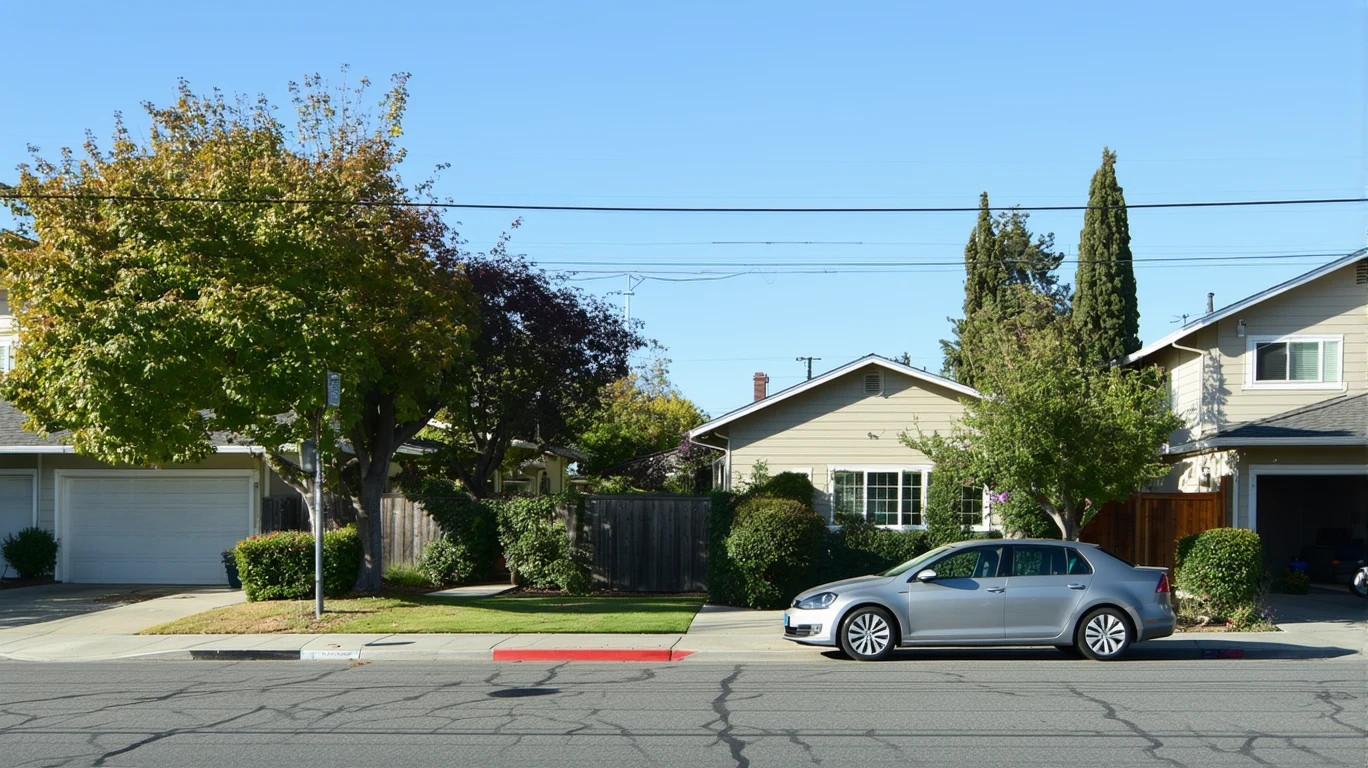
Cupertino’s housing market is shaped by its role as a Silicon Valley employment hub, home to Apple’s headquarters and a nationally recognized school district. These factors create sustained demand from high-earning tech professionals, families prioritizing education, and investors seeking stable long-term returns. The result is a market where inventory moves quickly, bidding pressure remains common, and both rent and purchase prices reflect competition for limited supply.
The city’s housing stock is a mix of single-family homes—many built in the 1960s through 1980s—and apartment complexes concentrated near transit corridors and commercial districts. Single-family inventory is constrained by zoning, lot sizes, and low turnover among long-term owners who benefit from Proposition 13’s property tax protections. Apartments, while more available, are often newer, amenity-rich, and priced to capture demand from high-income renters who prioritize walkability and proximity to employers.
What newcomers often misunderstand is that Cupertino’s cost structure isn’t just about high prices—it’s about the mismatch between entry costs and traditional affordability heuristics. A household earning $150,000 might qualify for a mortgage elsewhere but struggle to compete in a market where cash offers, stock-based down payments, and dual tech incomes set the baseline. For renters, the same dynamic applies: $3,501 per month is manageable for a senior engineer but prohibitive for service workers, teachers, or early-career professionals.
Renting in Cupertino
Rental pressure in Cupertino is driven by job market strength and housing supply constraints. Because the city lacks rent control, landlords can adjust rents at lease renewal to reflect current market conditions. This means that a tenant who signs a lease during a hiring slowdown may face a significant increase if the job market tightens by renewal time. Rent is not a fixed cost here—it’s a variable exposure tied to the broader Silicon Valley economy.
Location within Cupertino affects rental experience significantly. Apartments near Vallco Shopping District, De Anza Boulevard, or Stevens Creek Boulevard tend to offer better access to groceries, restaurants, and bus lines, reducing car dependency for daily errands. This matters because Cupertino’s infrastructure supports broadly accessible food and grocery options, with density exceeding regional thresholds. Renters in these areas can walk or bike to essentials, a meaningful cost and time advantage over car-dependent suburban layouts.
Renters also benefit from landlord-managed maintenance and predictable utility structures. Most apartments meter electricity separately, but water, trash, and sometimes gas are included in rent or billed as a flat fee. This simplifies budgeting and reduces exposure to seasonal volatility—though Cupertino’s mild Mediterranean climate keeps heating and cooling costs modest regardless of housing type.
The tradeoff is lack of control. Lease terms, pet policies, parking availability, and renewal timing are set by property management. For households prioritizing flexibility—those on temporary assignments, early in their careers, or uncertain about long-term Bay Area commitment—this tradeoff is acceptable. For those seeking stability, the annual reset cycle can feel like a recurring negotiation.
Owning a Home in Cupertino
Ownership in Cupertino begins with the $2,000,001 median home value, a figure that reflects both the city’s desirability and the structural undersupply of single-family housing in Silicon Valley. A conventional 20% down payment requires $400,000 in liquid assets—a threshold that favors households with existing home equity, stock compensation, or family wealth. First-time buyers without these resources often find themselves priced out or forced into smaller condos and townhomes.
Once purchased, ownership costs are shaped by California’s Proposition 13 tax structure, which sets property tax at roughly 1% of the purchase price and limits annual assessment increases to 2% as long as the property doesn’t change hands. This creates a bifurcated tax landscape: long-term owners who bought decades ago pay far less annually than recent buyers, even for identical homes. A buyer purchasing at $2,000,001 today will face a property tax base near $20,000 per year—before supplemental assessments, Mello-Roos districts, or voter-approved bonds.
Homeowners also absorb maintenance, insurance, and repair costs that renters delegate to landlords. In Cupertino, this includes earthquake insurance (a consideration given California’s seismic risk), roof and HVAC replacement for older homes, and landscape upkeep in neighborhoods without HOA services. Newer developments—particularly townhomes and condos—often include HOA fees that cover exterior maintenance, landscaping, and shared amenities, but these fees add a recurring cost layer that doesn’t build equity.
The advantage of ownership is control and predictability. Mortgage principal and interest are fixed for the loan term (assuming a fixed-rate loan), and property taxes grow slowly under Prop 13. Owners can renovate, landscape, and modify their homes without landlord approval. They also gain exposure to long-term appreciation, though this comes with liquidity risk, transaction costs, and the opportunity cost of capital tied up in a single asset.
Apartment vs House in Cupertino — Cost Behavior Comparison
| Expense Category | Apartment | House |
|---|---|---|
| Base monthly cost | $3,501 median gross rent, subject to annual market resets | Mortgage + property tax scaled to $2,000,001 purchase price; tax base locked under Prop 13 |
| Maintenance responsibility | Landlord handles repairs, HVAC, appliances, exterior | Owner absorbs all maintenance, including roof, earthquake retrofitting, aging systems |
| Utility structure | Electricity separately metered; water/trash often included or billed as flat fee | All utilities separately metered; owner pays for irrigation, pool (if present), whole-home systems |
| Parking inclusion | Often bundled in rent or available as add-on; covered/garage common in newer complexes | Driveway/garage included, but street parking may be limited in older neighborhoods |
| Amenity access | Pool, fitness center, clubhouse typically included in rent | Access to neighborhood parks (high density in Cupertino) and school facilities, but no private amenities unless in HOA community |
| Renewal volatility | Rent adjusts annually based on job market, inventory, and landlord strategy | Property tax grows slowly (2% cap under Prop 13); insurance and maintenance vary with age and claims |
Why these categories matter in Cupertino: The apartment-versus-house decision here is not just about space—it’s about cost predictability and lifestyle fit. Apartments offer lower entry costs, bundled amenities, and landlord-managed risk, making them the default choice for high-income renters who value mobility and simplicity. Houses offer control, tax base stability, and access to Cupertino’s highly rated school facilities, but they require substantial capital and expose owners to maintenance costs that scale with home age and size. Categories like “landscaping” or “HOA fees” were omitted because they vary widely within each housing type and don’t represent a consistent apartment-versus-house distinction in Cupertino’s mixed housing stock.
Utilities & Upkeep Differences
Cupertino’s mild climate—characterized by warm, dry summers and cool, wet winters—keeps heating and cooling costs modest compared to regions with extreme seasonal swings. Most homes and apartments rely on natural gas for heating and electricity for cooling, but neither system runs continuously. A typical apartment might see electricity bills rise slightly in summer for air conditioning, while a house with older insulation or a larger footprint will experience more noticeable seasonal variation. Still, the exposure is far less intense than in desert or snow-belt metros.
Electricity in Cupertino is priced at 33.60¢/kWh, reflecting California’s higher-than-national rates driven by renewable energy mandates and grid infrastructure costs. Natural gas costs $21.94 per MCF, a rate that fluctuates with wholesale markets but remains relatively stable year-over-year. For apartment renters, these rates matter primarily for electricity; gas is often included or billed as a minor line item. For homeowners, both fuels contribute to monthly utility costs, especially in larger homes with multiple zones, older HVAC systems, or poor insulation.
Maintenance exposure differs sharply by housing type. Apartment renters delegate HVAC servicing, appliance replacement, and exterior repairs to property management. Homeowners absorb these costs directly, and in Cupertino’s older housing stock, that can mean replacing 30-year-old furnaces, re-piping galvanized plumbing, or retrofitting for earthquake resilience. Newer homes and townhomes reduce some of this risk, but they often come with HOA fees that cover only exterior and common-area maintenance, leaving interior systems and appliances to the owner.
Water and trash costs are typically included in apartment rent or billed as a flat monthly fee, simplifying budgeting. Homeowners pay separately for water, sewer, and trash collection, with costs varying by lot size, landscaping, and household usage. In a city with integrated park access and minimal lawn-watering culture in newer developments, these costs remain manageable, but they add another variable layer to homeownership.
Rent vs Buy: Long-Term Exposure in Cupertino
The rent-versus-buy decision in Cupertino is not a simple math problem—it’s a choice between two different risk profiles. Renters face annual lease resets that can increase costs significantly if the job market strengthens or inventory tightens. They gain flexibility, liquidity, and freedom from maintenance risk, but they have no control over renewal terms and no equity accumulation. Over time, rent paid is gone; it buys housing service, not ownership.
Buyers, by contrast, lock in a property tax base under Proposition 13 and gain predictability on the largest component of housing cost. Their mortgage principal and interest remain fixed (assuming a fixed-rate loan), and while insurance, maintenance, and HOA fees can rise, these increases are typically slower and more controllable than rent swings in a competitive market. Buyers also gain exposure to home price appreciation, though this comes with liquidity constraints, transaction costs, and the risk that the market softens or stagnates.
What makes Cupertino distinct is the scale of entry capital required for ownership. A household that can afford $3,501 in monthly rent may still lack the $400,000+ down payment needed to buy the median home. This creates a trap: high rent makes it harder to save for a down payment, while waiting to buy means chasing a rising market. For tech employees with stock compensation, this gap can close quickly through RSU vesting. For others—teachers, service workers, single earners—it may never close.
Ownership also exposes households to costs that grow with the home’s age and complexity. A 1970s ranch on a large lot will require roof replacement, HVAC upgrades, and possibly foundation work over a decade of ownership. A newer townhome may avoid some of these issues but will carry HOA fees and shared-wall governance constraints. Renters avoid all of this, but they also forfeit the tax base lock and equity growth that make ownership financially advantageous over long holding periods.
The decision ultimately hinges on career trajectory, capital availability, and lifestyle priorities. Households with high incomes, existing equity, and long-term Silicon Valley commitment will find ownership advantageous despite the entry cost. Those prioritizing mobility, liquidity, or freedom from maintenance risk will find renting more aligned with their goals, even at $3,501 per month.
How Place Structure Shapes Housing Costs in Cupertino
Housing costs in Cupertino are not just about rent or mortgage—they’re about how the city’s physical layout and infrastructure affect daily expenses and time. Cupertino’s pedestrian infrastructure is substantial in certain areas, with a pedestrian-to-road ratio that exceeds regional thresholds. This creates walkable pockets where residents can reach groceries, restaurants, and services on foot or by bike, reducing the need for a second car or frequent driving.
For renters in apartments near De Anza Boulevard or Stevens Creek Boulevard, this translates to lower transportation costs and more time saved on errands. The city’s broadly accessible food and grocery density—exceeding high thresholds for both categories—means that daily shopping doesn’t require a car in well-located neighborhoods. Cycling infrastructure is also notable, with bike-to-road ratios high enough to support regular bike commuting or errands for those comfortable riding in mixed traffic.
Homeowners in single-family neighborhoods may experience a different pattern. While Cupertino’s park density is integrated—exceeding high thresholds and including water features—and family infrastructure is strong (both schools and playgrounds meet density benchmarks), these areas are often more car-dependent for commuting. Transit options are limited to bus service; there is no rail. This means that households in detached homes will likely need at least one car for work travel, even if errands can be handled locally.
The practical implication: when comparing what a budget has to handle, renters in walkable apartment zones may spend less on gas, parking, and car maintenance than owners in single-family zones, even though their rent is higher. Owners gain space, privacy, and equity, but they absorb the cost of car dependency and the time burden of longer commutes. Both groups benefit from Cupertino’s mixed-use land development, which blends residential and commercial zones and reduces the need for long trips to access services.
How this article was built: In addition to public economic data, this article incorporates location-based experiential signals derived from anonymized geographic patterns—such as access density, walkability, and land-use mix—to reflect how day-to-day living actually feels in Cupertino, CA.
FAQs About Housing Costs in Cupertino
Is $3,501 per month typical for rent in Cupertino?
$3,501 per month is the median gross rent, meaning half of renters pay more and half pay less. Rent varies by apartment size, age, location, and amenities. Newer complexes near transit or commercial districts often charge above this figure, while older units or those farther from job centers may fall below it. Rent is not fixed—it adjusts at lease renewal based on market conditions.
How does Proposition 13 affect property taxes for homeowners in Cupertino?
Proposition 13 sets property tax at approximately 1% of the purchase price and limits annual assessment increases to 2% as long as ownership doesn’t change. A home purchased at $2,000,001 will have a tax base near $20,000 per year, which grows slowly over time. Long-term owners who bought decades ago pay far less than recent buyers for comparable homes, creating a significant cost gap between old and new owners.
Do apartments in Cupertino include utilities in rent?
Most apartments meter electricity separately, so tenants pay their own electric bills based on usage. Water, trash, and sometimes gas are often included in rent or billed as a flat monthly fee. This structure simplifies budgeting and reduces exposure to seasonal cost swings, especially in Cupertino’s mild climate where heating and cooling demands are modest.
What makes Cupertino’s housing market more expensive than nearby cities?
Cupertino’s housing costs reflect its role as a Silicon Valley employment hub, its nationally ranked school district, and constrained housing supply due to zoning and low turnover. These factors create sustained demand from high-earning tech professionals and families, driving both rent and purchase prices above regional averages. The market is competitive, and inventory moves quickly.
Can a single-income household afford to buy a home in Cupertino?
A single-income household faces significant challenges in Cupertino’s housing market. The $2,000,001 median home value requires a down payment in the mid-six figures and a mortgage that assumes high, stable income. Most successful buyers are dual-income tech households or those with existing equity, stock compensation, or family wealth. Single earners are more commonly renters or buyers in nearby cities with lower entry costs.
Making Housing Choices in Cupertino
Housing costs in Cupertino are shaped by Silicon Valley’s employment strength, constrained supply, and the structural advantages Proposition 13 gives to long-term owners. Renters pay $3,501 per month for median apartments and gain flexibility, landlord-managed maintenance, and freedom from capital risk. Buyers face a $2,000,001 median home value, requiring substantial down payments and exposing them to property taxes, insurance, and upkeep costs that scale with purchase price—but they gain cost predictability, tax base stability, and equity accumulation over time.
The decision between renting and buying is not purely financial. It depends on career trajectory, capital availability, and how much control and stability matter relative to liquidity and mobility. Households with high incomes, stock compensation, and long-term Bay Area commitment will find ownership advantageous despite the entry barrier. Those prioritizing flexibility, lower upfront costs, or freedom from maintenance will find renting more aligned with their goals, even at high monthly rates.
Cupertino’s infrastructure—walkable pockets, strong errands accessibility, integrated parks, and notable cycling presence—affects the true cost of housing by reducing car dependency in well-located neighborhoods. Renters near commercial corridors can minimize transportation costs, while homeowners in single-family zones may need cars for commuting but benefit from proximity to schools and green space. Both pathways offer advantages; the right choice depends on what risks and tradeoffs a household is prepared to accept.