
“I thought I’d need a car for everything when I moved here,” says a daily commuter who lives near Covington’s core. “Turns out, I walk to the grocery store, bike to the riverfront, and only drive when I’m heading out to the suburbs or across the river.”
That experience captures the split reality of getting around Covington in 2026. This small city across the Ohio River from Cincinnati offers a surprisingly walkable core with notable cycling infrastructure and bus service—but step outside those pockets, and car dependence rises quickly. Understanding how transportation works here means recognizing that mobility isn’t one-size-fits-all: where you live, where you work, and how you structure your day determine whether you’ll rely on your feet, a bike, a bus, or a car.
This article explains transportation options in Covington, how transit availability shapes daily life, and which households benefit from walkability versus those who absorb the friction of driving. It does not calculate commute costs or transit fares—it focuses on access, coverage, and the practical realities of moving through this city.
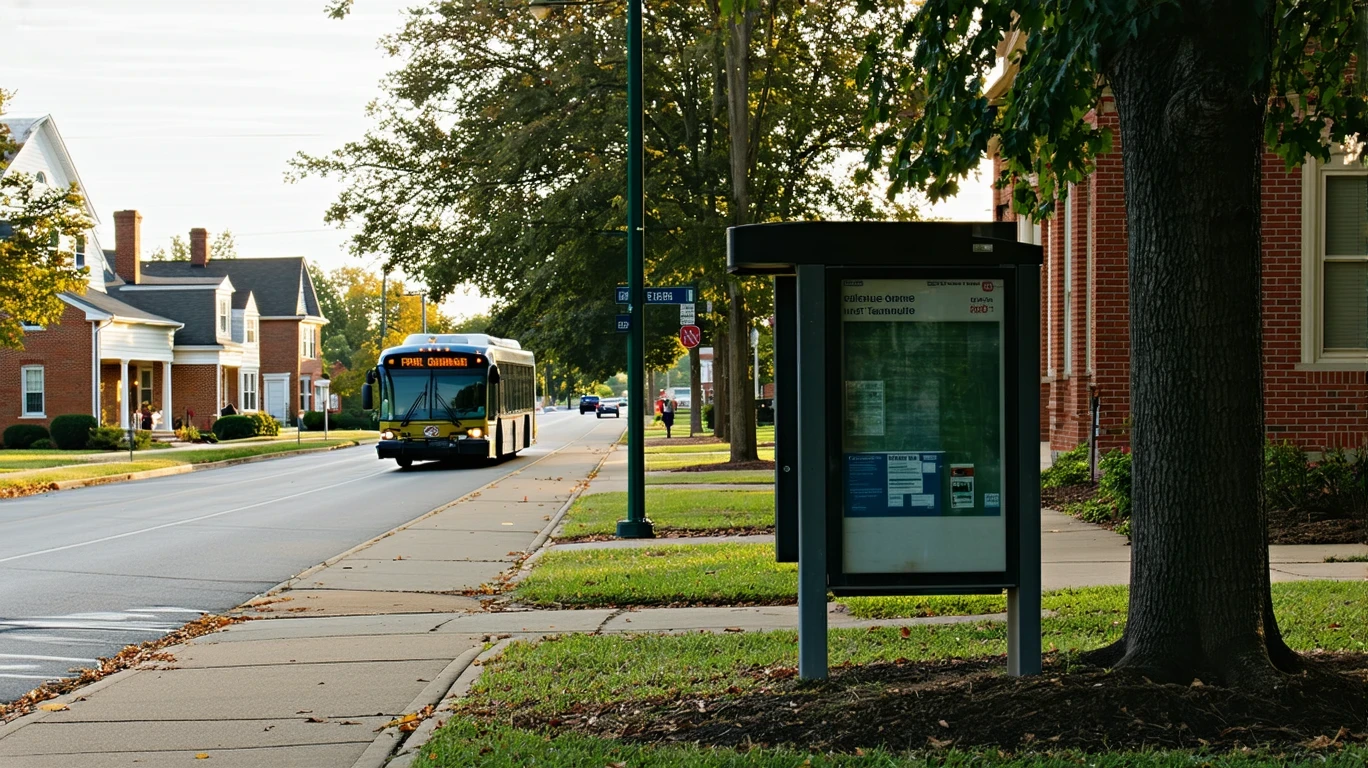
How People Get Around Covington
Covington’s mobility pattern reflects its compact urban core and more dispersed residential edges. The city’s pedestrian infrastructure is substantial in certain areas—pedestrian-to-road ratios exceed high thresholds in walkable pockets, and cycling infrastructure is notably present throughout parts of the city. Food and grocery density is high, meaning daily errands are broadly accessible for those living near commercial corridors. Mixed land use—both residential and commercial—creates neighborhoods where people can live, shop, and move without needing a car for every trip.
But this accessibility is geographically concentrated. Residents in the historic core, near MainStrasse Village or along key corridors, experience a fundamentally different transportation reality than those in peripheral neighborhoods or across municipal boundaries. For the latter group, driving becomes the default, not because transit doesn’t exist, but because coverage, frequency, and destination alignment don’t support car-free living.
Newcomers often misunderstand Covington as either “fully walkable” or “completely car-dependent.” The truth is more textured: it’s a city where some households thrive without a car, while others find themselves driving daily despite living just blocks away from a bus stop.
Public Transit Availability in Covington
Public transit in Covington centers around bus service, often provided through systems such as the Transit Authority of Northern Kentucky (TANK). Bus stops are present throughout the city, and service connects Covington to Cincinnati and other parts of Northern Kentucky. For residents living along major corridors or near the riverfront, transit can support commuting, errands, and cross-river trips.
But transit’s role is limited by coverage and schedule. Bus service works best for people whose destinations align with established routes and whose schedules accommodate fixed departure times. Late-night service is sparse, and reaching destinations in low-density residential areas often requires transfers or long walks from the nearest stop. For households with multiple daily stops—daycare, grocery shopping, evening activities—transit quickly becomes impractical.
Transit also works better for some commute directions than others. Cross-river commuters heading into Cincinnati’s downtown core benefit from more frequent service and shorter travel times. Those commuting laterally within Northern Kentucky or to suburban job centers face longer trips and fewer direct routes.
The result is that transit plays a supporting role rather than a dominant one. It’s viable for a subset of residents—typically younger renters, downtown workers, or those living in the walkable core—but it doesn’t eliminate the need for a car for most households.
Driving & Car Dependence Reality
For many Covington residents, driving is the primary mode of transportation. This isn’t a failure of planning—it’s a reflection of geography, job distribution, and household complexity. Families with children, residents in peripheral neighborhoods, and anyone commuting to suburban job centers typically rely on a car for daily mobility.
Parking in Covington is generally accessible, though availability varies by neighborhood. On-street parking in the historic core can be competitive during peak hours, but most residential areas offer driveways or off-street options. Compared to denser urban centers, parking pressure here is moderate.
Driving also offers flexibility that transit can’t match. Households managing multiple stops—school drop-offs, grocery runs, evening activities—find that a car compresses time and reduces logistical friction. For cross-river commuters, driving provides predictability and control over departure times, especially when work schedules don’t align with bus timetables.
The tradeoff is exposure to fuel costs, maintenance, insurance, and parking fees. Gas prices in the area recently stood at $2.60 per gallon, a variable cost that fluctuates with regional and national trends. But for most households outside the walkable core, that exposure is unavoidable—not because they prefer driving, but because their daily geography demands it.
Commuting Patterns & Daily Mobility
Commuting in Covington is shaped by the city’s position within the greater Cincinnati metro area. Many residents work across the river in Cincinnati’s downtown or in suburban job centers scattered throughout Northern Kentucky and Southwest Ohio. This creates a commuting pattern that’s less about distance and more about destination alignment.
For downtown Cincinnati commuters, proximity to the river and access to bus routes or bike infrastructure can make car-free commuting viable. The city’s more vertical building profile and mixed land use support dense, walkable living near transit corridors. But for those commuting to suburban office parks, industrial zones, or retail centers, driving becomes the only practical option.
Households also structure their commutes around flexibility. Single-job commuters with fixed schedules benefit most from transit. Multi-stop commuters—those managing daycare, errands, or irregular hours—absorb more friction when relying on buses and often default to driving.
The absence of detailed commute time data in the feed doesn’t change the underlying reality: where money goes in Covington is influenced by how far people travel and how they get there, but the bigger factor is whether their daily geography aligns with transit coverage or demands a car.
Who Transit Works For — and Who It Doesn’t
Transit in Covington works best for young professionals, renters in the core, and downtown commuters. These households benefit from proximity to bus routes, walkable errands access, and destinations that align with existing service. For them, car ownership becomes optional rather than essential.
Transit works less well for families with children, residents in peripheral neighborhoods, and anyone whose job or daily routine requires multiple stops across dispersed locations. Schools, daycare centers, grocery stores, and medical appointments are often spread across areas that transit doesn’t connect efficiently. For these households, a car isn’t a luxury—it’s infrastructure.
Homeowners in outer neighborhoods face a different calculus than renters in the core. Renters near MainStrasse or the riverfront can structure their lives around walkability and bus access. Homeowners farther out, where housing costs are lower but density drops, absorb the tradeoff of car dependence in exchange for more space and stability.
The fit isn’t about income or preference—it’s about geography and household complexity. Transit serves a real population in Covington, but it doesn’t serve everyone equally.
Transportation Tradeoffs in Covington
Choosing between transit and driving in Covington isn’t about cost alone—it’s about predictability, control, and time. Transit offers lower direct costs but requires schedule alignment, route familiarity, and tolerance for variability. Driving offers flexibility and speed but exposes households to fuel volatility, maintenance, and parking constraints.
For households in the walkable core, the tradeoff tilts toward transit and active transportation. Errands are accessible on foot, bus routes connect to major destinations, and cycling infrastructure supports short trips. For these residents, a car becomes a tool for occasional use rather than daily necessity.
For households in peripheral areas or with complex daily routines, the tradeoff tilts toward driving. The time saved, the flexibility gained, and the reduction in logistical friction outweigh the direct costs of car ownership. These households aren’t choosing convenience—they’re choosing functionality.
The broader tradeoff is between housing cost and transportation exposure. Living in the walkable core often means higher rent or home prices but lower transportation costs and time burden. Living farther out means lower housing costs but higher car dependence and commute friction. Neither choice is objectively better—each reflects a different set of priorities and constraints.
FAQs About Transportation in Covington (2026)
Is public transit usable for daily commuting in Covington?
Yes, but it depends on where you live and where you work. Residents in the core with jobs in downtown Cincinnati or along major corridors find bus service practical. Those commuting to suburban job centers or managing multiple daily stops typically rely on a car.
Do most people in Covington rely on a car?
Many do, especially families and residents in peripheral neighborhoods. But a meaningful subset of residents—particularly young professionals and renters near the core—live without a car or use one only occasionally. Car dependence in Covington is geographically variable, not universal.
Which areas of Covington are easiest to live in without a car?
The historic core, areas near MainStrasse Village, and neighborhoods close to the riverfront offer the best combination of walkability, transit access, and errands density. These areas support car-free or car-light living more readily than outer residential zones.
How does commuting in Covington compare to nearby cities?
Covington’s compact core and proximity to Cincinnati give it a transit and walkability advantage over more sprawling Northern Kentucky suburbs. But it doesn’t match the transit frequency or coverage of Cincinnati’s urban core. It occupies a middle ground—more accessible than outer suburbs, less connected than the urban center across the river.
Can you bike safely in Covington?
Cycling infrastructure is notably present, with bike-to-road ratios exceeding high thresholds in parts of the city. This makes biking a viable option for short trips and commutes within the core. However, cycling comfort and safety vary by route, and infrastructure is less developed in peripheral areas.
How Transportation Fits Into the Cost of Living in Covington
Transportation in Covington isn’t just a budget line—it’s a structural factor that shapes housing choice, time allocation, and daily flexibility. Households that can align their lives with transit and walkability reduce both direct costs and time burden. Those who can’t absorb the exposure of car ownership, fuel volatility, and maintenance as part of their baseline cost structure.
The city’s walkable pockets and bus service create real optionality for some residents, but that optionality is geographically bounded. Understanding a month of expenses in Covington requires recognizing that transportation costs—and the time and flexibility tradeoffs they represent—vary widely depending on where you live and how your daily routine is structured.
For newcomers, the key insight is this: Covington offers more transportation flexibility than many suburban areas, but less than a major urban core. The city rewards households who can structure their lives around its walkable corridors and bus routes, but it doesn’t penalize those who drive—it just shifts the cost and time burden in a different direction. Knowing which pattern fits your life is the first step toward making Covington work on your terms.
How this article was built: In addition to public economic data, this article incorporates location-based experiential signals derived from anonymized geographic patterns—such as access density, walkability, and land-use mix—to reflect how day-to-day living actually feels in Covington, KY.
—