
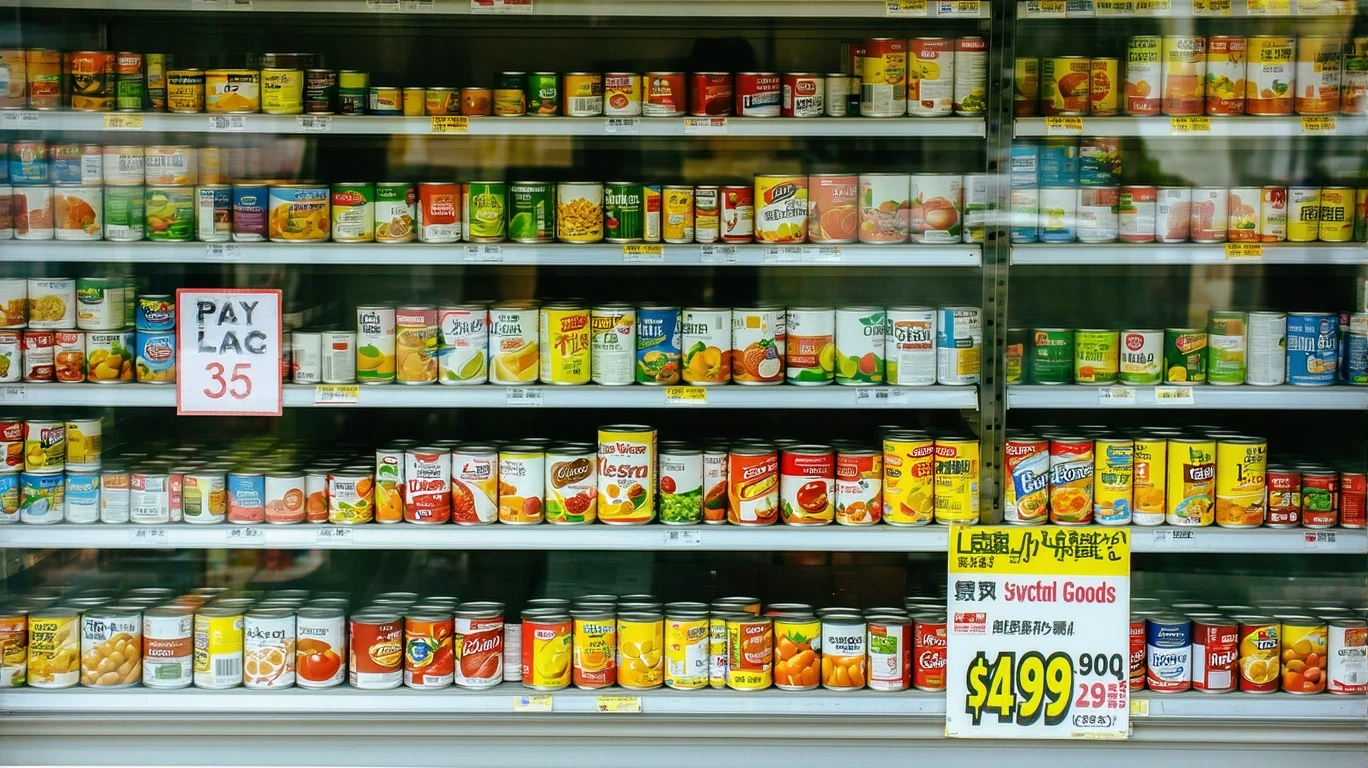
How Grocery Costs Feel in Covington
Grocery prices in Covington sit comfortably below the national baseline, reflecting the city’s regional price advantage across consumer goods. With a regional price parity index of 94—about 6% below the U.S. average—staple items tend to ring up lighter than in higher-cost metros. That doesn’t mean groceries feel cheap to everyone, though. For a household earning Covington’s median income of $53,770 per year, food spending still represents a meaningful share of the monthly budget, and the pressure varies widely depending on household size, store choice, and shopping habits.
Singles and younger professionals often notice grocery costs more acutely, not because prices are high, but because smaller households can’t leverage bulk discounts or split costs across multiple people. A week’s worth of fresh produce, proteins, and pantry staples can feel like a significant line item when you’re shopping for one. Couples have more flexibility—they can buy larger packages, plan meals around sales, and reduce per-serving costs without the waste risk that singles face. Families, meanwhile, deal with the highest absolute spending but also unlock the most opportunity for economies of scale, especially when they shop strategically across store tiers.
What makes Covington distinct is the density and accessibility of grocery options. The city’s high food and grocery establishment density means residents aren’t locked into a single store or format. Walkable pockets and mixed-use neighborhoods support multiple shopping trips without requiring a car for every errand, and the variety of retailers—from discount grocers to mid-tier chains to premium markets—gives households real control over how much they spend. That structural flexibility matters more than any single price point, because it allows people to adjust their shopping behavior to match their budget and priorities.
Grocery Price Signals (Illustrative)
These prices illustrate how staple items tend to compare locally—not a full shopping list. They’re derived estimates based on Covington’s regional price environment, adjusted from national baselines, and should be understood as directional anchors rather than checkout-accurate figures. Actual prices vary by store tier, brand, package size, and weekly promotions.
| Item | Illustrative Price |
|---|---|
| Bread (per pound) | $1.72/lb |
| Cheese (per pound) | $4.45/lb |
| Chicken (per pound) | $1.90/lb |
| Eggs (per dozen) | $2.55/dozen |
| Ground Beef (per pound) | $6.29/lb |
| Milk (per half-gallon) | $3.80/half-gallon |
| Rice (per pound) | $1.01/lb |
Protein costs—chicken and ground beef—represent the largest variable in most grocery budgets, and Covington’s prices reflect the regional advantage. Chicken under two dollars per pound and ground beef in the mid-six-dollar range are workable for families who plan meals around sales and buy in bulk. Eggs and milk, both household staples, sit in a range that feels reasonable but not bargain-bin, meaning households still need to pay attention to store circulars and seasonal shifts. Pantry staples like rice and bread remain low-cost anchors, the kind of items that stretch budgets when households cook from scratch rather than relying on convenience foods.
The real story isn’t in any single item—it’s in how these prices interact with household size and shopping frequency. A family buying five pounds of chicken, two gallons of milk, and three dozen eggs in a single trip sees meaningful savings at a discount grocer compared to a premium market. A single person buying smaller quantities more frequently may not notice the same percentage difference, but they’ll still feel the impact of store choice over time. The key insight is that Covington’s grocery environment rewards intentionality: knowing which stores carry which items at better prices, and being willing to make an extra stop when it makes sense.
Store Choice & Price Sensitivity
Grocery price pressure in Covington varies more by store tier than by any single “average” experience. The city’s retail landscape includes discount grocers, mid-tier chains, and premium markets, and the gap between them can represent a 20–30% swing in total spending for the same basket of goods. Discount stores anchor the low end, offering private-label staples, bulk proteins, and no-frills produce at prices that make a real difference for cost-conscious households. Mid-tier chains—stores such as Kroger or regional equivalents—balance selection, quality, and price, appealing to households that want variety without premium markup. Premium markets, whether specialty grocers or upscale chains, charge more for organic options, prepared foods, and curated selection, serving households that prioritize convenience or specific dietary preferences.
For families and larger households, the discount-to-mid-tier comparison is where the most meaningful savings live. A family of four that shifts even half their shopping to a discount grocer—buying proteins, dairy, and pantry staples there while filling in fresh produce and specialty items at a mid-tier store—can reduce monthly food costs without sacrificing meal quality. Singles and couples, who buy smaller quantities and shop more frequently, may find the time cost of multiple stops less appealing, but they still benefit from knowing which stores offer better prices on the items they buy most often.
Covington’s walkable pockets and high grocery density make store-switching more practical than in car-dependent suburbs where a single weekly trip is the norm. Residents who live near mixed-use corridors can stop at a discount grocer on the way home from work, pick up fresh produce at a mid-tier chain on the weekend, and still access a premium market when they want something specific—all without adding significant time or transportation cost. That flexibility is a structural advantage, and it’s one that households can leverage to manage cost structure more actively than in cities where grocery access is sparse or single-format.
What Drives Grocery Pressure Here
Income is the primary lens through which grocery costs feel tight or manageable. At Covington’s median household income of $53,770 per year, food spending represents a larger percentage of take-home pay than it would for higher-earning households, even with below-average prices. A family spending illustratively in the range typical for two adults—before accounting for children—might allocate 10–15% of gross income to groceries, and that share rises quickly when kids are added to the household. Singles earning below the median feel the pressure more acutely, because their absolute spending doesn’t drop proportionally with household size; they’re still buying many of the same staples, just in smaller (and often less economical) packages.
Household size amplifies sensitivity in both directions. Larger families face higher absolute costs but unlock bulk-buying advantages and per-serving efficiencies that singles and couples can’t access without waste risk. A family that buys a ten-pound bag of chicken thighs, a five-pound block of cheese, and a case of canned goods pays less per unit than someone buying single servings, but they also need the upfront cash flow and storage capacity to make that work. Smaller households, meanwhile, often pay a “convenience tax” for pre-portioned items, smaller packages, and more frequent trips, all of which add friction to cost management.
Regional distribution and access patterns also shape the grocery experience in Covington. The city’s proximity to Cincinnati and its position within a regional food distribution network mean that supply chains are efficient and product variety is strong. Seasonal variability—particularly for fresh produce—still exists, but it’s less extreme than in more isolated markets. Households that cook seasonally and adjust their shopping to what’s abundant (root vegetables in winter, stone fruits in summer) can smooth out cost spikes, but those who buy the same items year-round will notice price swings, especially for out-of-season produce and imported goods.
Practical Ways People Manage Grocery Costs
The most effective cost-management strategies in Covington revolve around store choice, meal planning, and shopping frequency. Households that split their shopping between a discount grocer for staples and a mid-tier chain for perishables and variety consistently spend less than those who default to a single store for convenience. This doesn’t require extreme couponing or hours of planning—it’s about knowing which stores carry which items at better prices and being willing to make an extra stop when the savings justify the time.
Meal planning reduces waste and impulse purchases, two of the biggest drivers of grocery overspending. Families that plan a week’s worth of dinners around proteins on sale, build lunches from dinner leftovers, and keep a running pantry inventory avoid the “nothing to eat” trap that leads to last-minute takeout or expensive convenience items. Singles and couples benefit from smaller-scale planning: buying versatile ingredients that work across multiple meals (a rotisserie chicken, a bag of rice, a head of lettuce) rather than single-use items that spoil before they’re used.
Shopping frequency matters, but the optimal cadence depends on household size and storage capacity. Larger families often do better with one major shopping trip per week, supplemented by a midweek produce run, because it minimizes impulse purchases and allows for bulk buying. Smaller households may find that two or three smaller trips per week—enabled by Covington’s walkable grocery access—reduce waste and keep perishables fresher, even if per-trip prices are slightly higher. The key is matching shopping rhythm to consumption patterns, not defaulting to a schedule that doesn’t fit.
Other practical levers include buying store brands for pantry staples (where quality differences are minimal), avoiding pre-cut or pre-prepped items that carry a labor markup, and cooking from scratch when time allows. None of these strategies require sacrifice or deprivation—they’re about making intentional choices that align spending with priorities and reduce the friction between cost and convenience.
Groceries vs Eating Out (Directional)
The tradeoff between cooking at home and eating out is less about absolute cost and more about time, convenience, and household rhythm. Cooking at home consistently costs less per meal than restaurant dining or takeout, but the gap narrows when you account for the time cost of shopping, prep, and cleanup—especially for smaller households where economies of scale are limited. A single person cooking dinner for one might spend less than ordering delivery, but the per-serving savings are smaller than for a family of four making the same meal, and the time investment feels heavier when it’s just for yourself.
Families and couples who cook regularly at home see the most meaningful cost advantage, particularly when they plan meals around grocery sales and use leftovers strategically. A home-cooked dinner might cost a family illustratively a fraction of what the same meal would cost at a mid-tier restaurant, and that gap compounds over the course of a month. Singles and younger professionals, meanwhile, often find that a mix of home cooking and selective dining out—cooking simple meals during the week, eating out on weekends—offers a better balance between cost control and lifestyle flexibility.
Covington’s food establishment density means that dining options are accessible and varied, which makes the tradeoff feel more immediate. When a quick meal is a short walk away, the friction of cooking at home increases, especially after a long workday. The households that manage this tension best are the ones who treat dining out as a deliberate choice rather than a default, reserving it for social occasions or nights when time is genuinely scarce, and relying on home cooking as the baseline. That shift in framing—from “cooking saves money” to “dining out is the exception”—makes cost management feel less like deprivation and more like intentional living.
FAQs About Grocery Costs in Covington (2026)
Is it cheaper to shop in bulk in Covington? Bulk buying reduces per-unit costs, especially for proteins, dairy, and pantry staples, but it requires upfront cash flow and storage space. Larger households benefit most; singles and couples should focus on items they’ll actually use before spoilage.
Which stores in Covington are best for low prices? Discount grocers anchor the low end for staples and bulk items, while mid-tier chains balance price and selection. The best strategy is splitting shopping between tiers based on item type rather than defaulting to a single store.
How much more do organic items cost in Covington? Organic products typically carry a premium, with the gap widening for fresh produce and dairy. Households that prioritize organic should focus on high-impact items (berries, leafy greens) and buy conventional for lower-priority staples to manage costs.
How do grocery costs for two adults in Covington tend to compare to nearby cities? Covington’s below-average regional price environment means groceries generally cost less than in higher-RPP metros, but the difference depends on store choice and shopping habits. The structural advantage is access and variety, not just baseline prices.
How do households in Covington think about grocery spending when cooking at home? Most households treat groceries as a controllable cost category, adjusting store choice, meal planning, and shopping frequency to match their budget. The flexibility to shop across multiple stores without car dependency gives residents more control than in less accessible cities.
Does Covington’s walkability make grocery shopping easier? Yes—walkable pockets and high grocery density mean residents can make multiple shopping trips without relying on a car for every errand. That flexibility supports more frequent, smaller purchases and reduces the pressure to do one large weekly trip.
Are there seasonal grocery price swings in Covington? Produce prices fluctuate with seasonality, but Covington’s position within a regional distribution network moderates extreme swings. Households that cook seasonally and adjust their shopping to what’s abundant can smooth out cost variability over the year.
How Groceries Fit Into the Cost of Living in Covington
Groceries represent a meaningful but manageable share of household spending in Covington, sitting below housing and comparable to utilities in terms of monthly expenses for most families. The city’s below-average price environment and high grocery density create favorable conditions, but the actual pressure households feel depends on income, household size, and shopping behavior. Unlike housing—which locks in a fixed monthly cost—or utilities—which fluctuate with weather and usage—groceries remain one of the few budget categories where households can adjust spending week to week through intentional choices.
That flexibility is both an advantage and a responsibility. Households that treat grocery spending as a passive expense—defaulting to the nearest store, buying without planning, and ignoring price differences—will spend more than those who engage actively with store choice, meal planning, and shopping rhythm. The difference isn’t trivial: over the course of a year, strategic shopping can represent hundreds of dollars in savings, even in a below-average price environment like Covington’s. For a complete picture of how groceries interact with other fixed and variable costs—and how they fit into a realistic monthly budget—see A Month of Expenses in Covington: What It Feels Like.
The key insight is that grocery costs in Covington are less about the prices themselves and more about the structural environment that shapes how people shop. High grocery density, walkable access, and a range of store tiers give residents real control over their food spending, but only if they’re willing to use that control. Households that do—splitting shopping between discount and mid-tier stores, planning meals around sales, and cooking at home as the default—find that groceries feel manageable even on a modest income. Those who don’t may wonder why their food costs feel higher than expected, even in a city where prices run below the national average.
How this article was built: In addition to public economic data, this article incorporates location-based experiential signals derived from anonymized geographic patterns—such as access density, walkability, and land-use mix—to reflect how day-to-day living actually feels in Covington, KY.
—