
Can you live in Coral Springs without a car? For most people, the honest answer is no—but the full picture is more textured than that. Coral Springs sits in the heart of South Florida’s suburban sprawl, where daily life is built around driving. Public transit exists, but it plays a supporting role rather than a central one. Whether you’re weighing a move or trying to understand how transportation shapes life here, the key is knowing where transit actually works, where it falls short, and how mobility decisions ripple into housing, time, and daily logistics.
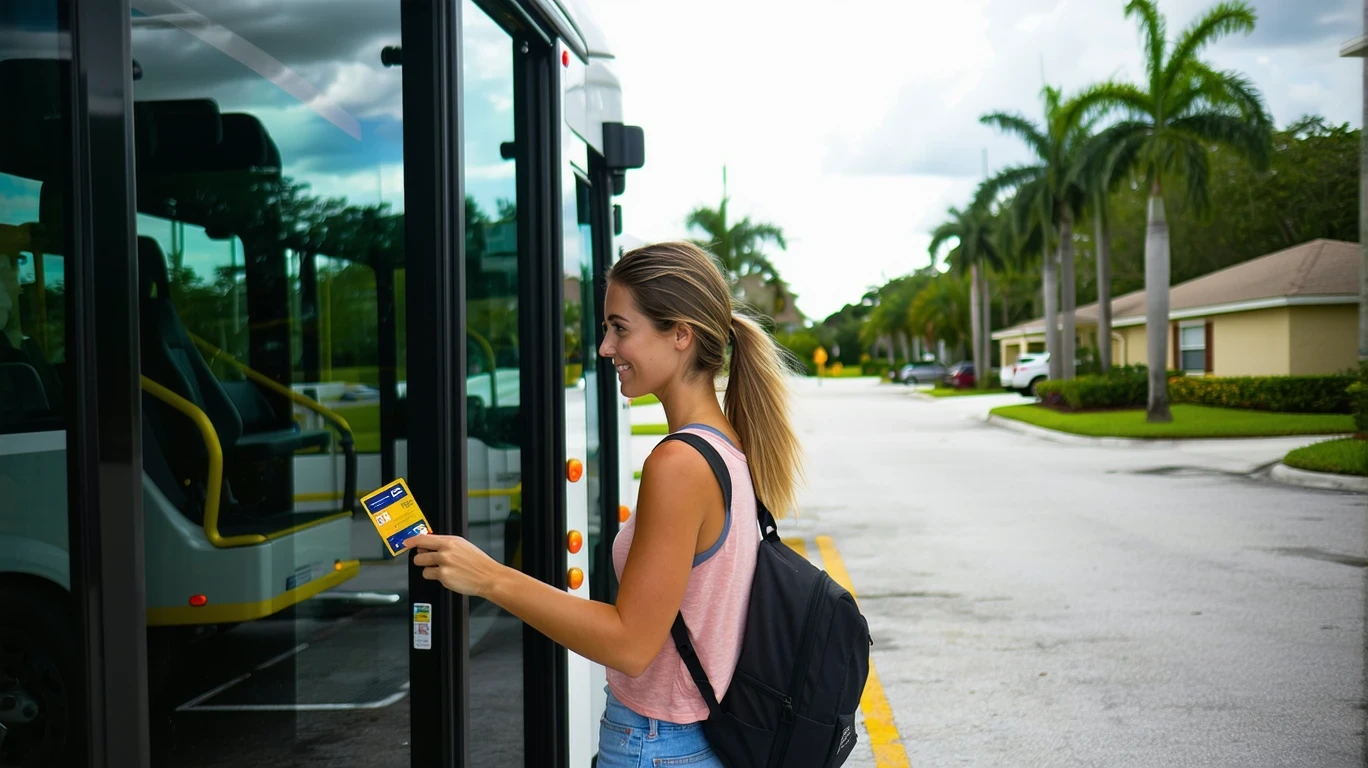
How People Get Around Coral Springs
Coral Springs is a car-first city. The layout reflects decades of suburban development: residential neighborhoods branch off main corridors, commercial centers cluster along arterials, and distances between home, work, and errands are structured for driving. Most households own at least one vehicle, and many own two. Parking is abundant, roads are wide, and the rhythm of daily life assumes you’ll drive to get where you need to go.
That said, the city isn’t a mobility desert. Bus service is present, and certain corridors support a mix of pedestrian activity and transit access. Some pockets of Coral Springs feature higher pedestrian-to-road ratios, meaning sidewalks, crosswalks, and walkable stretches exist—particularly near shopping centers, parks, and denser residential clusters. But these are pockets, not the norm. Outside those areas, walking or biking for daily errands quickly becomes impractical.
The average commute in Coral Springs is 29 minutes, and nearly half of all workers face what’s classified as a long commute. Only 8.4% of residents work from home. For the majority, getting around means time on the road, and that time is almost always spent behind the wheel.
Public Transit Availability in Coral Springs
Public transit in Coral Springs often centers around systems such as Broward County Transit, which provides bus service throughout the region. Routes connect Coral Springs to neighboring cities, employment centers, and regional hubs, but coverage within the city itself is uneven. Transit works best along major corridors—places where commercial activity, higher-density housing, and consistent ridership overlap. In residential neighborhoods farther from these arteries, service thins out or disappears entirely.
Bus stops are present, but frequency and span of service matter as much as availability. If you’re commuting during peak hours to a destination along a well-served route, transit can be viable. If your schedule is irregular, your job is off the main corridors, or you need to make multiple stops in a day, the system’s limitations become clear. There’s no rail service in Coral Springs, which means no rapid transit option for longer regional commutes.
Transit in Coral Springs is a tool, not a system. It’s useful for specific trips, specific people, and specific schedules—but it’s not a replacement for driving for most households.
Driving & Car Dependence Reality
Driving in Coral Springs isn’t just convenient—it’s structurally necessary. The city’s layout, the distance between residential and commercial zones, and the limited reach of public transit all point in the same direction: you need a car to function here. Grocery stores, schools, medical offices, and workplaces are rarely within walking distance of home. Even when they are, South Florida’s heat and humidity make walking or waiting outdoors a test of endurance, especially in summer.
Parking is plentiful and usually free, which removes one of the friction points that makes driving costly or stressful in denser cities. Traffic exists, particularly during morning and evening peaks on major roads like University Drive or Sample Road, but it’s manageable compared to downtown Miami or Fort Lauderdale. For most residents, the tradeoff is time, not money or stress.
Car dependence also shapes housing decisions. Proximity to work, schools, or shopping becomes less about walkability and more about drive time. A 15-minute commute by car opens up far more of the city than a 15-minute walk ever could. That flexibility is an advantage—but it also means transportation costs and time are baked into daily life, whether you’re filling the tank or sitting in traffic.
Commuting Patterns & Daily Mobility
Commuting in Coral Springs tends to follow one of two patterns: local trips within Broward County, or longer hauls to Miami-Dade or Palm Beach County. For those working locally, commutes are often straightforward—20 to 30 minutes by car, predictable routes, minimal complexity. For those commuting to Miami or beyond, the calculus shifts. Drive times stretch, traffic becomes less predictable, and the cost of commuting—both in time and fuel—rises.
Many households also juggle multi-stop commutes: dropping kids at school, stopping for groceries, picking up prescriptions. Transit doesn’t accommodate that kind of complexity well. Driving does. That’s why even households that could technically use transit for a single daily trip often choose not to—they need the flexibility a car provides for everything else.
Remote work is relatively rare here, with only 8.4% of workers staying home. For the rest, mobility is a daily reality, and the structure of that mobility is almost always car-based.
Who Transit Works For — and Who It Doesn’t
Transit in Coral Springs works best for a narrow slice of residents: those living near major corridors, commuting to destinations along bus routes, and working schedules that align with service hours. Single adults without children, renters in denser apartment complexes near arterials, and workers with flexible start times are the most likely to make transit work.
Transit doesn’t work well for families managing school drop-offs, households living in quieter residential neighborhoods, or anyone whose job requires travel to multiple sites during the day. It also doesn’t work for people who value time predictability—buses run on schedules, but delays, missed connections, and longer trip times are part of the reality.
Renters in Coral Springs often have more flexibility to choose transit-adjacent housing, but even then, the city’s layout limits how much transit can replace driving. Homeowners, especially those in single-family neighborhoods, are almost universally car-dependent. That’s not a failure of planning—it’s the structure of the place.
Transportation Tradeoffs in Coral Springs
Choosing between transit and driving in Coral Springs isn’t really a choice for most people—it’s a constraint. Driving offers control, flexibility, and speed. You leave when you want, stop where you need to, and adjust on the fly. Transit offers lower direct costs and removes the need to own and maintain a vehicle, but it comes with longer trip times, limited coverage, and less flexibility.
For households that can make transit work, the tradeoff is time for money. For everyone else, the tradeoff is between driving and not being able to get where they need to go. That’s the reality of living in a car-oriented city.
Biking exists in some pockets, particularly near parks or along certain corridors, but it’s not a primary mode of transportation for most residents. The heat, the distances, and the lack of continuous bike infrastructure all limit its practicality for daily commuting or errands.
FAQs About Transportation in Coral Springs (2026)
Is public transit usable for daily commuting in Coral Springs?
It depends on where you live and where you work. If you’re near a major corridor and commuting to a destination along a bus route, transit can work. For most residents, though, transit is too limited in coverage and frequency to replace driving for daily commuting.
Do most people in Coral Springs rely on a car?
Yes. The city’s layout, the distance between residential and commercial areas, and the limited reach of public transit mean that most households depend on at least one vehicle. Many own two.
Which areas of Coral Springs are easiest to live in without a car?
Areas near major corridors like University Drive or Sample Road, particularly near shopping centers or denser apartment complexes, offer the best chance of reducing car dependence. Even there, most residents still drive.
How does commuting in Coral Springs compare to nearby cities?
Coral Springs has an average commute time of 29 minutes, which is typical for suburban Broward County. Nearly half of workers face long commutes, often because they’re traveling to Miami-Dade or Palm Beach County. Compared to cities with rail transit or denser cores, commuting here is more car-dependent and time-intensive.
Can you bike for errands in Coral Springs?
In some areas, yes—particularly near parks or along certain corridors where bike infrastructure exists. But biking isn’t practical for most residents due to distance, heat, and limited connectivity between neighborhoods and commercial zones.
How Transportation Fits Into the Cost of Living in Coral Springs
Transportation in Coral Springs isn’t just about where money goes—it’s about how the city works. Mobility shapes housing decisions, time budgets, and daily logistics. Living closer to work or along a transit corridor can reduce drive time, but it doesn’t eliminate the need for a car. Living farther out may offer more space or lower rent, but it increases commute length and fuel costs.
For most households, transportation is a fixed cost and a time cost. Gas prices, vehicle maintenance, insurance, and the hours spent commuting all add up. Those costs don’t appear on a rent statement, but they’re part of the real cost of living here.
If you’re trying to understand how transportation fits into your budget, the monthly budget breakdown offers numeric context. But the bigger picture is structural: Coral Springs is built for driving, and that shapes everything from where you live to how you spend your time. Understanding that reality—and planning for it—is the key to making transportation work in your favor.
How this article was built: In addition to public economic data, this article incorporates location-based experiential signals derived from anonymized geographic patterns—such as access density, walkability, and land-use mix—to reflect how day-to-day living actually feels in Coral Springs, FL.