
Is Coral Springs the kind of place you grow roots—or just pass through? That question tends to reveal itself not in a single moment, but in the rhythm of daily life: how you run errands, where your kids play, whether you feel like you’re settling in or just marking time. Coral Springs carries the emotional signature of a planned suburban city that delivers on comfort and green space, but asks you to meet it halfway when it comes to spontaneity and urban texture.
The city’s vibe reflects a tradeoff many South Florida families navigate consciously: prioritizing safety, parks, and a low-rise residential feel over the density and walkable variety found closer to urban cores. People who thrive here tend to be those who’ve made peace with car dependency, value outdoor access, and appreciate pockets of walkability without expecting it everywhere. Those who struggle often arrived hoping for something more urban, more transit-rich, or more textured in its day-to-day rhythms.
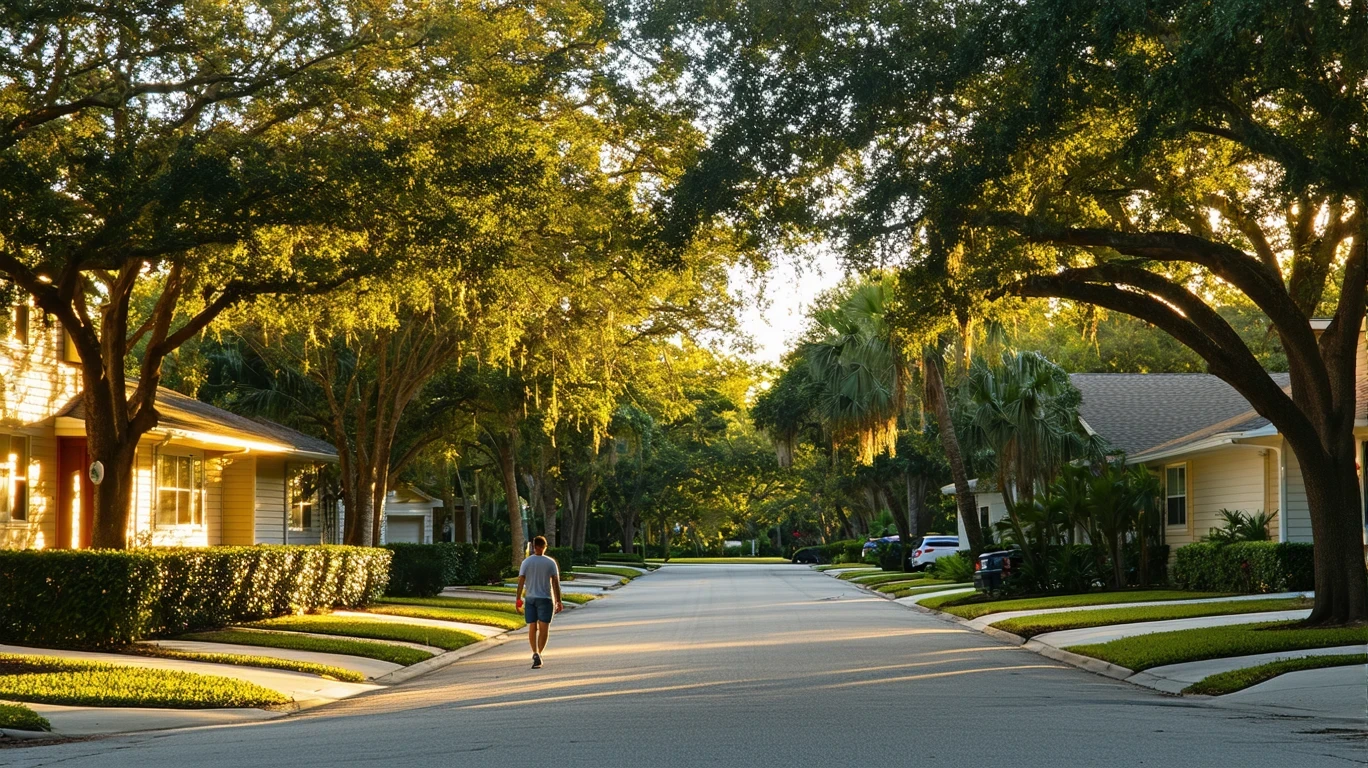
What Defines the Emotional Tone of Coral Springs
Coral Springs reads as a city built around family logistics and outdoor living. The infrastructure reflects this: playground density is notably high, park access is woven throughout the city, and green space feels integrated rather than incidental. Yet school density sits below typical thresholds, and healthcare access is limited to clinics rather than hospital facilities. The result is a place that works beautifully for certain household types—and feels incomplete to others.
The street-level experience varies depending on where you are. Some areas offer substantial pedestrian infrastructure, creating walkable pockets where errands and exercise overlap naturally. But the overall mobility texture remains car-oriented, with bus service available but no rail transit. Grocery access is strong along certain corridors, while food establishments cluster rather than distribute evenly. This creates a rhythm where some days feel effortless and others require deliberate planning.
What keeps surfacing in local sentiment is the sense that Coral Springs rewards intentionality. Families who actively use the parks, who build routines around the playgrounds, who appreciate the low-rise character and relative quiet—they tend to describe the city as exactly what they wanted. Those who expected urban conveniences within walking distance, or who underestimated how much driving shapes daily life, often feel a low-grade friction that doesn’t resolve.
Social Media Buzz in Coral Springs
In local online spaces—whether city-focused Facebook groups or regional South Florida discussions—Coral Springs tends to be described with a mix of pride and pragmatism. Residents often highlight what works: the parks, the sense of safety, the family-friendly infrastructure. But there’s also a recurring theme of managing expectations, particularly around errands, dining variety, and the need to leave the city for certain experiences.
“It’s a great place to raise kids, but you’re definitely driving to most things. The parks are fantastic, though—we’re outside almost every evening.”
“I love the green space here, but I miss being able to walk to dinner or grab coffee without getting in the car. It’s just not that kind of place.”
“Coral Springs feels safe and calm, which is exactly what we wanted after living closer to the city. The tradeoff is you plan your day around errands instead of just wandering.”
The tone isn’t dissatisfaction so much as recalibration. People who’ve lived here a few years tend to speak in terms of what the city is rather than what it isn’t—but newcomers often go through a period of adjusting expectations, particularly if they’re coming from denser, more walkable environments.
Local News Tone
Coverage of Coral Springs tends to frame the city through the lens of suburban evolution: how growth is managed, how amenities expand, and how residents negotiate between preserving the quiet character and adding conveniences. The emotional undertone is often one of careful stewardship rather than rapid transformation.
Typical themes that surface in local media include:
- “Community Debates What Growth Should Look Like”
- “New Amenities Arrive as Residential Character Holds Steady”
- “Families Weigh Convenience vs Calm in Suburban Planning”
- “Outdoor Spaces Remain Central to City Identity”
- “Residents Navigate Tradeoffs Between Local Access and Regional Proximity”
These aren’t declarations of crisis or celebration—they’re reflections of a city in ongoing conversation with itself about what kind of place it wants to be. The tone suggests a community that values stability but recognizes the tension between staying quiet and staying relevant.
Review-Based Public Perception
On platforms like Google Reviews, Yelp, and neighborhood forums, Coral Springs earns praise most consistently for its parks, safety, and family amenities. Complaints, when they appear, tend to focus on limited dining variety, the need to drive for most errands, and a lack of evening activity or nightlife.
Positive sentiment clusters around:
- Abundant and well-maintained parks
- Strong sense of community in family-oriented neighborhoods
- Quiet, low-rise residential character
- Access to outdoor recreation and green space
Frustrations tend to emerge around:
- Limited walkability outside certain pockets
- Corridor-based errands requiring car trips
- Lack of spontaneous dining or entertainment options
- Need to leave the city for hospital care or specialized services
The pattern is clear: people who arrived seeking suburban comfort with strong outdoor access tend to feel the city delivered. Those who hoped for urban texture, transit flexibility, or dense walkability often feel the city falls short—not because it’s poorly designed, but because it was designed for a different set of priorities.
Comparison to Nearby Cities
| Dimension | Coral Springs | Pembroke Pines | Boca Raton |
|---|---|---|---|
| Overall Vibe | Suburban calm with family focus | Larger, more sprawling suburban feel | Upscale, coastal-influenced lifestyle |
| Walkability | Pockets of pedestrian infrastructure | Car-oriented throughout | More walkable downtown areas |
| Outdoor Access | Integrated parks and green space | Parks present but less dense | Beach proximity adds dimension |
| Family Amenities | Strong playground density | Broader school infrastructure | More varied but pricier options |
| Dining & Errands | Corridor-clustered, requires planning | More dispersed commercial zones | Greater variety and density |
Coral Springs sits in an interesting middle ground. It’s quieter and more park-focused than Pembroke Pines, which sprawls across a larger footprint with more varied commercial development. But it lacks the coastal proximity and upscale dining texture of Boca Raton, which comes with a notably higher cost of entry. For families prioritizing outdoor space and a low-rise feel without paying Boca prices, Coral Springs often emerges as the pragmatic choice. For those seeking more walkable urban energy or beachside lifestyle, the city may feel too insulated.
What Locals Are Saying
“We moved here for the parks and the schools, and the parks have been even better than expected. The schools are fine, but the playgrounds are where our kids actually spend most of their time.”
“I work remotely, and Coral Springs is perfect for that—quiet, green, no distractions. But if I had to commute daily or wanted nightlife, I’d probably feel trapped.”
“It’s a car city, no question. But once you accept that, it’s actually pretty easy to navigate. Everything’s accessible, just not spontaneous.”
“I love the safety and the calm, but I do miss being able to walk to dinner. We drive everywhere, and that gets old sometimes.”
“Coral Springs feels like a place you choose deliberately. It’s not flashy, it’s not trendy, but it delivers on what it promises: space, parks, and a family-friendly rhythm.”
“We’re empty nesters now, and honestly, the city feels a little too quiet for us. It’s great if you have young kids, but there’s not much happening in the evenings.”
“The green space here is incredible. We’re outside constantly, and it never feels crowded. That alone makes it worth the tradeoffs.”
Does Coral Springs Feel Like a Good Fit?
Coral Springs doesn’t try to be all things to all people—and that clarity is part of its identity. It works beautifully for families who prioritize outdoor living, playground access, and a low-rise suburban rhythm. It rewards those who value green space integration and are comfortable building their routines around car-based errands. The city’s walkable pockets offer moments of pedestrian ease, but the overall texture remains car-dependent, with bus service available for those who need it.
The city tends to frustrate households seeking dense transit options, hospital-level healthcare locally, or the kind of spontaneous walkability that defines urban cores. It’s not a place where you wander into new restaurants on a whim or rely on rail transit for daily commutes. The housing tradeoffs reflect this: you’re paying for space, parks, and calm—not for urban texture or transit flexibility.
If you’re drawn to the idea of a planned suburban city with strong outdoor infrastructure and family amenities, Coral Springs likely delivers on what you’re imagining. If you’re hoping for a more urban experience with less driving and more density, the city may feel like a compromise you didn’t fully anticipate. Understanding where money goes in a car-dependent, suburban context helps clarify whether the rhythm here aligns with your priorities.
Ultimately, Coral Springs feels like a place you grow roots if you value what it offers—and pass through if you’re still searching for something more textured, more spontaneous, or more connected to transit and urban energy. The question isn’t whether it’s a happy city, but whether its particular set of tradeoffs matches the life you’re trying to build. Exploring what ‘enough’ actually means in this context can help you decide if this is the kind of place where you’ll feel at home—or just comfortable for now.
How this article was built: In addition to public economic data, this article incorporates location-based experiential signals derived from anonymized geographic patterns—such as access density, walkability, and land-use mix—to reflect how day-to-day living actually feels in Coral Springs, FL.
The perspectives shown reflect commonly expressed local sentiment and recurring themes in public discussion, rather than individual accounts.