
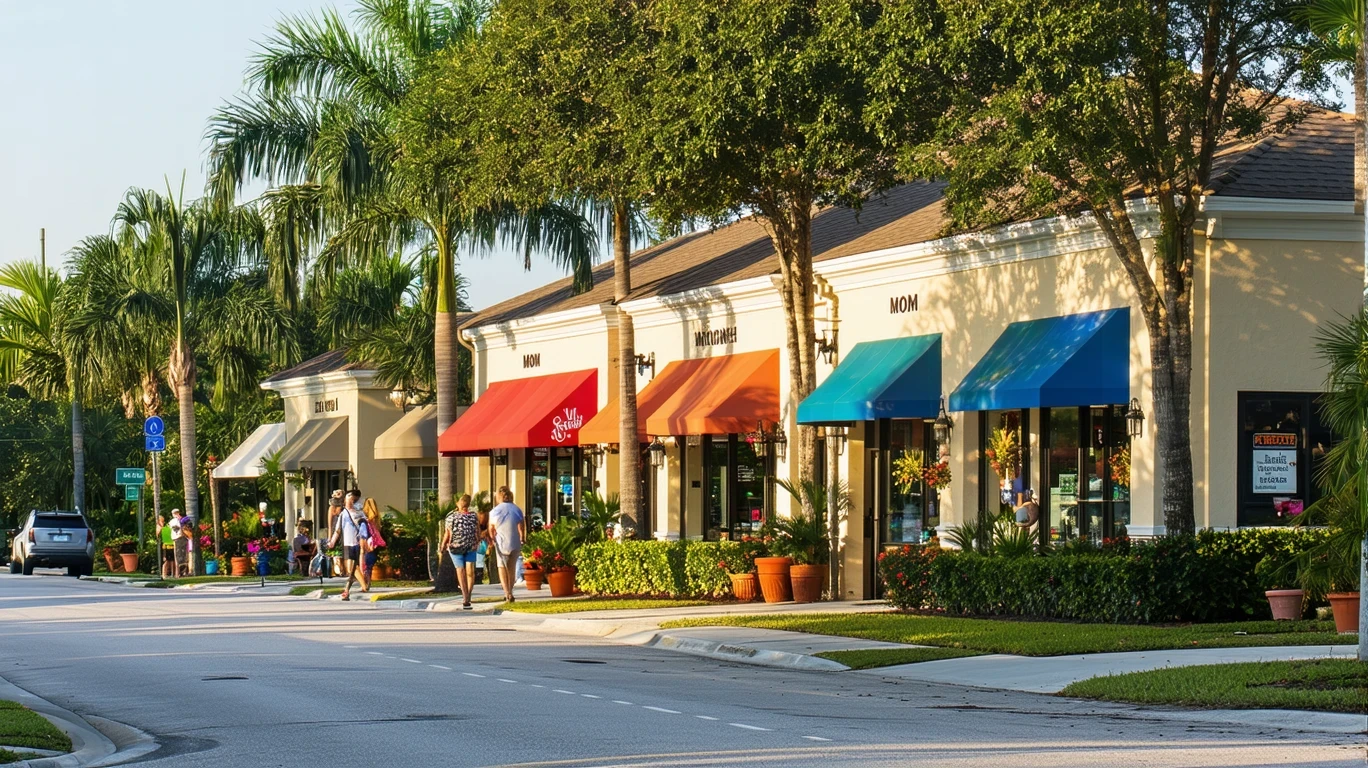
Coral Springs and Pembroke Pines sit just miles apart in Broward County, sharing the same metro economy, utility providers, and subtropical climate. Yet the cost experience in each city diverges in ways that matter deeply for households deciding where to settle in 2026. Both cities attract families, young professionals, and retirees drawn to South Florida’s warmth and job access, but the structure of expenses—particularly housing entry costs, family infrastructure, and healthcare access—creates distinct financial pressure points. This comparison explains where those differences show up, which households feel them most, and why the right choice depends on what costs dominate your day-to-day life, not which city appears “cheaper” on paper.
The decision between Coral Springs and Pembroke Pines isn’t about finding a universal winner. It’s about understanding how housing markets, commute patterns, and local amenities interact with your household’s specific sensitivities. A family prioritizing school access and playgrounds will weigh tradeoffs differently than a single professional focused on minimizing rent and commute friction. This article walks through each major cost category—housing, utilities, groceries, transportation, taxes—and explains how the same income can feel stable in one city and stretched in the other, depending on where your non-negotiable expenses land.
Both cities benefit from identical utility rates, gas prices, and regional price levels, which means the meaningful differences emerge not from price variation but from how housing stock, urban form, and infrastructure shape daily costs and time budgets. By the end of this comparison, you’ll understand which city aligns with your household’s financial structure and lifestyle priorities in 2026.
Housing Costs
Housing represents the most significant structural difference between Coral Springs and Pembroke Pines. Coral Springs’ median home value stands at $453,100, while Pembroke Pines’ median home value is $379,900. This gap creates a meaningful difference in entry barriers for buyers, particularly first-time purchasers assembling down payments and navigating mortgage qualification. The difference isn’t just about monthly payments—it’s about how much capital you need upfront and how that affects your ability to enter the ownership market at all.
For renters, the landscape looks nearly identical. Coral Springs’ median gross rent is $1,818 per month, compared to $1,787 per month in Pembroke Pines. This narrow gap means renters face similar ongoing obligations in either city, and the choice hinges more on neighborhood character, proximity to work, and access to amenities than on rent affordability. Renters sensitive to year-over-year lease renewal volatility will find comparable exposure in both markets, as neither city offers a structural rent advantage.
The housing stock in each city also shapes cost pressure differently. Coral Springs features predominantly low-rise residential development, which often translates to single-family homes with yards and associated maintenance responsibilities. Pembroke Pines shows a mixed building height profile, suggesting a broader range of housing types—including townhomes, condos, and mid-rise apartments—that can offer lower entry points and reduced upkeep burdens. For families seeking space and stability, Coral Springs’ housing form may feel more aligned with long-term plans, but that comes with higher purchase prices and ongoing maintenance exposure. For households prioritizing flexibility or lower entry costs, Pembroke Pines’ mixed housing stock provides more options.
Housing Takeaway: Pembroke Pines offers a lower entry barrier for ownership, making it more accessible for first-time buyers or households with limited savings. Coral Springs’ higher home values create steeper upfront costs but may appeal to families prioritizing established neighborhoods and single-family layouts. Renters face nearly identical costs in both cities, so the housing decision for non-owners hinges on neighborhood fit and commute convenience rather than rent levels.
Utilities and Energy Costs
Utility costs in Coral Springs and Pembroke Pines operate under identical rate structures. Both cities face electricity rates of 15.70¢/kWh and natural gas prices of $32.82/MCF. This means the primary driver of utility cost differences isn’t pricing—it’s how housing type, home age, and household behavior interact with South Florida’s extended cooling season. Triple-digit summer heat dominates the utility calendar, and air conditioning runs for most of the year, making cooling the single largest energy expense for nearly every household.
Housing stock differences between the two cities influence utility exposure in subtle but meaningful ways. Coral Springs’ low-rise, predominantly single-family housing often means larger conditioned square footage per household, which translates to higher baseline cooling costs. Older single-family homes, common in established suburban neighborhoods, may lack modern insulation or efficient HVAC systems, amplifying seasonal volatility. Pembroke Pines’ mixed building height profile suggests a broader range of housing types, including apartments and townhomes with shared walls that reduce cooling loads and stabilize monthly bills. For households in newer construction or multi-family units, utility costs tend to be more predictable and less sensitive to extreme heat days.
Household size and daily routines also shape utility pressure. Larger families in single-family homes face higher water heating, laundry, and cooling costs, particularly during summer months when kids are home and thermostats run continuously. Single adults or couples in smaller units experience lower baseline usage and less seasonal swing. Both cities benefit from the same regional utility programs, so opportunities for efficiency upgrades or time-of-use rate structures exist equally in either location, but the starting point—your home’s size, age, and layout—determines how much control you have over monthly bills.
Utility Takeaway: Utility rates are identical, so cost differences come down to housing type and household behavior. Coral Springs’ single-family housing stock tends to create higher cooling exposure, especially in older homes. Pembroke Pines’ mixed housing options—particularly apartments and townhomes—offer more predictable utility costs and lower baseline usage. Families in larger homes face more volatility; smaller households in newer construction experience more stability.
Groceries and Daily Expenses
Grocery and daily spending pressure in Coral Springs and Pembroke Pines reflects identical regional price levels, as both cities share the same cost baseline adjusted by regional price parity. Derived estimates for staples like bread ($1.84/lb), chicken ($2.11/lb), and eggs ($2.95/dozen) are identical in both cities. (Derived estimate based on national baseline adjusted by regional price parity; not an observed local price.) This means the meaningful differences in grocery costs come not from prices but from access patterns, store density, and how households navigate daily errands.
Both Coral Springs and Pembroke Pines show corridor-clustered food and grocery accessibility, with grocery density exceeding high thresholds in both cities. This suggests robust access to supermarkets and food retailers, but it also means households benefit from planning trips around major corridors rather than relying on walkable neighborhood stores. For families managing weekly shopping trips, this structure works well—big-box stores and regional chains offer competitive pricing and bulk options. For single adults or couples prioritizing convenience, the corridor-clustered model can introduce time costs and encourage more frequent, smaller trips that add up.
Dining out and convenience spending patterns also shape daily expense pressure. Both cities feature moderate food establishment density, meaning restaurants, cafes, and takeout options exist but aren’t saturated. Households sensitive to convenience spending creep—grabbing coffee, ordering delivery, or eating out frequently—will find similar temptations in either city. The key difference lies in how commute patterns and time budgets interact with these options. Longer commutes or car-dependent errands can push households toward convenience spending as a time-saving strategy, which quietly inflates monthly grocery and dining totals.
Grocery Takeaway: Prices are identical, and both cities offer strong grocery access along major corridors. The difference comes down to household habits and time budgets. Families with predictable shopping routines face similar costs in either city. Single adults or couples who rely on convenience spending may find their totals creeping higher if commute friction or errand logistics push them toward takeout and delivery. The structure of daily errands matters more than the prices themselves.
Taxes and Fees
Property taxes, sales taxes, and local fees in Coral Springs and Pembroke Pines operate under the same Broward County and Florida state frameworks, meaning the baseline tax structure is identical. Florida’s lack of state income tax benefits all residents equally, and sales taxes apply uniformly across both cities. The meaningful differences in tax and fee exposure come from housing values, homeownership duration, and the prevalence of HOA fees or special assessments tied to specific neighborhoods.
Property taxes in Florida are assessed based on home values, so Coral Springs’ higher median home value translates to higher annual property tax bills for homeowners. This creates a predictable, ongoing cost that compounds over time, particularly for households planning to stay long-term. Pembroke Pines’ lower median home value reduces this exposure, making ownership more affordable not just at purchase but throughout the life of the mortgage. For renters, property taxes are embedded in rent prices, but the pass-through effect is less direct and harder to isolate.
HOA fees and special assessments vary widely by neighborhood in both cities, but the prevalence of planned communities and managed developments in South Florida means many households face monthly or annual HOA obligations. These fees can bundle services like landscaping, trash collection, and shared amenities, but they also introduce another layer of predictable, non-negotiable cost. Households comparing specific neighborhoods should verify HOA structures and fee levels, as these can shift the total cost picture significantly—especially in newer developments or gated communities.
Tax and Fee Takeaway: The tax structure is identical, but Coral Springs’ higher home values create higher property tax exposure for owners. Pembroke Pines offers lower ongoing tax obligations due to lower home values, which matters most for long-term homeowners. HOA fees vary by neighborhood in both cities, so the total fee burden depends on where you live, not which city you choose. Renters face similar indirect tax exposure in either location.
Transportation and Commute Reality
Transportation costs in Coral Springs and Pembroke Pines begin with identical fuel pricing—both cities see gas prices of $2.77/gal—but the commute experience diverges based on job location, household schedules, and transit viability. Coral Springs reports an average commute time of 29 minutes, with 49.0% of workers facing long commutes and only 8.4% working from home. This suggests a car-dependent commute pattern for most households, with time and fuel costs accumulating steadily for those traveling to job centers in Fort Lauderdale, Miami, or other parts of the metro.
Pembroke Pines lacks specific commute data in the input feed, but both cities share similar mobility infrastructure signals: walkable pockets exist, bus service is present, and cycling infrastructure appears in limited areas. Neither city offers rail transit, so households relying on public transportation face bus-only options that may not align with all job locations or schedules. For households with flexibility—remote work, flexible hours, or jobs within the city—transportation costs remain manageable. For those commuting daily to distant job centers, the time and fuel burden becomes a significant, ongoing expense.
The experiential signals for both cities indicate high pedestrian-to-road ratios and moderate bike infrastructure, suggesting that some neighborhoods support walking or cycling for local errands. However, the corridor-clustered grocery and food accessibility pattern means most daily errands still require a car. Households with two working adults or families managing school drop-offs and extracurricular activities will likely need at least one vehicle, and possibly two, to navigate daily logistics efficiently.
Transportation Takeaway: Fuel prices are identical, and both cities rely heavily on cars for commuting and errands. Coral Springs’ documented commute times show meaningful time costs for workers traveling to regional job centers. Pembroke Pines likely faces similar patterns, though specific data is unavailable. Transit options exist but are limited to bus service, which may not serve all routes or schedules effectively. Households with remote work or flexible schedules face lower transportation pressure; those commuting daily to distant jobs face higher fuel and time costs in either city.
Cost Structure Comparison
Housing pressure dominates the cost experience in both Coral Springs and Pembroke Pines, but the nature of that pressure differs. Coral Springs’ higher home values create a steeper entry barrier for buyers, requiring larger down payments and higher mortgage qualifications. This front-loaded cost structure benefits households with accumulated savings or equity from prior home sales, but it limits access for first-time buyers or households with modest capital. Pembroke Pines’ lower home values reduce the entry barrier, making ownership more accessible and lowering ongoing property tax obligations. For renters, the cost experience is nearly identical, as median rents differ by only $31 per month—a gap too narrow to drive decision-making on its own.
Utilities introduce similar exposure in both cities due to identical rate structures, but housing stock differences create subtle variations in predictability. Coral Springs’ low-rise, single-family housing tends to amplify cooling costs, especially in older homes with less efficient insulation or HVAC systems. Pembroke Pines’ mixed building height profile offers more housing diversity, including apartments and townhomes that reduce cooling loads and stabilize monthly bills. Families in larger homes face more seasonal volatility; smaller households in newer construction experience more predictable utility costs.
Groceries and daily expenses operate under identical price levels, so the meaningful differences come from access patterns and household habits. Both cities feature corridor-clustered grocery access, which works well for planned shopping trips but introduces time costs for households juggling busy schedules. Convenience spending—takeout, delivery, coffee runs—can creep higher for households facing commute friction or errand logistics, but this pressure exists equally in both cities.
Transportation patterns matter more for households commuting to regional job centers. Coral Springs’ documented commute times show meaningful time costs, and Pembroke Pines likely faces similar patterns. Neither city offers rail transit, so car dependence is high, and fuel costs accumulate steadily for daily commuters. Households with remote work or flexible schedules face lower transportation pressure; those traveling long distances daily face higher fuel and time costs in either city.
The decision between Coral Springs and Pembroke Pines hinges on which costs dominate your household. For first-time buyers or households sensitive to upfront capital requirements, Pembroke Pines offers a lower entry barrier and reduced ongoing property tax exposure. For families prioritizing established neighborhoods and single-family layouts, Coral Springs’ housing stock may feel more aligned with long-term plans, despite higher purchase prices. Renters face similar costs in either city, so the choice comes down to neighborhood fit, commute convenience, and access to amenities rather than rent levels.
How the Same Income Feels in Coral Springs vs Pembroke Pines
Single Adult
For a single adult, rent becomes the first non-negotiable cost, and the $31 difference between cities barely registers. Flexibility emerges in transportation and convenience spending—remote work or a short commute keeps fuel costs low, while frequent takeout or dining out can quietly inflate monthly totals. Coral Springs’ slightly higher home values don’t affect renters directly, but the low-rise housing stock may limit apartment availability, pushing renters toward single-family rentals with higher utility exposure. Pembroke Pines’ mixed housing options offer more apartment and townhome choices, which stabilize utility costs and reduce time spent on home maintenance.
Dual-Income Couple
For a dual-income couple, housing entry costs become the primary decision point if ownership is the goal. Coral Springs’ higher home values require more upfront capital and create higher ongoing property tax obligations, which matters most for couples planning to stay long-term. Pembroke Pines’ lower entry barrier makes ownership more accessible and reduces ongoing tax exposure, freeing up cash flow for other priorities. If both partners commute, transportation costs accumulate quickly, and the time burden of long commutes can erode quality of life even when fuel costs remain manageable. Couples working remotely or with flexible schedules face lower transportation pressure and more control over daily spending.
Family with Kids
For families, housing costs and family infrastructure dominate the decision. Coral Springs’ higher home values create steeper entry costs, but the low-rise housing stock and high playground density appeal to families seeking space and outdoor access. Pembroke Pines offers stronger family infrastructure overall, with both schools and playgrounds meeting density thresholds, and the presence of a hospital adds healthcare access that Coral Springs lacks. Utility costs become less predictable in larger single-family homes, especially during summer months when cooling runs continuously. Families managing school drop-offs, extracurricular activities, and grocery trips face high car dependence in both cities, so transportation costs and time budgets become non-negotiable factors that shape daily logistics.
Decision Matrix: Which City Fits Which Household?
| Decision factor | If you’re sensitive to this… | Coral Springs tends to fit when… | Pembroke Pines tends to fit when… |
|---|---|---|---|
| Housing entry + space needs | You need to minimize upfront capital or prioritize long-term equity | You have accumulated savings and prioritize established single-family neighborhoods | You’re a first-time buyer or need lower entry costs and ongoing tax exposure |
| Transportation dependence + commute friction | You commute daily to regional job centers or manage multiple household schedules | Your job is local or you work remotely, reducing time and fuel costs | Your job is local or you work remotely, and you value mixed housing near transit corridors |
| Utility variability + home size exposure | You want predictable monthly bills and minimal seasonal volatility | You’re willing to manage higher cooling costs in exchange for single-family space | You prefer apartments or townhomes that reduce cooling loads and stabilize bills |
| Grocery strategy + convenience spending creep | You rely on planned shopping trips and want to avoid convenience spending | You have time to plan errands and access corridor-clustered stores efficiently | You have time to plan errands and access corridor-clustered stores efficiently |
| Fees + friction costs (HOA, services, upkeep) | You want to minimize ongoing obligations beyond rent or mortgage | You’re willing to manage higher property taxes and potential HOA fees for neighborhood amenities | You prioritize lower property taxes and want flexibility in housing type and fee structures |
| Time budget (schedule flexibility, errands, logistics) | You juggle work, school, and household logistics with limited flexibility | You have schedule flexibility and can absorb longer commutes or errand trips | You value mixed housing options and hospital access that reduce healthcare and logistics friction |
Lifestyle Fit
Coral Springs and Pembroke Pines share similar suburban character, but subtle differences in infrastructure and amenities shape daily life in meaningful ways. Both cities feature walkable pockets with high pedestrian-to-road ratios, suggesting that some neighborhoods support walking for local errands, though car dependence remains the norm for most households. Coral Springs shows park density exceeding high thresholds, with water features present, creating strong outdoor access for families and active residents. Pembroke Pines also offers integrated green space access, but the presence of a hospital facility adds a layer of healthcare convenience that Coral Springs lacks—clinics are available, but routine or urgent care requiring hospital services means traveling outside the city.
Family infrastructure differs notably between the two cities. Pembroke Pines shows both schools and playgrounds meeting density thresholds, creating a more robust family-oriented environment for households with children. Coral Springs features high playground density but lower school density, which may require families to navigate school choice or longer commutes to preferred schools. For families prioritizing access to parks, playgrounds, and schools within a short distance, Pembroke Pines offers a more integrated family infrastructure. For families prioritizing outdoor space and recreational access, Coral Springs’ high park density and water features provide strong amenities.
Urban form also shapes the lifestyle experience. Coral Springs’ low-rise building character creates a more uniform suburban feel, with predominantly single-family homes and lower-density neighborhoods. Pembroke Pines’ mixed building height profile introduces more housing diversity, including apartments, townhomes, and mid-rise developments that create denser pockets and more varied neighborhood character. This mixed form can feel more dynamic for households seeking walkable access to services, but it also means more variation in neighborhood aesthetics and noise levels. Both cities feature mixed residential and commercial land use, so daily errands and services are accessible by car, but neither city offers the walkable, urban density that eliminates car dependence entirely.
Quick Facts: Coral Springs’ park density exceeds high thresholds, offering strong outdoor access for active families. Pembroke Pines features a hospital facility, providing local healthcare access that Coral Springs lacks.
Frequently Asked Questions
Is Coral Springs or Pembroke Pines more affordable for first-time homebuyers in 2026?
Pembroke Pines offers a lower entry barrier for first-time buyers due to its lower median home value of $379,900, compared to Coral Springs’ $453,100. This difference reduces the down payment requirement and lowers ongoing property tax obligations, making ownership more accessible for households with limited savings. Renters face nearly identical costs in both cities, so the affordability advantage for buyers is specific to the purchase phase, not ongoing monthly expenses.
How do utility costs compare between Coral Springs and Pembroke Pines in 2026?
Utility rates are identical in both cities—15.70¢/kWh for electricity and $32.82/MCF for natural gas—so cost differences come from housing type and household behavior. Coral Springs’ low-rise, single-family housing tends to create higher cooling exposure, especially in older homes. Pembroke Pines’ mixed housing options, including apartments and townhomes, offer more predictable utility costs and lower baseline usage. Families in larger homes face more seasonal volatility; smaller households in newer construction experience more stability.
Which city is better for families with kids in Coral Springs vs Pembroke Pines in 2026?
Pembroke Pines offers stronger family infrastructure overall, with both schools and playgrounds meeting density thresholds, plus the presence of a hospital for healthcare access. Coral Springs features high playground density and exceptional park access, but lower school density may require families to navigate school choice or longer commutes. The decision depends on whether your household prioritizes integrated family amenities and healthcare access (Pembroke Pines) or outdoor space and recreational access (Coral Springs).
Do Coral Springs and Pembroke Pines have similar commute costs in 2026?
Fuel prices are identical at $2.77/gal, and both cities rely heavily on cars for commuting and errands. Coral Springs reports an average commute time of 29 minutes, with 49.0% of workers facing long commutes. Pembroke Pines lacks specific commute data, but both cities share similar transit infrastructure—bus service only, no rail—so car dependence is high. Households with remote work or flexible schedules face lower transportation pressure; those commuting daily to regional job centers face higher fuel and time costs in either city.
Are grocery and daily expenses cheaper in Coral Springs or Pembroke Pines in 2026?
Grocery prices are identical in both cities, as they share the same regional price baseline. Both cities feature corridor-clustered grocery access with high grocery density, so the meaningful differences come from household habits and time budgets. Families with predictable shopping routines face similar costs in either city. Single adults or couples who rely on convenience spending—takeout, delivery, coffee runs—may find their totals creeping higher if commute friction or errand logistics push them toward convenience options. The structure of daily errands matters more than the prices themselves.
Conclusion
Coral Springs and Pembroke Pines offer distinct cost structures that shape the financial experience for different households in 2026. Pembroke Pines provides a lower entry barrier for homeownership, reduced property tax exposure, and stronger family infrastructure, making it a better fit for first-time buyers, families with children, and households prioritizing healthcare access. Coral Springs’ higher home values create steeper upfront costs but appeal to families seeking established single-family neighborhoods, exceptional park access, and outdoor amenities. Renters face nearly identical costs in both cities, so the decision hinges on neighborhood fit, commute convenience, and access to services rather than rent levels.
The right choice depends on which costs dominate your household and where your non-negotiable expenses land. If upfront capital and ongoing property taxes are primary concerns, Pembroke Pines offers clear advantages. If you prioritize single-family space, outdoor access, and established neighborhoods, Coral Springs aligns better with those goals. Both cities share identical utility rates, gas prices, and regional price levels, so the meaningful differences emerge from housing stock, family infrastructure, and how daily logistics interact with your time and money budgets. Understanding where cost pressure shows up—not just how much it adds up to—clarifies which city fits your household’s financial structure and lifestyle priorities in 2026.
How this article was built: In addition to public economic data, this article incorporates location-based experiential signals derived from anonymized geographic patterns—such as access density, walkability, and land-use mix—to reflect how day-to-day living actually feels in Coral Springs, FL.