
Do you actually need a car to live in Coon Rapids? The answer depends less on whether transit exists and more on how you structure your daily life. Coon Rapids offers rail service and notable cycling infrastructure in parts of the city, but the reality of getting around here is shaped by sparse grocery and food access, sprawling residential zones, and a layout that rewards flexibility. For many households, a car isn’t just convenient—it’s the tool that makes errands, multi-stop days, and suburban distances manageable.
Understanding transportation options in Coon Rapids means recognizing that mobility here operates on two tracks: a rail-supported corridor system that works well for linear commutes to specific destinations, and a car-dependent structure that dominates daily logistics. Newcomers often assume that rail access equals walkability or that bike lanes replace the need for driving. In practice, Coon Rapids rewards those who can drive for groceries, errands, and flexibility, even if they use transit for work trips.
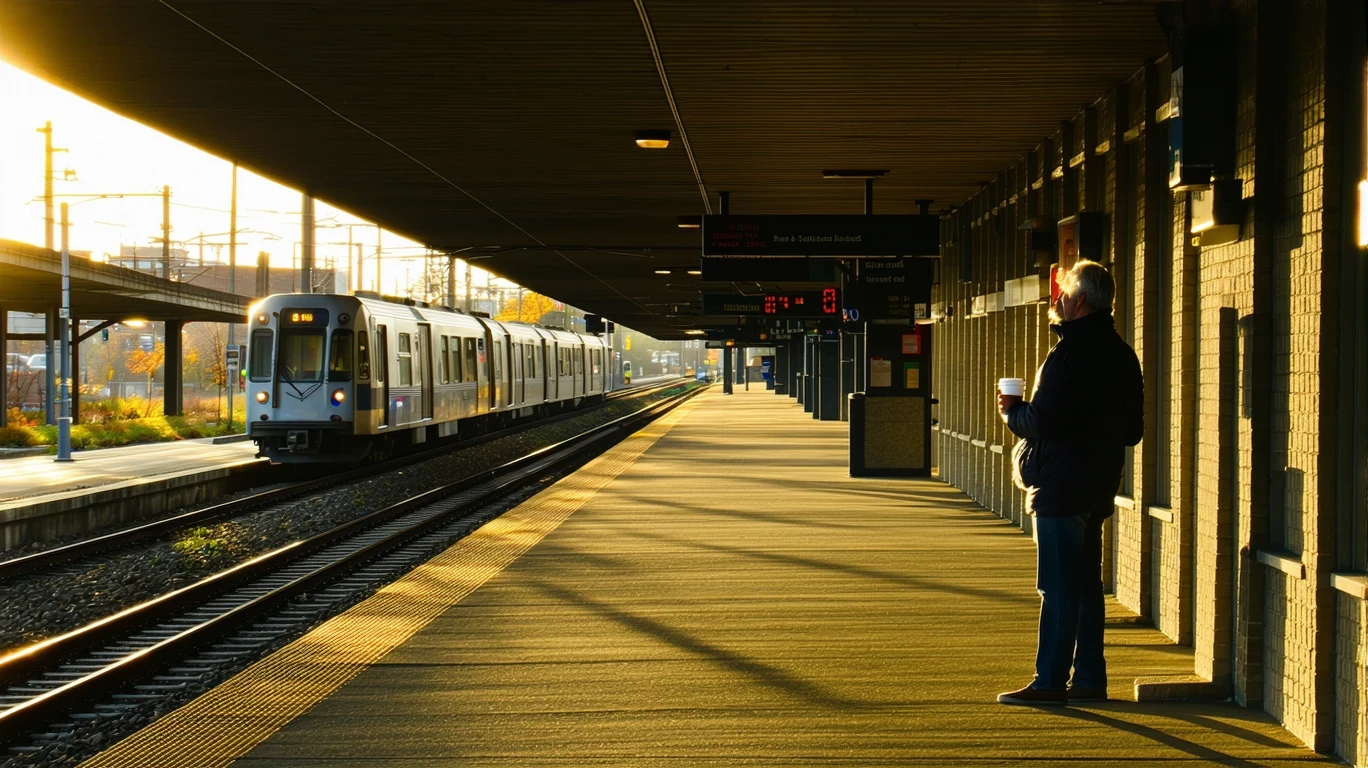
How People Get Around Coon Rapids
Most residents in Coon Rapids rely on a car as their primary tool for daily mobility. The city’s layout—characterized by residential neighborhoods separated from commercial corridors—means that even short errands often require driving. While rail service is present and cycling infrastructure is notably developed in certain areas, the sparse distribution of food and grocery establishments makes car-free living logistically challenging for most household types.
What surprises many newcomers is that Coon Rapids has both walkable pockets and car-dependent sprawl. The pedestrian-to-road ratio in some areas supports walking, and bike infrastructure exceeds typical suburban standards, but these features don’t translate into transit-only viability. The city’s structure rewards those who can combine modes: biking to a rail station, driving to a park-and-ride, or walking within a neighborhood while still owning a car for weekly shopping and appointments.
The typical commute here averages 24 minutes, with 33.6% of workers facing longer commutes. Only 4.2% work from home, meaning the vast majority of residents are moving through the city or beyond it daily. That movement is overwhelmingly car-based, even for those who live near transit.
Public Transit Availability in Coon Rapids
Public transit in Coon Rapids includes rail service, which provides a structured option for commuters traveling to and from specific regional destinations. Rail works best for residents living near stations and commuting along established corridors. For these households, transit offers predictability and eliminates parking concerns at the destination.
However, rail service in Coon Rapids functions as a commute tool, not a daily mobility solution. Coverage is corridor-based, meaning that access depends heavily on where you live relative to the line. Residents in peripheral neighborhoods or areas outside walking distance from stations will find transit impractical for routine trips. Late-hour service, weekend frequency, and coverage gaps further limit transit’s role in daily life.
Bus service may supplement rail in some areas, but the overall transit network is not designed to replace car ownership. For errands, appointments, and multi-stop days, transit becomes a time-intensive option that most households avoid in favor of driving.
Driving & Car Dependence Reality
Driving is the default mode of transportation in Coon Rapids, not because transit is absent, but because the city’s structure makes cars essential for daily logistics. Grocery stores, medical offices, schools, and retail are distributed across corridors and commercial zones that are difficult to reach on foot or by bike, even in areas with pedestrian infrastructure.
Parking is generally abundant and free, which removes one of the friction points that makes driving costly in denser cities. Suburban street design, wide roads, and ample residential parking mean that owning and operating a car here is logistically simple. For families, multi-earner households, and anyone managing errands beyond a single corridor, driving offers the flexibility that transit cannot match.
Car dependence in Coon Rapids is tied to geography, not preference. The city’s development pattern—residential subdivisions separated from commercial nodes—means that even short trips require covering distances that are impractical for walking or cycling, especially in winter. Households that attempt to live car-free face significant time costs and logistical complexity.
Commuting Patterns & Daily Mobility
Commuting in Coon Rapids typically involves either a direct drive to a workplace or a combination of driving and rail for regional trips. Single-job commuters who work along the rail corridor benefit most from transit, particularly if their destination is near a station. For these workers, rail eliminates traffic variability and parking costs.
However, many residents structure their days around multiple stops: dropping off children, running errands, attending appointments, or managing household logistics. This pattern makes transit impractical, as rail service is linear and bus connections add significant time. Flexibility—the ability to adjust routes, timing, and stops—is a major advantage of driving in Coon Rapids, and it’s one that transit cannot replicate.
Proximity to work matters less here than proximity to the rail line and to daily services. A resident living near a station but far from grocery stores will still need a car for weekly shopping, even if they commute by rail. Conversely, a resident living near commercial corridors but far from transit will drive for everything. The city’s layout rewards those who can access both.
Who Transit Works For — and Who It Doesn’t
Transit in Coon Rapids works best for single commuters living near rail stations and traveling to destinations along the same corridor. Renters in walkable pockets near transit may find that rail covers their work commute, but they will still face challenges accessing groceries, healthcare, and other daily services without a car.
Families, peripheral residents, and anyone managing multi-stop days will find transit insufficient. The sparse distribution of food and grocery options means that even households near transit must drive for errands. Parents coordinating school drop-offs, activities, and appointments will struggle to rely on transit, as the time cost and routing limitations make it impractical.
Homeowners in residential subdivisions—especially those outside the walkable pockets—are almost universally car-dependent. The city’s layout does not support transit-only living for these households, and attempting to do so would require significant lifestyle compromises and time investment.
Transportation Tradeoffs in Coon Rapids
Choosing between transit and driving in Coon Rapids is less about cost and more about control, predictability, and flexibility. Transit offers fixed schedules and eliminates the need to navigate traffic or find parking at the destination. For commuters traveling to a single workplace along the rail corridor, this predictability is valuable.
Driving, by contrast, offers flexibility and speed for daily logistics. It allows residents to manage errands, adjust routes, and respond to unexpected needs without waiting for connections or walking long distances. In a city where monthly expenses are shaped by how efficiently you can manage time and access, driving reduces friction and expands options.
The tradeoff is not financial in the short term—it’s operational. Transit limits where you can live, when you can travel, and how easily you can manage daily tasks. Driving expands all three, but it requires owning, maintaining, and fueling a vehicle. For most households in Coon Rapids, the flexibility of driving outweighs the predictability of transit.
FAQs About Transportation in Coon Rapids (2026)
Is public transit usable for daily commuting in Coon Rapids?
Yes, but only for specific commute patterns. Rail service works well for residents living near stations and traveling to destinations along the same corridor. For daily errands, appointments, and multi-stop trips, transit becomes impractical, and most households rely on driving.
Do most people in Coon Rapids rely on a car?
Yes. The city’s layout, sparse food and grocery access, and residential-commercial separation make car ownership essential for most households. Even residents near transit typically own a car for errands and flexibility.
Which areas of Coon Rapids are easiest to live in without a car?
Walkable pockets near rail stations offer the best chance of reducing car dependence, but even these areas require driving for groceries and daily services. No part of Coon Rapids is designed for fully car-free living.
How does commuting in Coon Rapids compare to nearby cities?
Coon Rapids offers rail access, which provides a structured option for regional commutes. However, the city’s suburban layout and sparse daily services make it more car-dependent than denser urban cores. Commute times are moderate, but flexibility requires driving.
Can you bike for daily errands in Coon Rapids?
Cycling infrastructure is notably developed in parts of Coon Rapids, but the sparse distribution of food and grocery establishments limits biking’s practicality for daily errands. Biking works well for recreation and short trips within walkable pockets, but most households still need a car for weekly shopping and appointments.
How Transportation Fits Into the Cost of Living in Coon Rapids
Transportation in Coon Rapids is a structural factor that shapes where you can live, how you spend your time, and what tradeoffs you accept. Rail service exists and provides a real option for corridor commuters, but the city’s layout and sparse daily services mean that most households need a car to function efficiently. The cost of living here is less about transit fares and more about the time, flexibility, and access that driving provides.
For households evaluating Coon Rapids, the question isn’t whether you can avoid owning a car—it’s whether the city’s mobility structure aligns with how you work, shop, and manage daily life. Rail access reduces commute stress for some, but car dependence remains the norm. Understanding that reality helps you plan housing location, budget for vehicle ownership, and structure your days around the city’s transportation framework.
How this article was built: In addition to public economic data, this article incorporates location-based experiential signals derived from anonymized geographic patterns—such as access density, walkability, and land-use mix—to reflect how day-to-day living actually feels in Coon Rapids, MN.
—