
Is Converse the kind of place you grow roots—or just pass through? That depends less on what the city offers and more on what you’re wired to need. Converse sits in the San Antonio metro area, offering suburban calm, accessible housing, and the kind of low-rise, spread-out layout that rewards car owners and frustrates walkability seekers. The vibe here isn’t about urban texture or spontaneous nightlife—it’s about space, affordability, and proximity to a bigger city without living in its center. For families prioritizing yard space and budget breathing room, Converse tends to feel like a smart landing spot. For those who crave dense amenities, walkable errands, or cultural variety within arm’s reach, it often feels like a compromise.
The Emotional Landscape of Converse
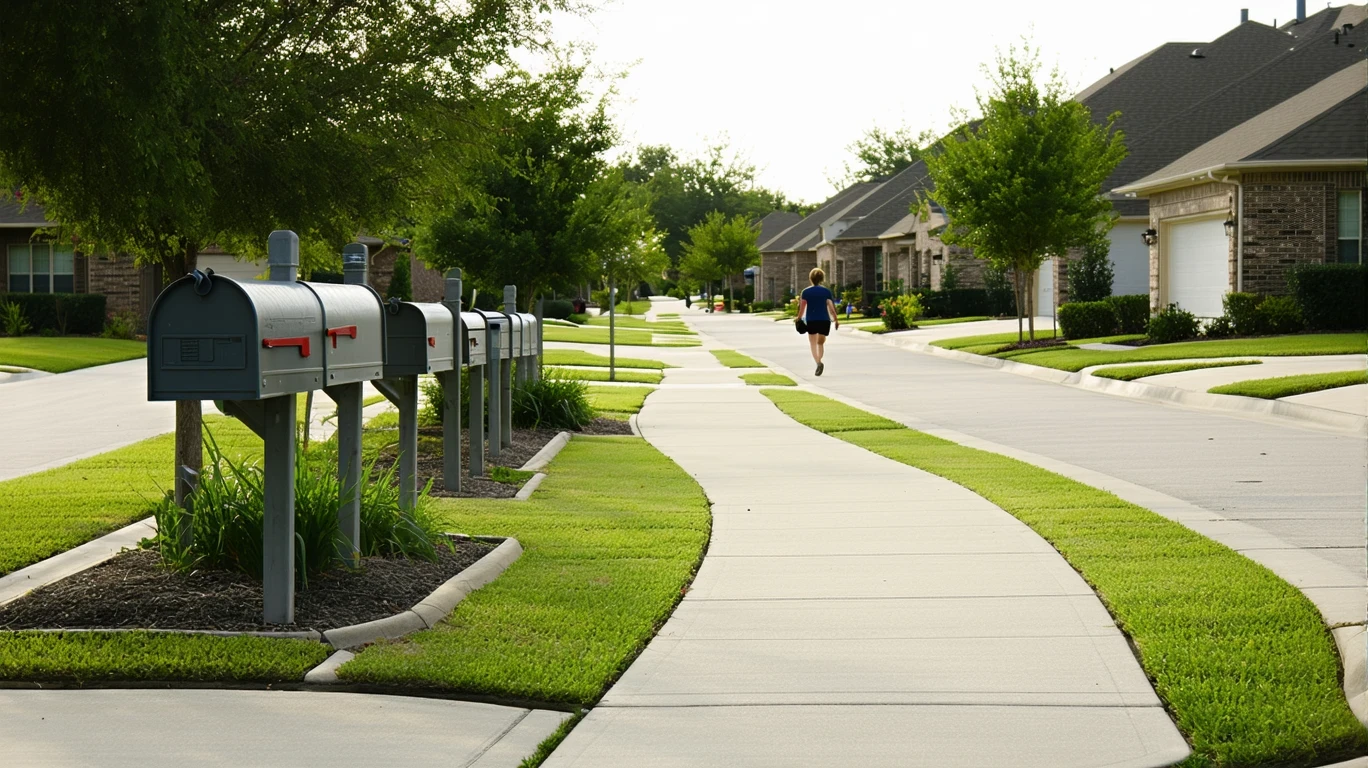
Converse carries the emotional tone of a place in transition—no longer a sleepy outpost, not yet a fully built-out suburb. People who feel at home here tend to value predictability, quiet streets, and the ability to access San Antonio’s jobs and amenities without paying its housing premium. The tradeoff that keeps surfacing is convenience versus texture: you get space and affordability, but errands and entertainment often require planning and driving. The city’s low-rise character and mixed land use mean residential and commercial areas coexist, but the pedestrian-to-road ratio sits in the medium band—enough sidewalks to suggest walkability, not enough to make it a lifestyle. For households who see a car as a tool rather than a burden, this feels fine. For those who measure quality of life by how much they can do on foot, it feels limiting.
What tends to feel rewarding here is the sense of space and the financial breathing room that comes with it. Median home values and rents sit below metro averages, and the unemployment rate reflects a stable local economy. What tends to feel irritating is the need to drive for most errands, the limited school and playground density, and the sense that the city’s infrastructure is still catching up to its growth. People who feel “at home” in Converse are often those who wanted suburban calm and metro access without urban intensity. People who feel “restless” are often those who assumed proximity to San Antonio would mean walkable variety and found instead that proximity requires a commute.
What People Talk About Online
In local Facebook groups and regional subreddit threads, Converse discussions tend to cluster around a few recurring themes: affordability, growth, and the tradeoffs of suburban life near a metro. The emotional tone is often protective—residents defend the city’s value proposition while acknowledging its gaps. There’s pride in the affordability and space, annoyance at the infrastructure lag, and a recurring question about what kind of place Converse is becoming as it grows.
“It’s a good place to land if you need more house for less money, but you’re definitely driving everywhere—there’s not much you can walk to.”
“We moved here for the schools and the yard space, and we got both, but the parks and playgrounds feel spread thin compared to other suburbs we looked at.”
“It’s quiet, it’s affordable, and you’re close enough to San Antonio that you don’t feel isolated—but don’t expect the city to come to you.”
The conversation tends to be pragmatic rather than passionate. People talk about Converse as a means to an end—a way to afford suburban life while staying connected to metro opportunities. The frustration that surfaces most often is about errands and amenities: grocery and food options exist but tend to cluster along corridors rather than being broadly accessible, and the sense that “everything requires a drive” comes up frequently. For households who see driving as a non-issue, this barely registers. For those who hoped for walkable convenience, it’s a daily friction point.
How Local Coverage Frames the City
Local news and community coverage tend to frame Converse through the lens of growth and identity—how the city is changing, what new development is arriving, and whether the infrastructure can keep pace. The tone is rarely celebratory or critical in isolation; instead, it reflects the tension of a city in motion, where optimism about growth coexists with concern about whether services, schools, and roads are ready for it.
Recurring headline-style themes include:
- “Community Debates What Growth Should Look Like”
- “New Retail and Dining Options Arrive Along Main Corridors”
- “Residents Weigh Suburban Calm Against Amenity Access”
- “Infrastructure Projects Aim to Keep Pace with Population”
- “Families Drawn to Affordability, Question School and Park Density”
The framing tends to position Converse as a city with potential and tradeoffs, rather than a finished product. For readers trying to predict alignment, this suggests a place where patience and adaptability matter—if you need everything to be polished and complete now, the city may feel unfinished. If you’re comfortable with a work-in-progress and prioritize cost and space over immediate convenience, the tone suggests a reasonable fit.
What Reviews and Public Perception Reveal
On platforms like Google Reviews, Yelp, and Nextdoor-style community boards, Converse tends to receive praise for affordability, space, and a family-friendly suburban layout—and criticism for limited walkability, sparse amenities, and the need to drive for most errands. The pattern that emerges is one of expectation matching: people who wanted suburban comfort and metro proximity tend to feel satisfied, while those who expected urban texture or dense convenience tend to feel disappointed.
Positive sentiment often centers on housing value, yard space, and the sense of safety and quiet that comes with low-rise, residential-dominant neighborhoods. Families appreciate the ability to afford single-family homes with outdoor space, and commuters value the access to San Antonio jobs without downtown housing costs. The criticism that surfaces most often is about the car dependency—errands require planning, and the pedestrian infrastructure, while present, doesn’t support a walk-first lifestyle. Food and grocery density sits in the medium band, meaning options exist but tend to cluster rather than spread evenly, and the limited school and playground density can feel like a gap for families with young children.
Neighborhood variation exists but tends to be framed generically: newer planned areas offer more consistent amenities and modern layouts, while older pockets may feel more established but less polished. Without specific neighborhood names in the feed, the safest framing is that the city’s character varies by development era rather than by distinct district identity.
How Converse Compares to Nearby Cities
| Dimension | Converse | Universal City | Schertz |
|---|---|---|---|
| Overall Vibe | Affordable suburban calm, car-dependent, metro-adjacent | Compact, base-adjacent, slightly more walkable pockets | Polished suburban feel, more retail density, family-oriented |
| Walkability | Mixed pedestrian infrastructure, driving required for most errands | Slightly better pedestrian access in core areas | Similar car dependency, but more clustered retail |
| Amenity Access | Corridor-clustered, medium food and grocery density | Tighter clustering, easier access to essentials | Broader retail and dining options, more polished |
| Housing Feel | Affordable, spacious, low-rise, varied by development era | Smaller lots, older housing stock, more compact | Newer builds, planned communities, slightly higher cost |
| Family Fit | Good for space and affordability, limited school/playground density | Decent for families, more established feel | Strong family appeal, more infrastructure maturity |
Converse sits between Universal City’s compact, base-adjacent character and Schertz’s more polished suburban feel. If you prioritize affordability and space over walkability and amenity density, Converse offers a strong value proposition. If you want slightly more pedestrian access and tighter clustering of essentials, Universal City may feel more convenient. If you’re willing to pay a bit more for a more finished suburban experience with broader retail and family infrastructure, Schertz may be a better match. None of these cities will satisfy someone seeking urban texture or walk-first living—they’re all car-dependent suburbs with varying degrees of polish and density.
Voices from the Community
“We moved here from Austin and immediately felt the financial relief—same house, half the cost. The tradeoff is that we drive everywhere, but we knew that going in.”
“It’s a great place to raise kids if you’re okay with driving to activities. The yards are big, the streets are quiet, but don’t expect a park on every corner.”
“I work in San Antonio and live in Converse, and the commute is fine. The city itself doesn’t have much nightlife or walkable dining, but that’s not what we moved here for.”
“The affordability is real, but so is the sense that the city is still figuring itself out. New stuff is coming, but it feels slow compared to how fast people are moving in.”
“If you’re used to running errands on foot or grabbing coffee without getting in the car, this will feel limiting. If you’re used to suburban life and just want more space for less money, it’s solid.”
“We love the quiet and the space, but we do wish there were more local options for groceries and dining—it feels like you’re always driving to the same few spots.”
“It’s not flashy, it’s not walkable, but it’s affordable and safe, and for us, that’s what mattered most.”
Does Converse Feel Like a Good Fit?
Converse tends to work for households who prioritize housing tradeoffs that favor space and affordability over walkability and dense amenities. It’s a place where cars are essential, where errands require planning, and where the city’s infrastructure is still catching up to its growth. For families willing to drive for schools, parks, and activities, and for commuters who value metro access without metro housing costs, the city offers a pragmatic, livable suburban option. For those who measure quality of life by how much they can do on foot, or who expect a polished, amenity-rich suburban experience, Converse will likely feel incomplete.
The emotional profile of Converse is one of tradeoffs made consciously: you get space, you get affordability, you get proximity to San Antonio—but you give up walkability, dense amenities, and the sense of a fully built-out suburb. If that exchange feels fair, Converse will likely feel like a smart choice. If it feels like settling, it probably won’t. Understanding what a budget has to handle and what lifestyle requirements matter most to you will help clarify whether this city’s vibe aligns with your wiring—or whether you’re better off looking elsewhere.
How this article was built: In addition to public economic data, this article incorporates location-based experiential signals derived from anonymized geographic patterns—such as access density, walkability, and land-use mix—to reflect how day-to-day living actually feels in Converse, TX.
The perspectives shown reflect commonly expressed local sentiment and recurring themes in public discussion, rather than individual accounts.