
Do you really need a car to live in Concord, NC? For most people, the answer is yes—but the reasons why reveal a lot about how this city actually works. Concord sits within the Charlotte metro area, and while it has grown steadily over the past two decades, its transportation infrastructure still reflects a car-first design. Public transit exists, but it plays a supporting role rather than serving as the backbone of daily mobility. Understanding how people get around here—and where the system works versus where it doesn’t—helps clarify what kind of lifestyle Concord supports and what tradeoffs you’ll face depending on where you live and how you move.
How People Get Around Concord
Concord is a commuter-oriented suburb, and most residents rely on personal vehicles for work, errands, and daily logistics. The city’s layout reflects decades of suburban development: residential neighborhoods spread across a wide area, commercial corridors cluster along major roads, and distances between home, work, and shopping typically require driving. Gas prices in Concord currently sit at $2.73 per gallon, which is relatively moderate but still a recurring cost for households that depend on cars for most trips.
That said, Concord isn’t uniformly car-dependent. Some neighborhoods feature higher pedestrian infrastructure density, with sidewalks, crosswalks, and mixed-use pockets that allow residents to walk to nearby shops or services. These walkable zones don’t eliminate the need for a car, but they do reduce the frequency of short trips and give residents more flexibility in how they move through their immediate area. The city also has bus service, which provides a transit option for specific routes and corridors. However, the absence of rail transit and the limited reach of bus coverage mean that most households still treat driving as the default mode of transportation.
Newcomers often underestimate how much driving shapes daily life in Concord. Even if you live in a walkable pocket, grocery stores, medical facilities, and many workplaces remain spread out enough that a car becomes necessary for routine household management. The city’s structure rewards car ownership with convenience, predictability, and access, while those without vehicles face significant friction in reaching essential services.
Public Transit Availability in Concord
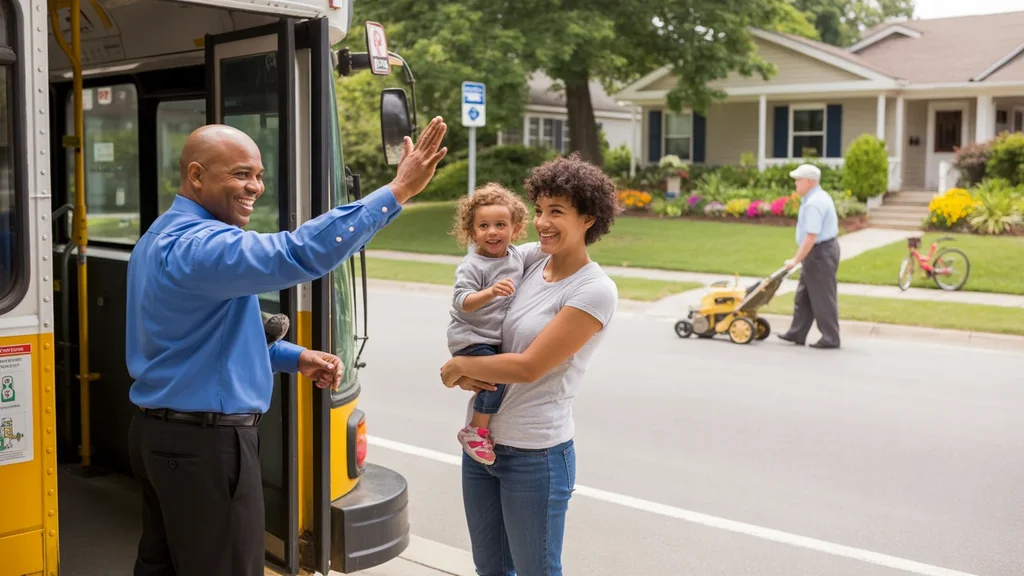
Public transit in Concord operates primarily through bus service, which connects parts of the city to the broader Charlotte metro area. Bus stops are present throughout Concord, but coverage is not uniform. Transit tends to work best along major corridors where residential density and commercial activity overlap, providing a viable option for commuters traveling to and from Charlotte or moving between specific nodes within Concord itself.
Where transit falls short is in reach and frequency. Many residential neighborhoods sit outside the effective service area of bus routes, and even within covered zones, the lack of rail transit limits how quickly or flexibly residents can move across longer distances. For households living in peripheral areas or needing to make multi-stop trips—picking up groceries, dropping off children, running errands—bus service often doesn’t provide the coverage or timing required to replace a car.
Transit also struggles with the city’s grocery access pattern. Concord has moderate food establishment density, but grocery stores specifically are sparse. This means that even if a bus route connects you to work or a shopping corridor, reaching a full-service grocery store may still require a car or a longer, less convenient transit journey. For households trying to live car-free or car-light, this grocery gap becomes a significant barrier.
Public transit in Concord is best understood as a supplement rather than a primary solution. It works for specific trips and specific people, but it doesn’t provide the comprehensive coverage or frequency that would allow most residents to forgo car ownership entirely.
Driving & Car Dependence Reality
Driving is the dominant mode of transportation in Concord, and the city’s infrastructure reflects that reality. Parking is generally abundant and free or low-cost in most areas, which removes one of the friction points that makes car ownership burdensome in denser cities. Roads are designed to move vehicles efficiently, and the suburban layout means that most destinations—work, shopping, healthcare, schools—are easiest to reach by car.
This car-first design offers real advantages. Drivers in Concord enjoy flexibility in when and where they travel, the ability to make multi-stop trips without waiting for connections, and the convenience of carrying groceries, children, or other cargo without logistical complexity. For families, multiple-car households are common and practical, as different members often have overlapping but non-identical schedules and destinations.
The tradeoff is that car dependence becomes a structural cost. Even with moderate gas prices, households must absorb the ongoing expenses of fuel, maintenance, insurance, and registration. These costs don’t fluctuate as visibly as rent or utilities, but they accumulate steadily and become non-negotiable for most residents. The city’s layout also means that reducing car use requires intentional proximity to walkable corridors or a willingness to accept longer, less convenient trips via transit.
For those who prefer or need to minimize driving, Concord presents challenges. The sparse grocery density and limited transit coverage mean that even small reductions in car dependence require careful planning and often involve accepting reduced convenience or longer travel times.
Commuting Patterns & Daily Mobility
Concord functions as part of the Charlotte metro commuter network, and many residents work outside the city limits. Commutes typically involve driving to jobs in Charlotte or other nearby suburbs, with some reliance on bus service for those traveling along established routes. The absence of rail transit means that commuters don’t have access to the faster, higher-capacity option that defines mobility in larger metro areas.
Daily mobility in Concord often involves more than just the work commute. Households make frequent trips for groceries, school drop-offs, medical appointments, and errands, and the city’s layout requires driving for most of these activities. The mixed land use pattern—where residential and commercial zones overlap in some areas—does create opportunities for occasional walking trips, but these tend to be supplemental rather than replacing the need for a car.
Who benefits from proximity? Residents living near walkable corridors or close to their workplace can reduce the frequency and length of their car trips, which lowers fuel costs and time spent on the road. Those in peripheral neighborhoods or with jobs farther afield absorb more commute friction, both in time and in the cumulative cost of driving longer distances regularly.
The commute structure in Concord rewards flexibility and car access. Households with predictable, single-destination commutes can optimize around that pattern, while those juggling multiple stops or variable schedules find that driving offers the control and adaptability they need.
Who Transit Works For—and Who It Doesn’t
Public transit in Concord works best for a narrow set of circumstances. Renters living along major bus corridors who commute to Charlotte or other transit-accessible job centers can use bus service as a primary or backup option. Single commuters without complex household logistics—no school drop-offs, no multi-stop errands—are more likely to find transit viable for at least part of their mobility needs.
Transit becomes much less practical for families, households in peripheral neighborhoods, or anyone whose daily routine requires frequent, dispersed trips. The sparse grocery density alone makes car-free living difficult, as reaching a full-service grocery store often requires either a car or a time-intensive transit journey. Parents managing school schedules, extracurriculars, and errands face similar challenges: bus service doesn’t provide the flexibility or coverage needed to handle multiple stops efficiently.
Homeowners in Concord are more likely to own cars, both because they tend to live in less transit-accessible neighborhoods and because the financial structure of homeownership—stable housing costs, longer-term planning—makes car ownership a more predictable expense. Renters closer to the city core or near bus routes have more options, but even they often find that a car significantly reduces friction in daily life.
The reality is that Concord’s transportation system is built around car ownership. Transit exists and provides value for specific trips and specific people, but it doesn’t replace the need for a vehicle for most households.
Transportation Tradeoffs in Concord
Choosing between transit and driving in Concord isn’t about cost alone—it’s about predictability, control, and how much friction you’re willing to accept in daily life. Driving offers convenience, flexibility, and the ability to manage complex schedules without waiting for connections or adjusting routes. It also means absorbing the ongoing costs of fuel, maintenance, and insurance, along with the time spent on the road.
Transit, where it works, reduces some of those costs and removes the burden of parking, traffic, and vehicle upkeep. But it requires living near a bus route, having a commute pattern that aligns with available service, and accepting longer travel times for trips that would be faster by car. For households trying to minimize transportation expenses, transit can help—but only if their location and daily routine fit within its limited coverage.
The tradeoff also involves time. Driving is faster for most trips in Concord, especially those involving multiple stops or destinations outside the bus network. Transit requires more planning, more waiting, and often more walking to and from stops. For some people, that tradeoff is worth it; for others, the time cost outweighs the financial savings.
Ultimately, transportation in Concord is about choosing the level of convenience and control you need versus the costs you’re willing to absorb. Most households choose driving because the city’s structure makes it the most practical option, but understanding where transit works—and where it doesn’t—helps clarify whether a car-light or car-free lifestyle is realistic for your situation.
How Place Structure Shapes Daily Errands and Mobility
The way Concord is built—its roads, sidewalks, grocery stores, and bus routes—directly shapes how people move through their day. Some neighborhoods have enough pedestrian infrastructure that residents can walk to a coffee shop, a park, or a nearby restaurant without getting in the car. These walkable pockets make life feel less car-dependent on a day-to-day basis, even if driving is still necessary for bigger trips.
But grocery access tells a different story. Even in areas with decent sidewalks and mixed-use development, grocery stores are sparse enough that most households still need to drive to stock up on food. That gap between walkable infrastructure and grocery availability means that even people living in the most pedestrian-friendly parts of Concord can’t fully eliminate car trips. The city’s layout supports walking for some errands, but it doesn’t remove the structural need for a vehicle when it comes to household essentials.
This combination—walkable pockets with limited grocery density—creates a specific kind of mobility pattern. Residents can reduce short car trips and enjoy more flexibility in how they move around their immediate neighborhood, but they still depend on driving for the trips that matter most: weekly grocery runs, medical appointments, and anything outside their immediate area. Understanding this structure helps clarify what “getting around Concord” actually feels like and what kind of transportation setup makes sense for your household.
How this article was built: In addition to public economic data, this article incorporates location-based experiential signals derived from anonymized geographic patterns—such as access density, walkability, and land-use mix—to reflect how day-to-day living actually feels in Concord, NC.
FAQs About Transportation in Concord (2026)
Is public transit usable for daily commuting in Concord?
Public transit in Concord is usable for specific commutes, particularly those along major bus corridors connecting to Charlotte or other transit-accessible job centers. However, the absence of rail transit and limited bus coverage mean that most residents still rely on cars for daily commuting, especially if their work or errands involve multiple stops or destinations outside the bus network.
Do most people in Concord rely on a car?
Yes. The vast majority of Concord residents rely on a car for work, errands, and daily logistics. The city’s suburban layout, sparse grocery density, and limited transit coverage make driving the most practical and convenient option for most households. Even in walkable neighborhoods, a car remains necessary for reaching grocery stores, medical facilities, and other essential services.
Which areas of Concord are easiest to live in without a car?
Neighborhoods near major bus corridors and with higher pedestrian infrastructure density offer the best chance of reducing car dependence, though even these areas rarely eliminate the need for a vehicle entirely. Residents living close to mixed-use zones or near transit stops can walk or take the bus for some trips, but sparse grocery access and limited transit reach still make car ownership highly practical.
How does commuting in Concord compare to nearby cities?
Concord’s commuting pattern is typical of suburban cities within the Charlotte metro area: car-oriented, with bus service providing limited supplemental coverage. Compared to Charlotte itself, Concord has less transit infrastructure and fewer walkable corridors, which increases car dependence. Compared to smaller, more rural towns, Concord offers more transit options and walkable pockets, but still requires driving for most daily needs.
Can you live in Concord without owning a car?
Living without a car in Concord is possible but requires significant tradeoffs. You would need to live near a bus route, work at a transit-accessible location, and accept longer, less convenient trips for groceries and errands. For most households, especially families or those with complex schedules, car-free living in Concord is impractical. A car-light approach—owning one vehicle instead of two, or using transit for some trips—is more realistic for those trying to reduce transportation costs.
How Transportation Fits Into the Cost of Living in Concord
Transportation in Concord isn’t just about monthly expenses—it’s about how the city’s structure shapes your daily routine, your time, and your flexibility. Car dependence is the default here, and that dependence affects where you can live, how you manage errands, and how much control you have over your schedule. For most households, owning a car is a non-negotiable part of living in Concord, and the costs associated with driving—fuel, maintenance, insurance—become steady, recurring expenses that sit alongside housing and utilities.
Understanding transportation in Concord means recognizing that the city rewards car ownership with convenience and access, while those trying to minimize driving face real friction in reaching grocery stores, jobs, and services. Transit exists and provides value for specific trips, but it doesn’t replace the need for a vehicle for most people. If you’re planning a move to Concord, factor in car ownership as part of your baseline cost structure, and choose your neighborhood with an eye toward how much driving you’re willing to do. The city’s layout is clear: driving is the path of least resistance, and most residents choose it because it works.