
74 out of 100 residents say they’re happy in Concord—but what does happiness actually mean here, and who tends to feel it? Concord sits in the Charlotte metro’s outer ring, offering suburban comfort, relative affordability, and proximity to a major job market. Yet the city’s rapid growth and car-oriented layout create friction for some, especially those who crave walkability, transit options, or dense neighborhood amenities. Understanding Concord’s vibe means recognizing the tradeoffs: space and cost relief for those willing to drive and plan, frustration for those who value spontaneous access and pedestrian life.
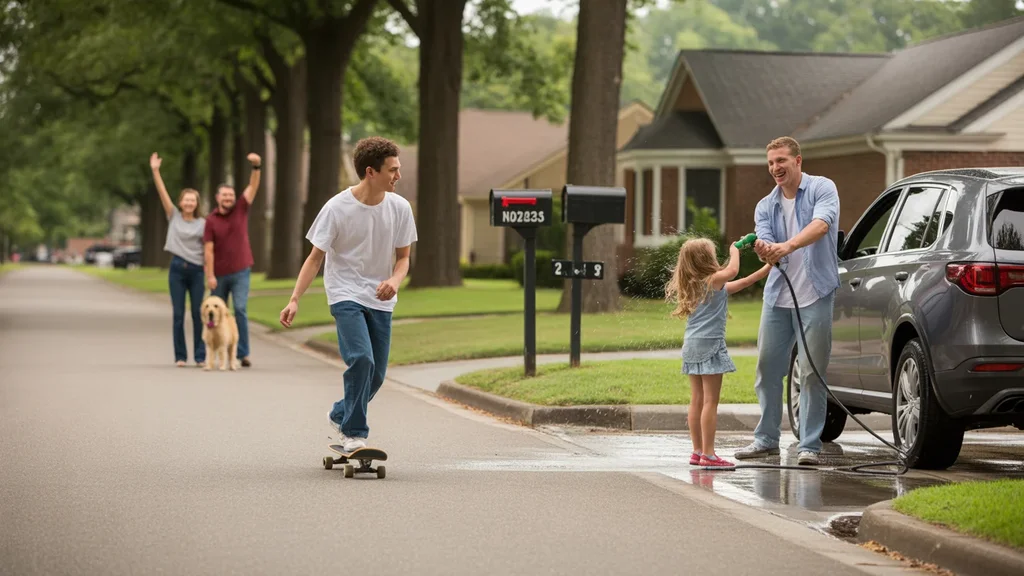
What Defines Concord’s Emotional Tone
Concord feels like a place in transition—caught between small-town identity and suburban expansion. For families and commuters who prioritize yard space, newer housing stock, and lower costs than Charlotte proper, the city delivers. Median household income sits at $83,480 per year, and the median home value of $288,100 remains accessible compared to the metro core. The unemployment rate of 3.4% signals economic stability, and many residents appreciate the breathing room that comes with a less congested environment.
But growth brings tension. Long-time locals express nostalgia for a quieter, slower Concord, while newcomers arrive expecting suburban convenience and find gaps in walkable infrastructure and local services. The city’s structure—marked by walkable pockets but sparse grocery density and limited park access—means daily life requires a car and advance planning. For those who accept this rhythm, Concord feels manageable and affordable. For those who don’t, it feels isolating and logistically draining.
Social Media Buzz in Concord
On platforms like Reddit, Facebook groups, and X, Concord residents discuss growth, traffic, and the balance between affordability and convenience. Conversations often reflect pride in the city’s motorsports heritage and frustration with infrastructure lagging behind population growth. The tone is protective but weary—residents want Concord to grow thoughtfully, not lose its character to sprawl.
“I moved here for the space and the price, but I didn’t realize how much I’d miss being able to walk to a coffee shop or grab groceries on the way home. Everything’s a drive.”
“Concord’s great if you have a family and want a yard. It’s quiet, safe, and you’re still close enough to Charlotte for work or a night out. But if you’re looking for walkable neighborhoods or nightlife here, you’ll be disappointed.”
“The growth is real. Traffic on certain roads has gotten noticeably worse, and it feels like the city’s playing catch-up with schools and parks. I love it here, but I hope they don’t just keep building without thinking about infrastructure.”
The recurring theme: Concord works well for those who embrace suburban car life and plan their errands, but it frustrates those who value spontaneity, density, or transit access.
Local News Tone
Local coverage tends to frame Concord through the lens of growth management, community identity, and infrastructure adaptation. Headlines reflect ongoing debates about what kind of city Concord is becoming:
- “Community Debates What Growth Should Look Like”
- “New Amenities Arrive as Town Identity Evolves”
- “Residents Weigh Convenience vs Quiet”
- “Schools and Parks Struggle to Keep Pace with Population”
- “Commuters Balance Charlotte Access with Suburban Space”
The tone is neither celebratory nor alarmist—it’s transitional. Coverage acknowledges that Concord is changing and that residents hold mixed feelings about the pace and direction. The city’s motorsports legacy and historic downtown anchor its identity, but newer developments and bedroom-community dynamics shape daily life for most.
Review-Based Public Perception
On Google, Yelp, and Nextdoor-style platforms, Concord earns praise for affordability, safety, and family-friendly neighborhoods—especially newer planned areas. Residents who wanted suburban comfort and lower housing pressure tend to feel satisfied. Those who expected urban texture, walkable errands, or robust transit feel let down.
Positive reviews highlight:
- Relative affordability compared to Charlotte
- Access to yards, quiet streets, and newer housing stock
- Proximity to Charlotte for work and entertainment
- Low crime and family-oriented environment
Critical reviews focus on:
- Car dependency for all errands and activities
- Limited walkable neighborhoods or pedestrian infrastructure
- Sparse grocery and retail density requiring longer drives
- Limited park access and family amenities relative to population
- Traffic congestion on key corridors during commute hours
Neighborhood variation exists but is often framed generically: newer planned areas offer modern amenities and HOA-managed aesthetics, while older pockets retain more character but fewer updates. Neither guarantees walkability or dense amenity access—Concord’s layout rewards those who drive and plan, not those who walk and improvise.
Comparison to Nearby Cities
| Dimension | Concord | Kannapolis | Huntersville |
|---|---|---|---|
| Overall Vibe | Suburban comfort with growth tension | Quieter, more affordable, less polished | Upscale suburban, lake-oriented lifestyle |
| Walkability | Pockets exist but sparse overall | Minimal, very car-dependent | Limited, similar car reliance |
| Affordability | Moderate, accessible for families | More affordable, lower home values | Higher cost, more premium feel |
| Amenity Access | Sparse grocery, limited parks | Even more limited, fewer options | Better retail density, lake recreation |
| Transit Options | Bus only, limited viability | Minimal to none | Minimal, car essential |
Concord sits between Kannapolis and Huntersville in cost and polish. If you want the most affordable option and don’t mind fewer amenities, Kannapolis may appeal. If you want a more upscale suburban feel with lake access and are willing to pay more, Huntersville offers that. Concord splits the difference: accessible pricing, motorsports identity, and Charlotte proximity, but with infrastructure growing pains and car dependency across the board.
What Locals Are Saying
“We moved here from Charlotte for the schools and the yard. The day-to-day costs are lower, and we love the space. But I do miss being able to walk to dinner or a park. Everything here requires a car and a plan.”
“I’m a remote worker, and Concord’s been great. Quiet, affordable, and I can get to Charlotte when I need to. But if I had to commute daily, the traffic on certain roads would wear me down.”
“Concord’s fine if you’re okay with suburban life. It’s safe, the people are friendly, and it’s not as expensive as other parts of the metro. But if you’re looking for nightlife, walkable neighborhoods, or public transit, this isn’t it.”
“I grew up here, and it’s changed so much. It used to feel like a small town. Now it’s just another suburb with chain restaurants and traffic. I get why people move here, but it’s lost some of its charm.”
“We’re a young family, and Concord checked a lot of boxes—affordable, safe, close to Charlotte. But the lack of parks and playgrounds near us is frustrating. We drive to everything, even just to let the kids run around.”
“I like Concord because it’s not as crowded or expensive as Charlotte, but I wish there were more local spots—coffee shops, grocery stores, things you could just walk to. It feels like you’re always in the car.”
“For retirees, Concord’s solid. It’s quiet, the cost of living is reasonable, and you’re close to healthcare in Charlotte if you need it. But if you don’t drive, you’ll struggle. There’s no real transit here.”
Does Concord Feel Like a Good Fit?
Concord works best for families, commuters, and homeowners who prioritize space, affordability, and proximity to Charlotte over walkability and dense amenity access. The city’s structure—walkable pockets but sparse grocery density, limited parks, and bus-only transit—means daily life revolves around driving and planning. For those who accept this rhythm, Concord delivers suburban comfort without the price tag of the metro core.
Friction tends to surface for walkability-dependent households, transit-reliant residents, and those who value spontaneous access to errands and recreation. The city’s growth brings new housing and retail, but infrastructure lags, and the car remains essential. If you’re weighing Concord, ask yourself: do I want space and cost relief enough to trade walkability and convenience? If yes, Concord aligns. If no, the city’s structure may feel limiting.
To explore how these tradeoffs shape your household budget, see A Month of Expenses in Concord. For a deeper look at quality of life factors and who tends to feel stable here, start there.
How this article was built: In addition to public economic data, this article incorporates location-based experiential signals derived from anonymized geographic patterns—such as access density, walkability, and land-use mix—to reflect how day-to-day living actually feels in Concord, NC.
The perspectives shown reflect commonly expressed local sentiment and recurring themes in public discussion, rather than individual accounts.