
“I thought I could skip the second car when we moved here,” a daily commuter from Colton told me last fall. “Then I realized how much of my week depends on being able to leave when I need to, not when the schedule says I can.”
That tension—between the transit that exists and the mobility most households actually need—defines transportation options in Colton in 2026. The city sits in the Inland Empire with rail service present and pockets of walkable infrastructure, but the day-to-day reality for most residents still centers on driving. Understanding how people actually get around here, and who benefits from the alternatives, matters more than knowing whether transit technically exists.
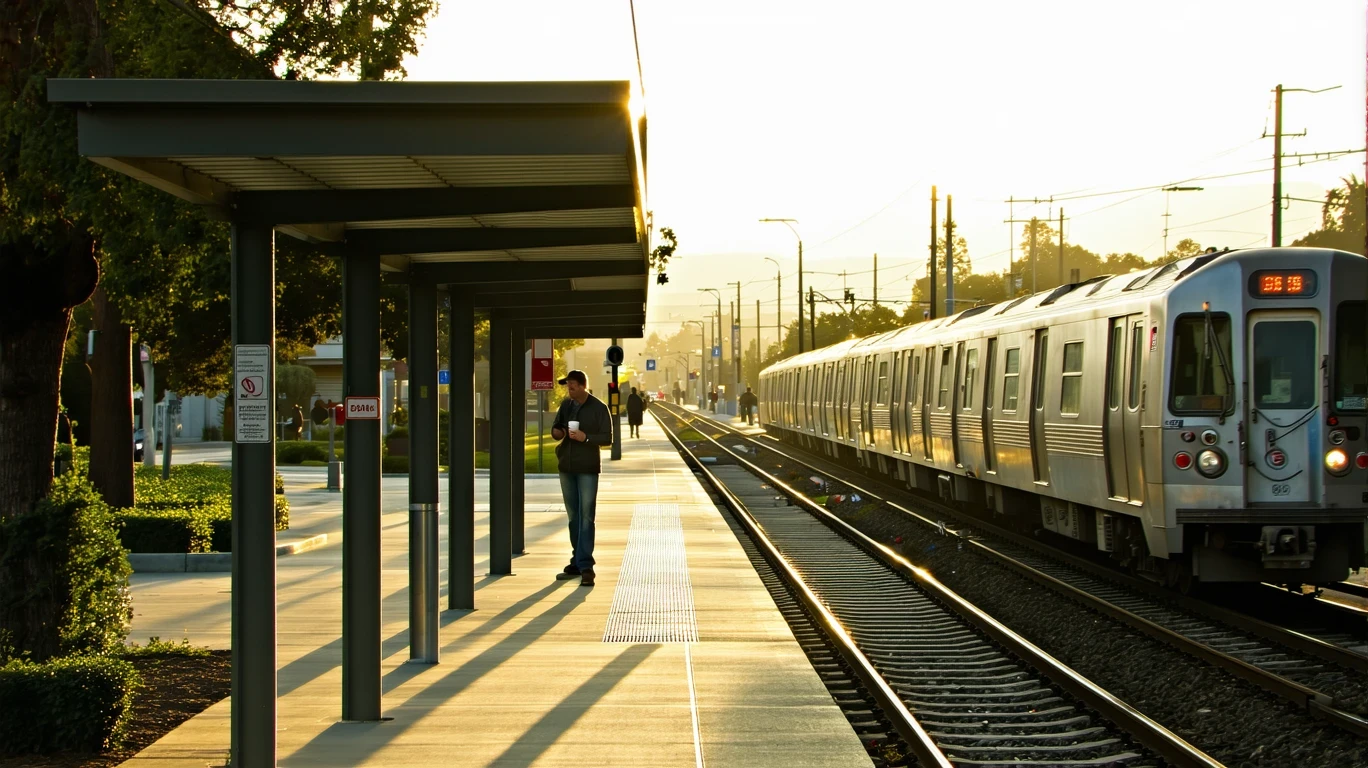
How People Get Around Colton
Colton is a low-rise city with mixed residential and commercial land use, and its mobility pattern reflects that structure. Most residents rely on personal vehicles for daily errands, work commutes, and household logistics. The pedestrian-to-road ratio is high in certain areas, creating walkable pockets where sidewalks and crossings make short trips on foot practical. But those pockets don’t connect seamlessly across the city, and the grocery and food options tend to cluster along corridors rather than distribute evenly through neighborhoods.
What newcomers often misunderstand is that Colton’s transit presence doesn’t translate into transit dependence. Rail service runs through the city, and that’s a real asset for specific commute patterns—particularly for workers traveling to regional employment centers on predictable schedules. But for the errands, appointments, and multi-stop days that define household life, driving remains the default. The city’s layout rewards car ownership with flexibility and coverage that transit can’t match across all zones.
The practical result is a transportation system that works in layers: rail for certain commuters, walkable streets in specific neighborhoods, and driving as the connective tissue that makes everything else accessible.
Public Transit Availability in Colton
Public transit in Colton often centers around systems such as Metrolink and Omnitrans, though coverage and service patterns vary by area. Rail transit provides a direct link to regional destinations, which makes it valuable for commuters whose work locations align with station access on both ends. For someone traveling from Colton to downtown Los Angeles or San Bernardino, rail can remove the variability and cost exposure of daily freeway driving.
Bus service exists, but its role is more supplementary than foundational. Routes tend to follow major corridors, and the grocery density along those corridors means some errands become reachable by transit. But the medium food establishment density and the way services cluster rather than spread means that households farther from those corridors face longer walks, transfers, or gaps in evening and weekend coverage.
Transit works best in Colton when your destinations are fixed, your schedule is predictable, and your starting point sits near a station or a well-served stop. It works less well when your day involves multiple stops, when timing matters, or when you’re managing a household with kids, groceries, or time-sensitive errands. The infrastructure is real, but it’s not comprehensive enough to replace car ownership for most residents.
Driving & Car Dependence Reality
Driving isn’t just common in Colton—it’s structurally necessary for most households. The city’s low-rise character and the way residential and commercial uses mix means that while some needs are close, others require crossing town or leaving the city entirely. Parking is generally accessible, and the road network supports the kind of multi-stop, flexible routing that daily life demands.
Car dependence here isn’t about preference or convenience; it’s about coverage. A household without a vehicle can manage in Colton if they live near a transit line, work along that same line, and keep their errands within a walkable or bus-accessible radius. But that’s a narrow set of conditions. For everyone else, driving is what makes the city’s jobs, services, and opportunities reachable within a reasonable timeframe.
The tradeoff is exposure. Owning and operating a vehicle brings fuel costs, maintenance, insurance, and depreciation into the household budget. But it also brings control over timing, routing, and the ability to handle the unexpected—a sick child, a last-minute meeting, a delayed delivery. In Colton, most households choose that tradeoff because the alternative limits access more than it limits cost.
Commuting Patterns & Daily Mobility
Commuting in Colton often means leaving the city. The local economy provides some employment, but many residents travel to larger job centers in San Bernardino, Riverside, or Los Angeles. For those commuters, rail transit can be a practical option if their workplace sits near a station and their schedule aligns with service hours. The benefit isn’t just financial—it’s also about predictability and the ability to use travel time for something other than navigating traffic.
But not all commutes fit that pattern. Workers with variable shifts, multiple job sites, or roles that require carrying tools or materials typically drive. Parents managing school drop-offs and pickups before or after work almost always drive. And households where both adults work in different directions rarely find a transit solution that serves both efficiently.
Daily mobility in Colton also involves errands that don’t follow a commute pattern. Grocery runs, medical appointments, school activities, and social commitments create a web of trips that transit can’t easily accommodate. The corridor clustering of food and grocery options means some of those trips are walkable or reachable by bus, but the majority still require a car to complete within a practical timeframe.
Who Transit Works For — and Who It Doesn’t
Transit in Colton works best for single adults or couples without children, living near a rail station or a major bus corridor, commuting to a fixed workplace that’s also near transit. For that household type, the combination of rail access and walkable pockets can reduce or eliminate the need for a second vehicle, and in some cases, make car-free living possible.
It works less well for families with school-age children, especially if school locations don’t align with home and work. It’s difficult for households in the peripheral neighborhoods where pedestrian infrastructure thins out and transit frequency drops. And it’s nearly impossible for anyone whose job requires a vehicle, whose work hours fall outside peak service times, or whose daily routine involves multiple stops across different parts of the city.
Renters in core areas near transit have more flexibility to test car-light living, because their housing choice can prioritize proximity over space. Homeowners, especially those in single-family neighborhoods farther from corridors, typically plan around car ownership from the start. The city’s structure doesn’t penalize driving, and it doesn’t reward transit use enough to shift behavior for most households.
Transportation Tradeoffs in Colton
Choosing between transit and driving in Colton isn’t about comparing monthly costs—it’s about comparing control, predictability, and access. Transit offers lower direct costs and removes the variability of fuel prices and parking. Driving offers flexibility, coverage, and the ability to manage complex household logistics without depending on schedules or transfers.
For commuters, the tradeoff often comes down to whether the destination is reachable by rail and whether the time saved by avoiding traffic justifies the loss of schedule control. For families, the tradeoff usually favors driving because the number of trips, the variety of destinations, and the need to move people and cargo efficiently all point toward car ownership.
The walkable pockets in Colton do create a middle ground. Households in those areas can handle some errands on foot, reducing the number of car trips without eliminating the need for a vehicle entirely. That’s not car-free living, but it’s also not the pure car dependence that defines more sprawling suburban areas. It’s a hybrid pattern that works when proximity, infrastructure, and household needs align.
FAQs About Transportation in Colton (2026)
Is public transit usable for daily commuting in Colton?
Yes, but only for specific commute patterns. If your workplace is near a rail station and your schedule aligns with service hours, transit can be a practical and predictable option. For commutes that involve multiple stops, variable hours, or destinations without direct transit access, driving remains more reliable.
Do most people in Colton rely on a car?
Yes. The city’s layout, the clustering of services along corridors, and the need for flexibility in daily errands make car ownership the standard for most households. Transit exists and serves certain commuters well, but it doesn’t provide the coverage or frequency needed to replace a vehicle for most residents.
Which areas of Colton are easiest to live in without a car?
Neighborhoods near rail stations and along major bus corridors offer the best chance for car-light or car-free living. These areas tend to have higher pedestrian infrastructure density and closer access to grocery and food options. But even in those zones, most households still find that owning at least one vehicle makes daily life significantly easier.
How does commuting in Colton compare to nearby cities?
Colton’s rail access gives it an advantage over some nearby cities for commuters traveling to regional job centers. But like most Inland Empire communities, it remains car-oriented for daily errands and local trips. The presence of walkable pockets and transit options makes it slightly more flexible than purely suburban areas, but it’s not a transit-rich environment like denser urban cores.
Can a household manage with one car in Colton?
It depends on proximity and routine. Single-car households work best when both adults’ commutes align with transit or when one person works from home. Families with school-age children or households where both adults work in different directions typically find that a second vehicle reduces friction and expands access more than it strains your monthly budget in Colton.
How Transportation Fits Into the Cost of Living in Colton
Transportation in Colton isn’t just a line item—it’s a structural factor that shapes where you can live, where you can work, and how much time you spend managing logistics. The presence of rail transit and walkable pockets creates real options for some households, but the city’s car-oriented layout means most residents plan around vehicle ownership as a baseline.
The cost exposure from driving—fuel, maintenance, insurance—sits alongside the time and flexibility it provides. For households evaluating whether Colton fits their budget, understanding how mobility works here matters as much as knowing housing or utility costs. Transit exists, and it works for specific patterns, but it doesn’t eliminate the need for a car for most people.
If you’re planning a move to Colton, start by mapping your commute, your errands, and your household’s daily destinations. If those align with transit corridors and walkable zones, you’ll have more flexibility. If they don’t, plan for car ownership and the costs that come with it. The city rewards proximity and planning, but it doesn’t penalize driving—and for most households, that’s the pattern that makes daily life work.
How this article was built: In addition to public economic data, this article incorporates location-based experiential signals derived from anonymized geographic patterns—such as access density, walkability, and land-use mix—to reflect how day-to-day living actually feels in Colton, CA.