

When people compare Colton and San Bernardino, they’re usually weighing two neighboring cities in California’s Inland Empire that share a metro area but diverge sharply in how cost pressure shows up. Both cities sit inland, experience hot summers, and serve households looking for more space than coastal California offers—but the mechanics of daily spending, commute friction, and housing accessibility differ in ways that matter for renters, families, and first-time buyers trying to decide where to land in 2026.
This isn’t about which city is “cheaper overall.” It’s about understanding where your money goes, which costs are predictable versus volatile, and how different household types experience the tradeoff between entry barriers and ongoing obligations. A single adult prioritizing transit access will feel these cities differently than a family managing school logistics and grocery runs, and a dual-income couple optimizing commute time will weigh factors that don’t show up in rent or mortgage alone.
The Ramirez family—two working parents and a school-age child—spent months debating whether to rent in Colton or San Bernardino. They kept circling back to the same question: does lower rent in San Bernardino offset longer drives and higher electricity bills, or does Colton’s rail access and walkable pockets reduce enough friction to justify the higher entry cost? By the end of this article, you’ll understand how to answer that question for your own household.
Housing Costs: Entry Barrier vs Ongoing Obligation
Housing is where the clearest structural difference emerges. Colton’s median home value sits at $376,600, while San Bernardino’s median is $347,100—a gap that translates directly into down payment size, mortgage qualification thresholds, and property tax baselines for buyers. For renters, the pattern holds: Colton’s median gross rent is $1,462 per month, compared to San Bernardino’s $1,319 per month. These aren’t small differences for households stretching to qualify or trying to preserve cash flow in the first year of a lease.
But the story isn’t just about the numbers on the lease or the loan. Colton’s housing stock includes more low-rise, mixed-use pockets where residential and commercial land use overlap, creating neighborhoods where errands and transit access reduce car dependency. San Bernardino’s housing tends to be more dispersed, with longer distances between daily destinations and fewer walkable clusters. That means Colton’s higher rent may buy you proximity to grocery stores, rail stops, and parks that reduce transportation and convenience spending, while San Bernardino’s lower rent often comes with the assumption that you’ll drive most places and plan around longer errand loops.
For first-time buyers, the entry barrier in Colton is steeper—not just in down payment dollars, but in the competition for inventory in neighborhoods with better pedestrian infrastructure. San Bernardino offers more accessible entry points for buyers willing to accept longer commutes and car-oriented layouts. For renters, the decision hinges on whether the $143 monthly rent difference (stated separately: Colton at $1,462, San Bernardino at $1,319) is offset by lower transportation costs, fewer convenience purchases, or reduced time spent driving. Families prioritizing school proximity and park access may find Colton’s higher rent worth it; single adults or couples optimizing for cash flow and flexibility may prefer San Bernardino’s lower baseline.
| Housing Type | Colton Characteristics | San Bernardino Characteristics |
|---|---|---|
| Median Home Value | $376,600 | $347,100 |
| Median Gross Rent | $1,462/month | $1,319/month |
| Typical Housing Form | Low-rise, mixed-use pockets | Dispersed, car-oriented layouts |
| Walkability to Errands | Moderate to high in pockets | Lower; longer distances typical |
Housing takeaway: Colton imposes a higher entry barrier but may reduce ongoing transportation and convenience costs for households that value proximity and rail access. San Bernardino offers lower upfront housing costs but assumes higher car dependence and longer errand loops. First-time buyers sensitive to down payment size will find San Bernardino more accessible; renters prioritizing walkability and transit will find Colton’s structure more aligned with reduced friction costs.
Utilities and Energy Costs: Rate Differences and Seasonal Exposure
Utility costs in these two cities diverge primarily on electricity rates, and that difference compounds over time for households in larger homes or those running air conditioning through extended summer heat. Colton’s electricity rate is 31.91¢/kWh, while San Bernardino’s rate is 33.60¢/kWh. Natural gas pricing is identical at $21.94/MCF, so heating exposure during cooler months doesn’t vary by city—but cooling exposure does, and the rate gap matters more for households in single-family homes with older HVAC systems or poor insulation.
Both cities experience hot, dry summers where air conditioning dominates utility bills from June through September. The difference is that San Bernardino’s higher electricity rate means every kilowatt-hour of cooling costs more, and for a household running central air in a 1,500-square-foot home, that rate difference translates into higher monthly exposure during peak months. Colton’s slightly lower rate doesn’t eliminate cooling costs, but it does reduce the per-unit price of managing indoor comfort. For renters in apartments with smaller square footage and shared walls, the rate difference matters less; for families in detached homes with high ceilings and west-facing windows, it matters more.
Utility cost exposure also varies by housing age and construction quality. Newer homes with better insulation, dual-pane windows, and efficient HVAC systems experience lower baseline usage regardless of rate, while older housing stock—common in both cities—tends to leak conditioned air and drive up consumption. Households in older rentals or starter homes should expect higher summer bills in both cities, but San Bernardino’s rate structure makes that volatility slightly more expensive per billing cycle. Predictability is low in both cities during summer months; the question is whether you’re paying the higher or lower rate when usage spikes.
Utility takeaway: Colton’s lower electricity rate reduces per-unit cooling costs, which matters most for families in larger, older homes during extended summer heat. San Bernardino’s higher rate increases exposure to seasonal volatility, especially for households with less control over housing quality or HVAC efficiency. Single adults in smaller apartments will feel less difference; families in detached homes will feel it more acutely. Natural gas costs are identical, so heating exposure is equivalent across both cities.
Groceries and Daily Expenses: Density, Access, and Spending Habits
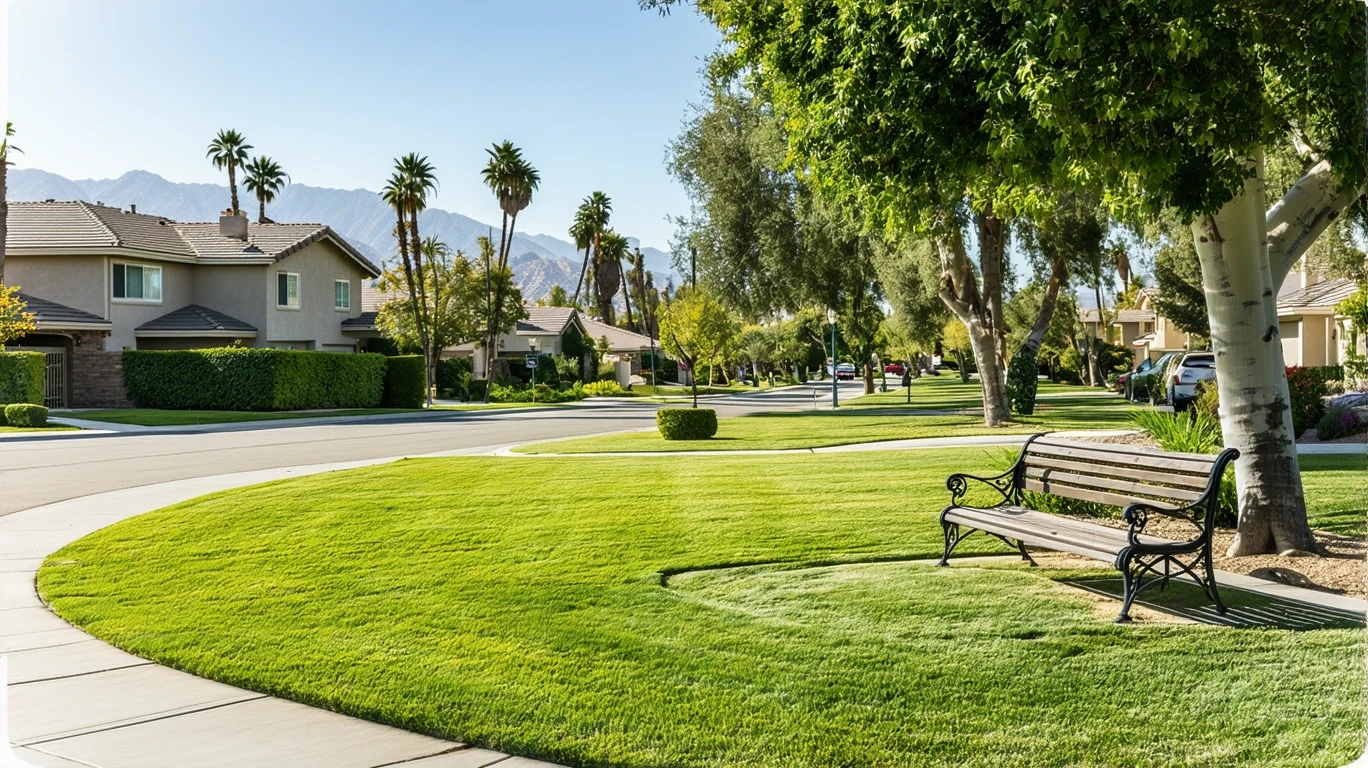
Grocery and daily expense pressure in Colton and San Bernardino isn’t primarily about price—it’s about access density, convenience friction, and how often households end up making extra trips or paying for prepared food because planning a full grocery run feels like a logistical burden. Colton benefits from higher grocery density in certain corridors, meaning households in walkable pockets or near mixed-use areas can make quick stops without driving across town. San Bernardino’s grocery access is more dispersed, with longer distances between stores and fewer neighborhood-scale options, which increases the likelihood of consolidating trips or relying on convenience stores and fast food when time is tight.
For families managing weekly grocery hauls, the difference shows up in trip frequency and fuel costs. Colton’s corridor-clustered grocery access means you can often hit a store on the way home from work or school without adding significant detour time. San Bernardino’s layout often requires dedicated grocery trips, and if you forget an item or run out mid-week, the friction of getting back to the store increases the temptation to order delivery or grab takeout instead. That convenience spending creep—small purchases that add up over the month—hits harder in cities where errands require more planning and driving.
Single adults and couples with flexible schedules may not feel this difference as intensely; they can batch errands and optimize routes without worrying about school pickup times or childcare windows. Families with kids, especially those managing after-school activities and tight weeknight schedules, feel the friction more acutely. Colton’s higher grocery density reduces the time cost of restocking essentials, while San Bernardino’s dispersed access increases the likelihood of convenience purchases or dining out when the alternative is another 20-minute round trip. Price sensitivity matters, but access friction often drives spending patterns more than per-item cost.
Grocery takeaway: Colton’s corridor-clustered grocery access reduces trip friction and convenience spending for households with tight schedules, especially families managing school and work logistics. San Bernardino’s dispersed access increases the likelihood of extra trips, fuel costs, and convenience purchases when time is limited. Single adults and couples with flexible routines will feel less difference; families with kids will notice the friction more in weekly spending patterns.
Taxes and Fees: Predictability and Structural Differences
Property taxes, sales taxes, and local fees don’t vary dramatically between Colton and San Bernardino—both cities sit within San Bernardino County and share the same baseline tax structure—but the way these costs show up depends more on housing type, ownership status, and length of residence than on city-specific policy differences. Homeowners in both cities face property tax obligations tied to assessed home values, and since Colton’s median home value is higher, property tax bills will reflect that difference proportionally. Renters don’t pay property taxes directly, but landlords typically pass through a portion of that cost in rent, so the higher home values in Colton indirectly contribute to higher rent baselines.
Sales tax applies equally across both cities for most purchases, so grocery, gas, and retail spending don’t create a tax-driven cost difference. Where fees diverge is in HOA prevalence, trash and water billing structures, and the likelihood of special assessments in newer developments. Colton’s mixed-use pockets and older housing stock mean fewer HOA-governed communities, which reduces monthly fee obligations but may increase individual responsibility for landscaping, exterior maintenance, and utility setup. San Bernardino’s housing mix includes more HOA-managed developments, especially in newer subdivisions, where monthly fees bundle services but reduce flexibility and control.
For long-term residents, property tax predictability matters more than initial rates. California’s Proposition 13 limits annual increases for existing homeowners, so households planning to stay several years benefit from stable tax bills even as market values fluctuate. Recent movers and first-time buyers face reassessed values at purchase, which means higher initial tax obligations in Colton due to higher home prices. Renters experience less direct tax exposure but should account for the likelihood that landlords adjust rent over time to reflect rising property tax and insurance costs, especially in markets where housing demand remains strong.
Taxes and fees takeaway: Colton’s higher home values lead to higher property tax baselines for buyers, but renters and long-term owners experience similar tax structures across both cities. HOA fees are more common in San Bernardino’s newer developments, which can increase predictability but reduce flexibility. Households planning to stay several years benefit from California’s property tax protections in both cities; recent movers face higher reassessed values in Colton due to higher purchase prices.
Transportation & Commute Reality
Transportation costs and commute friction separate Colton and San Bernardino more sharply than housing or utilities, and the difference isn’t just about gas prices—it’s about how much time you spend in the car, whether transit is a viable alternative, and how commute patterns shape daily logistics. San Bernardino has documented commute data: the average commute is 28 minutes, with 38.6% of workers facing long commutes and only 12.3% working from home. That means the majority of San Bernardino households are driving significant distances regularly, often to job centers in Riverside, Ontario, or farther west, and those trips accumulate fuel costs, vehicle wear, and time that could otherwise go toward errands or family logistics.
Colton’s commute data isn’t available in the same detail, but the city’s experiential structure tells a different story: rail transit is present, walkable pockets exist, and the pedestrian-to-road ratio exceeds high thresholds in parts of the city. That doesn’t mean everyone in Colton takes the train or walks to work, but it does mean households have more options for reducing car dependency, especially for non-work trips like grocery runs, medical appointments, or school pickups. San Bernardino’s layout assumes car ownership and regular driving; Colton’s structure allows some households to reduce vehicle miles traveled and the associated costs.
Gas prices are nearly identical—$4.27/gal in Colton, $4.22/gal in San Bernardino—so per-gallon cost isn’t the differentiator. The question is how many gallons you’re buying each month, and that depends on commute distance, errand consolidation, and whether you can substitute transit or walking for some trips. Families with two working adults and school-age kids in San Bernardino are more likely to operate two vehicles and drive most places; similar families in Colton’s walkable pockets may be able to reduce second-car usage or eliminate some trips entirely. Single adults and couples optimizing for commute time may find San Bernardino’s lower rent offsets higher driving costs, but only if their job location aligns with the city’s commute corridors.
Transportation takeaway: San Bernardino’s documented commute patterns show high car dependence, long average commute times, and significant exposure to fuel and vehicle costs for most households. Colton’s rail presence and walkable pockets reduce car dependency for some households, especially those prioritizing errands and non-work trips over long commutes. Gas prices are nearly identical, so the difference is driven by miles traveled and whether transit or walking can substitute for some driving.
Cost Structure Comparison
Housing pressure dominates the cost experience in both cities, but the nature of that pressure differs. Colton imposes a higher entry barrier—both for buyers facing a higher median home value and for renters paying more per month—but that cost buys proximity to rail transit, higher grocery density, and walkable pockets that reduce transportation and convenience spending. San Bernardino’s lower housing entry costs make it more accessible for first-time buyers and renters optimizing for cash flow, but the savings come with the assumption of higher car dependence, longer commutes, and more dispersed errands that increase fuel and time costs.
Utilities introduce more volatility in San Bernardino due to the higher electricity rate, and that difference compounds for families in larger homes or older housing stock where cooling exposure is harder to control. Colton’s lower rate reduces per-unit costs during peak summer months, which matters most for households with less flexibility to manage usage or upgrade HVAC systems. Natural gas costs are identical, so heating exposure is equivalent, but cooling pressure—the larger seasonal driver in both cities—tilts slightly in Colton’s favor.
Transportation patterns matter more in San Bernardino, where documented commute data shows that most households are driving long distances regularly and few have the option to work from home or rely on transit. Colton’s rail presence and higher pedestrian infrastructure density don’t eliminate car ownership for most households, but they do create opportunities to reduce vehicle miles traveled for errands, medical appointments, and non-work trips. That flexibility reduces fuel costs and vehicle wear over time, especially for families managing multiple daily trips.
Daily living costs—groceries, convenience spending, and the friction of running errands—are shaped more by access density than by prices. Colton’s corridor-clustered grocery access reduces the time cost of restocking essentials and lowers the likelihood of convenience purchases when schedules are tight. San Bernardino’s dispersed access increases trip planning burden and the temptation to order delivery or grab takeout when another grocery run feels like too much effort. For households with flexible schedules, this difference is minor; for families managing school, work, and after-school logistics, it’s a recurring source of spending creep.
The better choice depends on which costs dominate your household. If you’re sensitive to housing entry barriers and prioritize cash flow in the first year, San Bernardino’s lower rent and home values offer more accessible entry. If you’re sensitive to transportation friction, commute time, and the cumulative cost of driving everywhere, Colton’s transit access and walkable pockets reduce ongoing obligations. For families with kids, the difference is less about price and more about predictability: Colton’s structure reduces daily logistics friction, while San Bernardino’s lower housing costs leave more room in the budget for other priorities.
How the Same Income Feels in Colton vs San Bernardino
Single Adult
For a single adult, housing becomes the first non-negotiable cost, and the rent difference between Colton and San Bernardino directly affects how much flexibility remains for other spending. San Bernardino’s lower rent leaves more room for discretionary purchases, but the tradeoff is longer commutes and more driving, which reduces free time and increases fuel costs. Colton’s higher rent buys proximity to rail transit and walkable errands, which can reduce car dependency and time spent on logistics. Flexibility exists in both cities, but it shows up differently: San Bernardino offers more cash flow, Colton offers more time and reduced transportation exposure.
Dual-Income Couple
For a dual-income couple, the decision hinges on commute alignment and whether both partners can access jobs without long drives. San Bernardino’s lower housing costs make it easier to save or allocate income toward other goals, but the city’s documented long commute patterns mean at least one partner is likely spending significant time in the car, and that time cost compounds when both are working full schedules. Colton’s rail presence and higher walkability reduce commute friction for some job locations, and the higher rent may be offset by lower transportation costs and fewer convenience purchases. The role of commute friction becomes the deciding factor: if both partners can keep commutes manageable, San Bernardino’s lower housing entry preserves more flexibility; if one or both face long drives, Colton’s structure reduces daily stress and time lost to traffic.
Family with Kids
For families with kids, non-negotiable costs expand to include school proximity, park access, and the logistics of managing after-school activities, grocery runs, and medical appointments. San Bernardino’s lower housing costs create more budget room, but the dispersed layout increases the time and fuel costs of managing daily errands, and the lack of walkable pockets means most trips require driving. Colton’s higher rent and home values impose more upfront pressure, but the city’s corridor-clustered grocery access, hospital presence, and moderate school density reduce the friction of managing household logistics. Flexibility disappears faster in both cities for families, but the nature of the squeeze differs: San Bernardino front-loads housing savings and back-loads transportation and time costs, while Colton front-loads housing pressure and reduces ongoing logistics friction.
Decision Matrix: Which City Fits Which Household?
| Decision Factor | If You’re Sensitive to This… | Colton Tends to Fit When… | San Bernardino Tends to Fit When… |
|---|---|---|---|
| Housing entry + space needs | You’re stretching to qualify or prioritizing cash flow in year one | You value proximity to transit and walkable errands over lower rent | You prioritize lower upfront costs and can accept car-oriented layouts |
| Transportation dependence + commute friction | You want to reduce vehicle miles traveled or avoid long daily drives | You can access rail transit or work locally and value reduced car dependency | Your job location aligns with existing commute corridors and you’re comfortable driving most places |
| Utility variability + home size exposure | You’re in a larger or older home and want to minimize cooling costs | You benefit from the lower electricity rate during extended summer heat | You’re in a smaller apartment or newer home where rate differences matter less |
| Grocery strategy + convenience spending creep | You manage tight weeknight schedules and want to reduce errand friction | You value corridor-clustered grocery access that reduces trip planning burden | You have flexible schedules and can batch errands without time pressure |
| Fees + friction costs (HOA, services, upkeep) | You want predictable monthly obligations or prefer bundled services | You prefer fewer HOA fees and more control over maintenance decisions | You’re comfortable with HOA-managed developments that bundle services |
| Time budget (schedule flexibility, errands, logistics) | You’re managing school, work, and after-school activities with limited slack | You prioritize reduced logistics friction and shorter errand loops | You have flexible schedules and can absorb longer drive times without stress |
Lifestyle Fit: Daily Rhythms and Long-Term Comfort
Lifestyle differences between Colton and San Bernardino extend beyond cost structure into how daily routines feel and how much friction you encounter managing work, errands, and recreation. Colton’s rail transit presence and walkable pockets mean some households can reduce car trips for non-work errands, medical appointments, or social activities, which lowers transportation costs and frees up time that would otherwise go toward driving and parking. San Bernardino’s layout assumes car ownership and regular driving, which works well for households with flexible schedules and job locations that align with the city’s commute corridors, but it increases time costs and fuel exposure for families managing tight weeknight logistics.
Both cities experience hot, dry summers where outdoor recreation requires planning around heat exposure, and both offer moderate park density and access to water features for families prioritizing outdoor space. Colton’s moderate park density and hospital presence make it easier to manage routine medical care and school-age activities without long drives, while San Bernardino’s dispersed layout often requires longer trips to access similar amenities. For families with young kids, Colton’s moderate school density and hospital presence reduce the friction of managing pediatric care and school proximity, while San Bernardino’s lower housing costs leave more budget room for extracurriculars and childcare.
Cultural and recreational differences are subtle—both cities serve as bedroom communities within the Inland Empire rather than regional hubs for dining, entertainment, or nightlife—but Colton’s mixed-use pockets create more opportunities for spontaneous errands or casual dining without dedicated trips. San Bernardino’s car-oriented layout means most social and recreational activities require driving, which works well for households that already spend significant time in the car but adds friction for those trying to reduce vehicle dependence. Colton’s rail transit connects to broader regional job centers and cultural destinations, while San Bernardino’s documented 28-minute average commute reflects the reality of driving to work for most residents.
Long-term comfort in either city depends on how well your household’s priorities align with the city’s structure. If you value reduced car dependency, shorter errand loops, and proximity to transit, Colton’s higher housing costs buy you a lifestyle that reduces ongoing friction. If you prioritize lower housing entry costs and have the flexibility to absorb longer commutes and car-oriented logistics, San Bernardino’s structure preserves more cash flow without sacrificing access to the broader Inland Empire region.
Frequently Asked Questions
Is Colton or San Bernardino better for renters trying to keep housing costs low in 2026?
San Bernardino offers lower median gross rent, which preserves more cash flow for renters prioritizing affordability in the first year. Colton’s higher rent buys proximity to rail transit, walkable errands, and higher grocery density, which can reduce transportation and convenience spending over time. The better choice depends on whether you’re optimizing for upfront housing costs or ongoing logistics friction.
How do commute patterns differ between Colton and San Bernardino in 2026?
San Bernardino has documented commute data showing an average commute of 28 minutes, with 38.6% of workers facing long commutes and only 12.3% working from home, indicating high car dependence. Colton’s rail transit presence and walkable pockets offer more options for reducing vehicle miles traveled, especially for non-work trips, though most households still rely on cars for daily logistics.
Which city has lower utility costs for families in larger homes?
Colton’s electricity rate is lower, which reduces per-unit cooling costs during extended summer heat and matters most for families in larger or older homes where air conditioning dominates utility bills. San Bernardino’s higher electricity rate increases seasonal exposure, especially for households with less control over HVAC efficiency or insulation quality.
Does Colton or San Bernardino make it easier to run errands without driving everywhere?
Colton’s corridor-clustered grocery access and walkable pockets reduce errand friction for households managing tight schedules, especially families with school and work logistics. San Bernardino’s dispersed layout increases trip planning burden and the likelihood of convenience purchases when another grocery run feels like too much effort, which matters more for families than for single adults or couples with flexible routines.
Which city is better for first-time homebuyers in 2026?
San Bernardino’s lower median home value makes it more accessible for first-time buyers prioritizing down payment size and mortgage qualification thresholds. Colton’s higher home values impose a steeper entry barrier but offer proximity to rail transit, hospital presence, and walkable pockets that reduce ongoing transportation and logistics costs. The better choice depends on whether you’re optimizing for upfront affordability or long-term friction reduction.
Conclusion
Choosing between Colton and San Bernardino in 2026 isn’t about finding the city with lower total costs—it’s about understanding where cost pressure shows up and which household type each city’s structure serves best. San Bernardino offers lower housing entry costs, which preserves cash flow for renters and first-time buyers willing to accept longer commutes, higher car dependence, and more dispersed errands. Colton imposes higher upfront housing costs but reduces ongoing transportation friction through rail transit, walkable pockets, and corridor-clustered grocery access, which matters most for families managing tight schedules and households prioritizing reduced car dependency.
For the Ramirez family, the decision came down to whether they valued predictable monthly rent or reduced daily logistics friction. They ultimately chose Colton, reasoning that the higher rent was offset by shorter errand loops, rail access for one parent’s commute, and the ability to walk to parks and grocery stores without adding car trips to an already packed schedule. Another family might choose San Bernardino’s lower housing costs and use the savings to manage longer commutes and fuel expenses. Both cities offer viable paths—the right choice depends on which costs dominate your household and which tradeoffs you’re equipped to manage.
How this article was built: In addition to public economic data, this article incorporates location-based experiential signals derived from anonymized geographic patterns—such as access density, walkability, and land-use mix—to reflect how day-to-day living actually feels in Colton, CA.