
A first-time renter in College Park faces a baseline of $1,838 per month before utilities, parking, or fees—a figure shaped by the city’s role as a university town with consistent demand and limited turnover. A first-time buyer confronts a $404,700 median home value, requiring roughly $81,000 down at 20 percent and the willingness to absorb property taxes, maintenance, and the long-term costs of owning in a market where older housing stock and vertical building forms dominate. The decision between renting and buying here isn’t about monthly equivalence—it’s about whether you’re paying for flexibility in a tight rental market or locking in predictability in a place where housing demand doesn’t disappear during summer breaks.
College Park’s housing market operates under pressure from the University of Maryland’s enrollment cycle, a steady flow of academic staff and federal commuters, and a walkable, transit-connected geography that makes car-light living feasible for many households. The result is a rental market that doesn’t soften seasonally the way purely residential suburbs do, and an ownership market where location value—proximity to Metro, grocery density, and pedestrian infrastructure—commands a premium that doesn’t always show up in the listing price but becomes clear in long-term cost behavior.
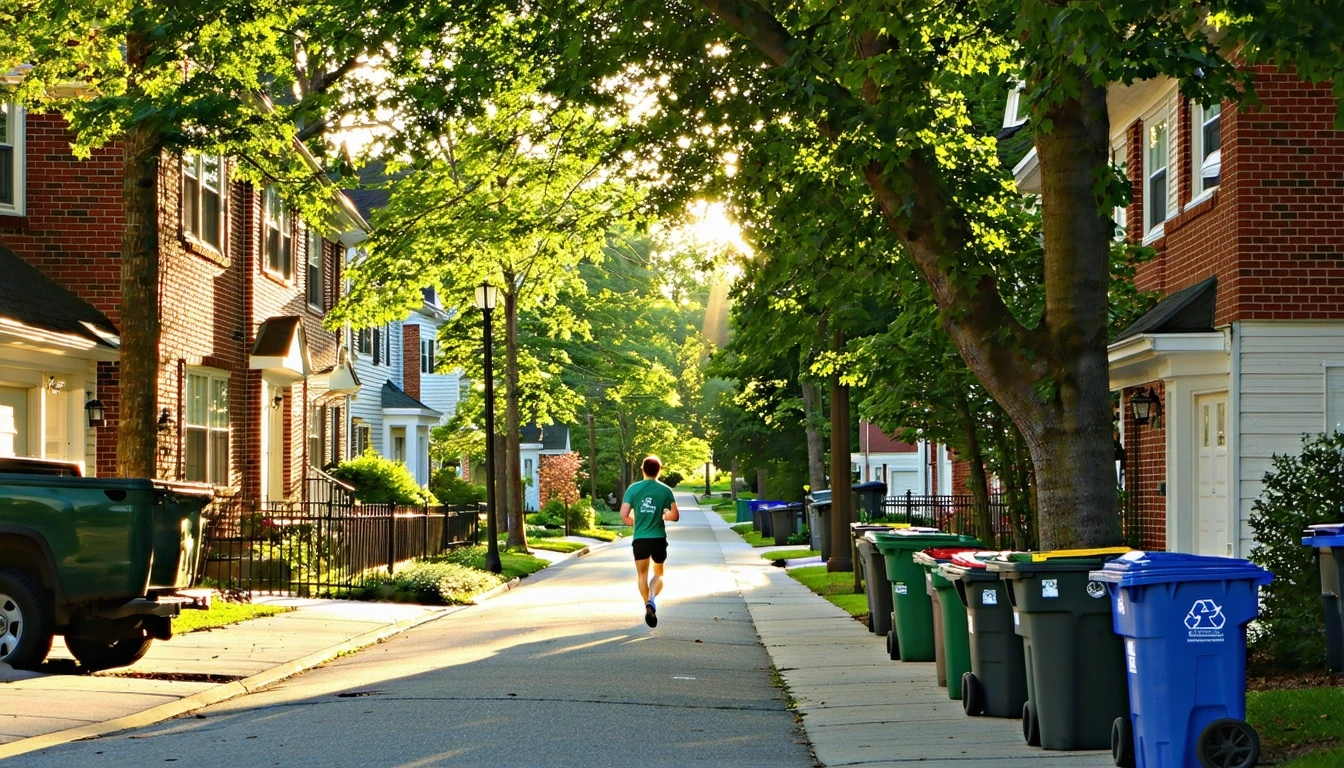
The Housing Market in College Park Today
College Park’s housing market is shaped by its dual identity: a university town with 40,000+ students cycling through annually, and a commuter node for Washington, DC, connected by Metro’s Green Line. This creates a rental market with structural demand that persists year-round, unlike college towns where leases cluster around academic calendars and vacancy rates swing seasonally. Here, graduate students, postdocs, university staff, and federal employees overlap in their housing search, compressing availability and keeping rent floors elevated even during traditionally soft months.
The $404,700 median home value reflects more than square footage—it prices in walkable access to campus, rail transit, and a mixed-use urban form where errands don’t require a car. Homes near the Metro station or along Route 1’s commercial corridor carry a location premium that buyers either pay upfront or discover later in the form of lower transportation costs and higher resale stability. The housing stock skews older, with many mid-century single-family homes and aging apartment complexes that require ongoing maintenance, meaning ownership here often means inheriting deferred upkeep rather than move-in-ready condition.
What newcomers misunderstand is that College Park’s rental tightness isn’t a temporary spike—it’s a structural feature of a place where demand is institutionally anchored. Buyers who assume they’re overpaying relative to nearby suburbs often underestimate the compounding value of transit access and walkability, which translate into lower household transportation costs and higher quality of life for car-light households. Renters who expect seasonal rent drops or negotiation leverage find that landlords here operate with waitlists, not concessions.
Renting in College Park
Renting in College Park means entering a market where $1,838 per month is the median gross rent, but the experience varies sharply depending on proximity to campus, building age, and whether utilities are included. Apartments near the university or Metro stations command the highest rents, while single-family home rentals farther from Route 1 offer more space but often require tenants to cover all utilities separately, adding $150–$250 monthly in electricity, gas, water, and trash—costs that aren’t always disclosed upfront.
The rental market here doesn’t follow the same seasonal softening seen in purely residential suburbs. University-adjacent neighborhoods maintain tight occupancy because graduate students, visiting scholars, and academic staff lease year-round, not just in August. This reduces turnover and limits the negotiation power renters typically gain in slower months. Landlords in College Park operate with the knowledge that if one tenant leaves, another will apply within days, which discourages rent concessions and encourages lease renewals at or above the previous rate.
Location within College Park determines more than commute time—it shapes daily logistics. Renters in walkable pockets near campus or along Route 1 can rely on high grocery density and pedestrian infrastructure to run errands without a car, reducing transportation costs and parking fees. Those in quieter residential blocks farther from the commercial corridor gain space and lower rent but lose the convenience of car-free errands, which means either owning a vehicle or spending more time on logistics. The tradeoff isn’t just rent versus space—it’s rent versus the friction of daily life.
Rental volatility in College Park is driven less by economic downturns and more by enrollment growth, federal hiring cycles, and Metro-adjacent development. Renters should expect that lease renewals will reflect these pressures, not personal negotiation or tenure. The rental experience here rewards those who can absorb year-over-year increases in exchange for location stability, and penalizes those who assume rent will plateau after the first year.
Owning a Home in College Park
Owning a home in College Park means committing to a $404,700 median entry point, but the cost structure extends well beyond the purchase price. Property taxes in Maryland are assessed at the county level, and Prince George’s County applies rates that vary by jurisdiction and property type, with annual increases tied to assessed value changes rather than fixed caps. Buyers should expect that tax bills will rise over time, particularly if the neighborhood benefits from Metro-adjacent development or university expansion, both of which increase assessed values without necessarily improving the home itself.
Maintenance exposure in College Park is amplified by the age of the housing stock. Many single-family homes date to the mid-20th century, meaning buyers often inherit aging HVAC systems, outdated electrical panels, and roofs nearing replacement. The region’s humid summers and freeze-thaw cycles in winter accelerate wear on siding, foundations, and exterior wood, creating a maintenance cadence that differs from newer suburban developments where major systems are under warranty. Buyers who budget only for the mortgage and taxes discover within the first year that deferred maintenance isn’t optional—it’s a cost category that compounds if ignored.
Homeownership in College Park also means navigating a mixed governance landscape. Some neighborhoods have homeowners associations that bundle services like trash collection, snow removal, and common area upkeep, while others leave these responsibilities to individual owners. HOA fees, where present, add a recurring cost that doesn’t appear in the listing price but affects long-term affordability. Buyers should verify not only whether an HOA exists but also its financial health, reserve funding, and history of special assessments, all of which can turn a manageable monthly cost into an unexpected lump-sum obligation.
The ownership experience here differs from renting in one critical way: predictability. While rent can rise annually at the landlord’s discretion, a fixed-rate mortgage payment remains constant, and property tax increases, though inevitable, follow a slower and more transparent process. Owners gain control over their housing cost trajectory in exchange for assuming the risk of maintenance, taxation, and market timing. In a college town where rental demand is structurally high, ownership also provides insulation from the displacement risk that renters face when landlords decide to sell or convert units.
Apartment vs House in College Park — Cost Behavior Comparison
| Expense Category | Apartment | House |
|---|---|---|
| Heating & Cooling | Lower exposure due to shared walls and smaller square footage; central systems often cover multiple units, reducing per-unit load during humid summers and cold snaps | Higher exposure due to standalone structure and larger conditioned space; older HVAC systems common in mid-century housing stock increase both energy use and replacement risk |
| Water & Sewer | Often included in rent or billed as flat fee; usage rarely metered individually, reducing variability | Billed separately and metered individually; older plumbing in College Park’s housing stock increases risk of leaks and higher consumption |
| Exterior Maintenance | Managed by landlord or property management; tenant exposure limited to interior damage beyond normal wear | Owner responsibility; includes roof, siding, foundation, and drainage—all subject to Maryland’s freeze-thaw cycles and summer humidity, which accelerate deterioration |
| Parking | Often requires separate monthly fee in Metro-adjacent buildings; street parking in older complexes may be unassigned and competitive | Typically includes driveway or garage; eliminates recurring parking fees but adds maintenance responsibility for paved surfaces |
| Property Taxes | Not directly paid by tenant; embedded in rent but not itemized or controllable | Direct annual cost; assessed by Prince George’s County and subject to increases tied to neighborhood development and Metro proximity |
Why these categories differ in College Park: The comparison reflects the city’s older housing stock, humid continental climate, and transit-oriented geography. Apartments benefit from shared infrastructure and landlord-managed systems, while houses expose owners to the full cost of maintaining aging structures in a climate that stresses exteriors and mechanicals. Parking costs are driven by Metro-adjacent density, where land value makes surface lots expensive to maintain. Property taxes are included because College Park’s location near the university and Metro creates upward pressure on assessments, which affects ownership cost trajectory but not rental cost transparency.
Omitted categories: Trash collection, internet, and HOA fees were excluded because they vary by building and neighborhood rather than by housing type. Homeowners insurance and renters insurance were omitted because neither is uniquely shaped by College Park’s local conditions—they follow state and regional pricing models that don’t differ meaningfully between apartments and houses within the same city.
Utilities & Upkeep Differences
Utility exposure in College Park is shaped by Maryland’s humid summers and cold winter stretches, both of which drive seasonal spikes in electricity and natural gas use. The electricity rate of 19.57¢ per kWh is moderate by regional standards, but the cost impact depends on housing type and age. Apartments with shared walls and smaller square footage reduce cooling and heating loads, while standalone houses—particularly older single-family homes with minimal insulation and aging HVAC systems—face higher consumption during peak months. Summer humidity in College Park is persistent, meaning air conditioning isn’t optional for comfort, and older window units or undersized central systems run longer to maintain livable temperatures, increasing both usage and wear.
Natural gas, priced at $15.87 per MCF, primarily affects heating costs during winter months. Houses with forced-air furnaces or boiler systems consume more than apartments, where heat from adjacent units reduces the burden on individual systems. The region’s freeze-thaw cycles also create maintenance exposure: older furnaces in College Park’s mid-century housing stock require more frequent servicing, and ductwork in unconditioned attics or basements loses efficiency, forcing systems to work harder. Apartment dwellers typically avoid this exposure because landlords manage HVAC maintenance and replacement, while homeowners inherit the full cost and timing risk.
Upkeep differences between apartments and houses in College Park are driven by the age and construction of the housing stock. Many single-family homes were built in the 1950s–1970s, meaning buyers often face near-term replacement of roofs, water heaters, and electrical panels—costs that can exceed several thousand dollars and arrive without warning. Exterior maintenance is particularly demanding here: vinyl siding cracks in freeze-thaw cycles, wood trim rots in humid summers, and foundations settle unevenly in clay-heavy soils common to the region. Apartment renters are insulated from these costs entirely, while condo owners face them collectively through HOA assessments, which can spike when major building systems fail.
The difference in utility and upkeep exposure isn’t just about total cost—it’s about predictability and control. Apartment renters pay a fixed rent and variable utilities, with maintenance handled by others. Homeowners gain control over upgrades and efficiency improvements but assume the risk that a failing HVAC system or leaking roof will arrive at the worst financial moment. In College Park, where housing stock skews older and climate stress is noticeable, that risk is not hypothetical—it’s a recurring feature of ownership that buyers must budget for beyond the mortgage payment.
Rent vs Buy: Long-Term Exposure in College Park
The long-term cost difference between renting and buying in College Park isn’t a matter of monthly equivalence—it’s a question of which risks you’re willing to absorb and which forms of control matter most. Renters face annual lease renewals in a market where demand is structurally high due to the university’s enrollment and the city’s role as a Metro-connected commuter node. Rent increases here aren’t tied to inflation or personal tenure—they reflect landlord pricing power in a tight market where vacancy rates stay low year-round. Over time, renters pay for flexibility and freedom from maintenance, but they also accept that their housing cost can rise faster than their income, with no mechanism to lock in predictability.
Buyers in College Park pay $404,700 at the median to enter the ownership market, but the cost structure shifts once the purchase is complete. A fixed-rate mortgage payment remains constant for 15 or 30 years, insulating owners from the rental market’s volatility. Property taxes, however, do not stay fixed—they rise with assessed values, which in College Park are influenced by Metro-adjacent development, university expansion, and neighborhood investment. These increases are slower and more transparent than rent hikes, but they are inevitable, and buyers should expect that the tax portion of their housing cost will grow over time, particularly in areas close to transit or campus.
Maintenance exposure is the wildcard in ownership. College Park’s older housing stock means buyers inherit aging systems—HVAC, roofing, plumbing, electrical—that will require replacement on a timeline that doesn’t align with financial convenience. A furnace failure in January or a roof leak during spring storms can cost thousands of dollars on short notice, and these events are more frequent here than in newer suburban developments where major systems are under warranty. Renters avoid this exposure entirely, but they also forgo the ability to improve efficiency, control upgrades, or benefit from long-term equity accumulation.
The ownership advantage in College Park becomes clearer over time. Renters who stay five or ten years will have paid rent that rises annually, with no residual value and no protection against displacement if the landlord sells or converts the property. Buyers who stay the same duration will have paid down principal, built equity, and locked in the largest component of their housing cost—the mortgage—while retaining the option to sell and recover their investment. The tradeoff is that buyers assume the risk of market timing, maintenance surprises, and the illiquidity of homeownership, all of which matter more in a college town where economic cycles are tied to institutional stability rather than regional growth.
For households planning to stay in College Park long-term, ownership provides structural protection against the rental market’s volatility and the risk of displacement. For those uncertain about tenure, career mobility, or financial reserves, renting preserves flexibility and avoids the front-loaded costs and ongoing maintenance exposure that come with owning in a market where housing stock is older and climate stress is persistent. The decision isn’t about which option costs less—it’s about which cost structure aligns with your timeline, risk tolerance, and need for control.
FAQs About Housing Costs in College Park
Is renting or buying more affordable in College Park for a household earning the median income?
At $76,973 per year, the median household income in College Park supports rent of $1,838 per month using the 30 percent affordability heuristic, but it makes homeownership challenging without substantial savings. A $404,700 home requires roughly $81,000 down at 20 percent, plus closing costs, and the mortgage payment alone would consume a significant share of gross income before adding property taxes, insurance, and maintenance. Renting preserves liquidity and avoids front-loaded costs, while buying requires financial reserves and a longer time horizon to justify the entry barrier.
How do property taxes in College Park change over time?
Property taxes in College Park are assessed by Prince George’s County and rise with the assessed value of the home, which is influenced by neighborhood development, Metro proximity, and university-driven demand. Buyers should expect that tax bills will increase over time, particularly in areas close to transit or campus where location value grows faster than in purely residential neighborhoods. The increases follow a transparent assessment process, but they are not capped, meaning long-term owners will see the tax portion of their housing cost grow even as their mortgage payment remains fixed.
What drives rental cost increases in College Park?
Rental cost increases in College Park are driven by structural demand from the University of Maryland’s enrollment, academic staff turnover, and federal commuters who use Metro to reach Washington, DC. Landlords operate in a market where vacancy rates stay low year-round, which reduces their incentive to offer concessions or hold rents flat during lease renewals. Renters should expect that annual increases will reflect the landlord’s pricing power rather than inflation or personal tenure, and that negotiation leverage is limited in a market where demand consistently exceeds supply.
Does owning a home in College Park require higher maintenance costs than in newer suburbs?
Yes. College Park’s housing stock skews older, with many single-family homes built in the mid-20th century, meaning buyers often inherit aging HVAC systems, roofs nearing replacement, and outdated electrical panels. The region’s humid summers and freeze-thaw winters accelerate wear on exteriors and mechanicals, creating a maintenance cadence that differs from newer developments where major systems are under warranty. Buyers should budget for near-term replacements and ongoing upkeep as a recurring cost category, not a one-time expense.
How does College Park’s walkability affect the rent vs buy decision?
College Park’s walkable pockets and rail transit access reduce the need for car ownership, which lowers household transportation costs and changes the affordability calculus for both renters and buyers. Renters near Metro or Route 1’s commercial corridor can avoid vehicle expenses, making higher rent more manageable. Buyers who pay a premium for transit-adjacent homes gain long-term value from lower transportation costs and higher resale stability, but they also inherit the maintenance responsibility for older housing stock in mixed-use areas. The walkability premium isn’t just about convenience—it’s about whether you’re willing to pay upfront for location value that compounds over time.
Making Housing Choices in College Park
Housing costs in College Park reflect the city’s dual role as a university town and a Metro-connected commuter hub, creating a rental market with structural demand and an ownership market where location value commands a premium that becomes clear only over time. Renters pay $1,838 per month at the median and accept annual increases driven by tight supply and consistent demand, while buyers commit to a $404,700 entry point and assume the long-term costs of property taxes, maintenance, and aging housing stock. The decision between renting and buying here isn’t about monthly equivalence—it’s about whether you’re paying for flexibility in a market that doesn’t soften seasonally, or locking in predictability in a place where transit access and walkability reduce transportation costs and increase resale stability.
For households planning to stay in College Park long-term, ownership provides structural protection against rental volatility and the risk of displacement, but it requires financial reserves to cover the front-loaded costs and ongoing maintenance exposure that come with older homes in a climate that stresses exteriors and mechanicals. For those uncertain about tenure or career mobility, renting preserves liquidity and avoids the illiquidity of homeownership, but it also means accepting that housing costs will rise annually with no mechanism to lock in predictability or build equity.
The housing market in College Park rewards those who understand that location value—proximity to Metro, grocery density, and pedestrian infrastructure—compounds over time, and penalizes those who assume that rent will plateau or that ownership costs end with the mortgage payment. Whether you rent or buy, the key is to recognize that The Real Cost Pressures in College Park extend beyond the listing price or lease terms, and that the cost structure you choose will shape your financial flexibility, risk exposure, and quality of life for as long as you live here. For a clearer picture of how housing fits into your overall spending, see Monthly Spending in College Park: The Real Pressure Points.
How this article was built: In addition to public economic data, this article incorporates location-based experiential signals derived from anonymized geographic patterns—such as access density, walkability, and land-use mix—to reflect how day-to-day living actually feels in College Park, MD.