
Living comfortably in Clearwater isn’t about hitting a magic number—it’s about whether your income gives you enough room to make choices instead of concessions. The same salary that feels spacious for one household can feel tight for another, depending on how housing, utilities, and transportation line up with daily routines and expectations.
Clearwater sits just above the national average in overall cost structure, with a regional price parity index of 103. But that single number hides the real story: comfort here depends less on total income and more on how well your earnings match the city’s specific cost rhythm—long cooling seasons, car-oriented infrastructure with pockets of walkability, and a housing market shaped partly by retiree demand.
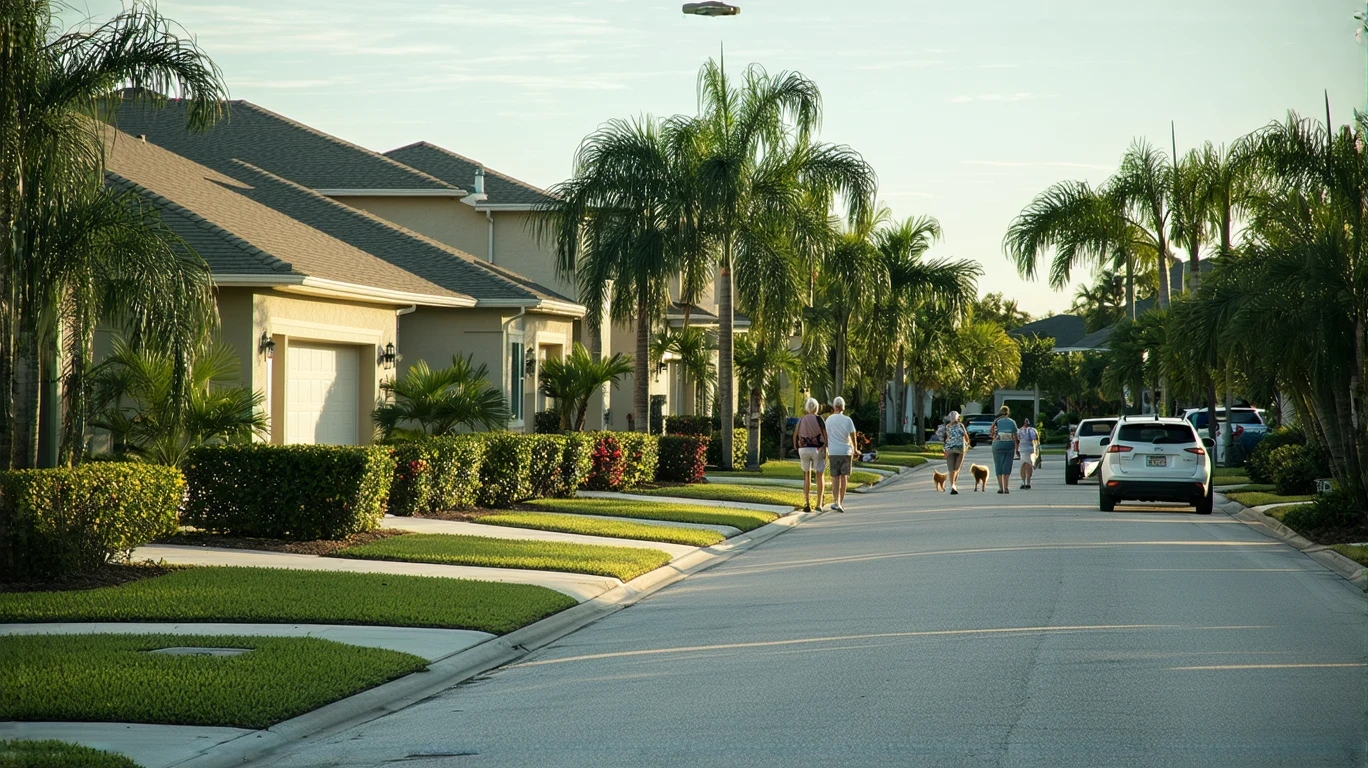
What “Living Comfortably” Means in Clearwater
Comfort in Clearwater means your paycheck covers more than survival. It means you’re not choosing between a shorter commute and a livable apartment. It means a hot July doesn’t force you to ration air conditioning or avoid cooking. It means you can replace a worn tire without rearranging other expenses.
For many residents, comfort also means proximity—being near the grocery corridors, parks, or schools that matter to your household, rather than driving 20 minutes for every errand. Clearwater has strong family infrastructure, integrated green space access, and grocery density that exceeds typical thresholds, but much of that accessibility is spatially concentrated. Where you live within the city determines how much time and fuel you spend on daily logistics.
Comfort isn’t the same as luxury. It’s the point where bills stop dictating behavior, where you can absorb a surprise expense without panic, and where you have enough margin to save or spend intentionally rather than reactively.
Where Income Pressure Shows Up First
Housing dominates the pressure landscape. Median gross rent sits at $1,389 per month, and median home values reach $287,900. For renters, that monthly figure becomes the baseline around which everything else must fit. For buyers, the home price translates into mortgage payments, property taxes, insurance (often elevated in Florida), and maintenance—all of which compound quickly in a coastal climate.
The housing market here reflects Clearwater’s role as a retirement city. That demand influences both availability and pricing, particularly for single-family homes and units near healthcare and parks. Younger households and families often find themselves competing for space in a market where retiree buyers have different priorities and sometimes more purchasing power.
Utility costs add a second layer of pressure, driven by extended heat and humidity. Electricity rates stand at 15.70¢ per kWh, and cooling needs stretch across most of the year. A household that budgets for moderate utility bills in spring can face significantly higher costs by midsummer, when air conditioning runs nearly continuously. That seasonality makes it harder to predict monthly expenses and easier to fall behind if income is already tight.
Transportation pressure varies by location within Clearwater. The city has a high pedestrian-to-road ratio in certain areas, and bus service is present, but the overall structure remains car-oriented. Walkable pockets exist, but they’re not evenly distributed. If your home or workplace isn’t near one of those pockets or a bus route, car ownership becomes non-negotiable. Gas prices currently sit at $2.87 per gallon, but the real cost is cumulative—daily commutes, errands, and trips to access the grocery corridors or family amenities that aren’t always nearby.
For families, pressure multiplies. Clearwater offers strong family infrastructure—school and playground density both meet meaningful thresholds—but accessing that infrastructure often requires living in specific parts of the city, where housing costs are higher. Families also face larger utility bills due to household size and greater transportation complexity when managing school runs, activities, and errands.
How the Same Income Feels Different by Household
A single adult earning Clearwater’s median household income of $59,358 per year (about $4,946 gross per month) experiences very different financial pressure than a family of four at the same income level.
Single adults have the most flexibility. They can choose smaller housing, access walkable pockets or transit corridors more easily, and absorb utility swings with less absolute impact. Rent at $1,389 represents a significant share of gross income, but it’s manageable if transportation costs stay low and there’s no need for larger space. The challenge is less about survival and more about whether there’s enough left over to save, travel, or build financial cushion.
Couples gain meaningful breathing room. With two incomes, housing becomes more affordable relative to earnings, and utility volatility becomes easier to absorb. Couples also have more geographic flexibility—they can afford to live near the grocery corridors or parks without sacrificing space. The tradeoff shifts from “Can we afford this?” to “What are we optimizing for?”
Families face compounding costs. Median income stretched across four people means housing must be larger, utilities are higher in absolute terms, and transportation becomes more complex. Families benefit from Clearwater’s strong infrastructure—schools, playgrounds, parks, and healthcare are present and accessible—but proximity to those resources often correlates with higher housing costs. A family at median income can live here, but comfort requires careful location choices and little margin for error.
Households at similar income levels often experience very different pressure depending on whether they need space, how much they drive, and whether they can access the parts of Clearwater where daily errands don’t require a car for every trip.
The Comfort Threshold (Qualitative)
Comfort begins when income exceeds the point where every decision is a tradeoff. It’s the level where you can choose housing based on preference rather than pure affordability, where a high utility month is annoying but not destabilizing, and where transportation becomes a matter of convenience rather than constraint.
In Clearwater, that threshold varies by household size and lifestyle expectations. For a single adult, comfort might mean earning enough to live in one of the walkable pockets without roommates and still save. For a couple, it might mean affording a home near parks and grocery corridors without stretching the budget. For a family, it might mean covering a larger space, higher utilities, and the transportation complexity of managing school and activities—while still having enough left over for occasional dining out or an emergency fund.
The threshold isn’t a number. It’s the point where your income gives you choices: where to live, how to manage cooling costs, whether to drive less, and whether you can absorb the unexpected without restructuring your entire month.
Why Online Cost Calculators Get Clearwater Wrong
Most cost-of-living calculators treat Clearwater as a set of averages: median rent, typical utilities, standard transportation. But averages hide the structure that actually determines comfort.
Calculators assume uniform access to walkability, transit, and errands. In reality, Clearwater’s pedestrian infrastructure and grocery density are concentrated in specific areas. Living outside those pockets means higher transportation costs and more time spent driving. A calculator might estimate $200 per month for transportation, but that figure is meaningless if your specific location requires a car for every trip.
They underestimate cooling season intensity. Clearwater’s heat and humidity stretch across most of the year, and electricity costs during summer months can significantly exceed spring or winter levels. A calculator that averages utility costs across 12 months will miss the seasonal cash flow pressure that many households feel from June through September.
They ignore household composition effects. A family of four at $60,000 per year faces entirely different pressure than a single adult at the same income, but many calculators simply divide costs by household size and call it equivalent. In Clearwater, where housing size, utility usage, and transportation complexity scale with household size, that approach produces misleading conclusions.
They don’t account for retiree influence on the housing market. Clearwater is a retirement city, and that shapes both availability and pricing in ways a generic calculator can’t capture. Younger households often find themselves competing in a market where demand is driven partly by buyers with different financial profiles and priorities.
People feel surprised after moving because the calculator gave them a total, but what matters is the fit between their income, their household needs, and the specific geography of cost and access within Clearwater.
How to Judge Whether Your Income Fits Clearwater
Instead of asking “Is my income enough?”, ask whether your income aligns with how Clearwater actually works.
Can you afford housing near the resources you’ll use most? If you rely on walkability, grocery access, or proximity to schools and parks, can your income support rent or a mortgage in those areas? Or will you need to live farther out and drive more?
Can you absorb seasonal utility swings? Clearwater’s cooling season is long and intense. If your budget is tight, a $100+ jump in summer electricity costs can destabilize other expenses. Do you have enough margin to handle that volatility, or will you need to adjust usage and accept discomfort?
Is your income stable or variable? Clearwater’s unemployment rate is low at 3.3%, but income stability matters more than employment availability. If your income fluctuates month to month, the combination of fixed housing costs and variable utility costs creates compounding unpredictability.
How sensitive are you to transportation tradeoffs? Clearwater has walkable pockets and bus service, but the overall structure is car-oriented. If you don’t own a car, your housing and job options narrow significantly. If you do own a car, are you prepared for the cumulative cost of daily driving, maintenance, and insurance in a place where most errands require it?
Does your household size match your income? A single adult and a family of four need very different amounts of space, utilities, and logistical capacity. Clearwater offers strong family infrastructure, but accessing it affordably requires income that can cover larger housing and higher fixed costs.
How much flexibility do you expect month to month? Comfort isn’t just about covering bills—it’s about having enough left over to handle surprises, save, or spend intentionally. If your income leaves little margin after housing, utilities, and transportation, Clearwater will feel restrictive even if you’re technically “getting by.”
What Daily Life Actually Looks Like Here
Understanding the real cost pressures in Clearwater means recognizing how place structure shapes household routines. Clearwater’s layout—with its mix of walkable pockets, corridor-clustered grocery access, and car-oriented connectors—determines how much time and money residents spend on daily logistics.
Households living in the walkable pockets benefit from reduced trip frequency. Pedestrian infrastructure in these areas exceeds typical thresholds, meaning errands, dining, and some services are reachable on foot. But these pockets aren’t everywhere. Families seeking proximity to schools and parks, or households prioritizing grocery access, often find that the most convenient locations come with higher housing costs.
For those outside the walkable zones, car dependency is near-total. Grocery density is high overall, but it’s spatially concentrated along specific corridors. That means some residents drive 10 minutes for groceries while others drive 25. The difference compounds over weeks and months—not just in fuel costs, but in time, vehicle wear, and the cognitive load of planning every trip.
Transit exists, but it’s bus-only. That limits flexibility compared to cities with rail. Bus routes work well for residents whose commute or errands align with existing service, but they don’t provide the same coverage or frequency that would make car-free living practical for most households.
Families experience the strongest logistical complexity. Clearwater offers robust family infrastructure—schools, playgrounds, and parks are present and accessible—but managing school drop-offs, activity schedules, and errands requires either living very close to these resources or accepting significant drive time. The city’s building character is more vertical than many suburban areas, which sometimes translates to denser residential zones near amenities, but availability in those zones is limited and competitive.
Daily life here rewards households who can afford to live near the resources they use most. For those who can’t, the city still works—but it requires more driving, more planning, and more time spent managing the gap between where you live and where you need to be.
Frequently Asked Questions About Living Comfortably in Clearwater
Is Clearwater affordable for families?
Clearwater offers strong family infrastructure—schools, playgrounds, parks, and hospital access are all present—but affordability depends on household income and location within the city. Families need larger housing, face higher utility costs, and require proximity to schools and activities. At median household income ($59,358 per year), a family can live here, but comfort requires careful location choices and limited financial margin. Families earning above median gain meaningful flexibility.
Can you live in Clearwater without a car?
Possible, but limiting. Clearwater has walkable pockets with high pedestrian infrastructure and bus service, but the overall structure is car-oriented. Households without cars must live in or very near the walkable zones and have jobs or routines that align with bus routes. Grocery access is strong but spatially concentrated, so location matters significantly. Most residents find car ownership necessary for practical daily life.
How much do utilities actually cost in Clearwater?
Electricity rates are 15.70¢ per kWh, and natural gas is $32.82 per MCF, but the real cost depends on cooling season intensity. Clearwater’s heat and humidity stretch across most of the year, and summer months drive significantly higher usage. Households that budget for moderate utility bills in spring often face sharp increases by midsummer. Absolute costs scale with household size and housing type, but seasonality affects everyone.
Does Clearwater feel expensive compared to other Florida cities?
Clearwater sits slightly above the national average in overall cost structure (regional price parity index of 103). Compared to other Florida cities, it’s neither the most nor least expensive, but its cost rhythm is distinct. Housing costs reflect retiree demand, cooling season length exceeds many inland cities, and transportation costs vary significantly depending on where you live within the city. It feels expensive if your income is tight or your location forces high transportation costs.
What income level feels comfortable for a single adult in Clearwater?
Comfort for a single adult means covering rent (median $1,389/month), utilities with seasonal swings, transportation, and groceries—while still having margin to save and handle surprises. At median household income ($59,358/year, roughly $4,946 gross per month), a single adult can live here and have some flexibility, especially if they secure housing in a walkable pocket or near transit. Below that threshold, tradeoffs become necessary. Above it, choices expand significantly.
How this article was built: In addition to public economic data, this article incorporates location-based experiential signals derived from anonymized geographic patterns—such as access density, walkability, and land-use mix—to reflect how day-to-day living actually feels in Clearwater, FL.