
The Ramirez family has been debating the same question for weeks: stay in their Clearwater apartment near the beach, or move inland to Lakeland where housing costs drop but the commute stretches longer. Both cities sit within the Tampa metro, share the same humid subtropical climate, and operate under Florida’s tax structure. Yet the cost pressures they create for households feel entirely different—not because one is universally cheaper, but because the trade-offs land differently depending on what dominates your budget and how you move through daily life in 2026.
Clearwater offers walkable pockets, bus transit, and a more vertical, mixed-use urban form. Lakeland presents lower housing entry costs but longer average commutes and greater car dependence. For the Ramirez family, the decision hinges on whether they value proximity and reduced transportation friction more than the savings from a lower rent or mortgage payment. Neither city is objectively more affordable—each simply concentrates cost pressure in different categories, and the right choice depends entirely on which expenses a household is most sensitive to and least able to control.
This article compares how housing, utilities, groceries, transportation, and recurring fees behave differently in Clearwater and Lakeland. It does not calculate total cost of living or declare a winner. Instead, it explains where costs show up, how they interact with household structure, and which trade-offs matter most for renters, owners, singles, couples, and families navigating the Tampa metro in 2026.
Housing Costs: Entry Barrier vs. Ongoing Flexibility
Housing represents the starkest structural difference between Clearwater and Lakeland. Clearwater’s median home value sits at $287,900, while Lakeland’s stands at $207,800. Median gross rent in Clearwater reaches $1,389 per month compared to Lakeland’s $1,217 per month. These aren’t minor variations—they reflect fundamentally different housing markets operating within the same metro region. Clearwater’s higher entry costs buy access to a more vertical, mixed-use environment with integrated transit and walkable infrastructure. Lakeland’s lower costs reflect a car-oriented layout where housing stock spreads horizontally and commute distances lengthen.
For renters, the $172 monthly difference between median rents translates into meaningful budget flexibility. A single adult or young couple in Lakeland gains room to absorb transportation costs, build savings, or manage variable expenses like utilities and groceries. Renters in Clearwater face tighter monthly margins but reduce reliance on a personal vehicle, shorten errands loops, and access corridor-clustered grocery options that lower friction costs. The trade-off isn’t about which rent is “affordable”—it’s about whether the household prioritizes cash flexibility or reduced logistical complexity.
For prospective homeowners, the gap widens further. The difference in median home values creates a steeper down payment requirement in Clearwater, which can delay entry for first-time buyers or force households into smaller units. Lakeland’s lower entry point opens single-family home ownership to households who might otherwise rent in Clearwater. However, Clearwater’s denser, mixed-use form means homeowners may face lower transportation and time costs over the long term, while Lakeland homeowners absorb higher commute exposure and fuel expenses. Families weighing these options must decide whether front-loaded housing costs or ongoing transportation and time burdens feel more manageable within their income structure.
| Housing Type | Clearwater | Lakeland |
|---|---|---|
| Median Home Value | $287,900 | $207,800 |
| Median Gross Rent | $1,389/month | $1,217/month |
First-time buyers sensitive to down payment size and closing costs will find Lakeland more accessible in the near term. Renters prioritizing month-to-month flexibility and lower baseline obligations also benefit from Lakeland’s structure. Conversely, households that value reduced car dependence, shorter errands distances, and access to transit infrastructure may find Clearwater’s higher housing costs offset by lower transportation exposure and time savings. Families planning to stay several years should weigh whether the upfront housing premium in Clearwater reduces cumulative friction costs, or whether Lakeland’s lower entry point provides enough budget margin to absorb longer commutes and higher fuel consumption without stress.
Housing takeaway: Clearwater imposes higher entry barriers but reduces ongoing transportation and time costs through denser, mixed-use infrastructure. Lakeland offers lower rents and home prices but shifts cost pressure toward commuting, fuel, and vehicle dependence. Renters seeking cash flexibility and buyers prioritizing lower down payments will find Lakeland more accessible. Households sensitive to commute friction, errands logistics, and car dependence may prefer Clearwater despite the higher housing baseline.
Utilities and Energy Costs: Identical Rates, Different Exposure
Both Clearwater and Lakeland operate under the same utility rate structure: electricity costs 15.70¢ per kWh, and natural gas runs $32.82 per MCF. Because both cities share Florida’s humid subtropical climate and belong to the same metro region, seasonal cooling dominates energy usage for most of the year. Heating needs remain minimal, with rare cold snaps requiring only brief natural gas or electric heating. The structural similarity in rates and climate means that utility cost differences between the two cities arise not from pricing, but from housing stock characteristics, unit size, and household behavior.
Clearwater’s more vertical building character and mixed-use density suggest a higher concentration of apartment units and attached housing. Apartments and townhomes typically consume less energy per household than detached single-family homes due to smaller square footage and shared walls that reduce heating and cooling loss. Renters in multi-unit buildings often experience lower baseline utility costs and more predictable monthly bills. Lakeland’s housing market, oriented toward single-family homes spread across car-dependent neighborhoods, exposes homeowners to higher cooling loads during summer months and greater variability depending on home age, insulation quality, and square footage.
For families and larger households, the difference in housing form matters significantly. A family of four in a 1,500-square-foot single-family home in Lakeland will face higher summer cooling costs than a similar household in a two-bedroom apartment in Clearwater, even though both pay the same per-kWh rate. Older homes in either city—common in both markets—amplify this exposure through poor insulation, inefficient HVAC systems, and air leakage. Renters in newer apartment complexes gain some insulation from these variables, while homeowners bear full responsibility for efficiency upgrades and maintenance.
Households sensitive to utility volatility should consider how housing type interacts with energy exposure. Renters in Clearwater’s denser housing stock gain predictability and lower baseline usage. Homeowners in Lakeland’s single-family market face greater variability and higher seasonal peaks, but also control efficiency investments like programmable thermostats, attic insulation, and HVAC upgrades. Couples and single adults in smaller units experience minimal differences between the two cities. Families in larger homes, especially older construction, should budget for higher summer cooling exposure in Lakeland’s detached housing stock compared to Clearwater’s more compact, multi-unit options.
Utility takeaway: Identical rates mean utility cost differences stem from housing form, not pricing. Clearwater’s vertical, mixed-use density favors renters and smaller households seeking predictable, lower-baseline energy costs. Lakeland’s single-family orientation exposes homeowners to higher cooling loads and greater seasonal variability. Families in larger homes face more utility volatility in Lakeland; renters and smaller households see minimal structural differences beyond what housing type already determines.
Groceries and Daily Expenses: Density vs. Distance
Grocery and daily spending pressure in Clearwater and Lakeland differs not primarily through price variation—both cities share the same regional price parity index of 103—but through access patterns, store density, and the friction costs of running errands. Clearwater’s corridor-clustered food access and high grocery density mean that many households can reach multiple grocery options, pharmacies, and convenience stores within short distances, often without a car. Lakeland lacks detailed experiential signals for errands accessibility, but its car-oriented commute patterns and lower housing density suggest that grocery trips require more intentional planning, longer drives, and greater reliance on a personal vehicle.
For single adults and couples, the structural difference shows up in time and convenience rather than cart totals. A single professional in Clearwater can walk or take a short bus trip to a grocery store after work, pick up a few items, and return home without needing to plan a dedicated shopping trip. The same household in Lakeland likely needs to drive to a grocery store, plan for larger hauls to minimize trip frequency, and absorb the fuel and time costs of each outing. This doesn’t necessarily make groceries more expensive in Lakeland, but it does increase the logistical burden and reduce flexibility for households that value spontaneous, small-batch shopping.
Families managing larger grocery volumes face a different calculus. Clearwater’s high grocery density offers choice and competition, which can create downward price pressure on staples and allow households to comparison-shop across multiple stores within a compact area. However, families in Clearwater’s denser housing may lack storage space for bulk purchases, forcing more frequent trips. Lakeland’s car-oriented layout favors households with vehicles and storage capacity who can take advantage of big-box stores, warehouse clubs, and bulk discounts. The trade-off becomes one of access flexibility versus volume efficiency: Clearwater rewards frequent, smaller trips; Lakeland rewards planned, larger hauls.
Dining out and convenience spending also shift with density. Clearwater’s mixed-use environment and walkable pockets increase exposure to coffee shops, takeout options, and prepared food—convenient, but easy to overspend on if not monitored. Lakeland’s layout reduces spontaneous spending opportunities but may push households toward drive-through chains and less varied dining options. Households sensitive to convenience creep—small, frequent purchases that add up—may find Clearwater’s density both a benefit (more choice) and a risk (more temptation). Lakeland’s structure imposes natural friction that can limit impulse spending but also reduces access to diverse, affordable prepared food options.
Groceries takeaway: Price parity is identical, but access structure differs sharply. Clearwater’s corridor-clustered grocery density favors households that value walkability, frequent small trips, and comparison shopping without a car. Lakeland’s car-oriented layout suits families with vehicles and storage who prefer bulk shopping and planned grocery hauls. Singles and couples in Clearwater gain convenience and flexibility; families in Lakeland gain volume efficiency and lower spontaneous spending exposure. Households sensitive to errands friction and time costs will feel the structural difference more than any price gap.
Taxes and Fees: Shared Structure, Different Housing Exposure
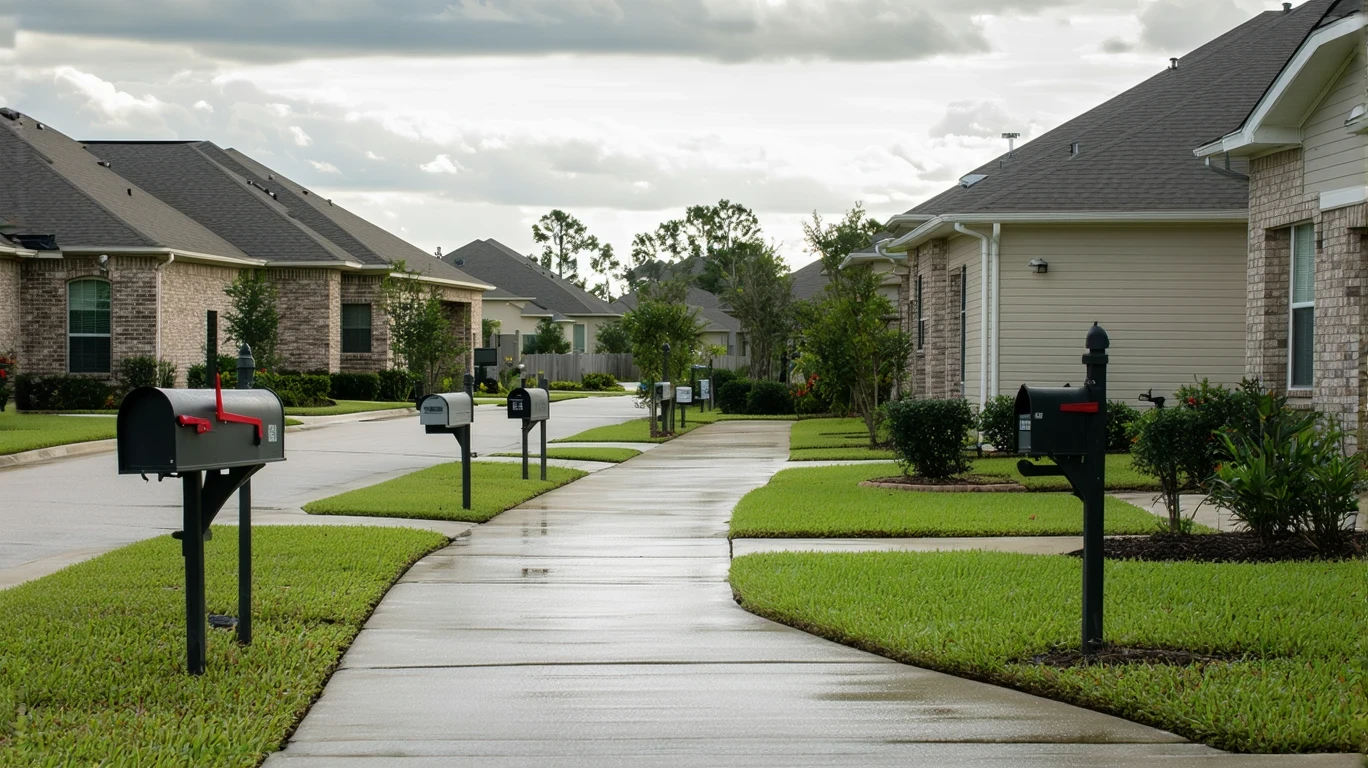
Florida’s tax structure applies uniformly across Clearwater and Lakeland: no state income tax, reliance on sales taxes and property taxes, and local fees for services like trash collection and water. Because both cities operate under the same state framework and belong to the same metro region, the primary tax and fee differences arise from housing values and the prevalence of homeowners associations (HOAs) rather than from distinct municipal policies.
Property taxes in Florida are assessed based on home value, which means Clearwater homeowners face higher annual property tax bills due to the city’s higher median home value of $287,900 compared to Lakeland’s $207,800. This difference compounds over time: a homeowner in Clearwater pays property taxes on a larger assessed value every year, which increases the ongoing cost of ownership even if the tax rate remains constant. Renters in both cities do not pay property taxes directly, but landlords pass a portion of that cost through in rent. Clearwater’s higher rents reflect, in part, the higher property tax burden on rental property owners.
HOA fees represent another layer of recurring cost that varies by housing type and neighborhood rather than by city. Clearwater’s denser, more vertical housing stock includes a higher concentration of condominiums and townhome communities, many of which carry monthly HOA fees that cover shared amenities, exterior maintenance, and insurance. These fees can range widely but often add $100 to $400 per month to the cost of ownership. Lakeland’s single-family home market includes both HOA-governed subdivisions and non-HOA neighborhoods, giving buyers more choice in whether to accept that recurring obligation. Families planning to buy should investigate HOA prevalence and fee structures in both cities, as these costs are predictable but non-negotiable once committed.
Sales taxes apply uniformly across both cities, so households experience identical exposure on everyday purchases, dining, and goods. Local utility fees—trash collection, water, sewer—also follow similar structures, though individual providers and billing practices may vary by neighborhood. Renters typically see these fees bundled into rent or billed separately as a flat monthly charge. Homeowners pay them directly and have more visibility into rate changes and seasonal adjustments.
Taxes and fees takeaway: Shared state tax structure means differences arise from housing values and HOA prevalence, not distinct municipal policies. Clearwater homeowners face higher property tax exposure due to higher home values; renters absorb a portion of that through higher rents. HOA fees are more common in Clearwater’s denser, condo-heavy housing stock, adding predictable but non-negotiable monthly costs. Lakeland offers more non-HOA single-family options, reducing recurring fee exposure for buyers who prioritize ownership flexibility. Long-term homeowners in Clearwater should budget for higher property taxes and potential HOA obligations; Lakeland buyers gain more control over recurring fees but must manage car-dependent commute costs instead.
Transportation & Commute Reality
Transportation costs and commute patterns represent one of the sharpest structural divides between Clearwater and Lakeland. Clearwater’s experiential signals reveal walkable pockets with a high pedestrian-to-road ratio, bus transit service, and medium bike infrastructure presence. This doesn’t mean Clearwater is universally car-free, but it does mean that many households can reduce vehicle dependence for errands, short trips, and daily routines. Lakeland’s commute data tells a different story: the average commute runs 23 minutes, 27.8% of workers face long commutes, and only 7.0% work from home. These figures point to a car-oriented layout where most households rely on personal vehicles for both commuting and daily errands.
For single adults and couples, the difference in transportation structure affects both time and cash budgets. A renter in Clearwater who can walk to a grocery store, take the bus to work, or bike to nearby amenities reduces fuel consumption, vehicle wear, and parking costs. Even households that own a car in Clearwater may drive less frequently, lowering monthly fuel expenses and extending the time between maintenance intervals. In Lakeland, the same household likely drives daily—to work, to the grocery store, to run errands—accumulating miles, fuel costs, and vehicle depreciation at a faster rate. Gas prices differ slightly between the cities ($2.87 per gallon in Clearwater vs. $2.78 in Lakeland), but the structural difference in how much driving is required far outweighs the per-gallon price gap.
Families with multiple drivers face compounded exposure in Lakeland. A household with two working adults and a teenage driver may operate two or three vehicles, each logging significant miles for commuting, school, and errands. Fuel, insurance, registration, and maintenance costs multiply with each additional vehicle. Clearwater’s transit and walkable infrastructure won’t eliminate the need for a car in most family scenarios, but it can reduce the pressure to own multiple vehicles or drive for every trip. Families in Lakeland should budget not only for higher fuel consumption but also for the time cost of longer commutes—27.8% of workers face long commutes, which translates to less time at home, more stress, and reduced schedule flexibility.
Households considering remote work or hybrid schedules gain more flexibility in Lakeland’s lower-cost housing market, but only 7.0% of Lakeland workers currently work from home, suggesting that most jobs in the area require in-person presence. Clearwater’s denser, mixed-use environment may offer more opportunities for short commutes or transit-accessible employment, though specific job market data is not available. The trade-off becomes one of housing cost savings versus transportation time and expense: Lakeland offers lower rents and home prices but demands more driving, longer commutes, and greater vehicle dependence. Clearwater imposes higher housing costs but reduces the need to drive for every errand and offers bus transit as a fallback option.
Transportation takeaway: Clearwater’s walkable pockets, bus transit, and mixed-use density reduce car dependence and lower transportation costs for households that can take advantage of the infrastructure. Lakeland’s 23-minute average commute, 27.8% long-commute rate, and low remote work percentage point to a car-oriented layout where most households drive daily and accumulate higher fuel, maintenance, and time costs. Singles and couples in Clearwater gain the most from reduced vehicle reliance; families in Lakeland face compounded exposure if multiple drivers are required. The housing cost savings in Lakeland must be weighed against the ongoing transportation and time burden that car dependence creates.
Cost Structure Comparison
Housing pressure dominates the cost experience in Clearwater, where higher median rents and home values create a steeper entry barrier and tighter monthly margins for renters and buyers alike. Lakeland’s lower housing costs provide immediate budget relief, but that advantage shifts cost pressure toward transportation and time. Households in Lakeland drive more, commute longer, and rely on personal vehicles for nearly every errand, which accumulates fuel, maintenance, and depreciation costs that Clearwater households can partially avoid through walkable infrastructure and bus transit. The decision between the two cities hinges on whether a household is more sensitive to front-loaded housing costs or ongoing transportation and time burdens.
Utilities introduce minimal structural difference because both cities share identical electricity and natural gas rates and operate under the same climate conditions. However, Clearwater’s denser, more vertical housing stock—apartments, condos, townhomes—tends to reduce per-household energy consumption compared to Lakeland’s single-family home market. Families in larger, detached homes in Lakeland face higher cooling loads and more seasonal volatility, while renters in Clearwater’s multi-unit buildings gain predictability and lower baseline usage. The difference matters most for families in older, larger homes; singles and couples in smaller units see minimal variation.
Groceries and daily expenses reflect access structure rather than price differences. Clearwater’s corridor-clustered grocery density and walkable errands infrastructure reduce friction costs for households that value convenience and frequent, small shopping trips. Lakeland’s car-oriented layout favors families with vehicles and storage who can take advantage of bulk shopping and planned grocery hauls. Neither city is objectively cheaper for groceries—both share the same regional price parity—but the logistical burden of running errands differs sharply. Households in Clearwater gain flexibility and choice; households in Lakeland gain volume efficiency but absorb more driving and time costs.
Taxes and fees follow the same state structure in both cities, but Clearwater homeowners face higher property tax exposure due to higher home values. HOA fees are more common in Clearwater’s condo-heavy housing stock, adding predictable but non-negotiable monthly costs. Lakeland offers more non-HOA single-family options, reducing recurring fee exposure for buyers who prioritize ownership flexibility. The difference is less about tax policy and more about housing form: Clearwater’s density creates more shared-cost structures, while Lakeland’s sprawl allows more individual control over recurring obligations.
For households sensitive to housing entry costs and monthly rent or mortgage payments, Lakeland offers a clearer path to affordability. For households sensitive to transportation friction, time costs, and car dependence, Clearwater’s higher housing costs may be offset by lower transportation exposure and reduced logistical complexity. The better choice depends entirely on which costs dominate the household budget and which trade-offs feel more manageable. There is no universal winner—only different cost structures that fit different household priorities.
How the Same Income Feels in Clearwater vs. Lakeland
Single Adult
Housing becomes the first non-negotiable cost, and Clearwater’s higher median rent of $1,389 per month leaves less room for discretionary spending compared to Lakeland’s $1,217. However, flexibility emerges in transportation: a single adult in Clearwater can reduce or eliminate car ownership by relying on bus transit and walkable errands infrastructure, cutting fuel, insurance, and maintenance costs. In Lakeland, the same income requires a vehicle and daily driving, which absorbs the housing savings through higher transportation exposure. The difference is less about total spending and more about whether the household values lower rent or reduced car dependence.
Dual-Income Couple
Two incomes provide more budget margin, but the trade-off between housing and transportation sharpens. A couple in Clearwater faces higher rent but can share one vehicle or rely on transit for one partner’s commute, reducing transportation costs and time burdens. In Lakeland, both partners likely drive daily, requiring two vehicles and doubling fuel, insurance, and maintenance exposure. The housing savings in Lakeland create flexibility for other priorities—savings, dining, travel—but only if the couple accepts longer commutes and higher vehicle dependence. Clearwater’s structure reduces logistical complexity but demands more income allocated to rent or mortgage payments.
Family with Kids
Families face the most complex cost interaction because housing size, school access, and transportation needs all escalate simultaneously. Lakeland’s lower home prices make single-family ownership more accessible, which matters for families seeking yard space and larger square footage. However, families in Lakeland absorb higher transportation costs—multiple vehicles, longer commutes, and more driving for school, activities, and errands. Clearwater’s higher housing costs buy access to denser infrastructure, integrated parks, and family amenities within shorter distances, reducing time costs and vehicle dependence. The trade-off becomes one of space versus logistics: Lakeland offers more house for less money, but Clearwater reduces the daily friction of managing a household with kids.
Decision Matrix: Which City Fits Which Household?
| Decision factor | If you’re sensitive to this… | Clearwater tends to fit when… | Lakeland tends to fit when… |
|---|---|---|---|
| Housing entry + space needs | Down payment size, monthly rent or mortgage obligation, access to single-family homes | You value walkable infrastructure and transit access enough to accept higher rents or home prices | Lower entry costs and access to single-family homes outweigh transportation and time trade-offs |
| Transportation dependence + commute friction | Daily driving requirements, fuel costs, vehicle ownership burden, commute time | Reducing car dependence and shortening errands loops matters more than housing cost savings | You have reliable vehicle access and accept longer commutes in exchange for lower housing costs |
| Utility variability + home size exposure | Seasonal cooling costs, energy bill predictability, housing type and square footage | You prefer smaller, multi-unit housing with lower baseline energy usage and more predictable bills | You prioritize single-family home ownership and can manage higher cooling loads and seasonal volatility |
| Grocery strategy + convenience spending creep | Errands logistics, access to multiple stores, ability to shop without a car, bulk vs. frequent trips | You value walkable grocery access, frequent small trips, and comparison shopping without driving | You have vehicle and storage capacity for bulk shopping and prefer planned, less frequent grocery hauls |
| Fees + friction costs (HOA, services, upkeep) | Recurring monthly fees, property tax exposure, shared-cost structures, ownership flexibility | You accept higher property taxes and potential HOA fees in exchange for denser, mixed-use infrastructure | You prefer non-HOA single-family options and more control over recurring fees and maintenance obligations |
| Time budget (schedule flexibility, errands, logistics) | Commute duration, errands complexity, household logistics with kids, daily routine predictability | Shorter errands loops and reduced driving time outweigh the higher cost of housing in your budget | You can absorb longer commutes and more driving in exchange for lower monthly housing obligations |
Lifestyle Fit
Clearwater’s walkable pockets, bus transit, and mixed-use density create a lifestyle centered on proximity and reduced car dependence. Households that value being able to walk to a coffee shop, take the bus to work, or bike to a park will find Clearwater’s infrastructure supports that daily rhythm. The city’s integrated green space access—high park density and water features—offers outdoor recreation without requiring a drive to a trailhead or nature area. Families benefit from strong infrastructure for schools and playgrounds, both meeting density thresholds that suggest accessible options within shorter distances. The more vertical building character and mixed residential-commercial land use mean that errands, dining, and services cluster within compact areas, reducing the logistical burden of managing a household.
Lakeland’s car-oriented layout and longer average commute times reflect a lifestyle built around personal vehicles and single-family home ownership. Households that prioritize yard space, larger square footage, and lower housing entry costs will find Lakeland’s market more accommodating. However, the trade-off is time: 27.8% of workers face long commutes, and the low 7.0% remote work rate suggests that most jobs require in-person presence. Families in Lakeland gain more house for less money but absorb the time cost of driving to work, school, groceries, and activities. The city’s structure favors households with reliable vehicle access and the schedule flexibility to manage longer commutes without stress.
Both cities share Florida’s humid subtropical climate, with hot summers dominated by cooling costs and minimal heating needs. Clearwater’s coastal proximity and water features offer recreational opportunities tied to the Gulf of Mexico, while Lakeland’s inland location provides a quieter, less tourist-heavy environment. Households that value beach access and waterfront recreation will find Clearwater’s location a lifestyle advantage; households seeking a more residential, less transient community may prefer Lakeland’s character. The unemployment rate in Clearwater sits at 3.3% compared to Lakeland’s 4.2%, suggesting slightly tighter labor market conditions in Clearwater, though both figures reflect relatively healthy regional employment.
Quick facts: Clearwater offers bus transit and walkable pockets, reducing the need for a car in many daily scenarios. Lakeland’s average commute runs 23 minutes, with over a quarter of workers facing long commutes. Clearwater’s park density exceeds high thresholds, with water features integrated throughout the city. Lakeland’s housing market provides more single-family options at lower entry costs, favoring families seeking space and ownership.
Frequently Asked Questions
Is Clearwater or Lakeland cheaper for renters in 2026?
Lakeland’s median gross rent of $1,217 per month is lower than Clearwater’s $1,389, providing immediate monthly savings for renters. However, Lakeland’s car-oriented layout means renters likely need a vehicle and will drive more frequently, absorbing fuel, insurance, and maintenance costs that Clearwater renters can partially avoid through bus transit and walkable errands infrastructure. The better choice depends on whether the household values lower rent or reduced transportation exposure.
How do housing costs in Clearwater compare to Lakeland for first-time homebuyers in 2026?
Clearwater’s median home value of $287,900 creates a higher down payment requirement and steeper entry barrier compared to Lakeland’s $207,800. First-time buyers in Lakeland gain access to single-family homes at lower upfront costs, while buyers in Clearwater pay more for denser, mixed-use infrastructure and reduced car dependence. The trade-off is between front-loaded housing costs and ongoing transportation and time burdens.
Which city has lower transportation costs,