
“I thought I could make it work without a second car when we first moved here,” says Marcus, who commutes from Clayton to Raleigh for work. “That lasted about three weeks. The reality is, if you’re working outside Clayton, you need your own wheels—there’s just no way around it.”
Understanding transportation options in Clayton means recognizing what this growing town is—and isn’t—built for. Clayton sits in a region where employment centers are spread across multiple municipalities, commute distances are substantial, and the infrastructure reflects a car-first development pattern. For anyone considering a move here, the transportation reality shapes daily routines, household logistics, and long-term cost exposure more than almost any other factor.
This article explains how people actually get around Clayton, what mobility options exist in practice, and which households adapt easily versus which face ongoing friction.
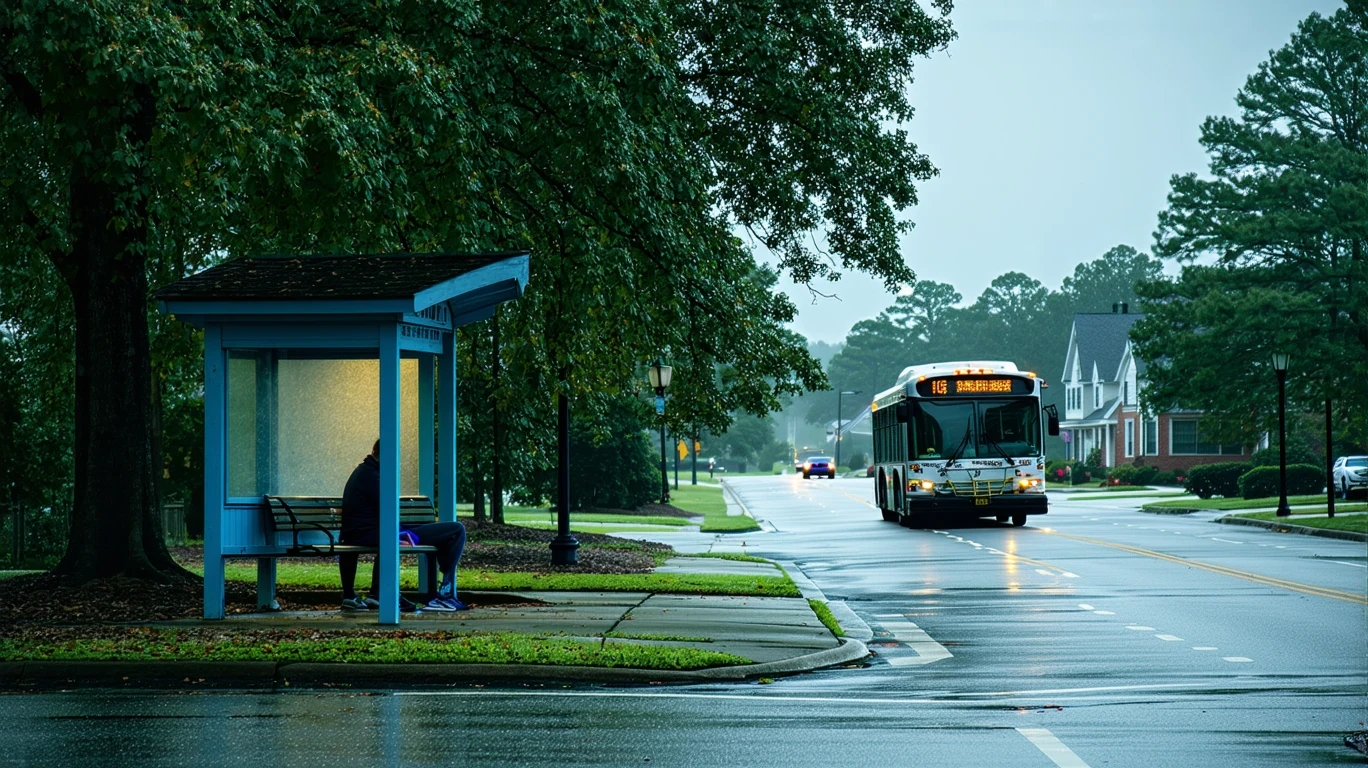
How People Get Around Clayton
Clayton operates as a car-dominant suburb. The town’s layout, density, and relationship to surrounding employment centers all reinforce driving as the primary—and for most residents, only—viable mode of daily transportation.
Infrastructure data shows Clayton has developed walkable pockets where pedestrian-to-road ratios exceed typical suburban thresholds, and cycling infrastructure is notably present throughout parts of the town. But these features serve neighborhood-level mobility and recreation far more than employment commuting. With an average commute time of 31 minutes and 53.8% of workers facing long commutes, the distances and destinations involved make car ownership functionally non-negotiable for the majority of households.
Only 9.6% of Clayton workers operate from home, meaning over 90% must travel to a workplace—most of which lie outside Clayton’s borders, in Raleigh, Garner, or other parts of the Research Triangle region.
Newcomers often underestimate how car-dependent Clayton is, especially those relocating from transit-rich metros or walkable urban cores. The presence of sidewalks, bike lanes, and mixed-use pockets can create an initial impression of walkability, but these elements don’t extend to employment access. Clayton’s role as a bedroom community means most economic activity happens elsewhere, and the infrastructure reflects that.
Public Transit Availability in Clayton
Clayton does not have detectable public transit infrastructure serving daily commuters. No bus routes or rail stations were identified within the town’s mobility network, and regional transit connections that might link Clayton to Raleigh or other employment hubs are either absent or insufficient to serve as a practical commuting option for residents.
This is not an oversight—it reflects Clayton’s development pattern and regional role. The town grew rapidly as a suburban extension of the Raleigh metro, and its street network, housing stock, and commercial corridors were designed around private vehicle access. Transit systems typically require density, mixed-use corridors, and concentrated destinations to function efficiently, and Clayton’s layout does not provide those conditions at scale.
For households accustomed to cities where transit reduces or eliminates car dependence, this absence is a fundamental shift. There is no fallback option for getting to work, running errands, or managing household logistics without a vehicle. Ride-hailing services exist but are not a substitute for structured transit—they’re expensive, unpredictable during peak times, and unavailable in some outlying areas.
Driving & Car Dependence Reality
In Clayton, car ownership isn’t a convenience—it’s infrastructure. The 53.8% long-commute rate signals that over half of workers travel significant distances daily, and the 31-minute average commute reflects both distance and the realities of regional traffic patterns.
Driving provides the flexibility Clayton’s geography demands. Employment is dispersed across Raleigh, Research Triangle Park, Garner, and other nodes, and commute routes vary widely by household. Parking is abundant and typically free, both in residential areas and at most commercial destinations, which removes one of the friction points common in denser cities.
But car dependence also creates exposure. Households must budget for vehicle acquisition, insurance, maintenance, fuel, and depreciation—all of which are ongoing and non-discretionary. Gas prices in Clayton currently sit at $2.71 per gallon, but fuel is only one component of transportation cost. The larger financial commitment is the vehicle itself and the systems required to keep it operational.
Multi-driver households face compounded exposure. Families with two working adults almost always need two vehicles, and households with teenage drivers often add a third. Each additional vehicle increases fixed costs and creates more surface area for maintenance surprises, registration fees, and insurance complexity.
The tradeoff is control and predictability. Driving allows households to manage their own schedules, chain errands efficiently, and avoid the delays and coverage gaps that plague transit systems elsewhere. For many Clayton residents, that tradeoff feels reasonable—but it’s still a tradeoff, and it’s one that shapes what a budget has to handle in Clayton in ways that aren’t immediately obvious during a first visit.
Commuting Patterns & Daily Mobility
Most Clayton commuters follow a hub-and-spoke pattern: they live in Clayton and work elsewhere. Raleigh is the most common destination, but Research Triangle Park, Cary, Garner, and even Durham pull workers from Clayton’s residential base.
Commute structure varies by household type. Single-job commuters with predictable schedules face the least friction—they optimize their route once and repeat it daily. But households managing multiple jobs, school drop-offs, daycare pickups, or eldercare responsibilities face compounding logistics. Without transit to absorb even one leg of the daily circuit, every trip requires a vehicle, and every vehicle requires a driver.
This is where Clayton’s walkable pockets and cycling infrastructure show their limits. A resident might bike to a local coffee shop or walk to a nearby park, but those trips don’t reduce commute exposure. The 31-minute average commute reflects highway travel, not neighborhood circulation, and the 53.8% long-commute figure signals that a majority of workers are traveling well beyond Clayton’s borders.
Remote work offers the only true escape from this pattern, but at 9.6%, it’s a minority arrangement. For the 90% who must travel to work, the question isn’t whether to drive—it’s how to manage the time, cost, and complexity that driving imposes.
Who Transit Works For — and Who It Doesn’t
Transit doesn’t work for anyone in Clayton in a functional, day-to-day sense—because it doesn’t exist at a scale that serves employment commuting.
This creates a clear dividing line between households that adapt easily and those that struggle. Car-owning households with predictable work locations, stable incomes, and the ability to absorb vehicle costs fit Clayton’s transportation structure well. Families with multiple drivers, flexible schedules, and suburban preferences often find Clayton’s car-dependent layout more liberating than restrictive.
But transit-dependent households—those without access to a vehicle, those with a single car and multiple workers, or those who cannot drive due to age, disability, or legal status—face significant barriers. Clayton’s infrastructure does not accommodate them, and the lack of alternatives means they either adapt by acquiring vehicles (and the debt or expense that entails) or accept severe limitations on employment access, healthcare appointments, and daily errands.
Renters in Clayton’s more affordable apartment complexes often face the steepest mobility challenges. These households are more likely to be cost-constrained, less likely to own multiple vehicles, and more likely to work hourly or shift-based jobs that don’t align neatly with carpool arrangements. For them, Clayton’s transportation reality isn’t a tradeoff—it’s a structural disadvantage.
Transportation Tradeoffs in Clayton
Comparing transit and driving in Clayton isn’t a meaningful exercise, because transit isn’t a live option. The real tradeoff is between accepting car dependence and choosing a different place to live.
Car dependence in Clayton offers control, flexibility, and alignment with the town’s infrastructure. Households that own reliable vehicles, have predictable commutes, and value suburban space over urban density often find this arrangement preferable to the delays, crowding, and coverage gaps they’ve experienced in transit-dependent cities.
But car dependence also creates rigidity. Households cannot reduce transportation costs by substituting transit for driving. They cannot avoid vehicle ownership or defer major repairs without losing access to employment. And they cannot easily adapt to changes in household composition—adding a teenage driver, losing a vehicle to an accident, or supporting an aging parent who can no longer drive all create logistical and financial stress that transit systems would otherwise absorb.
The absence of transit also limits housing flexibility. In cities with strong transit networks, households can trade longer commutes for lower rent by moving farther from job centers while maintaining access via rail or bus. In Clayton, distance from employment always means more driving, more fuel consumption, and more time in the car. There’s no mechanism to convert distance into a different mode.
FAQs About Transportation in Clayton (2026)
Is public transit usable for daily commuting in Clayton?
No. Clayton does not have public transit infrastructure that supports employment commuting. Residents rely on private vehicles for nearly all travel, including commutes to Raleigh and other regional job centers.
Do most people in Clayton rely on a car?
Yes. Over 90% of workers commute to jobs outside the home, and the town’s layout and regional role make car ownership functionally required. Multi-vehicle households are common, especially among families with multiple working adults.
Which areas of Clayton are easiest to live in without a car?
None, realistically. While some neighborhoods have walkable pockets with good pedestrian and cycling infrastructure, these features serve local errands and recreation, not employment access. Without a car, reaching jobs, healthcare, and essential services becomes extremely difficult.
How does commuting in Clayton compare to nearby cities?
Clayton’s 31-minute average commute and 53.8% long-commute rate reflect its role as a bedroom community. Residents typically drive to Raleigh, Research Triangle Park, or other regional employment centers, and commute length depends heavily on destination and traffic patterns. Compared to Raleigh proper, Clayton commuters generally travel farther and rely more heavily on highway access.
Can you get by with one car in a two-adult household in Clayton?
It depends entirely on work locations and schedules. If both adults work in the same direction or have staggered shifts, one vehicle might suffice, but it creates logistical friction and eliminates flexibility. Most two-adult working households in Clayton operate two vehicles to avoid this constraint.
How Transportation Fits Into the Cost of Living in Clayton
Transportation in Clayton isn’t just a budget line—it’s a structural factor that shapes housing choice, time allocation, and household flexibility. The absence of transit means vehicle costs are non-negotiable, and the long commutes many residents face mean those costs are both high and recurring.
Households evaluating Clayton need to account for vehicle acquisition, insurance, fuel, maintenance, and registration as fixed costs, not optional expenses. For multi-driver households, these costs multiply, and for households with older or less reliable vehicles, the risk of sudden repair expenses adds volatility.
But transportation also determines what housing is accessible. Proximity to Raleigh or major employment corridors reduces commute time and fuel costs, but those locations command higher rents and home prices. Moving farther from job centers lowers housing costs but increases transportation exposure, and without transit to soften that tradeoff, the math is purely linear: more distance always means more driving.
The best way to understand how transportation costs interact with housing, utilities, and other expenses is to review the full picture. For a breakdown of how all these pieces fit together, see the monthly budget guide for Clayton.
Clayton’s transportation reality is clear, consistent, and car-dependent. Households that accept that structure and plan accordingly tend to adapt well. Those that need alternatives face a much harder road.
How this article was built: In addition to public economic data, this article incorporates location-based experiential signals derived from anonymized geographic patterns—such as access density, walkability, and land-use mix—to reflect how day-to-day living actually feels in Clayton, NC.