
Can you live in Cibolo without a car? For most people, the answer is no—and understanding why reveals a lot about how daily life actually works here. Cibolo is a growing suburban city northeast of San Antonio, shaped by low-rise residential neighborhoods, integrated parks, and a layout that rewards vehicle ownership. While the city offers some pedestrian infrastructure and mixed land use, the structure of daily errands and the absence of robust transit options make driving the default for nearly every household.
This article explains transportation options in Cibolo, what public transit realistically offers, how car dependence shapes daily routines, and which household types find mobility here manageable versus frustrating.
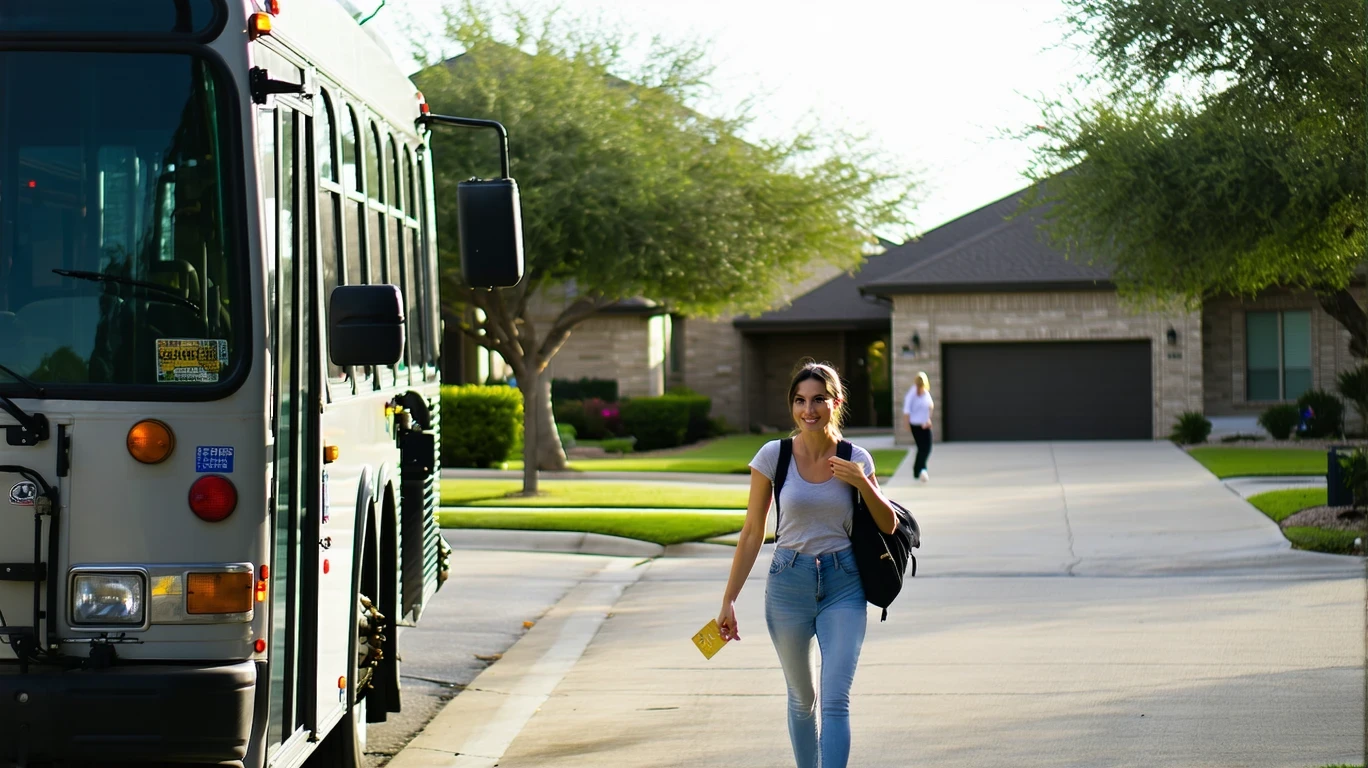
How People Get Around Cibolo
Cibolo’s transportation reality is straightforward: most residents drive. The city’s pedestrian-to-road ratio sits in a moderate band, meaning sidewalks and pathways exist in many neighborhoods, but they don’t form a continuous network dense enough to replace a car for daily tasks. Food and grocery establishments are sparse relative to the city’s footprint, which means even short errands often require driving to reach the nearest store or service.
What newcomers often misunderstand is that Cibolo’s layout isn’t hostile to walking—it’s just not structured to support car-free living. You can walk your neighborhood, enjoy the city’s well-distributed parks, and move comfortably within residential pockets. But getting around for work, groceries, healthcare, or school drop-offs almost always involves a vehicle. The city’s low-rise character and mixed residential-commercial land use create a pleasant suburban environment, but one that assumes car ownership as the baseline.
Public Transit Availability in Cibolo
Public transit in Cibolo is minimal. The city does not have its own dedicated transit system, and regional bus service from the San Antonio metro area offers limited reach into Cibolo’s residential neighborhoods. While some residents near major corridors or closer to the city’s southern edge may encounter regional shuttle options, coverage is sparse and schedules are not designed for daily commuting or errands within Cibolo itself.
Transit works best—if at all—for residents who live near a handful of access points and whose destinations align with regional routes heading into San Antonio. For everyone else, transit is effectively unavailable. Late hours, weekend service, and coverage beyond main roads are all weak points. The infrastructure exists in theory, but in practice, it doesn’t serve the majority of Cibolo’s geography or daily needs.
This isn’t a failure of planning—it’s a reflection of Cibolo’s role as a suburban extension of a larger metro. The city developed around car access, and transit has not kept pace with residential growth or the dispersed pattern of schools, clinics, and grocery stores.
Driving & Car Dependence Reality
Driving isn’t just common in Cibolo—it’s structurally necessary. Sparse food and grocery density means even a quick trip for milk or prescriptions often involves a drive of several minutes. Schools are spread across the city with density below typical thresholds, so most families drive for drop-offs and pickups. Clinics are present, but without a hospital in the city, more serious healthcare needs require driving to nearby Schertz or San Antonio.
Parking is abundant and free in most contexts, which removes one layer of friction common in denser cities. Commute flexibility is high for those working locally or willing to drive into San Antonio, but that flexibility depends entirely on vehicle access. For households with one car and multiple working adults, coordination becomes a daily logistical task.
The city’s layout rewards car ownership with predictability: you can reach most destinations within Cibolo in under ten minutes, and access to regional highways makes longer commutes manageable. But that same layout penalizes households without a car, turning routine errands into multi-hour obstacles involving rides, planning, or delivery fees.
Commuting Patterns & Daily Mobility
Cibolo functions as a bedroom community for many residents who commute into San Antonio or nearby employment centers. The typical commute structure is single-destination: home to work, work to home, with errands folded in on the way. Multi-stop commutes—dropping kids at school, stopping for groceries, picking up a prescription—are common and almost always car-based.
Remote workers and retirees benefit most from Cibolo’s mobility structure. They avoid the daily commute entirely and can time errands during off-peak hours when roads are clear and parking is easy. Families with school-age children face more friction: school density is limited, so even nearby schools may require a drive, and after-school activities or sports often mean additional trips.
Proximity matters, but not in the way it does in transit-rich cities. Living closer to Cibolo’s commercial corridors reduces drive time but doesn’t eliminate the need to drive. The city’s low-rise character and integrated green space make it pleasant to live in, but daily mobility hinges on vehicle access, not walkability or transit coverage.
Who Transit Works For—and Who It Doesn’t
Transit in Cibolo works for almost no one as a primary mode of transportation. The absence of frequent, reliable service within city limits means even transit-dependent households struggle. If you don’t own a car and need to work, shop, or access healthcare regularly, Cibolo presents significant challenges.
Renters in Cibolo face the same car dependence as homeowners. The city’s housing stock is low-rise and spread across neighborhoods without concentrated commercial cores, so proximity to transit or walkable errands is rare regardless of tenure. Families, remote workers, and retirees all benefit from car ownership here; the difference is in how much driving they do, not whether they drive at all.
The households that find Cibolo most manageable are those with two vehicles, flexible schedules, and a tolerance for suburban commuting rhythms. Single-car households can make it work but face coordination costs. Car-free households face isolation and high reliance on delivery services, rides, or regional transit that doesn’t reliably serve their needs.
Transportation Tradeoffs in Cibolo
Choosing to rely on a car in Cibolo means accepting predictability and control in exchange for ongoing vehicle costs and commute time. You decide when you leave, where you stop, and how you route your day. You’re insulated from service cuts, schedule changes, and coverage gaps. But you’re also exposed to fuel price swings, maintenance needs, insurance premiums, and the time cost of driving.
Choosing to rely on transit—or attempting to—means accepting severe limitations in Cibolo. You lose flexibility, face longer trip times, and encounter frequent gaps in service. The tradeoff isn’t financial savings versus convenience; it’s near-total mobility versus restricted access to work, errands, and services.
For most households, the question isn’t whether to drive but how much driving they’re willing to absorb. Commuters heading into San Antonio weigh time and fuel exposure against housing affordability and space. Families weigh school access and activity logistics against proximity to work. Remote workers and retirees weigh errands frequency against the appeal of Cibolo’s parks and low-rise neighborhoods.
FAQs About Transportation in Cibolo (2026)
Is public transit usable for daily commuting in Cibolo?
No, not for most residents. Regional bus service exists but offers limited coverage within Cibolo and infrequent schedules. Daily commuting by transit is not practical for the majority of households.
Do most people in Cibolo rely on a car?
Yes. The city’s layout, sparse grocery and food access, and limited transit infrastructure make car ownership necessary for nearly all daily tasks, from work commutes to errands and school runs.
Which areas of Cibolo are easiest to live in without a car?
None, realistically. Even neighborhoods with moderate pedestrian infrastructure and proximity to commercial corridors still require a car for groceries, healthcare, and most services. Walkability exists for recreation, not for car-free living.
How does commuting in Cibolo compare to nearby cities?
Cibolo functions as a suburban commuter city with highway access to San Antonio. Commute times depend on destination and traffic, but the structure is similar to other bedroom communities in the metro: driving is required, and transit is not a viable alternative.
Can you get by with one car in Cibolo?
Many households do, but it requires coordination. If both adults work outside the home or have conflicting schedules, one-car logistics become a daily planning task. Two-car households face fewer constraints and more flexibility.
How Transportation Fits Into the Cost of Living in Cibolo
Transportation in Cibolo isn’t just a line item—it’s a structural factor that shapes where you live, how you spend your time, and what tradeoffs you accept. Car dependence means vehicle costs are unavoidable for most households, but those costs come with predictability and control. You’re not waiting for a bus or adjusting your schedule to match transit hours. You’re managing fuel, insurance, and maintenance on your own terms.
For a fuller picture of monthly expenses and how transportation fits alongside housing, utilities, and other costs, the Monthly Budget article provides grounded context. But the transportation reality in Cibolo is clear: this is a city built for drivers, and households without reliable vehicle access face significant friction in daily life.
If you’re considering a move to Cibolo, plan for car ownership. The city offers integrated parks, low-rise neighborhoods, and a family-friendly layout—but all of it assumes you can drive. That’s not a drawback for most households; it’s simply the structure of life here.
How this article was built: In addition to public economic data, this article incorporates location-based experiential signals derived from anonymized geographic patterns—such as access density, walkability, and land-use mix—to reflect how day-to-day living actually feels in Cibolo, TX.