
How much is enough to feel at ease? In Cibolo, the answer depends less on a number and more on how your household handles tradeoffs between housing, logistics, and time. Comfort here isn’t about hitting an income threshold—it’s about whether your earnings give you enough room to absorb the friction that comes with suburban life in a place where convenience costs extra effort.
Cibolo sits in the San Antonio metro, with a median household income of $116,510 per year. But that figure tells you almost nothing about whether you’ll feel comfortable. What matters more is how your income interacts with the structure of daily life: the distance between home and errands, the intensity of summer heat, the logistics of getting kids where they need to be, and whether your housing leaves enough slack for everything else.
What “Living Comfortably” Means in Cibolo
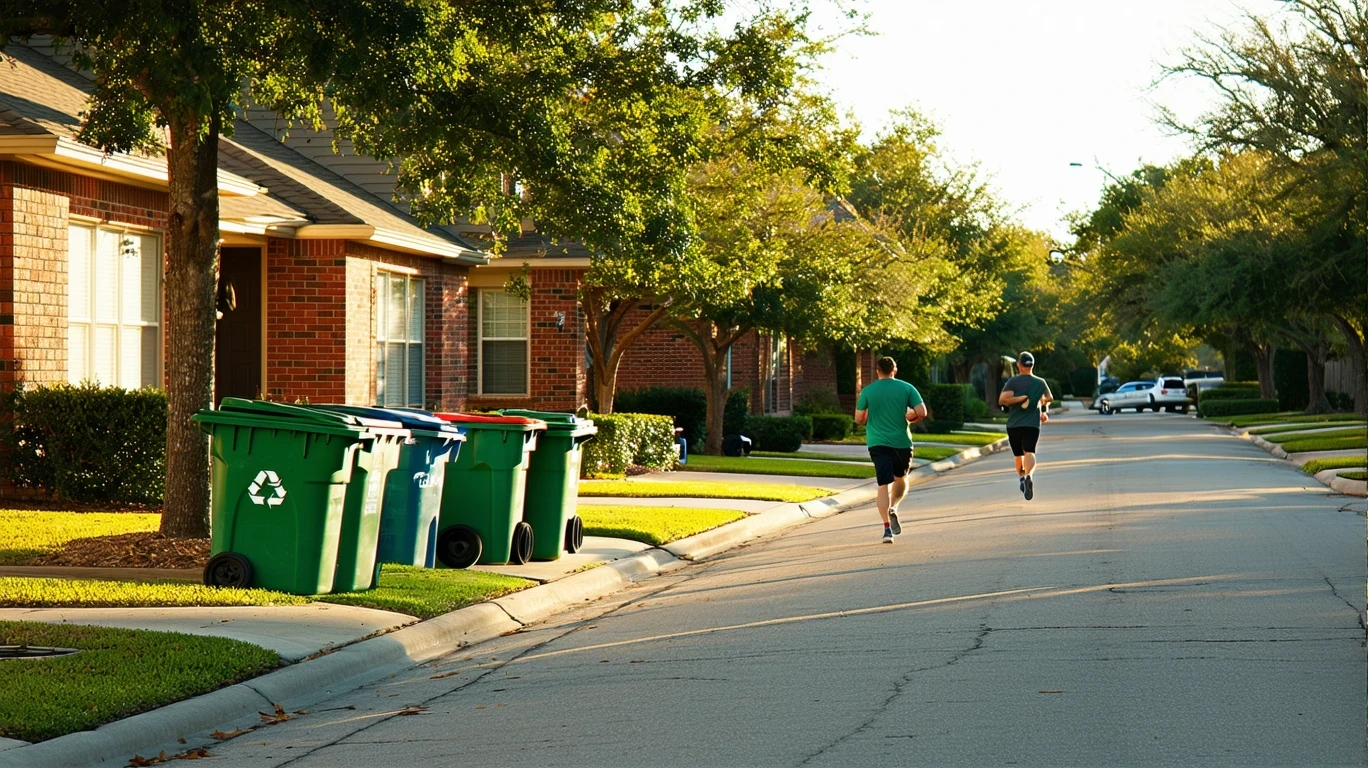
Comfort in Cibolo means different things depending on what you value and what you’re willing to manage. For some households, it’s having a single-family home with a yard and access to parks—Cibolo offers that, with park density well above typical thresholds and water features woven into the landscape. For others, it’s minimizing the time spent planning trips to the grocery store or pharmacy.
The reality is that Cibolo’s layout creates a specific texture of daily life. Food and grocery establishment density falls below low thresholds, meaning errands require intentional planning and car trips. There’s a moderate level of pedestrian infrastructure relative to roads, but the overall environment leans toward driving as the primary mode. If your definition of comfort includes being able to walk to grab milk or pick up a prescription on a whim, Cibolo will feel less convenient than places with denser commercial corridors.
Climate also shapes comfort expectations. Triple-digit summer heat is common, and cooling costs aren’t optional—they’re a baseline household expense. Electricity rates sit at 16.04¢ per kWh, and when the air conditioner runs for months on end, bills rise accordingly. Comfort here includes the ability to cool your home without constantly adjusting the thermostat out of financial anxiety.
Space, access to green areas, and low-rise residential character define much of Cibolo’s appeal. But convenience, walkability, and spontaneous errands are not part of the package. Households that feel comfortable here tend to be those who’ve accepted—or prefer—a car-dependent rhythm and don’t mind the logistics that come with it.
Where Income Pressure Shows Up First
Income pressure in Cibolo doesn’t announce itself with one large bill. It accumulates across housing, transportation, utilities, and time.
Housing is the starting point. The median home value is $291,500, and median gross rent is $1,872 per month. For renters, that figure represents a fixed monthly obligation before utilities, transportation, or groceries enter the picture. For buyers, mortgage payments, property taxes, insurance, and maintenance combine into a monthly reality that doesn’t pause during expensive months. Households that stretch to afford housing often find themselves with little room to absorb surprises elsewhere.
Transportation costs layer on top. Cibolo’s structure requires a car for nearly everything—work, errands, school drop-offs, healthcare. Gas prices currently sit at $2.45 per gallon, but the real cost isn’t just fuel. It’s insurance, maintenance, and the time spent behind the wheel. Families with multiple drivers face multiplied expenses. Single adults may spend less in absolute terms but still shoulder the full cost alone.
Utility volatility is another pressure point. Summer cooling dominates household energy use, and while rates are published, the intensity and duration of heat determine the actual impact. Homes that aren’t well-insulated or that face afternoon sun see higher bills. Natural gas, priced at $30.71 per MCF, plays a smaller role in this climate but still factors into water heating and occasional winter use.
For families, pressure also shows up in logistics complexity. School density in Cibolo falls below low thresholds, meaning some families face longer drives or need to research district boundaries carefully. Clinic access is present locally, but hospital care requires travel. Errands can’t be combined easily when stores are scattered, so trips multiply. Time becomes a hidden cost, and for households where both adults work, that time pressure translates into stress even when income seems adequate on paper.
How the Same Income Feels Different by Household
Households at similar income levels often experience very different pressure depending on size, structure, and expectations.
Single adults face lower absolute housing pressure but carry the full weight of car dependency alone. A one-bedroom apartment or small rental still requires a vehicle, insurance, and fuel. Errands sparsity means planning ahead and dedicating time to trips that can’t be done on foot. The lack of walkable amenities reduces spontaneity. For single adults who value convenience and flexibility, Cibolo’s structure can feel isolating and time-consuming, even with a solid income.
Couples without children often find more breathing room. Dual incomes can absorb housing and transportation costs more easily, and errands planning becomes a shared task rather than an individual burden. Cibolo’s strong park access offers recreational value, and the low-rise, mixed-use character in some areas provides pockets of walkability. Still, the sparse daily infrastructure means that convenience isn’t a given—it’s something you plan for.
Families with children face the most complex tradeoffs. Housing costs rise with the need for more space, and transportation expenses multiply with multiple drivers or school-related trips. The limited school density may require longer commutes or careful attention to district lines. On the other hand, Cibolo’s integrated park infrastructure and water features provide strong outdoor recreation options, which many families prioritize. The question becomes whether your income gives you enough margin to handle the logistics friction—extra driving, planning, and time—without constant stress.
The Comfort Threshold (Qualitative)
Comfort in Cibolo isn’t a single income figure. It’s the point where your earnings give you enough slack that day-to-day costs stop dictating behavior.
You know you’ve crossed that threshold when:
- Housing payments feel sustainable, not stretched
- Summer utility swings don’t force you to adjust the thermostat out of anxiety
- Car expenses—fuel, maintenance, insurance—feel like infrastructure rather than sacrifice
- Errands friction becomes routine rather than stressful
- You can absorb an unexpected expense without derailing the month
- Saving becomes plausible, not aspirational
For some households, that threshold arrives well below the median income. For others—especially families with multiple children, older vehicles, or homes that aren’t energy-efficient—it may require earnings well above it. The difference isn’t just income. It’s how your household’s needs and expectations align with Cibolo’s cost structure and daily logistics.
Why Online Cost Calculators Get Cibolo Wrong
Most cost-of-living calculators treat Cibolo as a set of line items: housing, utilities, transportation, groceries. They produce a total and call it a budget. But totals don’t capture how life actually feels here.
Calculators assume you’ll spend a fixed percentage of income on transportation, but they don’t account for the fact that Cibolo’s sparse errands infrastructure means more trips, more planning, and more time behind the wheel. They include a generic utility estimate but ignore the intensity of summer heat and how cooling costs dominate household energy use for months. They list groceries as a percentage but don’t reflect the reality that you can’t walk to the store—you drive, you plan, and you batch trips.
Calculators also treat all households the same. A single adult, a couple, and a family of four get scaled versions of the same formula. But in Cibolo, household structure determines how much friction you experience. Families face logistics complexity that doesn’t scale linearly with income. Singles face car dependency that doesn’t shrink just because they live alone.
The biggest gap is lifestyle assumptions. Calculators don’t ask whether you value walkability, whether you’re comfortable with car-dependent routines, or whether you expect to combine errands easily. They don’t measure time costs or convenience tradeoffs. People feel surprised after moving because the total seemed affordable, but the daily texture didn’t match their expectations.
How to Judge Whether Your Income Fits Cibolo
Instead of asking “Is my income enough?”, ask yourself these questions:
How sensitive are you to housing tradeoffs? If you need to stretch to afford rent or a mortgage in Cibolo, will you have enough left over to handle transportation, utilities, and the logistics costs that come with suburban life? Housing here isn’t just a monthly payment—it’s the foundation that determines how much flexibility you have everywhere else.
Can you absorb seasonal utility swings? Summer cooling isn’t optional in triple-digit heat. If a few months of higher electricity bills would force you to cut back elsewhere or stress about the thermostat, that’s a signal that your income may not provide the cushion you need.
Is time or money your limiting factor? Cibolo’s layout requires time—time to drive to errands, time to manage logistics, time to get kids to school or activities. If your household is already time-constrained, adding more driving and planning can feel like a cost even when your income seems adequate.
How much do you value walkable convenience? If being able to walk to a coffee shop, pharmacy, or grocery store is important to your sense of comfort, Cibolo will feel limiting. The infrastructure exists in pockets, but it’s not the dominant texture. If you prefer space, parks, and a car-oriented rhythm, the tradeoff may feel worth it.
How much flexibility do you expect month to month? Comfort isn’t just about covering bills—it’s about having enough margin that an unexpected expense, a higher utility month, or a car repair doesn’t create a crisis. If your income leaves little room for variability, Cibolo’s cost structure may feel tighter than you expect.
FAQs About Living Comfortably in Cibolo
Is Cibolo affordable compared to other San Antonio suburbs?
Cibolo’s median rent of $1,872 per month and median home value of $291,500 place it in the middle range for the metro. But affordability depends on what you’re comparing and what you value. If you prioritize space, parks, and a less dense environment, Cibolo may feel like a good fit. If you need walkable errands or shorter commutes, other areas might offer better alignment with your lifestyle.
What income level do most people in Cibolo have?
The median household income is $116,510 per year. But medians don’t tell you who feels comfortable. Some households below that figure manage well because their housing costs are moderate and they’ve adapted to the car-dependent rhythm. Others above it feel stretched because they have larger families, higher housing costs, or expectations that don’t match the local infrastructure.
How much do utilities really cost in Cibolo?
Electricity rates are 16.04¢ per kWh, and natural gas is priced at $30.71 per MCF. But rates don’t determine your bill—usage does. In summer, cooling dominates, and homes that aren’t well-insulated or that face intense sun exposure see higher costs. Winter heating is less intense but still a factor. The real question is whether your income gives you enough margin that seasonal swings don’t force you to adjust your comfort level.
Do you need two cars to live in Cibolo?
Most households do. The sparse daily errands infrastructure and low density mean that nearly every trip requires a vehicle. Families with two working adults or school-age children typically need two cars to manage logistics. Single adults can get by with one, but they’ll still face the full cost of car dependency—fuel, insurance, maintenance—without the ability to share it.
Is Cibolo a good place for families on a budget?
It depends on what “budget” means and what tradeoffs you’re willing to make. Cibolo offers strong park access and outdoor recreation, which many families value. But school density is below low thresholds, errands require planning and driving, and logistics complexity increases with children. Families who feel comfortable here tend to have enough income to absorb transportation costs, manage time pressure, and handle the friction that comes with a car-dependent layout. Families on tight budgets may find that the hidden costs—time, driving, and reduced convenience—add up in ways that aren’t obvious from rent or mortgage figures alone.
How this article was built: In addition to public economic data, this article incorporates location-based experiential signals derived from anonymized geographic patterns—such as access density, walkability, and land-use mix—to reflect how day-to-day living actually feels in Cibolo, TX.
Cibolo can work well for some households—but only if expectations match reality. Comfort here isn’t about hitting a magic income number. It’s about whether your earnings give you enough room to handle the tradeoffs that come with suburban life: car dependency, errands friction, summer heat, and the time costs that don’t show up on a budget spreadsheet. If your household can absorb those pressures without constant stress, Cibolo offers space, parks, and a quieter pace. If not, the same income that looks adequate on paper may feel tighter than you expect once you’re living it.