
Seventy-four out of 100 residents say they’re happy in Chula Vista — but that number hides a more interesting story. This isn’t a city where everyone feels the same way. It’s a place where your daily rhythm, your household structure, and your expectations about convenience shape whether Chula Vista feels like a natural fit or a constant compromise.
Chula Vista sits in the South Bay, close enough to San Diego to feel connected, far enough to offer more space and a slower pace. It’s a city built for families who want parks, schools, and safety — and it delivers on that promise with confidence. But if you’re someone who measures quality of life by walkable errands, spontaneous nightlife, or quick access to urban texture, the city’s structure will ask you to adjust.
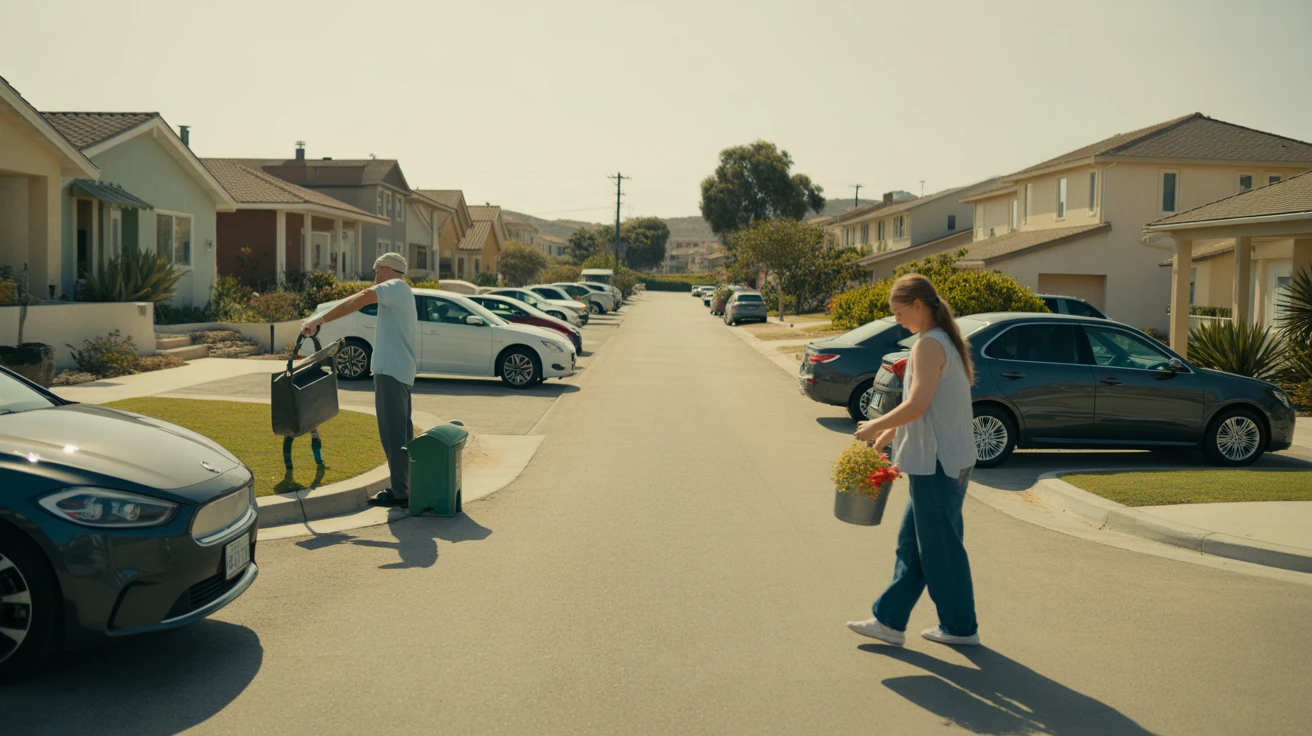
What Chula Vista Feels Like Day to Day
The emotional tone here is grounded and practical. People tend to describe Chula Vista as a place where you can raise kids without constant worry, where parks are plentiful and well-kept, and where the climate makes outdoor life easy most of the year. The city has rail transit connecting to downtown San Diego, which matters to commuters willing to plan around schedules. But daily life — groceries, errands, grabbing a coffee — still leans heavily on driving. Food and grocery options cluster along main corridors rather than spreading evenly through neighborhoods, which means convenience depends on where you live and whether you’re comfortable getting in the car for most tasks.
What tends to feel rewarding here: predictable routines, access to green space, a strong sense of community among families, and the ability to afford more square footage than you’d get closer to the coast. What tends to feel limiting: the need to drive for most errands, longer commutes if you work in central San Diego, and a quieter social scene that doesn’t offer much spontaneity after dark.
People who feel “at home” in Chula Vista are often those who wanted exactly this — a suburban structure with urban proximity, not urban immersion. People who feel restless are usually those who underestimated how much car dependency would shape their week, or who expected more walkable texture and local nightlife than the city provides.
Social Media Buzz in Chula Vista
Conversations on Reddit, Facebook groups, and X often revolve around a few recurring themes: pride in the city’s parks and family-friendly infrastructure, frustration with traffic and commute times, and ongoing debates about growth and development. There’s a protective tone when outsiders dismiss Chula Vista as “just a suburb” — locals push back, pointing to diversity, amenities, and affordability relative to coastal San Diego.
At the same time, there’s fatigue around congestion and the feeling that the city is growing faster than its roads can handle. People talk about needing to time their errands carefully to avoid bottlenecks, and about weighing whether a shorter commute would be worth higher rent elsewhere.
“It’s a great place to raise kids, but you have to accept that you’re driving everywhere. If you’re okay with that, it works.”
“I love the parks here — we’re outside almost every weekend. But getting to work in downtown San Diego is a grind.”
“People don’t give Chula Vista enough credit. It’s diverse, it’s safe, and you actually get space for your money.”
The tone isn’t bitter, but it’s not uncritical either. It’s the voice of people who chose a tradeoff and are living with both sides of it.
How Local Coverage Frames the City
Local news and community outlets tend to frame Chula Vista through the lens of growth, change, and identity. Coverage often focuses on new development, infrastructure projects, and the tension between preserving suburban character and accommodating more density. There’s also attention to regional issues — water, housing affordability, and transportation — that affect the whole South Bay.
Here are the kinds of topics that tend to surface:
- “Community Debates What Growth Should Look Like”
- “New Amenities Arrive as Town Identity Evolves”
- “Families Weigh Space and Affordability Against Commute Time”
- “Parks and Schools Draw Young Households to South Bay”
- “Residents Navigate Tradeoffs Between Quiet and Convenience”
The framing isn’t alarmist, but it does reflect a city in transition — one that’s figuring out how to grow without losing what made it appealing in the first place.
Review-Based Public Perception
On platforms like Google Reviews, Yelp, and Nextdoor, Chula Vista earns praise for its parks, schools, and overall safety. Families consistently highlight the availability of playgrounds, green space, and youth programs. The climate gets frequent mentions — mild winters, long stretches of sunshine, and the ability to be outside year-round.
Complaints tend to focus on convenience and variety. People note that day-to-day costs include more driving than they expected, that dining and entertainment options feel limited compared to urban neighborhoods, and that errands require more planning. Newer planned communities get positive marks for cleanliness and amenities, while older pockets are described as more affordable but less polished.
Expectation matching is key. People who wanted suburban comfort and family infrastructure tend to feel satisfied. People who wanted walkable texture, late-night options, or easy car-free living tend to feel disappointed.
“Great for families, but if you’re single or don’t have kids, it can feel pretty quiet.”
“The parks are amazing. We’re at the playground or a trail almost every day.”
“You need a car for everything. I didn’t realize how much that would bother me until I moved here.”
Comparison to Nearby Cities
| Dimension | Chula Vista | San Diego | National City |
|---|---|---|---|
| Family Infrastructure | Strong parks and schools | Varied by neighborhood | More limited options |
| Walkability | Corridor-based, car-dependent | Urban pockets highly walkable | Mixed, less pedestrian-friendly |
| Nightlife & Dining | Quiet, family-focused | Vibrant, diverse options | Limited, neighborhood-focused |
| Commute Burden | Moderate to long for downtown | Shorter for most jobs | Similar to Chula Vista |
| Affordability | More space for the money | Higher costs, less space | More affordable, fewer amenities |
Chula Vista sits between San Diego’s urban energy and National City’s more working-class, no-frills character. If you want walkable neighborhoods, nightlife, and cultural variety, San Diego’s central and coastal areas will feel more aligned — but you’ll pay more and likely get less space. If you want affordability and don’t mind a quieter, less polished environment, National City offers lower costs but fewer parks and amenities.
Chula Vista works best for households who want suburban structure with proximity to urban resources, not immersion in them. It’s a city that rewards planning, patience with traffic, and a lifestyle centered on home, family, and outdoor space rather than spontaneous urban exploration.
What Locals Are Saying
“We moved here from a condo in downtown San Diego. The space is incredible, the schools are solid, and our kids are outside all the time. The commute is longer, but it’s worth it for us.”
“I work remotely, so the commute doesn’t affect me. For my situation, Chula Vista is perfect — affordable, safe, and the weather is unbeatable.”
“It’s fine, but it’s not exciting. If you’re looking for things to do at night, you’re going to be disappointed.”
“The diversity here is something I really appreciate. It feels like a real community, not just a cookie-cutter suburb.”
“I underestimated how much I’d miss being able to walk to a coffee shop or a grocery store. Everything requires a drive.”
“We’ve been here for 20 years. It’s changed a lot, but it’s still a good place to raise a family.”
“The trolley helps, but you still need a car for almost everything. If you’re okay with that, it’s a solid choice.”
Does Chula Vista Feel Like a Good Fit?
Chula Vista isn’t trying to be something it’s not. It’s a family-oriented, park-rich, suburban city with rail access to San Diego and a climate that makes outdoor life easy. It works best for households who value space, safety, and green space over walkable convenience and urban texture.
This tends to work for: families with school-age children, remote workers who don’t commute daily, households willing to drive for errands in exchange for more affordable square footage, and people who prioritize outdoor recreation and a quieter pace.
This tends to frustrate: urbanites who measure quality of life by walkability and spontaneity, car-free households, people with long daily commutes to central San Diego, and those expecting a vibrant nightlife or dense dining scene.
If you’re considering Chula Vista, the key question isn’t whether it’s “happy” — it’s whether the tradeoffs align with how you actually live. If you want to understand what drives quality of life here, or explore housing tradeoffs in more depth, those details will help you predict fit more clearly than any sentiment score.
How this article was built: In addition to public economic data, this article incorporates location-based experiential signals derived from anonymized geographic patterns—such as access density, walkability, and land-use mix—to reflect how day-to-day living actually feels in Chula Vista, CA.
The perspectives shown reflect commonly expressed local sentiment and recurring themes in public discussion, rather than individual accounts.