
Chula Vista is considered expensive in 2026, with a median home value of $647,100 and median rent of $2,035 per month anchoring the cost structure. The value proposition depends on housing entry cost versus car dependence, with transportation and utility seasonality adding secondary pressure rather than day-to-day price volatility.
Maria pulls into her new driveway in Chula Vista on a warm Saturday afternoon, keys still cold in her hand. The moving truck left an hour ago. She’s run the numbers a dozen times—rent, gas, electricity—but now she’s wondering what the real cost structure looks like when it all runs at once. Not the average. The actual exposure.
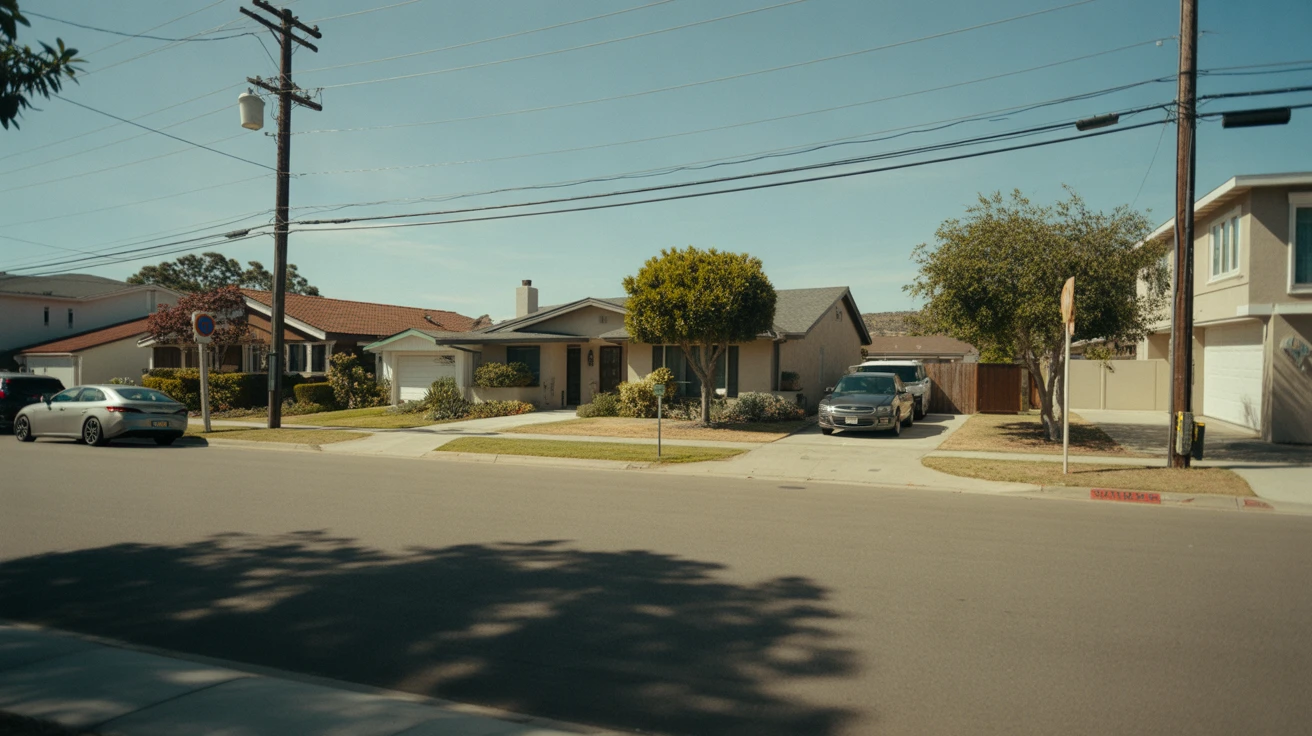
Overall Cost of Living Snapshot
Chula Vista operates as an expensive market in 2026, shaped primarily by housing costs that dominate household budgets and set the baseline for financial planning. The regional price parity index of 111 confirms that goods and services cost more here than the national baseline, but housing pressure is the main driver, not groceries or gas. The structure is typical of coastal Southern California: high entry costs, moderate ongoing expenses, and transportation exposure that varies sharply depending on commute length and vehicle count.
What surprises newcomers isn’t the rent or mortgage—they expect that—it’s the compounding effect of car dependency, summer cooling costs, and the planning burden required to manage errands efficiently. The city’s layout rewards those who live near transit and work locally, but penalizes long commutes and multi-vehicle households. Chula Vista isn’t uniformly expensive; it’s selectively expensive, and the difference hinges on housing tenure, commute pattern, and energy exposure.
The verdict: housing dominates, transportation amplifies, and utilities swing seasonally. Surprises come from underestimating how much driving costs when gas sits at $4.21 per gallon and 44.4% of workers face long commutes.
Housing Costs (Primary Driver)
Housing is the weight that shapes everything else. The median home value of $647,100 reflects a market where ownership requires substantial capital and long-term commitment. For buyers, the question isn’t whether housing is expensive—it is—but whether the entry cost aligns with career stability and commute tolerance. Homeownership here means locking in a fixed housing cost against a backdrop of rising property taxes, insurance, and maintenance, all of which escalate over time in ways renters avoid.
Renters face a different calculus. At $2,035 per month for median gross rent, the monthly outlay is significant but doesn’t require six-figure down payments or multi-decade financing. Renting preserves flexibility and shifts maintenance risk to landlords, but exposes households to rent increases and limits wealth-building through equity. The tradeoff is control versus liquidity: owners gain stability and asset accumulation, renters gain mobility and lower upfront costs.
Chula Vista functions as a long-term ownership market for those with stable income and minimal commute friction, and a transitional rental market for those testing the region or prioritizing flexibility. Neither path is cheap, but the exposure profile differs sharply. Buyers absorb volatility in property taxes and insurance; renters absorb volatility in lease renewals and displacement risk.
| Housing Type | Cost Anchor | What That Buys You |
|---|---|---|
| Median Home Value | $647,100 | Equity accumulation, fixed principal, long-term stability, maintenance responsibility |
| Median Gross Rent | $2,035/month | Flexibility, lower entry cost, landlord-managed maintenance, renewal exposure |
Utilities & Energy Risk
Electricity in Chula Vista costs 33.60¢ per kilowatt-hour, a rate that sits above national norms and translates into meaningful exposure during the extended cooling season. The climate here—mild by national standards but warm enough to require air conditioning through long stretches of summer—means that cooling costs dominate utility bills for several months. Households in older homes or units with poor insulation face sharper swings; those in newer construction or with programmable thermostats can moderate the impact, but the baseline rate remains elevated regardless of efficiency.
Natural gas, priced at $21.94 per thousand cubic feet, plays a smaller role given the region’s limited heating demand. Winter months may see modest gas usage for water heating or occasional space heating, but the volatility here is minimal compared to electricity. The real risk is summer: when temperatures climb and air conditioning runs for hours daily, the combination of high rates and sustained usage creates bills that spike noticeably above spring and fall levels.
Risk classification: moderate. Utilities aren’t the primary cost driver, but they’re a recurring exposure that rewards efficiency upgrades, behavioral adjustments, and attention to rate structures. Households that ignore cooling costs or fail to manage peak usage will see bills climb faster than expected. Those who invest in insulation, shade, and smart thermostats can reduce usage and stabilize bills, but the underlying rate structure remains a persistent pressure point.
Groceries & Daily Costs
Grocery costs in Chula Vista reflect the region’s elevated price level, with staples like ground beef at $7.42 per pound, eggs at $3.01 per dozen, and milk at $4.49 per half-gallon. These prices aren’t extreme outliers, but they’re consistently above national baselines, and the cumulative effect over weeks and months adds up for households buying fresh ingredients regularly. The pressure isn’t catastrophic—it’s steady, predictable, and unavoidable.
Derived estimate based on national baseline adjusted by regional price parity; not an observed local price.
For single-person households, grocery costs remain manageable with planning and selective shopping. For families—especially those with teenagers or dietary restrictions—the pressure intensifies. The difference between cooking at home and relying on convenience foods widens here, both in cost and in time investment. Chula Vista’s corridor-clustered errands accessibility means that grocery shopping often requires intentional trips rather than quick stops, adding friction to the weekly routine.
The takeaway: groceries are a consistent, moderate expense that rewards bulk buying, meal planning, and strategic store selection. They don’t dominate the budget the way housing does, but they’re a recurring pressure point that compounds when combined with transportation costs and time constraints.
Transportation Reality
Transportation in Chula Vista is a recurring exposure, not a one-time cost. The average commute is 29 minutes, but 44.4% of workers face long commutes, and only 9.0% work from home. For the majority, getting around means driving, often significant distances, often daily. Gas at $4.21 per gallon turns every commute into a measurable expense, and the longer the commute, the sharper the bite.
The city does have rail service, which moderates car dependency for those who live near stations and work along transit corridors. Mixed pedestrian infrastructure supports walking in certain neighborhoods, and cycling infrastructure exists in pockets, but the dominant pattern remains car-centric. Errands are corridor-clustered rather than broadly accessible, meaning that even short trips often require a vehicle. Households with one car face scheduling friction; households with two or more cars face doubled insurance, maintenance, and fuel costs.
Transportation isn’t just about commuting—it’s about access. Families with kids benefit from strong school and playground density, which reduces the need for long trips to extracurricular activities. Integrated green space access means parks are nearby, cutting down on weekend driving. But routine errands—groceries, pharmacies, appointments—still require planning and vehicle access for most residents.
The exposure is highest for long-distance commuters in multi-vehicle households. Every additional mile driven, every additional car insured, every additional maintenance cycle adds to the recurring cost base. The exposure is lowest for those who live near transit, work locally, and can consolidate errands into fewer trips. The difference between these two profiles can be hundreds of dollars per month, sustained over years.
Cost Exposure Profiles
Cost exposure in Chula Vista isn’t uniform—it’s structural, and it hinges on housing tenure, commute length, and vehicle count. The city rewards those who can minimize transportation friction and manage energy usage, and penalizes those who can’t.
Low-exposure profile: A renter living near a rail station, working locally or remotely, driving minimally, and occupying an energy-efficient unit. This household avoids the capital lock-in of homeownership, minimizes fuel and vehicle costs, and keeps utility bills stable through efficiency and behavioral adjustments. The monthly cost base is still high by national standards, but it’s predictable and manageable.
High-exposure profile: A homebuyer with a long commute, multiple vehicles, and an older home with high cooling needs. This household absorbs mortgage payments, property tax escalation, insurance increases, and maintenance cycles on the housing side, while also paying for long-distance commuting, multi-vehicle insurance, and elevated summer utility bills. The cost base is not only high—it’s volatile, with multiple pressure points that can spike simultaneously.
The difference between these profiles isn’t about income or affordability—it’s about structure. Chula Vista’s cost landscape is navigable, but it requires intentional choices about where to live, how to commute, and how to manage recurring expenses. Those who align their housing and transportation decisions with the city’s infrastructure and transit options face lower ongoing costs. Those who don’t face compounding exposure across multiple categories.
What matters here isn’t whether Chula Vista is expensive in the abstract—it is—but whether the specific cost structure aligns with a household’s circumstances. The city’s layout, transit presence, and family infrastructure create opportunities to reduce exposure, but only for those who can access them. For everyone else, the cost pressure is real, recurring, and difficult to escape.
How this article was built: In addition to public economic data, this article incorporates location-based experiential signals derived from anonymized geographic patterns—such as access density, walkability, and land-use mix—to reflect how day-to-day living actually feels in Chula Vista, CA.
Frequently Asked Questions
Is Chula Vista more affordable than San Diego in 2026? Chula Vista tends to offer lower housing costs than central San Diego, but the gap narrows when factoring in commute length and transportation expenses. The affordability advantage depends on where you work and how much you drive.
What does a typical cost profile look like in Chula Vista? Housing dominates, followed by transportation and utilities. The profile varies sharply based on housing tenure (renting vs owning), commute length, and vehicle count. Low-exposure households keep costs predictable; high-exposure households face compounding pressure across multiple categories.
Do utilities cost more in Chula Vista than nearby areas? Electricity rates at 33.60¢ per kilowatt-hour are elevated compared to many other regions, and the extended cooling season amplifies exposure. Natural gas costs are moderate, but the real utility pressure comes from summer air conditioning usage.
What costs tend to surprise newcomers in Chula Vista? Most newcomers expect high housing costs, but underestimate the cumulative impact of car dependency, fuel prices, and summer utility bills. The planning burden required for errands and the time cost of long commutes also catch people off guard.
Are property taxes higher in Chula Vista than in other California cities? Property taxes in California are governed by Proposition 13, which caps base rates and limits annual increases. The effective tax burden depends on assessed home value and local assessments, but the structure is consistent statewide. Chula Vista’s high median home value means property tax bills are substantial in absolute terms, even if rates are capped.
Is Chula Vista a good place for families on a budget? Chula Vista offers strong family infrastructure—schools and playgrounds are well-distributed, and green space access is integrated throughout the city. However, the cost structure is challenging for households trying to minimize expenses, particularly if long commutes or multiple vehicles are required. Families who can live near transit and work locally face lower ongoing costs.
How much does commuting add to the cost of living in Chula Vista? Commuting costs scale with distance and vehicle count. With gas at $4.21 per gallon and 44.4% of workers facing long commutes, transportation becomes a recurring exposure that compounds over time. Households with one vehicle and short commutes face minimal pressure; those with multiple vehicles and long commutes face significant ongoing costs.
Can you live in Chula Vista without a car? Rail transit is present, and mixed pedestrian infrastructure supports walking in certain areas, but the majority of residents rely on cars for daily errands and commuting. Living without a car is possible for those near transit and willing to plan around corridor-clustered errands, but it requires intentional location choice and lifestyle adjustments.