
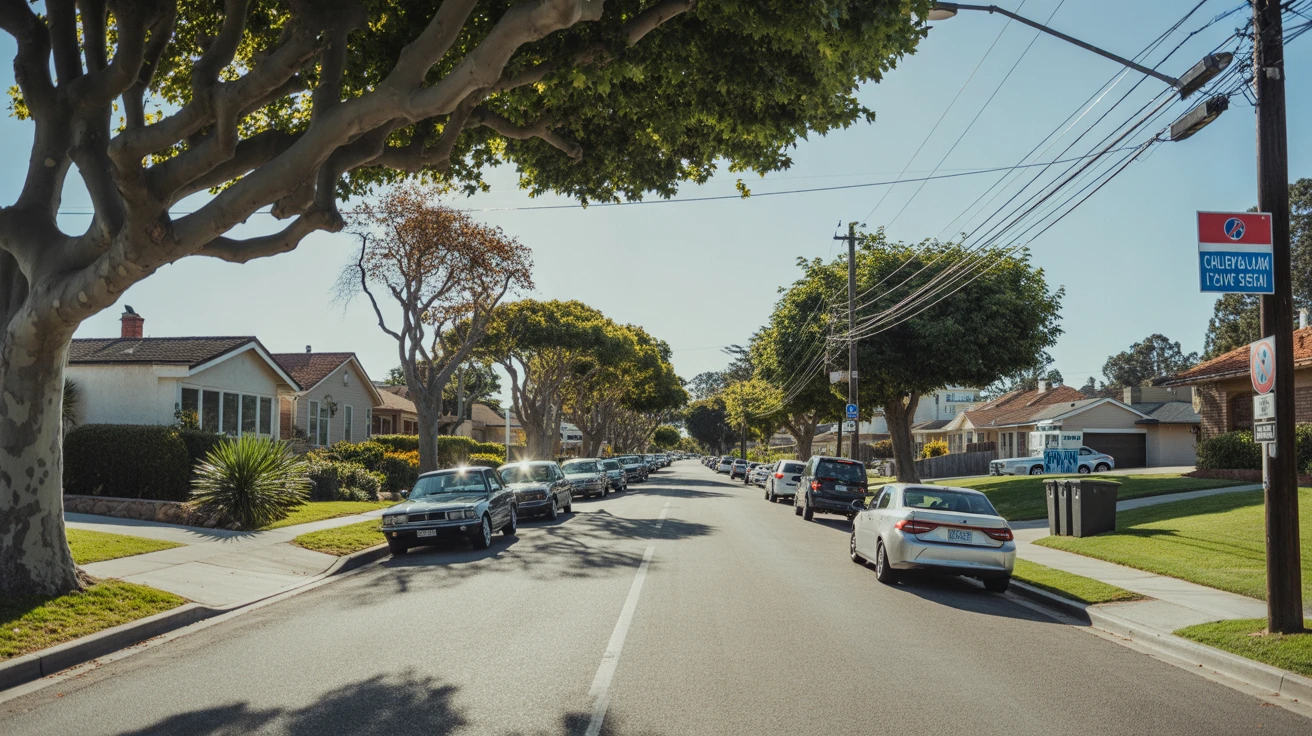
Chula Vista: $647,100 median home, $2,035 rent, $101,984 median income, 29-minute commute, rail transit.
Escondido: $616,400 median home, $1,833 rent, $77,554 median income, no rail.
Same metro. Same gas prices. Different cost pressure. Different household fit.
People compare Chula Vista and Escondido because both sit in the San Diego metro but serve different roles in how families balance space, access, and financial exposure. Chula Vista offers rail connectivity, integrated parks, and stronger family infrastructure, but demands higher housing costs and income to sustain them. Escondido presents a lower entry barrier for housing but pairs that with significantly lower median income and less transit flexibility. The decision isn’t about which city costs less overall—it’s about which cost structure aligns with how your household earns, commutes, and manages day-to-day logistics in 2026.
This comparison explains where cost pressure concentrates differently, which households feel those differences most acutely, and why the same gross income can feel stable in one city and tight in the other. Both cities share the same regional price environment, but the way housing, transportation, and access interact creates distinct financial textures that matter more than any single line item.
Housing Costs
Chula Vista’s median home value sits at $647,100, with median rent at $2,035 per month. Escondido’s median home value is $616,400, with median rent at $1,833 per month. The difference in housing entry costs is meaningful but not dramatic—what matters more is how that difference interacts with income, commute obligations, and household structure.
In Chula Vista, higher housing costs come with higher median household income ($101,984 annually) and access to rail transit, which reduces car dependency for some commuters. The housing stock supports families seeking parks, schools, and mixed-use neighborhoods where errands cluster along corridors. Rent and ownership both reflect demand from households prioritizing proximity to transit, family infrastructure, and predictable access to daily needs. For renters, the $2,035 median suggests competition for units near transit or within walkable pockets, where pedestrian infrastructure supports some car-free errands.
Escondido’s lower housing costs—both for rent and purchase—create a more accessible entry point, but median income is significantly lower at $77,554 annually. This income gap means that while the absolute dollar difference in rent or mortgage may seem modest, the proportion of income required to secure housing can feel similar or even tighter in Escondido. Without rail transit or the same density of walkable infrastructure, households in Escondido typically rely more heavily on cars, which shifts cost pressure from housing alone to a combination of housing plus transportation. The housing stock tends toward single-family homes and lower-density neighborhoods, which offer more space but less convenience for car-free living.
| Housing Type | Chula Vista | Escondido |
|---|---|---|
| Median Home Value | $647,100 | $616,400 |
| Median Gross Rent | $2,035/month | $1,833/month |
| Median Household Income | $101,984/year | $77,554/year |
For renters, Chula Vista’s higher rent reflects access to transit, parks, and mixed-use corridors where grocery and errands cluster. Escondido’s lower rent comes with trade-offs: less transit flexibility, more car reliance, and neighborhoods where errands require planning rather than spontaneity. For first-time buyers, Escondido’s lower home values ease the down payment hurdle, but ongoing transportation costs and longer commutes (for those working in coastal job centers) can erode that initial savings. Families prioritizing space and yard access may find Escondido’s housing stock more accommodating, while those prioritizing school density, playground access, and park integration may find Chula Vista’s infrastructure better aligned with daily logistics.
Housing takeaway: Chula Vista imposes higher housing entry costs but pairs them with higher income, transit access, and infrastructure that reduces household friction. Escondido offers lower housing costs but requires households to absorb transportation and time costs that can offset the initial savings. Renters sensitive to transit access and walkable errands face more exposure in Escondido. Buyers prioritizing space over convenience may find Escondido’s structure more flexible, while those managing school-age children or rail commutes may find Chula Vista’s layout reduces daily complexity.
Utilities and Energy Costs
Both Chula Vista and Escondido share identical utility rate structures: 33.60¢ per kWh for electricity and $21.94 per MCF for natural gas. Because both cities sit in the same metro and climate zone, the primary differences in utility exposure come from housing stock, home age, and household behavior rather than rate differences. This means that utility cost pressure is less about where you live and more about what you live in and how you use it.
Chula Vista’s housing stock includes a mix of older single-family homes and newer mixed-use developments. Homes in older neighborhoods may experience higher cooling costs during extended warm seasons, especially if insulation and window efficiency haven’t been updated. Apartments and newer townhomes in mixed-use areas tend to benefit from shared walls and more recent construction standards, which reduce baseline electricity usage. Families in larger single-family homes face more exposure to cooling costs, particularly if the home lacks shade, efficient HVAC, or programmable thermostats. The presence of water features and integrated parks in Chula Vista suggests some neighborhoods benefit from cooler microclimates, but this varies widely by location.
Escondido’s housing stock leans more heavily toward single-family homes, many of which are older and situated in lower-density neighborhoods. This creates more exposure to cooling costs, as larger homes with less efficient envelopes require more energy to maintain comfort during warm months. Without the same density of mixed-use development, Escondido households are less likely to benefit from the passive efficiency gains that come with shared walls or newer construction. Natural gas usage remains minimal in both cities due to mild winters, but older homes in Escondido may still see occasional heating costs during cooler nights, particularly in inland areas where temperature swings are more pronounced.
Household size and home type drive the most meaningful differences in utility exposure. Single adults or couples in apartments face predictable, lower utility costs in both cities, with Chula Vista offering slightly more access to newer, efficient units near transit corridors. Families in single-family homes—especially those with three or more bedrooms—face higher and more volatile cooling costs, with Escondido households more exposed due to older housing stock and less density. Renters in both cities benefit from landlords covering water and sometimes trash, but electricity remains the dominant variable cost, and that cost scales with home size, age, and cooling habits.
Utility takeaway: Both cities share the same rate structure, so utility cost differences come from housing type and age, not location. Chula Vista offers more access to newer, efficient housing near transit, which reduces baseline exposure for renters and small households. Escondido’s older, larger single-family homes create more volatility in cooling costs, particularly for families. Households prioritizing predictability should focus on housing age and insulation quality, not city choice. Those in older, larger homes will face similar exposure in both cities, but Escondido’s housing stock skews more heavily toward that profile.
Groceries and Daily Expenses
Both Chula Vista and Escondido share the same regional price parity index (111), meaning grocery staples, household goods, and everyday spending face similar baseline pricing. The meaningful differences come from access patterns, store density, and how much convenience costs when errands require extra time or driving. In Chula Vista, grocery and food establishments cluster along corridors, with grocery density exceeding high thresholds and food density in the medium band. This means that for households in or near these corridors, grocery runs can happen more spontaneously, with less planning and fewer miles driven. Escondido lacks the same experiential signal data, but its lower-density, car-oriented layout suggests that grocery access typically requires intentional trips rather than quick stops on the way home.
For single adults and couples, grocery spending pressure in both cities is manageable, but the time cost differs. In Chula Vista, proximity to grocery clusters means fewer trips to big-box stores and more flexibility to shop smaller, more frequent purchases without burning gas or time. In Escondido, households often consolidate grocery runs into weekly trips to larger stores, which can reduce per-item costs at big-box retailers but increases the time and fuel cost of each trip. Dining out and convenience spending—coffee, takeout, prepared foods—are more accessible in Chula Vista’s mixed-use corridors, which can either increase spending (due to temptation and ease) or reduce it (by lowering the friction of grabbing essentials without a full grocery run).
Families managing larger grocery volumes face different trade-offs. In Chula Vista, access to both discount grocers and specialty stores along corridors allows families to mix and match based on sales, preferences, and schedules. The downside is that convenience can encourage more frequent, smaller purchases that add up over time. In Escondido, families often rely on bulk shopping at big-box stores, which can lower per-unit costs but requires more upfront planning, storage space, and discipline to avoid mid-week convenience runs that erode savings. The lack of dense, walkable grocery access in Escondido means that every grocery trip is a car trip, and every forgotten item becomes a decision about whether to drive back or make do.
Grocery takeaway: Both cities share the same baseline pricing, but access patterns create different cost textures. Chula Vista’s corridor-clustered grocery density reduces time and fuel costs for households near those corridors, but convenience can encourage spending creep. Escondido’s car-oriented layout favors bulk shopping and planning, which can lower per-item costs but increases the time and fuel burden of each trip. Single adults and couples feel this difference less acutely, while families managing larger volumes face more exposure to either convenience creep (Chula Vista) or planning friction (Escondido).
Taxes and Fees
Both Chula Vista and Escondido sit in San Diego County, which means they share the same county-level property tax structure and similar sales tax rates. The primary differences in tax and fee exposure come from home values, local service fees, and the prevalence of HOAs or special assessments in different neighborhoods. Because Chula Vista’s median home value is higher, property tax obligations are correspondingly higher for homeowners, even though the rate structure is identical. For a household purchasing at the median, the difference in annual property tax between the two cities reflects the $30,700 gap in home values, which translates to ongoing exposure that compounds over years of ownership.
Renters in both cities are indirectly exposed to property taxes through rent, but the more immediate fee exposure comes from utilities, trash, and parking. In Chula Vista, some newer developments and mixed-use buildings include HOA fees that bundle services like landscaping, water, or shared amenities. These fees can range widely depending on the development, but they add predictability by consolidating variable costs into a fixed monthly obligation. In Escondido, HOA fees are less common in older single-family neighborhoods, but when present, they tend to cover basic services like street maintenance or shared landscaping rather than bundled utilities.
For homeowners, the structure of fees matters as much as the magnitude. Chula Vista’s higher home values mean higher property taxes, but the presence of rail transit, parks, and schools can make that cost feel more justified for households using those amenities. Escondido’s lower home values reduce the property tax burden, but the lack of transit and lower density means households may spend more on transportation and time, which doesn’t show up as a tax but still drains household flexibility. Long-term residents in both cities benefit from Proposition 13, which caps annual property tax increases, but recent movers face reassessment at current market values, which resets their tax exposure to reflect today’s prices rather than historical ones.
Tax and fee takeaway: Both cities share the same tax structure, so differences come from home values and local fee patterns. Chula Vista’s higher home values create higher property tax obligations, but access to transit and amenities can offset that for households using them. Escondido’s lower home values reduce property tax exposure, but the lack of transit and density shifts cost pressure to transportation and time. Homeowners planning to stay long-term face more predictable tax growth in both cities due to Proposition 13, but recent movers absorb the full reset. Renters feel tax exposure indirectly through rent, but fee structures (HOAs, utilities) vary more by development than by city.
Transportation and Commute Reality
Chula Vista’s transportation structure is defined by rail transit access, a 29-minute average commute, and a 44.4% long commute rate, with only 9.0% of workers working from home. Gas prices sit at $4.21 per gallon, identical to Escondido. The presence of rail transit—confirmed by experiential signals—means that some households can reduce or eliminate daily driving for work commutes, particularly those traveling to downtown San Diego or other rail-connected job centers. However, the high long commute rate suggests that many Chula Vista residents still drive significant distances, either because their jobs aren’t near rail stations or because rail schedules don’t align with their work hours.
Escondido lacks commute data in the input feed, but its absence of rail transit and lower-density layout suggest that car dependency is near-universal for work commutes. Without rail, every commute is a driving commute, and every household needs at least one reliable vehicle—often two for dual-income couples. The lack of walkable errands infrastructure (no experiential signals provided) reinforces that daily life in Escondido is car-first, meaning that transportation costs aren’t just about commuting—they’re about every grocery run, school drop-off, and errand.
For single adults, Chula Vista’s rail access can meaningfully reduce transportation costs if their job is rail-accessible, turning a two-car household into a one-car household or eliminating car ownership entirely for some. In Escondido, single adults almost always need a car, and the lack of transit means that any job change or relocation requires recalculating driving distance and fuel costs. For families, Chula Vista’s rail access matters less unless both adults work near rail lines, but the presence of bike infrastructure (medium confidence, some pockets) and mixed walkability means that some errands can happen without driving. In Escondido, families typically need two cars, and every household member’s schedule requires coordination around vehicle availability.
Transportation takeaway: Chula Vista offers rail transit that can reduce or eliminate driving for some commuters, but the 44.4% long commute rate shows that many residents still drive significant distances. Escondido lacks rail and commute data, but its car-oriented structure means universal car dependency for both commuting and errands. Households with rail-accessible jobs gain meaningful cost and time flexibility in Chula Vista. Those without rail access face similar driving exposure in both cities, but Escondido’s lack of walkable errands infrastructure means more trips, more miles, and more fuel costs even outside of commuting.
Cost Structure Comparison
Housing pressure dominates the cost experience in both cities, but the nature of that pressure differs. Chula Vista imposes higher entry costs—both for rent and ownership—but pairs those costs with higher median income and infrastructure that reduces friction in other areas. Rail transit, corridor-clustered groceries, and integrated parks mean that households absorbing higher housing costs gain predictability and convenience in daily logistics. Escondido’s lower housing costs ease the initial entry barrier, but the income gap is significant, and the lack of transit or dense errands infrastructure shifts cost pressure to transportation and time. For households earning near the median in each city, the proportion of income required for housing may feel similar, but the trade-offs in flexibility and daily friction differ meaningfully.
Utilities introduce similar exposure in both cities due to identical rate structures, but housing stock matters more than location. Chula Vista’s mix of newer, efficient units near transit and older single-family homes creates variability, with renters and small households benefiting from lower baseline usage. Escondido’s older, larger single-family homes create more volatility in cooling costs, particularly for families. Households prioritizing predictability should focus on housing age and insulation quality, not city choice, but Escondido’s housing stock skews more heavily toward older, larger homes that amplify seasonal exposure.
Groceries and daily expenses share the same baseline pricing, but access patterns create different cost textures. Chula Vista’s corridor-clustered grocery density reduces time and fuel costs for errands, but convenience can encourage spending creep. Escondido’s car-oriented layout favors bulk shopping and planning, which can lower per-item costs but increases the time and fuel burden of each trip. Families managing larger grocery volumes face more exposure to either convenience creep (Chula Vista) or planning friction (Escondido), while single adults and couples feel this difference less acutely.
Transportation patterns matter more in Chula Vista because rail access creates meaningful optionality for some households, turning a two-car household into a one-car household or eliminating car ownership entirely. In Escondido, car dependency is universal, and every household needs at least one vehicle—often two. The lack of transit and walkable errands infrastructure means that transportation costs aren’t just about commuting—they’re about every trip, every day. Households with rail-accessible jobs gain significant cost and time flexibility in Chula Vista. Those without rail access face similar driving exposure in both cities, but Escondido’s layout means more trips, more miles, and more fuel costs even outside of commuting.
The decision between Chula Vista and Escondido isn’t about which city costs less—it’s about which cost structure aligns with how your household earns, commutes, and manages daily logistics. Households sensitive to housing entry costs may prefer Escondido, but those prioritizing transit access, walkable errands, and reduced household friction may find Chula Vista’s higher housing costs offset by lower transportation and time costs. For households earning near the median in each city, the difference is less about total spending and more about where flexibility exists and where it disappears.
How the Same Income Feels in Chula Vista vs Escondido
Single Adult
In Chula Vista, a single adult’s non-negotiable costs start with rent near transit or walkable corridors, which commands a premium but reduces car dependency. Flexibility exists in transportation—rail access can eliminate or reduce driving costs, and some errands happen on foot or bike. The role of commute friction is lower if the job is rail-accessible, freeing up time and money for discretionary spending or savings.
In Escondido, a single adult’s non-negotiable costs start with rent and a reliable car, as transit isn’t viable and errands require driving. Flexibility exists in housing—lower rent creates more room for other expenses—but car ownership, fuel, and maintenance become fixed obligations. The role of commute friction is higher, as every job requires driving, and longer commutes eat into both time and fuel budgets.
Dual-Income Couple
In Chula Vista, a dual-income couple’s non-negotiable costs include higher rent or mortgage, but rail access can reduce the household to one car if both jobs are rail-accessible. Flexibility exists in errands and logistics—corridor-clustered groceries and mixed-use neighborhoods reduce the need for long, planned trips. The role of housing form is more compact, with apartments and townhomes offering efficiency gains in utilities and maintenance.
In Escondido, a dual-income couple’s non-negotiable costs include lower housing costs but two cars, as both adults typically need independent transportation. Flexibility exists in space—larger homes and yards are more accessible—but time costs increase as every errand requires driving and coordination. The role of housing form is more spread out, with single-family homes offering privacy and space but less efficiency in utilities and logistics.
Family with Kids
In Chula Vista, a family’s non-negotiable costs include higher housing to access strong school density, playground access, and integrated parks. Flexibility disappears in housing choice—proximity to schools and parks commands a premium—but daily logistics become more predictable with walkable errands and rail access for working parents. The role of commute friction is mixed: rail helps if jobs align, but the long commute rate shows many families still drive significant distances.
In Escondido, a family’s non-negotiable costs include lower housing but higher transportation exposure, as every school run, activity, and errand requires driving. Flexibility exists in space—larger homes and yards are more affordable—but time costs compound as schedules require coordination around vehicle availability. The role of car dependence is total, with no transit fallback and limited walkability, meaning every household decision involves driving logistics.
Decision Matrix: Which City Fits Which Household?
| Decision Factor | If You’re Sensitive to This… | Chula Vista Tends to Fit When… | Escondido Tends to Fit When… |
|---|---|---|---|
| Housing entry + space needs | Down payment size, monthly rent burden, yard access | You prioritize transit access and walkable errands over space and can absorb higher entry costs | You prioritize lower entry costs and more space over transit and accept car dependency |
| Transportation dependence + commute friction | Car ownership costs, fuel exposure, commute time flexibility | Your job is rail-accessible or you value reducing car dependency for daily errands | You already own reliable vehicles and your job requires driving regardless of location |
| Utility variability + home size exposure | Seasonal cooling costs, baseline usage predictability | You prefer newer, efficient housing near transit with shared walls and lower baseline usage | You prioritize space and yard access and can manage higher cooling costs in older, larger homes |
| Grocery strategy + convenience spending creep | Time cost of errands, temptation to overspend on convenience | You value spontaneous errands and corridor-clustered access even if convenience encourages more spending | You prefer bulk shopping and planning to lower per-item costs and can absorb time and fuel costs of trips |
| Fees + friction costs (HOA, services, upkeep) | Predictability of monthly obligations, bundled vs unbundled services | You value bundled services and predictable fees even if they increase baseline costs | You prefer lower baseline fees and can manage variable costs like landscaping and maintenance yourself |
| Time budget (schedule flexibility, errands, logistics) | Household coordination complexity, driving time for daily tasks | You prioritize reducing daily driving and coordination friction over space and lower housing costs | You have schedule flexibility and vehicle availability to manage driving logistics without strain |
Lifestyle Fit
Chula Vista and Escondido offer distinct lifestyle textures shaped by transit access, density, and infrastructure. Chula Vista’s rail transit, mixed walkability, and corridor-clustered errands create a rhythm where some households can reduce car dependency and fold errands into daily routines. The presence of integrated parks—park density exceeds high thresholds—and strong family infrastructure (both schools and playgrounds meet density thresholds) means that families with school-age children find daily logistics more predictable. Water features and green space access support outdoor recreation without requiring long drives, and mixed land use (both residential and commercial detected) means that some neighborhoods support a blend of living, working, and errands within a smaller radius.
Escondido’s lifestyle is more car-oriented and spread out, with neighborhoods favoring single-family homes, yards, and privacy over walkability and transit. Without rail access or dense errands infrastructure, daily life requires more planning and coordination, but the trade-off is more space, quieter streets, and lower housing entry costs. Families prioritizing yard access, larger homes, and a slower pace may find Escondido’s layout more aligned with their preferences, even if it means more driving. The lack of experiential signals for Escondido means that mobility texture, errands accessibility, and outdoor access aren’t quantified, but the city’s lower density and car-first layout suggest that spontaneity and walkability are less central to daily life.
For households valuing convenience, transit flexibility, and reduced household friction, Chula Vista’s infrastructure reduces the time and mental load of managing errands, commutes, and family logistics. For households valuing space, privacy, and lower housing costs, Escondido’s layout offers more room to spread out, even if it means more driving and coordination. Both cities benefit from San Diego’s mild climate, but Chula Vista’s denser, mixed-use corridors create more opportunities for outdoor activity and social interaction without requiring a car, while Escondido’s quieter, more residential character appeals to those seeking separation from urban density.
Quick fact: Chula Vista’s rail transit connects residents to downtown San Diego and other job centers, reducing car dependency for some commuters.
Quick fact: Escondido’s lower-density layout and larger lot sizes offer more space for families prioritizing yards and privacy over walkability.
Frequently Asked Questions
Is Chula Vista or Escondido cheaper for renters in 2026?
Escondido’s median rent is lower at $1,833 per month compared to Chula Vista’s $2,035, but the difference in cost pressure depends on income and transportation needs. Chula Vista’s higher rent comes with access to rail transit, walkable errands, and infrastructure that can reduce car dependency, which lowers transportation costs for some renters. Escondido’s lower rent requires universal car ownership, meaning that the savings in housing can be offset by higher transportation and time costs. Renters with rail-accessible jobs or those prioritizing walkability may find Chula Vista’s higher rent offset by lower transportation costs, while those with cars and flexible schedules may prefer Escondido’s lower entry cost.
How do commute costs compare between Chula Vista and Escondido in 2026?
Chula Vista offers rail transit that can eliminate or reduce driving for commuters with rail-accessible jobs, turning a two-car household into a one-car household or eliminating car ownership entirely. The 29-minute average commute and 44.4% long commute rate show that many residents still drive significant distances, but rail access creates meaningful optionality. Escondido lacks rail transit, meaning every commute is a driving commute, and every household needs at least one reliable vehicle. Gas prices are identical in both cities at $4.21 per gallon, so the difference comes from whether rail access aligns with your job location and whether you can reduce or eliminate daily driving.
Which city is better for families with kids, Chula Vista or Escondido, in 2026?
Chula Vista offers strong family infrastructure, with both school density and playground density meeting thresholds, plus integrated parks where park density exceeds high thresholds. This means that daily logistics—school runs, playground visits, outdoor recreation—are more predictable and require less driving. Escondido offers lower housing costs and more space, with larger homes and yards that appeal to families prioritizing privacy and room to spread out. The trade-off is more car dependency and less walkable access to schools and parks, meaning families need to plan and coordinate more around driving. Families prioritizing infrastructure and reduced friction may prefer Chula Vista, while those prioritizing space and lower housing costs may prefer Escondido.
Do Chula Vista and Escondido have the same utility costs in 2026?
Yes, both cities share identical utility rate structures: 33.60¢ per kWh for electricity and $21.94 per MCF for natural gas. The difference in utility exposure comes from housing stock, home age, and household behavior, not location. Chula Vista’s mix of newer, efficient units near transit and older single-family homes creates variability, with renters and small households benefiting from lower baseline usage. Escondido’s older, larger single-family homes create more volatility in cooling costs, particularly for families. Households prioritizing predictability should focus on housing age