
Chino Hills sits in the western edge of the Inland Empire, a suburban city where housing costs reflect both the region’s relative affordability compared to coastal California and the premium families pay for space, schools, and parks. The median home value here is $776,200, and median rent is $2,575 per month—figures that place Chino Hills above many neighboring Inland Empire communities but well below Orange County and Los Angeles proper. The market here rewards buyers willing to trade some urban walkability for family infrastructure and outdoor access, but it punishes renters and single-income households who face steep monthly obligations without the equity-building upside of ownership.
What shapes Chino Hills affordability is not just price, but structure: this is a city built around car ownership, corridor-based errands, and residential neighborhoods with strong school and park density. Walkable pockets exist, particularly where pedestrian infrastructure clusters near commercial corridors, but daily mobility still leans heavily on driving. For families with dual incomes and school-age children, that tradeoff often makes sense. For renters without cars, or buyers expecting dense, transit-rich walkability throughout, the cost experience becomes more friction-laden.
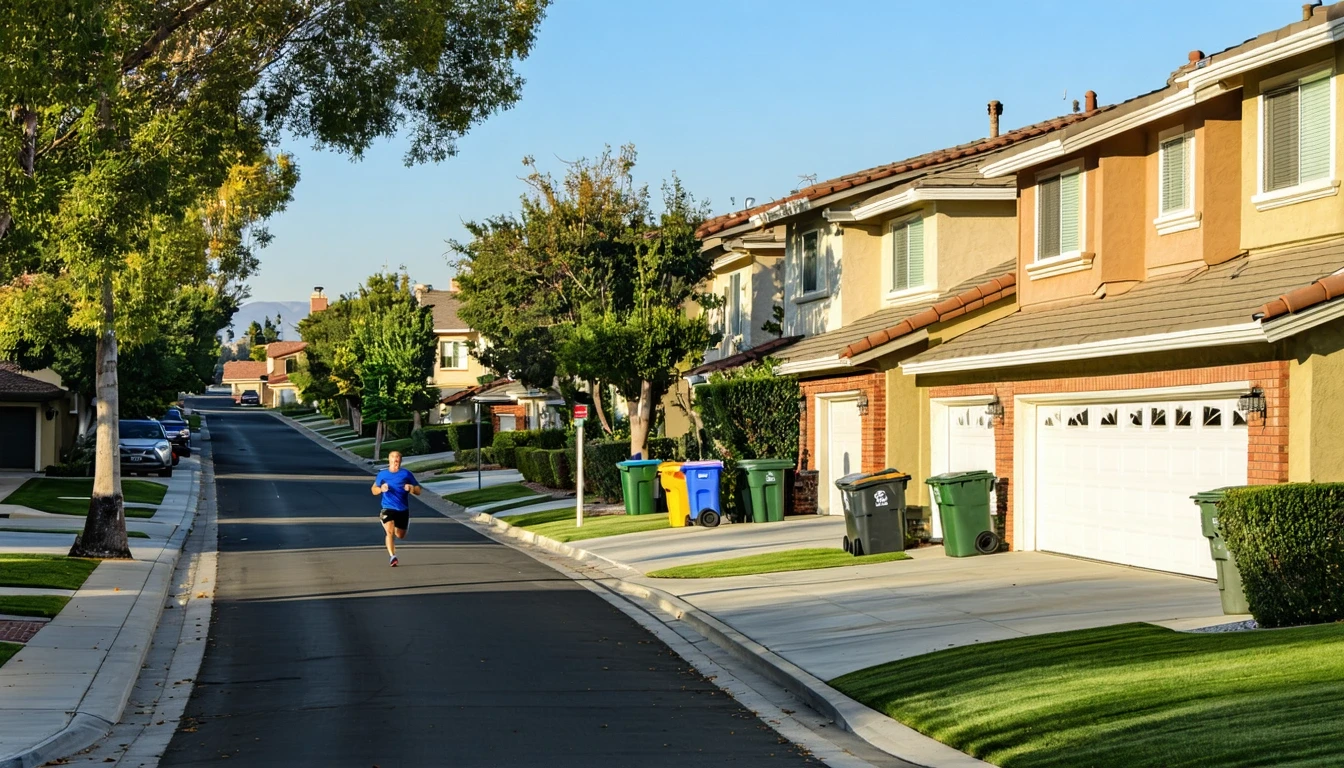
The Housing Market in Chino Hills Today
Chino Hills operates as a commuter suburb with family-oriented appeal. Its housing stock skews toward single-family homes, many built during the region’s growth phases in the 1990s and 2000s. The $776,200 median home value reflects demand for space, school access, and park availability—factors that matter more here than transit proximity or urban density. Buyers are typically families seeking predictable neighborhoods, outdoor access, and room to grow, often commuting to jobs in Ontario, Riverside, or even Orange County.
The rental market, by contrast, is tighter and less forgiving. At $2,575 per month, median rent consumes a significant share of household income, particularly for single earners or younger households without dual incomes. Rental stock is less abundant than ownership inventory, and landlords price units with the understanding that most tenants are either transitional (waiting to buy) or constrained by credit or down payment barriers. Unlike denser urban markets where renters gain walkability and transit access in exchange for high rent, Chino Hills renters pay suburban rent without the offsetting convenience of car-free living.
Renting in Chino Hills
Renting here is expensive relative to the lifestyle it supports. At $2,575 per month, a renter is paying for space and neighborhood quality, but not for the transit access, walkability, or urban amenities that typically justify high rent in coastal cities. Errands are corridor-clustered, meaning grocery stores and daily services are accessible but require planning and driving. Public transit exists in the form of bus service, but it’s not a viable primary mobility solution for most households.
For families, renting in Chino Hills can make sense as a short-term strategy—accessing strong schools and parks while saving for a down payment. For single-income households or those without reliable car access, the rent burden is compounded by transportation costs and the logistical friction of car-dependent errands. Renters also face the volatility of annual lease renewals in a market where landlords have pricing power, particularly when ownership inventory is more abundant than rental units.
Owning a Home in Chino Hills
Ownership in Chino Hills is where the city’s cost structure begins to favor long-term residents. The $776,200 median home value is steep, but it reflects a market where buyers gain control over housing costs, access to strong family infrastructure, and the ability to build equity in a region with sustained demand. Property taxes, insurance, and maintenance are ongoing exposures, but they’re more predictable than rent increases and more aligned with the household’s ability to plan over time.
Homeowners here also gain access to the city’s park density and school infrastructure, which rank high relative to regional benchmarks. The experiential structure of daily life—running errands along commercial corridors, accessing green space integrated throughout residential areas, and managing household logistics with a car—becomes more manageable when housing costs are locked in through ownership rather than subject to annual rental market swings.
The tradeoff is upfront cost and long-term exposure. Buyers need substantial down payments, and they inherit responsibility for maintenance, utilities, and property tax obligations that rise over time. In a climate with warm summers and mild winters, cooling costs dominate seasonal utility exposure, and older homes may require efficiency upgrades to keep bills manageable. Homeowners also face the risk of special assessments, HOA fees (where applicable), and deferred maintenance that renters can offload to landlords.
Apartment vs House in Chino Hills — Cost Behavior Comparison
| Expense Category | Apartment | House |
|---|---|---|
| Cooling exposure | Lower square footage and shared walls reduce summer cooling load | Larger footprint and standalone structure increase cooling costs during extended warm season |
| Outdoor maintenance | Typically covered by landlord or HOA; minimal tenant responsibility | Full responsibility for landscaping, irrigation, and yard upkeep in a dry climate |
| Parking and access | Assigned or shared parking; less flexibility for multiple vehicles | Driveway and garage space; better suited to multi-car households in car-dependent area |
| Utility structure | Some utilities may be bundled or shared; less control over efficiency upgrades | Separate metering; full control over efficiency investments and usage behavior |
Why these categories: The table reflects distinctions that matter in Chino Hills specifically—cooling exposure driven by warm summers, outdoor maintenance in a dry climate, parking needs in a car-oriented city, and utility control in a market where homeowners can invest in efficiency. Generic cost categories (e.g., base rent vs mortgage) were excluded because they don’t explain how housing type changes the cost experience locally.
Utilities & Upkeep Differences
Utility exposure in Chino Hills is shaped by climate and housing type. Electricity rates are 33.60¢/kWh, and natural gas is priced at $21.94/MCF. For homeowners, cooling dominates summer bills, particularly in standalone houses with larger square footage and full sun exposure. Apartments benefit from shared walls and smaller footprints, which reduce cooling load even when tenants lack control over efficiency upgrades.
Maintenance exposure also diverges by housing type. Homeowners in Chino Hills manage landscaping, irrigation, and exterior upkeep in a climate where dry conditions stress lawns and outdoor surfaces. Apartment tenants offload most of this responsibility, though they also lose the ability to make efficiency improvements or control long-term upkeep quality. For families planning to stay long-term, the control and equity-building potential of ownership often outweigh the higher maintenance burden.
Rent vs Buy: Long-Term Exposure in Chino Hills
The structural difference between renting and owning in Chino Hills is volatility versus control. Renters face annual lease renewals in a market where landlords have pricing power, particularly when ownership inventory is more abundant than rental units. Rent increases are driven by regional demand, and tenants have limited ability to lock in costs or build equity. For households planning to stay short-term or uncertain about job stability, renting offers flexibility, but it comes at the cost of predictability.
Ownership, by contrast, locks in the largest component of housing cost—the mortgage principal and interest—while exposing buyers to property taxes, insurance, and maintenance. These costs shift over time, but they do so more gradually and predictably than rent. Homeowners also gain the ability to invest in efficiency upgrades, control outdoor space, and build equity in a market with sustained family-oriented demand.
For dual-income families with school-age children, ownership in Chino Hills often makes sense as a long-term strategy. The city’s strong family infrastructure, park density, and school access reward households willing to commit to car-oriented suburban living. For single-income renters or households prioritizing transit access and urban walkability, the cost structure is less forgiving, and the tradeoffs tilt toward shorter-term flexibility rather than long-term equity building.
FAQs About Housing Costs in Chino Hills
Is Chino Hills more expensive than other Inland Empire cities?
Chino Hills sits at the higher end of Inland Empire housing costs, reflecting demand for family infrastructure, school access, and park density. It’s more expensive than Riverside or San Bernardino but less costly than Orange County or Los Angeles.
Can you rent affordably in Chino Hills without a car?
It’s difficult. Median rent is $2,575 per month, and daily errands are corridor-clustered, requiring driving for most trips. Bus service exists but isn’t a viable primary mobility solution for most households.
What drives utility costs for homeowners in Chino Hills?
Cooling dominates summer exposure due to warm, extended seasons. Electricity rates are 33.60¢/kWh, and standalone houses with larger square footage face higher bills than apartments with shared walls.
Is buying in Chino Hills a good long-term investment?
For families prioritizing space, schools, and parks, ownership offers control, equity building, and access to strong family infrastructure. For households seeking dense walkability or transit access, the cost structure is less aligned with lifestyle expectations.
How does housing in Chino Hills compare to nearby cities?
Chino Hills is pricier than most Inland Empire neighbors but offers stronger family infrastructure and park access. Buyers trade some urban walkability for space and school quality, a tradeoff that works well for dual-income families with children.
Making Housing Choices in Chino Hills
Housing costs in Chino Hills reward families who value space, schools, and outdoor access over urban density and transit convenience. The $776,200 median home value and $2,575 median rent reflect a market where ownership offers long-term control and equity building, while renting imposes steep monthly costs without offsetting walkability or transit benefits. For dual-income households with school-age children, the city’s strong family infrastructure and park density make ownership a logical long-term strategy. For single-income renters or households prioritizing car-free living, the cost structure is less forgiving.
Understanding your monthly budget in Chino Hills means recognizing how housing type, mobility patterns, and household logistics interact. Ownership locks in the largest cost component but exposes buyers to maintenance, taxes, and utility volatility. Renting offers flexibility but subjects households to annual lease renewals in a landlord-favorable market. The city’s experiential structure—car-oriented errands, walkable pockets, and integrated green space—shapes how housing costs translate into daily living, and the fit depends on whether your household can absorb the upfront cost and logistical friction in exchange for space, schools, and long-term stability.
How this article was built: In addition to public economic data, this article incorporates location-based experiential signals derived from anonymized geographic patterns—such as access density, walkability, and land-use mix—to reflect how day-to-day living actually feels in Chino Hills, CA.