
Is Cherry Hill expensive to live in? Cherry Hill is considered moderately priced in 2026, with median home values at $281,700 and median rent at $1,777 per month. The value proposition depends on housing entry cost versus transportation flexibility—walkable pockets with rail access reduce car dependence, while other areas require vehicle ownership as a recurring expense.
When you’re budgeting for a move to Cherry Hill, the first question isn’t just “Can I afford it?”—it’s “Where does my money actually go?” Understanding the cost structure here means recognizing which expenses dominate, which ones surprise newcomers, and how your household situation changes your exposure to each category.
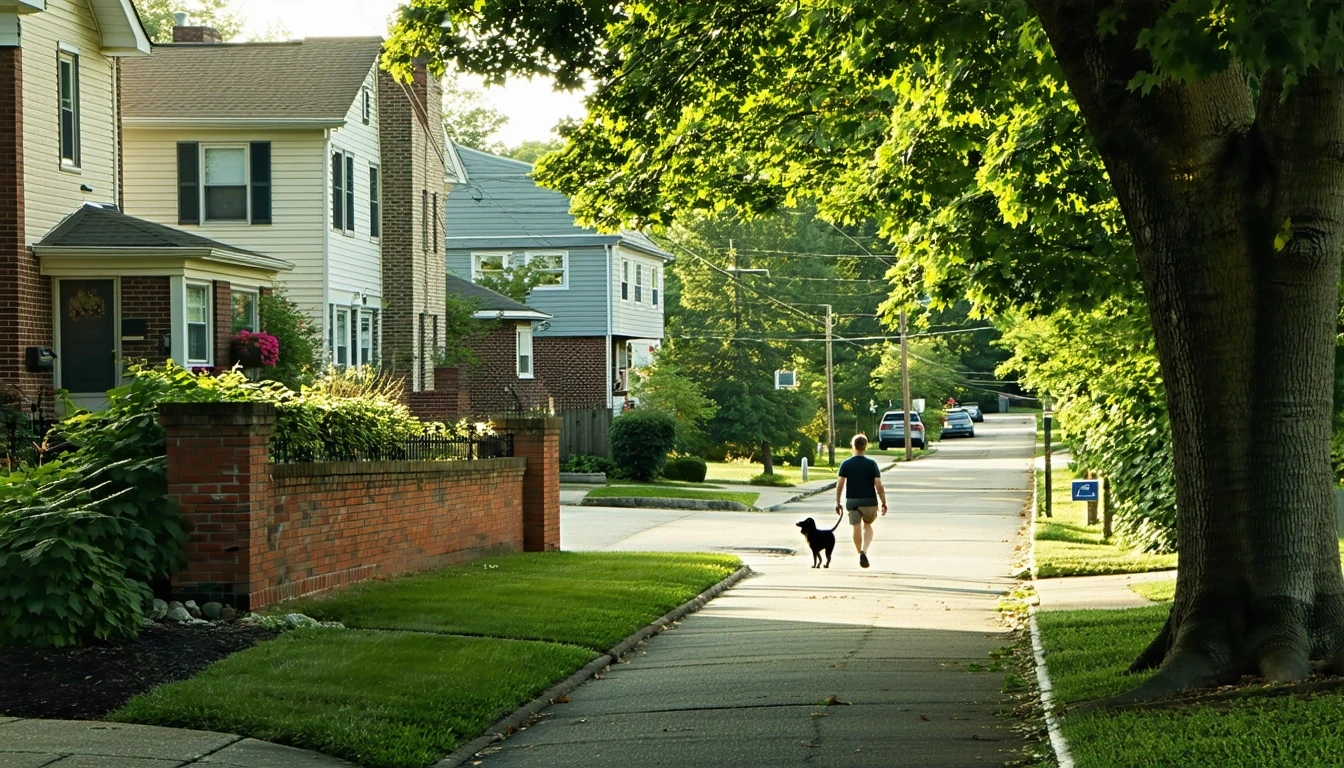
Overall Cost of Living Snapshot
Cherry Hill operates slightly above the national baseline, with a regional price parity index of 104, meaning the overall cost structure runs about 4% higher than the U.S. average. But that broad number hides the real story: housing and transportation are the primary levers, and how much you spend in each category depends heavily on where you settle within the township and how you commute.
The dominant cost driver is housing—whether you’re renting or buying, this is where the largest share of household budgets goes. But the secondary pressure point is transportation, and here’s where Cherry Hill’s structure creates divergent experiences. Some neighborhoods offer walkable access to groceries, schools, and rail transit, reducing the need for constant driving. Other parts of the township are car-dependent by design, meaning vehicle ownership, fuel, insurance, and maintenance become non-negotiable recurring costs.
Driver verdict: Housing dominates upfront and ongoing costs, but transportation exposure varies widely based on neighborhood structure and commute patterns. Surprises come from the gap between low-car and high-car lifestyles—the difference isn’t just convenience, it’s a structural cost shift.
Housing Costs (Primary Driver)
With a median home value of $281,700 and median gross rent of $1,777 per month, Cherry Hill presents a housing tradeoff between ownership entry cost and rental flexibility. For buyers, the entry point is moderate compared to nearby Philadelphia submarkets, but property taxes and maintenance add ongoing pressure. For renters, $1,777 per month is the median—not the floor—and rental stock varies widely in age, layout, and proximity to transit.
The renting-versus-owning calculus here tilts toward ownership for households planning to stay long-term, especially given the township’s strong family infrastructure (high school density and established playgrounds). Renters gain flexibility and avoid maintenance exposure, but they’re also subject to lease renewal volatility and limited control over housing stability. Buyers face higher upfront costs and property tax exposure, but they lock in predictable principal and interest payments and gain equity accumulation over time.
Conclusion: Cherry Hill is a mixed market favoring ownership for settled households and families, while renters should budget for median-or-above pricing unless they’re willing to compromise on location or unit age.
| Housing Type | Cost Anchor | What That Buys You |
|---|---|---|
| Median Home Value | $281,700 | Ownership entry in established neighborhoods; property tax and maintenance exposure |
| Median Gross Rent | $1,777/month | Rental flexibility; lease renewal volatility; no equity build |
Utilities & Energy Risk
Electricity in Cherry Hill runs at 22.73¢ per kWh, which is notably higher than the national average and reflects New Jersey’s regional utility structure. For a typical household using around 1,000 kWh per month, that translates to roughly $227 per month in electricity costs before fees and taxes—an illustrative baseline that rises in summer due to air conditioning demand and falls moderately in milder months.
Natural gas is priced at $17.94 per MCF (roughly 100 therms), which is used primarily for heating in winter months. A household using about 1 MCF per month during heating season would see illustrative gas costs around $18 per month before distribution fees and taxes, though actual usage varies widely based on home size, insulation quality, and thermostat settings.
The real risk here is seasonal swing. Cherry Hill experiences cold winters that drive heating demand and warm, humid summers that require extended cooling. Utility bills aren’t flat—they spike in January and July, and households without efficiency upgrades or budget billing plans face month-to-month volatility that complicates cash flow planning.
Risk classification: Moderate. Electricity rates are high, and seasonal swings are real, but the exposure is manageable with efficiency measures and billing strategies. The bigger risk is underestimating summer cooling costs or winter heating spikes if you’re coming from a milder climate.
Groceries & Daily Costs
Cherry Hill benefits from high grocery density—food and grocery establishments exceed density thresholds across the township, meaning most residents have broadly accessible options without long drives. This isn’t just about convenience; it’s about reducing the friction cost of daily errands and giving households the ability to shop competitively rather than defaulting to the closest (and possibly most expensive) option.
Grocery price pressure in Cherry Hill runs slightly above the national baseline, consistent with the regional price parity index of 104. Everyday staples—bread, eggs, milk, chicken—cost a bit more here than in lower-cost regions, but the impact is incremental rather than dramatic. The real household difference comes from shopping behavior: access to multiple stores, including discount grocers and warehouse clubs, allows cost-conscious households to reduce their per-trip spending without sacrificing quality or variety.
For families, the combination of strong school infrastructure and accessible grocery options reduces the logistical burden of running a household. You’re not driving 20 minutes each way for a gallon of milk or planning weekly mega-trips because nothing’s nearby. That time savings and planning simplicity has real value, even if it doesn’t show up as a line item on a budget.
Transportation Reality
Transportation in Cherry Hill is a tale of two experiences. The township has rail transit access, and certain neighborhoods feature walkable pockets with pedestrian infrastructure that exceeds typical suburban norms. If you live near a rail stop and work along a transit corridor, your transportation costs can stay low—limited driving, manageable fuel expenses, and the option to avoid or defer a second vehicle.
But for most households, Cherry Hill remains car-dependent. The average commute is 25 minutes, and 36.9% of workers face long commutes (over 30 minutes), which suggests that many residents are traveling to job centers outside the immediate area—likely Philadelphia or other regional employment hubs. Only 6.9% of workers report working from home, meaning the vast majority are commuting regularly.
For illustrative context, a typical commuter driving 25 miles round trip at 25 MPG would use about one gallon of gas per day. At $2.86 per gallon, that’s roughly $57 per month in fuel costs alone for a five-day work week—before insurance, maintenance, registration, or vehicle depreciation. Households with two commuters or longer drives face doubled or tripled exposure, and that’s where transportation shifts from a minor line item to a structural cost driver.
The key decision point: if you can position yourself in a walkable pocket near rail and reduce car dependency, transportation becomes a minor cost factor. If you’re commuting by car daily, it becomes a recurring, non-negotiable expense that compounds over time.
Cost Exposure Profiles
Cost exposure in Cherry Hill is shaped by three primary factors: housing entry versus long-term ownership, transportation dependence, and utility volatility. Households face different pressure points depending on their structure and choices.
Low-exposure situations: Homeowners who bought years ago and have locked-in mortgage rates, live in walkable areas near rail transit, work locally or from home, and have implemented energy efficiency measures face the lowest ongoing cost pressure. Their largest expenses—housing principal and interest—are fixed, their transportation costs are minimal, and their utility bills are moderated by insulation, efficient HVAC, and behavioral adjustments.
High-exposure situations: Renters facing lease renewals in a tightening market, households with two long car commutes, and families in older, less-efficient homes experience compounding cost pressure. Rent increases are unpredictable, fuel and vehicle costs are recurring and non-negotiable, and utility bills swing sharply with the seasons. These households have less control over their largest expenses and face more month-to-month volatility.
The structural takeaway: Cherry Hill rewards households that can reduce transportation dependence and lock in housing costs early. It penalizes those who must rent long-term in volatile markets and drive extensively for work or daily errands. The township’s infrastructure—walkable pockets, rail access, grocery density—creates opportunities to lower costs, but only if your household can position itself to take advantage of them.
Frequently Asked Questions
Is Cherry Hill more affordable than Philadelphia in 2026? Cherry Hill typically offers lower housing entry costs than many Philadelphia neighborhoods, but transportation costs can be higher if you’re commuting into the city by car rather than using rail transit. The tradeoff depends on your commute pattern and whether you can access walkable areas with transit connections.
What does a typical cost profile look like in Cherry Hill? Housing dominates, followed by transportation if you’re car-dependent. Utilities add moderate seasonal pressure, and groceries run slightly above the national average but remain manageable given the township’s high grocery density and competitive shopping options.
Do utilities cost more in Cherry Hill than in nearby towns? Electricity rates in Cherry Hill are high compared to the national average, reflecting New Jersey’s regional utility structure. Natural gas pricing is moderate, but the real cost driver is seasonal demand—winter heating and summer cooling create noticeable bill swings.
What costs tend to surprise newcomers in Cherry Hill? Transportation exposure surprises households that underestimate car dependency, and utility seasonality catches renters who haven’t budgeted for summer cooling spikes. Property taxes also surprise first-time buyers who focus only on mortgage payments during the purchase process.
Are property taxes higher in Cherry Hill than in nearby New Jersey towns? Property taxes vary widely across New Jersey municipalities and depend on local budgets, school funding, and assessed home values. Cherry Hill’s taxes should be verified directly, but New Jersey as a state has some of the highest property tax rates in the country, so this is a significant cost factor for homeowners.
Can you live in Cherry Hill without a car? It’s possible in certain walkable pockets near rail transit, especially if your work and daily errands align with transit routes and high-density grocery access. But for most households, especially those with school-age children or jobs outside transit corridors, a car remains necessary.
How does Cherry Hill compare to Camden or Voorhees for cost of living? Cherry Hill generally sits between Camden (which tends to have lower housing costs but fewer amenities) and some parts of Voorhees (which can be similarly priced but with different infrastructure trade-offs). The comparison depends heavily on neighborhood-level factors like school quality, transit access, and housing stock age.
Is Cherry Hill a good value for families in 2026? Cherry Hill offers strong family infrastructure—high school density, accessible playgrounds, and broadly available grocery options—which reduces the logistical burden of raising children. The value proposition depends on whether you can secure housing at a reasonable entry cost and minimize transportation exposure through location and commute choices.
How this article was built: In addition to public economic data, this article incorporates location-based experiential signals derived from anonymized geographic patterns—such as access density, walkability, and land-use mix—to reflect how day-to-day living actually feels in Cherry Hill, NJ.