
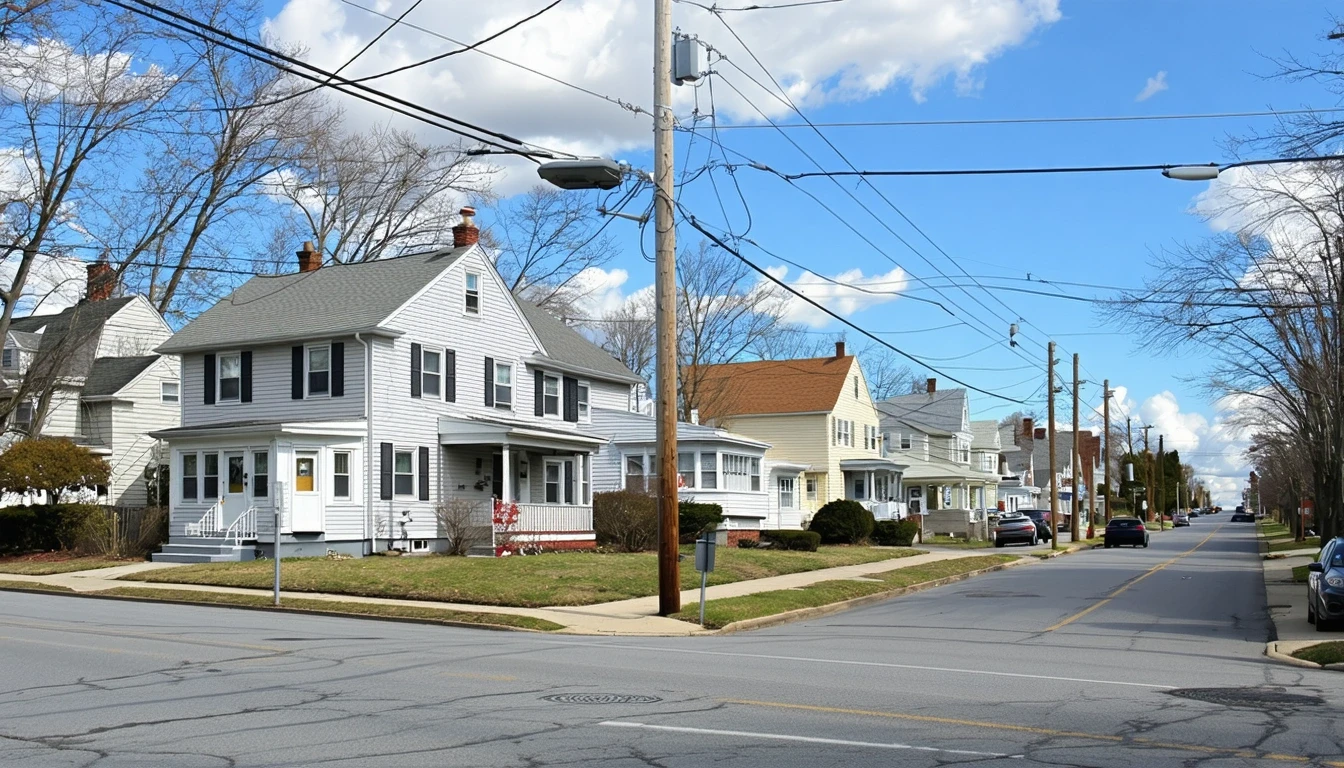
Which city wins on cost? Cherry Hill and Mount Laurel sit just miles apart in New Jersey’s Philadelphia metro, yet the way households experience cost pressure in each city diverges in ways that matter far beyond sticker prices. Both are established suburban communities with strong schools, family-oriented infrastructure, and access to regional employment hubs. But Cherry Hill offers rail transit, walkable pockets, and a lower entry point for homeownership, while Mount Laurel commands higher home values and presents a different balance of predictability and exposure. The better choice in 2026 depends not on which city is “cheaper overall,” but on which cost structure aligns with how your household earns, spends, and moves through daily life.
For families weighing space against access, renters navigating tight inventory, or dual-income households managing commute logistics, the differences between these two cities show up in housing entry barriers, transportation dependence, and the flexibility—or rigidity—of monthly obligations. This comparison explains where cost pressure concentrates in each city, which households feel those differences most acutely, and how to match your financial priorities to the right suburban structure.
Housing Costs
Housing dominates the cost experience in both Cherry Hill and Mount Laurel, but the entry threshold and ongoing obligation differ in ways that reshape affordability for different household types. Cherry Hill’s median home value sits at $281,700, while Mount Laurel’s reaches $314,800—a gap that reflects not just price, but the type of housing stock each city offers and the trade-offs buyers face between space, age, and location within the metro. For renters, Cherry Hill’s median gross rent of $1,777 per month positions it below Mount Laurel’s $1,872 per month, a difference that compounds over time and affects how much flexibility remains after housing costs are locked in.
The higher home values in Mount Laurel often correspond to larger lots, newer construction, and more single-family inventory designed for families prioritizing space and privacy. Cherry Hill’s housing stock includes more attached homes, older single-family properties, and a broader mix of housing types, which creates more entry points for first-time buyers and households willing to trade square footage for proximity to transit and walkable errands. For renters, both cities present tight inventory and significant monthly obligations, but Cherry Hill’s lower baseline rent leaves more room for households managing student loans, childcare, or irregular income streams.
Homeownership in both cities requires substantial upfront capital and ongoing property tax obligations, but the difference in entry price affects who can access ownership and when. A household targeting Cherry Hill may reach the down payment threshold months or even a year earlier than one targeting Mount Laurel, which matters for families trying to lock in housing costs before lease renewals or school transitions. Renters in Mount Laurel face higher baseline obligations, which can crowd out savings for eventual ownership or reduce flexibility to absorb unexpected expenses. Both cities reward households with stable dual incomes and long-term planning horizons, but Cherry Hill’s lower entry barrier makes ownership accessible to a wider range of household structures.
| Housing Type | Cherry Hill | Mount Laurel |
|---|---|---|
| Median Home Value | $281,700 | $314,800 |
| Median Gross Rent | $1,777/month | $1,872/month |
First-time buyers benefit from Cherry Hill’s lower entry threshold, particularly those who can tolerate older housing stock or smaller lots in exchange for faster access to ownership. Families prioritizing space, newer construction, or larger yards may find Mount Laurel’s housing stock better aligned with long-term needs, but must plan for a higher upfront barrier and larger ongoing mortgage obligation. Renters in both cities face significant monthly pressure, but Cherry Hill’s lower rent baseline provides more breathing room for households managing competing financial priorities or building savings. The primary difference is not whether housing is expensive—it is in both cities—but whether cost pressure shows up as a higher entry barrier, a larger ongoing obligation, or reduced flexibility after housing is secured.
Utilities and Energy Costs
Utility costs in Cherry Hill and Mount Laurel share the same electricity rate—22.73¢/kWh—but diverge slightly in natural gas pricing, with Cherry Hill at $17.94/MCF and Mount Laurel at $17.04/MCF. These differences are modest in isolation, but they interact with housing type, home age, and household size in ways that shift exposure to seasonal volatility. Both cities experience cold winters and warm summers, which means heating and cooling dominate utility bills depending on the season. Older single-family homes with less efficient insulation, windows, or HVAC systems amplify exposure to temperature swings, while newer construction or well-maintained apartments offer more predictable baseline usage.
Cherry Hill’s slightly higher natural gas price affects households relying on gas heat during winter months, particularly those in older single-family homes or larger properties where heating demand scales with square footage. Mount Laurel’s marginally lower gas price provides modest relief, but the difference is unlikely to reshape monthly budgets unless the household occupies a large, older home with high heating demand. Electricity costs remain identical across both cities, which means cooling exposure during summer months depends more on home size, insulation quality, and thermostat discipline than on location. Apartments and townhomes in both cities tend to offer more predictable utility costs due to shared walls and smaller conditioned spaces, while detached single-family homes introduce more variability and higher baseline usage.
Households in older housing stock—common in both cities—face higher exposure to utility volatility, as aging HVAC systems, poor insulation, and drafty windows reduce efficiency and increase seasonal spikes. Families with young children or members working from home experience higher baseline usage year-round, as heating, cooling, and electricity demands remain elevated regardless of season. Single adults or couples in newer apartments benefit from lower baseline costs and more predictable monthly obligations, as modern construction standards and smaller square footage reduce both heating and cooling loads. Both cities offer typical utility efficiency programs and time-of-use concepts, but participation requires upfront research and behavioral adjustment, which not all households can prioritize.
The primary utility takeaway is that Cherry Hill and Mount Laurel present similar exposure to seasonal volatility, with modest differences in natural gas pricing that matter most for households in older, larger homes relying on gas heat. Predictability favors renters in newer apartments or townhomes, where landlords may bundle some utilities or where smaller square footage limits usage swings. Volatility increases for homeowners in older single-family properties, where heating and cooling costs can spike unpredictably during extreme weather. Households sensitive to utility unpredictability should prioritize housing age, insulation quality, and square footage over city-level price differences, as those structural factors drive exposure far more than the modest gap in natural gas rates.
Groceries and Daily Expenses

Grocery and daily spending pressure in Cherry Hill and Mount Laurel reflects access patterns, household size, and the balance between convenience and price discipline. Cherry Hill’s experiential signals show broadly accessible food and grocery density, with both food establishments and grocery options exceeding high thresholds. This means households can choose between discount chains, specialty stores, and prepared food options without long drives or logistical friction. Mount Laurel lacks detailed experiential signals, but its suburban structure and proximity to regional retail corridors suggest similar access to big-box grocers and chain restaurants, though the density and walkability of those options remain less clear.
For families managing weekly grocery runs, bulk purchasing, and meal planning, access to discount grocers and warehouse clubs reduces per-unit costs and allows for strategic shopping that minimizes convenience spending. Cherry Hill’s high grocery density means households can comparison-shop without adding significant drive time, which matters for dual-income families balancing work schedules and childcare logistics. Single adults and couples face different pressure: smaller households benefit less from bulk pricing and may lean more heavily on prepared foods, takeout, or convenience stores, which increases per-meal costs and reduces price flexibility. Both cities support these habits, but Cherry Hill’s walkable pockets and mixed land use allow some households to run errands on foot or combine trips, reducing the time cost of daily spending.
Dining out and convenience spending—coffee shops, quick-service restaurants, and household goods—add up differently depending on household routines and income stability. Households with predictable schedules and meal-planning discipline can limit these costs, but families with irregular work hours, long commutes, or young children often rely on convenience options to manage time pressure. Cherry Hill’s corridor-clustered food access and mixed-use pockets make it easier to grab a meal or run an errand without a dedicated car trip, which reduces the friction cost of daily life. Mount Laurel’s structure likely requires more intentional trip planning, as suburban layouts typically concentrate retail in specific corridors rather than distributing it throughout residential neighborhoods.
The grocery and daily spending takeaway is that Cherry Hill offers more flexibility for households who value walkable errands, comparison shopping, and reduced logistical friction, while Mount Laurel likely requires more car-dependent trip planning and intentional shopping routines. Families managing large grocery volumes benefit from access to discount chains in both cities, but Cherry Hill’s higher density reduces the time cost of running errands. Single adults and couples face more convenience spending temptation in areas with high food density, but also gain more flexibility to manage daily life without a car. Price sensitivity matters less than access structure: households who can plan trips and buy in bulk will find similar pricing in both cities, but those who rely on convenience or spontaneous errands will feel more friction in car-dependent layouts.
Taxes and Fees
Property taxes, local fees, and recurring obligations shape the ongoing cost structure in both Cherry Hill and Mount Laurel, but the specifics of rates, assessments, and fee structures are not provided in the available data. What remains clear is that both cities rely heavily on property taxes to fund schools, infrastructure, and municipal services, which means homeowners face substantial annual obligations that scale with home value. Cherry Hill’s lower median home value of $281,700 suggests a lower absolute property tax bill compared to Mount Laurel’s $314,800 median, assuming similar millage rates, but the actual burden depends on assessment practices, exemptions, and local levy structures that vary across municipalities.
Renters in both cities do not pay property taxes directly, but landlords typically pass those costs through in the form of higher rent, which means the tax burden is embedded in the $1,777 and $1,872 monthly rent figures. Homeowners, by contrast, face property taxes as a separate, predictable annual obligation that must be budgeted alongside mortgage payments, insurance, and maintenance. Long-term residents benefit from stable assessment practices and predictable tax increases, while recent buyers may face reassessment at purchase price, which can increase the tax burden relative to what the previous owner paid. Households planning to stay several years can absorb these costs more easily, as the predictability allows for long-term financial planning.
Local fees—trash collection, water and sewer, parking permits, and HOA assessments—add another layer of ongoing obligation that varies by housing type and neighborhood. Single-family homeowners in both cities typically pay for trash and water separately, while apartment renters may see these costs bundled into rent. HOA fees are more common in newer developments and townhome communities, where they cover landscaping, shared amenities, and exterior maintenance. These fees can range from modest monthly amounts to several hundred dollars, depending on the services provided and the age of the community. Households considering townhomes or planned developments should verify HOA fee structures and assess whether the bundled services reduce or increase total monthly obligations.
The tax and fee takeaway is that homeowners in Cherry Hill face lower absolute property tax exposure due to lower home values, assuming comparable millage rates, while Mount Laurel homeowners pay more in taxes but may benefit from newer infrastructure or different service levels. Renters in both cities absorb property taxes indirectly through rent, which limits their control over tax-driven cost increases. Long-term homeowners benefit from predictable tax obligations, while recent buyers face reassessment risk that can increase annual costs. Households sensitive to ongoing fees should scrutinize HOA structures, utility billing practices, and municipal fee schedules, as these costs are less visible than rent or mortgage payments but accumulate steadily over time.
Transportation & Commute Reality
Transportation costs and commute patterns differ between Cherry Hill and Mount Laurel in ways that affect both time and money, though the available data limits direct comparison. Cherry Hill reports an average commute time of 25 minutes, with 6.9% of workers working from home and 36.9% experiencing long commutes. Mount Laurel does not provide commute data, which makes it difficult to assess how travel time and car dependence compare directly. Both cities share the same gas price of $2.86/gal, which means fuel costs depend more on commute distance, frequency, and vehicle efficiency than on location-specific pricing.
Cherry Hill’s experiential signals reveal rail transit presence and walkable pockets with a high pedestrian-to-road ratio, which means some households can reduce car dependence for daily errands, commuting, or accessing regional employment hubs. The rail service connects Cherry Hill to Philadelphia and other metro destinations, offering an alternative to driving for workers commuting to Center City or nearby job centers. This reduces fuel costs, parking expenses, and vehicle wear for households who can structure their routines around transit schedules. Walkable pockets within Cherry Hill allow some residents to run errands on foot, which further reduces the need for short car trips and lowers overall transportation exposure.
Mount Laurel lacks detailed experiential signals, but its suburban structure and absence of noted transit infrastructure suggest higher car dependence for most households. Commuters in Mount Laurel likely rely on personal vehicles for work trips, errands, and accessing regional amenities, which increases fuel costs, maintenance expenses, and the time cost of driving. Households with two working adults may need two vehicles, which doubles insurance, registration, and depreciation costs. Single adults or couples who work remotely or have flexible schedules can reduce transportation exposure, but families managing school drop-offs, extracurriculars, and grocery runs face more logistical complexity and higher baseline vehicle usage.
The transportation takeaway is that Cherry Hill offers more flexibility for households who can leverage rail transit or walkable errands to reduce car dependence, while Mount Laurel likely requires more consistent vehicle usage and higher baseline transportation costs. Commuters targeting Philadelphia or regional job centers benefit from Cherry Hill’s rail access, which reduces fuel costs and parking expenses. Households in Mount Laurel face more car-dependent routines, which increases both time and money costs, particularly for families managing multiple daily trips. Gas prices are identical across both cities, so the primary difference is not fuel cost per gallon, but how often households need to drive and whether alternatives exist to reduce that frequency.
Cost Structure Comparison
Housing pressure concentrates differently in Cherry Hill and Mount Laurel, with Cherry Hill presenting a lower entry barrier for both renters and buyers, while Mount Laurel’s higher home values and rents reflect larger housing stock and newer construction. Renters in Cherry Hill face a baseline monthly obligation of $1,777, compared to $1,872 in Mount Laurel—a difference that compounds over time and affects how much flexibility remains after housing is secured. First-time buyers targeting Cherry Hill can reach the down payment threshold faster due to the $281,700 median home value, while Mount Laurel’s $314,800 median requires more upfront capital and results in a larger ongoing mortgage obligation. Families prioritizing space and newer construction may find Mount Laurel’s housing stock better aligned with long-term needs, but must plan for higher entry costs and less flexibility in the early years of ownership.
Utilities introduce similar seasonal volatility in both cities, with identical electricity rates and only modest differences in natural gas pricing. Cherry Hill’s slightly higher natural gas cost of $17.94/MCF affects households in older, larger homes relying on gas heat, while Mount Laurel’s $17.04/MCF provides marginal relief. Predictability favors renters in newer apartments or townhomes, where smaller square footage and modern construction reduce baseline usage and limit seasonal spikes. Volatility increases for homeowners in older single-family properties, where heating and cooling costs can swing unpredictably during extreme weather. The primary difference is not city-level pricing, but housing age and size, which drive exposure far more than the modest gap in natural gas rates.
Daily living and grocery costs depend more on access structure than on pricing, as both cities share the same regional price environment. Cherry Hill’s broadly accessible food and grocery density allows households to comparison-shop, run errands on foot in walkable pockets, and reduce the time cost of daily spending. Mount Laurel likely requires more car-dependent trip planning and intentional shopping routines, which increases logistical friction for households managing tight schedules or multiple daily trips. Families who can plan bulk purchases and limit convenience spending will find similar pricing in both cities, but those who rely on spontaneous errands or prepared foods will feel more friction in car-dependent layouts.
Transportation patterns matter more in Cherry Hill, where rail transit and walkable pockets allow some households to reduce car dependence and lower fuel, parking, and vehicle maintenance costs. Mount Laurel’s structure likely requires more consistent vehicle usage, which increases both time and money costs for commuters, families managing school logistics, and households running frequent errands. Households with two working adults in Mount Laurel may need two vehicles, which doubles insurance, registration, and depreciation expenses. Cherry Hill’s transit access benefits commuters targeting Philadelphia or regional job centers, while Mount Laurel’s car-dependent routines increase baseline transportation exposure.
The decision between Cherry Hill and Mount Laurel is not about which city is cheaper overall, but about which cost structure aligns with how your household earns, spends, and moves through daily life. Households sensitive to housing entry barriers may prefer Cherry Hill’s lower home values and rents, while those prioritizing space and newer construction may accept Mount Laurel’s higher costs in exchange for larger lots and modern housing stock. Households who can leverage transit or walkable errands benefit from Cherry Hill’s infrastructure, while those who prioritize predictable car-dependent routines and larger homes may find Mount Laurel’s structure more aligned with their needs. For households managing tight budgets or irregular income, the difference is less about price and more about predictability, flexibility, and where cost pressure shows up first.
How the Same Income Feels in Cherry Hill vs Mount Laurel
Single Adult
Housing becomes the first non-negotiable cost, with Cherry Hill’s lower rent baseline leaving more room for savings or discretionary spending. Flexibility exists in grocery and dining habits, but car ownership remains essential in both cities unless the single adult can structure routines around Cherry Hill’s rail transit and walkable pockets. Mount Laurel’s higher rent and car-dependent layout reduce flexibility and increase the share of income locked into fixed obligations. Time costs matter less for single adults without childcare or school logistics, but commute friction and errand planning still shape daily routines.
Dual-Income Couple
Housing costs consume a smaller share of combined income, but Cherry Hill’s lower entry barrier allows couples to reach homeownership faster or allocate more toward retirement savings and travel. Flexibility exists in transportation, as one partner may leverage Cherry Hill’s rail transit while the other drives, reducing the need for two vehicles. Mount Laurel’s higher home values and car-dependent structure require more upfront capital and higher baseline vehicle usage, which increases fixed obligations and reduces discretionary flexibility. Commute friction becomes more pronounced if both partners work in different directions or face long drives, as time costs compound and limit household scheduling flexibility.
Family with Kids
Housing, childcare, and transportation become non-negotiable, with Mount Laurel’s larger housing stock offering more space but requiring higher monthly obligations that reduce flexibility for extracurriculars or unexpected expenses. Cherry Hill’s lower entry costs and strong school density allow families to allocate more toward childcare, activities, or savings, but may require accepting older housing stock or smaller lots. Transportation flexibility disappears in both cities, as school drop-offs, extracurriculars, and grocery runs require consistent vehicle usage. Cherry Hill’s walkable pockets and rail transit offer limited relief for families managing tight schedules, while Mount Laurel’s car-dependent layout increases logistical complexity and time costs. The role of housing form becomes critical: families in older single-family homes face higher utility volatility, while those in newer construction benefit from more predictable baseline costs.
Decision Matrix: Which City Fits Which Household?
| Decision factor | If you’re sensitive to this… | Cherry Hill tends to fit when… | Mount Laurel tends to fit when… |
|---|---|---|---|
| Housing entry + space needs | You need to minimize upfront capital or monthly rent obligations | Lower home values and rents allow faster access to ownership or more post-housing flexibility | You prioritize larger lots and newer construction over entry speed |
| Transportation dependence + commute friction | You want to reduce car dependence or access regional job centers without driving | Rail transit and walkable pockets allow some households to reduce vehicle usage and fuel costs | You accept car-dependent routines and prioritize predictable suburban layouts |
| Utility variability + home size exposure | You want predictable utility costs or are targeting newer construction | Modest natural gas difference matters less than housing age and size | Slightly lower natural gas pricing offers marginal relief for large, older homes |
| Grocery strategy + convenience spending creep | You value walkable errands or want to reduce logistical friction for daily spending | Broadly accessible food and grocery density reduces time costs and allows comparison shopping | You can plan bulk purchases and tolerate car-dependent trip planning |
| Fees + friction costs (HOA, services, upkeep) | You want to minimize ongoing fees or avoid HOA obligations | Lower home values reduce absolute property tax exposure | Higher home values increase property tax obligations but may reflect newer infrastructure |
| Time budget (schedule flexibility, errands, logistics) | You need to minimize commute time or reduce errand complexity | Rail transit and walkable pockets reduce time costs for some households | You prioritize space and newer construction over transit access or walkability |
Lifestyle Fit
Cherry Hill and Mount Laurel offer distinct lifestyle textures shaped by transit access, walkability, and the density of daily amenities. Cherry Hill’s rail transit connects residents to Philadelphia and regional job centers, which matters for commuters who want to avoid parking costs and reduce vehicle wear. The city’s walkable pockets and high pedestrian-to-road ratio allow some households to run errands on foot, grab coffee, or access parks without a car, which reduces logistical friction and supports more spontaneous daily routines. Cherry Hill’s broadly accessible food and grocery density means households can comparison-shop, try new restaurants, or pick up groceries without long drives, which matters for families managing tight schedules or dual-income couples balancing work and household logistics.
Mount Laurel’s suburban structure prioritizes space, privacy, and newer construction, which appeals to families seeking larger lots, modern amenities, and predictable neighborhood layouts. The absence of detailed transit or walkability signals suggests more car-dependent routines, which increases logistical planning for errands, school drop-offs, and extracurriculars. Households in Mount Laurel likely rely on personal vehicles for most daily trips, which increases time costs and requires more intentional trip planning to avoid redundant drives. Both cities offer strong school infrastructure and family-oriented amenities, but Cherry Hill’s higher school density and playground access provide more options within shorter distances, which matters for families managing multiple children or extracurricular schedules.
Outdoor access and recreation differ in texture, with Cherry Hill offering moderate park density and water features that support casual outdoor activity, while Mount Laurel’s suburban layout likely includes larger parks and open spaces suited for organized sports and weekend outings. Cherry Hill’s mixed-use land use and medium building height create a more varied urban form, with pockets of commercial activity interspersed among residential neighborhoods. Mount Laurel’s structure likely emphasizes single-family residential zones with retail concentrated in specific corridors, which creates more separation between home and daily errands. Households who value spontaneity, walkable access, and transit flexibility may find Cherry Hill’s infrastructure better aligned with their routines, while those who prioritize space, privacy, and car-dependent predictability may prefer Mount Laurel’s suburban layout.
Cherry Hill offers rail transit access to Philadelphia, reducing commute costs and parking expenses for regional workers. Mount Laurel’s higher median home value of $314,800 reflects larger housing stock and newer construction appealing to space-prioritizing families.
Frequently Asked Questions
Is Cherry Hill or Mount Laurel cheaper for renters in 2026? Cherry Hill’s median gross rent of $1,777 per month sits below Mount Laurel’s $1,872 per month, which means renters in Cherry Hill face a lower baseline monthly obligation. This difference compounds over time and affects how much flexibility remains after housing costs are secured. Both cities present tight rental inventory and significant monthly pressure, but Cherry Hill’s lower rent baseline leaves more room for households managing student loans, childcare, or irregular income streams.
Which city has lower home prices, Cherry Hill or Mount Laurel? Cherry Hill’s median home value of $281,700 is lower than Mount Laurel’s $314,800, which creates a lower entry barrier for first-time buyers and reduces the upfront capital required to access homeownership. Mount Laurel’s higher home values often correspond to larger lots and newer construction, which appeals to families prioritizing space and modern amenities. The difference in entry price affects who can access ownership and when, with Cherry Hill allowing households to reach the down payment threshold faster.
Does Cherry Hill or Mount Laurel require more car dependence in 2026? Cherry Hill offers rail transit and walkable pockets with high pedestrian-to-road ratios, which allows some households to reduce car dependence for commuting and daily errands. Mount Laurel lacks detailed transit infrastructure signals and likely requires more consistent vehicle usage for work trips, errands, and accessing regional amenities. Households in Mount Laurel may need two vehicles if both adults work, which doubles insurance, registration, and depreciation costs. Cherry Hill’s transit access benefits commuters targeting Philadelphia or regional job centers, while Mount Laurel’s car-dependent routines increase baseline transportation exposure.
How do utility costs compare between Cherry Hill and Mount Laurel? Both cities share the same electricity rate of 22.73¢/kWh, but Cherry Hill’s natural gas price of $17.94/MCF is slightly higher than Mount Laurel’s $17.04/MCF. This difference affects households relying on gas heat during winter months, particularly those in older, larger homes where heating demand scales with square footage. Predictability favors renters in newer apartments or townhomes, where smaller square footage and modern construction reduce baseline usage and limit seasonal spikes. The primary difference is not city-level pricing, but housing age and size, which drive exposure far more than the modest gap in natural gas rates.
Which city is better for families with kids, Cherry Hill or Mount Laurel? Cherry Hill offers strong family infrastructure with high school density and moderate playground access, which provides more options within shorter distances for families managing multiple children or extracurricular schedules. Mount Laurel’s higher home values reflect larger housing stock and newer construction, which appeals to families prioritizing space and modern amenities. Cherry Hill’s lower entry costs and walkable pockets allow families to allocate more toward childcare, activities, or savings, while Mount Laurel’s larger homes require higher monthly obligations that reduce flexibility for unexpected expenses. The better choice depends on whether the family prioritizes entry speed and access density or space and newer construction.
Conclusion
Cherry Hill and Mount