
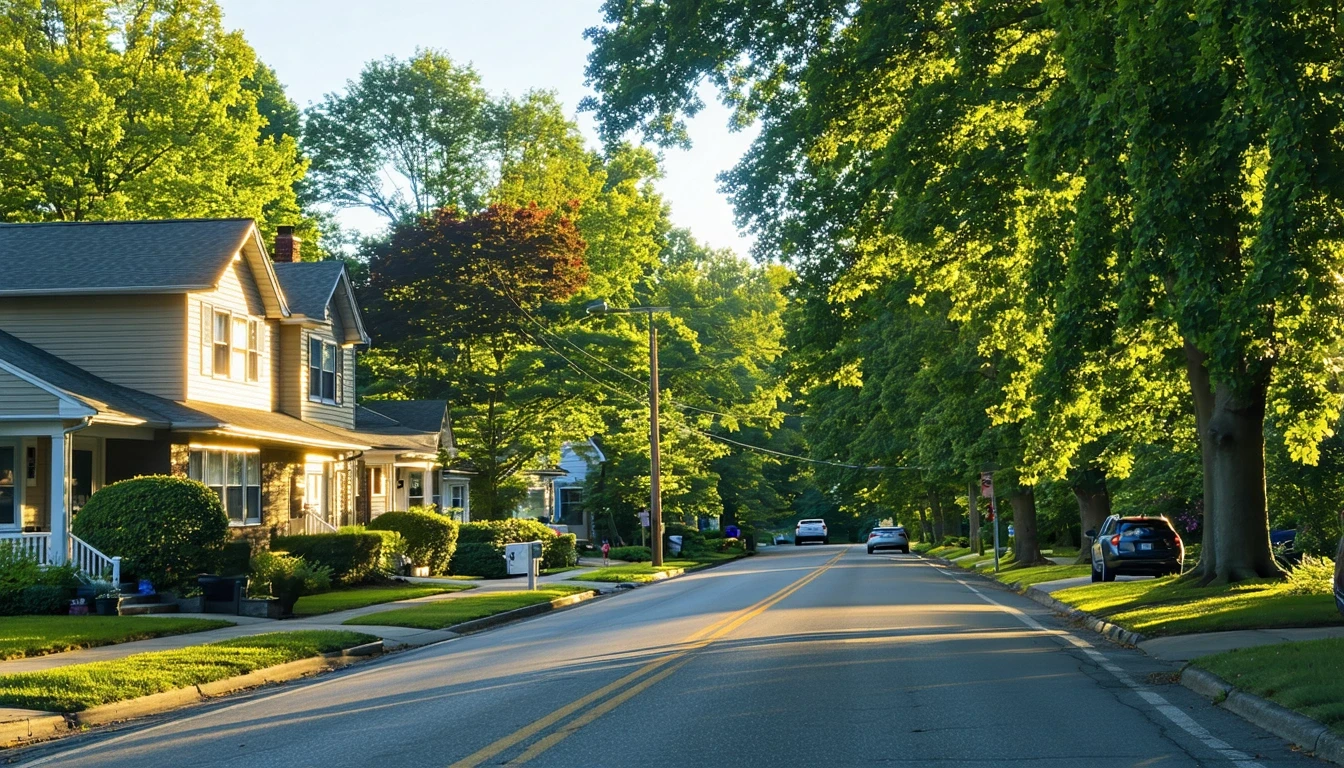
Picture two households earning the same salary, both looking at apartments in South Jersey. One opens a spreadsheet comparing Cherry Hill and Deptford Township: rent in Cherry Hill runs $1,777 per month for a median apartment, while Deptford comes in at $1,452. Ground beef sits at an estimated $6.95 per pound in both towns, eggs around $2.82 per dozen, milk roughly $4.21 for a half-gallon. On paper, the difference looks like $325 in monthly rent and nearly identical grocery prices. But the real question isn’t what the line items say—it’s how the same income feels when you’re actually living there, running errands, getting to work, and managing the daily friction that doesn’t show up on a receipt.
Cherry Hill and Deptford Township sit in the same Philadelphia metro area, share the same regional price environment, and face similar commute realities. Yet the cost structure in each city creates different pressure points for different households. Cherry Hill offers rail transit access, walkable pockets with high food and grocery density, and strong family infrastructure—but commands higher housing entry costs. Deptford presents a lower threshold for renters and buyers, but without the same experiential infrastructure to reduce car dependence or errand friction. The decision isn’t about which city costs less overall; it’s about which cost pressures you’re equipped to handle and which conveniences you’re willing to pay for in 2026.
This article breaks down where expenses concentrate differently, how the same household income stretches or tightens depending on your daily patterns, and which tradeoffs matter most when you’re choosing between these two South Jersey communities.
Housing Costs
Housing creates the sharpest dividing line between Cherry Hill and Deptford Township. Cherry Hill’s median gross rent sits at $1,777 per month, while Deptford’s comes in at $1,452—a difference that represents more than just monthly cash flow. It signals different entry barriers, different tenant pools, and different expectations around what housing includes. For renters, that gap translates to front-loaded budget pressure: Cherry Hill demands more upfront to secure a lease, which can delay move-in timelines or force households to accept smaller units to stay within range. Deptford’s lower rent threshold opens access earlier, but it also means navigating a market where amenities, walkability, and transit proximity may require more intentional searching.
For buyers, the gap widens further. Cherry Hill’s median home value stands at $281,700, compared to Deptford’s $235,800. That difference affects down payment requirements, mortgage qualification thresholds, and ongoing property tax exposure. Cherry Hill’s higher home values reflect not just housing stock age or size, but also proximity to rail transit, access to higher-density grocery and food options, and stronger school and playground infrastructure. Buyers in Cherry Hill are paying for embedded convenience—less need to drive for errands, more options within walking distance, more predictable access to family-oriented amenities. Buyers in Deptford face a lower entry cost, but they’re also taking on more responsibility to manage transportation, errands, and logistics without the same built-in infrastructure support.
The housing cost difference also shapes long-term financial exposure differently. In Cherry Hill, higher home values mean higher property tax bases, more equity accumulation potential, and more sensitivity to interest rate changes. In Deptford, lower entry costs mean smaller mortgage payments and lower property tax obligations, but also less cushion if maintenance costs spike or if the household needs to relocate quickly. Renters in Cherry Hill face tighter monthly budgets but gain access to neighborhoods where car dependence drops and errand time shrinks. Renters in Deptford keep more cash flow flexibility but may spend more on transportation and time managing daily logistics across a more car-oriented landscape.
Housing takeaway: Cherry Hill’s higher rent and home values create steeper entry barriers, but they also buy access to transit, walkable errands, and family infrastructure that reduce ongoing friction costs. Deptford’s lower housing costs ease the initial threshold, but households take on more responsibility to manage transportation and daily logistics without the same experiential support. First-time buyers prioritizing lower down payments and monthly obligations may find Deptford more accessible; families prioritizing school density, playground access, and rail transit may find Cherry Hill’s higher entry cost worth the embedded convenience. Renters sensitive to monthly cash flow will feel Deptford’s advantage immediately, while renters prioritizing walkability and transit access will find Cherry Hill’s premium harder to avoid.
Utilities and Energy Costs
Utility costs in Cherry Hill and Deptford Township operate within nearly identical rate structures—electricity runs 22.73¢ per kWh in both cities, and natural gas prices differ only slightly ($17.94 per MCF in Cherry Hill versus $17.04 in Deptford). That similarity means the primary driver of utility cost differences isn’t pricing—it’s housing stock, household behavior, and the way daily routines interact with heating and cooling exposure. In Cherry Hill, where walkable pockets and mixed-use land patterns reduce car dependence, households may spend less time at home during peak heating or cooling hours, which can moderate baseline usage. In Deptford, where car-oriented patterns dominate and errands require more driving, households may spend more time at home between trips, which can increase heating and cooling cycles throughout the day.
The natural gas price difference, while modest, becomes more visible in older single-family homes with less efficient heating systems. Cherry Hill’s higher home values often correlate with newer construction or updated HVAC systems, which can reduce gas consumption even when temperatures drop. Deptford’s lower home values may reflect older housing stock where furnaces run longer and insulation performs less predictably, amplifying the impact of even small rate differences. For renters in multi-unit buildings, utility predictability depends heavily on whether heat is included in rent or billed separately. In Cherry Hill, where apartment density is higher and landlords may bundle utilities to attract tenants, renters face less month-to-month volatility. In Deptford, where single-family rentals are more common, renters are more likely to manage their own utility accounts and absorb seasonal swings directly.
Household size and daily routines also shape utility exposure differently in each city. Single adults working full-time and running errands on foot or by transit in Cherry Hill may see lower baseline usage simply because they’re home less. Families with young children in Deptford, managing school drop-offs, grocery runs, and after-school activities by car, may spend more cumulative time at home and cycle heating or cooling more frequently. Older homes in both cities face higher exposure to drafts, inefficient windows, and outdated appliances, but Deptford’s lower home values suggest a higher concentration of these conditions. Newer construction in Cherry Hill, particularly in neighborhoods with mixed-use development, tends to include better insulation and more efficient systems, which reduces both heating and cooling intensity even when rates stay constant.
Utility takeaway: Cherry Hill and Deptford share nearly identical utility rates, so cost differences emerge from housing stock age, household routines, and how much time people spend at home. Cherry Hill’s walkable infrastructure and higher home values correlate with newer construction and less time-intensive errands, which can moderate baseline usage. Deptford’s car-oriented patterns and lower home values suggest older housing stock and more time spent at home between trips, which can increase heating and cooling cycles. Families in older single-family homes will feel seasonal volatility more acutely in Deptford; renters in multi-unit buildings with bundled utilities will find more predictability in Cherry Hill. Households prioritizing energy cost control should focus on housing age and insulation quality, not just rate comparisons.
Groceries and Daily Expenses
Grocery and daily spending pressure in Cherry Hill and Deptford Township reflects less about price per item and more about access density, convenience infrastructure, and how much time households spend managing errands. Both cities sit within the same regional price environment, with an RPP index of 104, meaning staple prices—bread, eggs, milk, ground beef—track closely across both locations. But Cherry Hill’s high food and grocery density, confirmed by experiential signals, means households encounter more options within shorter distances, which reduces the need to plan around bulk trips or accept higher prices at the nearest store. Deptford lacks the same density signals, which suggests fewer grocery options within easy reach and more reliance on driving to access competitive pricing or specialty items.
The difference shows up most clearly in how households manage weekly routines. In Cherry Hill, where food establishments exceed high-density thresholds and grocery stores cluster accessibly, a household can comparison-shop without adding significant time or fuel costs. That access reduces the penalty for forgetting an item or needing a quick restock, which in turn reduces the temptation to overspend on convenience items at higher-priced corner stores. In Deptford, where grocery access requires more intentional planning, households face a tradeoff: either commit to larger, less frequent shopping trips to access lower prices at big-box stores, or accept higher per-item costs at the nearest available option. That tradeoff doesn’t always show up as a line-item price difference—it shows up as time spent driving, fuel consumed per trip, and the cognitive load of managing a more complex errands schedule.
Dining out and convenience spending follow similar patterns. Cherry Hill’s mixed land-use presence and high food density mean more restaurants, cafes, and takeout options within walking or short driving distance, which increases the temptation to spend on prepared food but also increases competition that can keep prices in check. Deptford’s lower density suggests fewer options nearby, which can reduce spontaneous dining spending but also means households may drive farther for variety, adding transportation costs that offset any savings on the meal itself. Single adults and couples in Cherry Hill may find themselves spending more on coffee, lunch, and takeout simply because access is frictionless; families in Deptford may spend less on dining out but more on fuel and time managing grocery logistics across longer distances.
Groceries takeaway: Cherry Hill’s high food and grocery density reduces the time, fuel, and planning burden required to access competitive pricing and variety, which lowers the hidden costs of daily errands even if per-item prices stay similar. Deptford’s lower access density means households must plan more intentionally, drive farther, and accept less flexibility in where they shop, which can increase fuel costs and reduce the ability to comparison-shop without adding significant time. Families managing larger grocery volumes will feel the access difference more acutely in Deptford; single adults and couples prioritizing convenience and walkable errands will find Cherry Hill’s density reduces both cash and time costs. Price sensitivity matters less than access friction when comparing these two cities.
Taxes and Fees
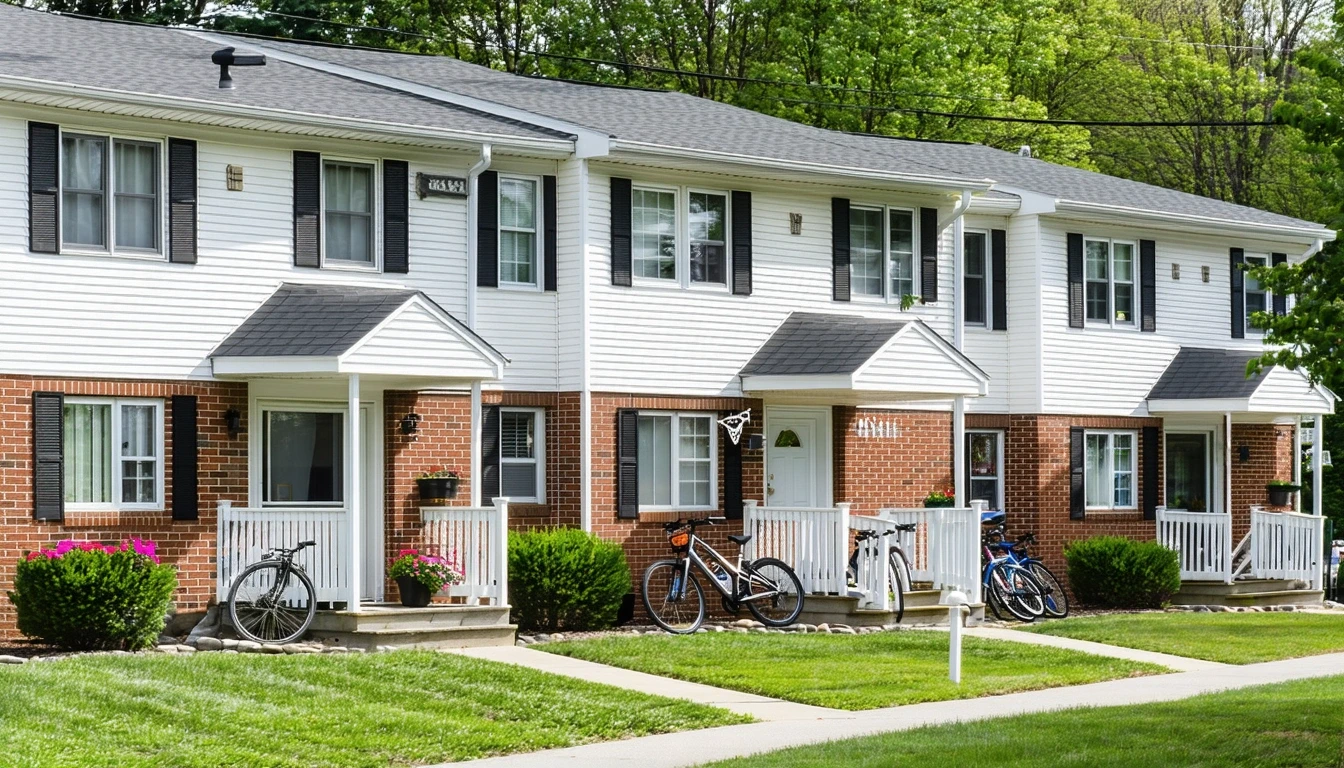
Property taxes and local fees in Cherry Hill and Deptford Township reflect different municipal revenue structures, different service expectations, and different ways of distributing cost burdens across homeowners and renters. Cherry Hill’s higher median home value of $281,700 means property tax bills, even at identical millage rates, would generate higher absolute payments compared to Deptford’s $235,800 median. That difference doesn’t just affect homeowners—it also filters into rental pricing, as landlords pass through property tax obligations in the form of higher rents. Cherry Hill’s $1,777 median rent already reflects that embedded tax pressure, while Deptford’s $1,452 rent suggests lower property tax passthrough and potentially different service funding models.
Beyond property taxes, both cities likely impose local fees for trash collection, water, sewer, and stormwater management, though the structure and predictability of these fees can vary. In Cherry Hill, where mixed-use development and higher-density neighborhoods are more common, municipalities may bundle certain services or offer tiered pricing based on household size or water usage. In Deptford, where single-family homes dominate and car-oriented patterns prevail, fees may be more uniform but also less flexible, meaning households pay the same amount regardless of actual usage. HOA fees, where applicable, add another layer of cost predictability or volatility depending on what services they cover—landscaping, snow removal, shared amenities—and how aggressively associations raise assessments over time.
The tax and fee structure also affects long-term residents differently than recent movers. Homeowners in Cherry Hill who bought years ago may benefit from assessment caps or exemptions that newer buyers don’t receive, which can create significant cost differences between neighbors in similar homes. Homeowners in Deptford face the same dynamic, but the lower baseline home values mean even uncapped assessments generate smaller absolute tax bills. Renters in both cities feel tax pressure indirectly, through rent increases that track property tax hikes, but they also avoid the direct exposure to special assessments, school bond referendums, and other voter-approved tax changes that homeowners must absorb immediately.
Taxes and fees takeaway: Cherry Hill’s higher home values generate higher property tax obligations in absolute terms, which homeowners feel directly and renters feel through higher baseline rents. Deptford’s lower home values reduce property tax exposure, but households still face local fees and potential HOA assessments that can add unpredictability to monthly budgets. Long-term homeowners in both cities may benefit from assessment caps that newer buyers don’t receive, creating cost disparities even within the same neighborhood. Renters avoid direct property tax volatility but absorb tax increases through rent adjustments over time. Households planning to stay several years should investigate local tax trends and fee structures, not just current rates, to understand long-term cost exposure.
Transportation & Commute Reality
Transportation costs and commute patterns in Cherry Hill and Deptford Township share identical average commute times—25 minutes—and identical gas prices at $2.86 per gallon, but the experience of getting around daily differs sharply because of infrastructure, transit access, and the density of destinations within reach. Cherry Hill’s experiential signals confirm rail transit presence, walkable pockets with high pedestrian-to-road ratios, and cycling infrastructure in some areas. That combination means households can choose whether to drive, take transit, or walk for different types of trips, which reduces the baseline assumption that every errand requires a car. Deptford lacks the same infrastructure signals, which suggests most households default to driving for nearly all trips—work commutes, grocery runs, school drop-offs, and errands.
The presence of rail transit in Cherry Hill doesn’t eliminate car ownership for most households, but it does create optionality that reduces per-mile driving costs and time spent in traffic. Commuters heading into Philadelphia or other regional employment centers can use rail for work trips, reserving car use for weekends, errands, or trips that don’t align with transit schedules. That flexibility reduces fuel consumption, lowers wear-and-tear on vehicles, and can delay the need to replace a car or add a second vehicle to the household. In Deptford, where transit signals are absent, households must rely on personal vehicles for nearly all trips, which increases fuel costs, maintenance frequency, and the likelihood that a two-adult household needs two cars to manage work and errands simultaneously.
Walkability and bike infrastructure in Cherry Hill also reduce the hidden costs of short trips—picking up a prescription, grabbing coffee, running to the grocery store for a missing ingredient. In car-dependent environments, even a five-minute errand requires starting the car, finding parking, and burning fuel, which adds friction and cost to daily routines. In Cherry Hill’s walkable pockets, those same errands can happen on foot or by bike, which eliminates fuel costs and reduces the cognitive load of managing a car-centric schedule. Families with young children in Cherry Hill may find they can walk to playgrounds, schools, and parks more easily, reducing the need to drive for after-school activities. Families in Deptford face longer distances to the same amenities, which increases time spent in the car and fuel consumed per week even if commute times to work stay constant.
Transportation takeaway: Cherry Hill’s rail transit, walkable pockets, and cycling infrastructure create optionality that reduces car dependence for errands and some commutes, lowering fuel costs and vehicle wear even if work commute times stay similar. Deptford’s lack of transit and walkability signals means most households default to driving for all trips, which increases fuel consumption, maintenance frequency, and the likelihood of needing multiple vehicles. Households with flexible work schedules or the ability to use transit for commuting will find Cherry Hill’s infrastructure reduces both cash and time costs; households prioritizing lower housing entry costs in Deptford must account for higher transportation exposure and less flexibility in how they move around daily.
Where Cost Pressure Lands Differently
Housing dominates the cost experience in both Cherry Hill and Deptford Township, but the pressure shows up at different stages and affects different household types more acutely. Cherry Hill’s higher rent and home values create a steeper entry barrier—renters need more upfront cash to secure a lease, and buyers need larger down payments and higher income to qualify for mortgages. That front-loaded cost buys access to infrastructure that reduces ongoing friction: rail transit, walkable errands, high food and grocery density, and strong family amenities. Deptford’s lower housing costs ease the initial threshold, making it more accessible for first-time renters and buyers, but households take on more responsibility to manage transportation, errands, and daily logistics without the same built-in support. The tradeoff isn’t about total cost—it’s about whether you’re better equipped to absorb upfront housing pressure or ongoing transportation and time costs.
Utilities introduce similar exposure in both cities because electricity and natural gas rates track closely, but the volatility differs based on housing stock and daily routines. Cherry Hill’s higher home values correlate with newer construction and more efficient systems, which can moderate heating and cooling costs even when rates stay constant. Deptford’s lower home values suggest older housing stock where furnaces and air conditioners run less efficiently, amplifying seasonal swings. Families in older single-family homes will feel utility volatility more acutely in Deptford; renters in multi-unit buildings with bundled utilities will find more predictability in Cherry Hill. The difference isn’t about rates—it’s about how much control households have over usage and how much infrastructure absorbs or amplifies seasonal exposure.
Daily living costs—groceries, dining, convenience spending—reflect less about price per item and more about access friction and time management. Cherry Hill’s high food and grocery density means households can comparison-shop, restock quickly, and avoid the penalty of forgetting an item without adding significant time or fuel costs. Deptford’s lower density means households must plan more intentionally, drive farther, and accept less flexibility in where they shop, which increases fuel costs and reduces the ability to respond to price changes without adding logistical complexity. Single adults and couples in Cherry Hill may spend more on takeout and coffee simply because access is frictionless; families in Deptford may spend less on dining out but more on fuel and time managing grocery logistics across longer distances.
Transportation and access create the sharpest divergence in how the same income feels. Cherry Hill’s rail transit, walkable pockets, and cycling infrastructure reduce car dependence for errands and some commutes, which lowers fuel costs, delays vehicle replacement, and reduces the need for multiple cars in a household. Deptford’s lack of transit and walkability signals means most households default to driving for all trips, which increases fuel consumption, maintenance frequency, and the likelihood that a two-adult household needs two cars to manage work and errands simultaneously. The cost difference doesn’t show up as a single line item—it shows up as cumulative fuel expenses, time spent driving, and the cognitive load of managing a car-centric schedule without the option to walk, bike, or take transit for any portion of daily routines.
The better choice depends on which costs dominate your household and which tradeoffs you’re equipped to manage. Households sensitive to upfront housing costs may prefer Deptford’s lower entry barrier, but they must account for higher transportation exposure and less infrastructure support for daily errands. Households sensitive to time costs, car dependence, and errand friction may prefer Cherry Hill’s higher housing costs in exchange for walkability, transit access, and higher-density amenities that reduce the need to drive for every trip. For families prioritizing school density, playground access, and predictable daily routines, the difference is less about price and more about how much infrastructure absorbs the logistics burden versus how much the household must manage independently.
How the Same Income Feels in Cherry Hill vs Deptford Township
Single Adult
For a single adult, housing becomes the first non-negotiable cost, and Cherry Hill’s higher rent absorbs more of the monthly budget before anything else gets paid. That upfront pressure leaves less flexibility for discretionary spending, but it also buys proximity to transit and walkable errands, which reduces the need for a car or lowers fuel costs if a car is kept. In Deptford, lower rent frees up more cash flow immediately, but the lack of transit and walkability means a car becomes essential, and fuel, insurance, and maintenance costs replace the housing savings. Flexibility exists in Cherry Hill through the ability to skip car trips for errands; flexibility exists in Deptford through lower baseline rent, but daily logistics require more planning and driving.
Dual-Income Couple
For a dual-income couple, the tradeoff shifts toward time management and whether both adults need cars to manage work and errands independently. Cherry Hill’s rail transit and walkable infrastructure mean one partner might commute by train while the other drives, reducing the need for two vehicles and lowering cumulative fuel and insurance costs. Deptford’s lower housing costs ease the monthly budget, but the lack of transit means both partners likely need cars to avoid schedule conflicts, which increases transportation exposure and reduces the cash flow advantage from lower rent. Non-negotiable costs in Cherry Hill concentrate in housing; non-negotiable costs in Deptford spread across housing and transportation, with less ability to reduce car dependence even if work schedules align.
Family with Kids
For families with children, the cost structure diverges most sharply around logistics, time, and infrastructure support. Cherry Hill’s strong family infrastructure—high school density, playgrounds, and walkable access to parks—reduces the need to drive for after-school activities and weekend errands, which lowers fuel costs and frees up time for other household tasks. Deptford’s lower housing costs ease the entry barrier for families needing more space, but the lack of walkability and transit means parents spend more time driving kids to school, activities, and errands, which increases fuel consumption and reduces schedule flexibility. Non-negotiable costs in Cherry Hill include higher rent or mortgage payments but come with embedded convenience that reduces ongoing friction; non-negotiable costs in Deptford include transportation and time spent managing logistics without the same infrastructure support, even if housing costs stay lower.
Decision Matrix: Which City Fits Which Household?
| Decision factor | If you’re sensitive to this… | Cherry Hill tends to fit when… | Deptford Township tends to fit when… |
|---|---|---|---|
| Housing entry + space needs | You need to minimize upfront cash or qualify for a mortgage quickly | You can absorb higher rent or home prices in exchange for walkability and transit access | You prioritize lower entry costs and can manage transportation independently |
| Transportation dependence + commute friction | You want to reduce car dependence or avoid needing multiple vehicles | You value rail transit, walkable errands, and the ability to bike for some trips | You’re comfortable driving for all trips and can absorb fuel and maintenance costs |
| Utility variability + home size exposure | You want predictable utility bills and efficient heating or cooling systems | You prefer newer construction or multi-unit buildings with bundled utilities | You’re willing to manage older housing stock and absorb seasonal utility swings |
| Grocery strategy + convenience spending creep | You want to comparison-shop easily and avoid fuel costs for short errands | You value high food and grocery density that reduces planning and driving | You’re comfortable planning larger, less frequent shopping trips to access lower prices |
| Fees + friction costs (HOA, services, upkeep) | You want to avoid unpredictable assessments or service fees | You can absorb higher baseline property taxes in exchange for embedded services | You prefer lower property tax exposure even if it means managing more services independently |
| Time budget (schedule flexibility, errands, logistics) | You want to minimize time spent driving and managing household logistics | You value walkable infrastructure and transit that reduce errand friction | You have schedule flexibility and can absorb longer driving times for errands |
Lifestyle Fit
Cherry Hill and Deptford Township offer distinct lifestyle textures shaped by infrastructure, access, and the daily rhythms that emerge from how each city is built. Cherry Hill’s rail transit presence and walkable pockets create a rhythm where errands, commutes, and recreation don’t always require a car. Residents can walk to coffee shops, take the train into Philadelphia for work or entertainment, and access parks and playgrounds without planning around parking or fuel costs. That infrastructure doesn’t eliminate car ownership, but it does reduce the baseline assumption that every trip requires driving, which changes how weekends feel, how much time gets spent in traffic, and how much flexibility exists in daily schedules. Families in Cherry Hill benefit from high school density and playground access, which means after-school activities and weekend outings can happen within walking or short driving distance, reducing the logistical burden of managing multiple kids’ schedules.
Deptford Township’s lifestyle centers more heavily on car-based routines, where driving becomes the default for work, errands, and recreation. Without the same transit or walkability signals, residents plan around longer trips to access grocery stores, dining options, and entertainment, which can increase the time spent managing logistics and reduce spontaneity in daily routines. That car-oriented structure works well for households that value lower housing entry costs and don’t mind the tradeoff of spending more time driving, but it can feel restrictive for households that prefer the option to walk, bike, or take transit for at least some trips. Recreation and outdoor access in both cities include parks and green spaces, though Cherry Hill’s park density signals suggest more integrated access within neighborhoods, while Deptford may require more intentional planning to reach similar amenities.
The lifestyle differences also affect how housing stock and neighborhood character shape daily life. Cherry Hill’s mixed land-use presence and higher building density mean more variety in housing types—apartments, townhomes, single-family homes—within closer proximity to commercial areas, which can reduce the need to drive for daily needs. Deptford’s lower-density, more car-oriented development means neighborhoods tend to separate residential and commercial areas more distinctly, which increases the distance between home and errands and reinforces the need for a car to manage daily routines. Both cities sit within the same regional climate and weather patterns, so heating and cooling needs track similarly, but the way housing stock absorbs or amplifies those needs differs based on building age and efficiency. Cherry Hill’s median household income of $107,056 per year reflects a higher-earning resident base compared to Deptford’s $90,995, which can correlate with newer housing stock and more updated infrastructure. Both cities report similar long commute percentages at 36.9%, meaning a significant share of residents in each city face extended travel times regardless of local infrastructure.
Cherry Hill’s unemployment rate sits at 5.0%, slightly higher than Deptford’s 4.4%, though both remain within typical ranges for suburban communities in the Philadelphia metro. The lifestyle fit ultimately depends on whether you prioritize infrastructure that reduces car dependence and errand friction, or whether you prioritize lower housing entry costs and are comfortable managing a more car-centric daily routine.
FAQ
Is Cherry Hill or Deptford Township more affordable for renters in 2026?
Deptford Township offers lower median rent at $1,452 per month compared to Cherry Hill’s $1,777, which eases upfront budget pressure and makes it more accessible for renters prioritizing lower monthly housing costs. However, Cherry Hill’s higher rent buys access to rail transit, walkable errands, and high food and grocery density, which can reduce transportation and time costs. Renters in Deptford save on housing but may spend more on fuel, car maintenance, and time managing errands across longer distances without the same infrastructure support.
Which city has lower transportation costs, Cherry Hill or Deptford Township?
Both cities share identical gas prices at $2.86 per gallon and similar average commute times of 25 minutes, but transportation costs differ based on infrastructure and car dependence. Cherry Hill’s rail transit, walkable pockets, and cycling infrastructure reduce the need to drive for all trips, which lowers fuel consumption and can delay the need for a second vehicle. Deptford lacks the same transit and walkability signals, meaning most households default to driving for work, errands, and recreation, which increases fuel costs, maintenance frequency, and the likelihood of needing multiple cars.
How do grocery costs compare between Cherry Hill and Dept