
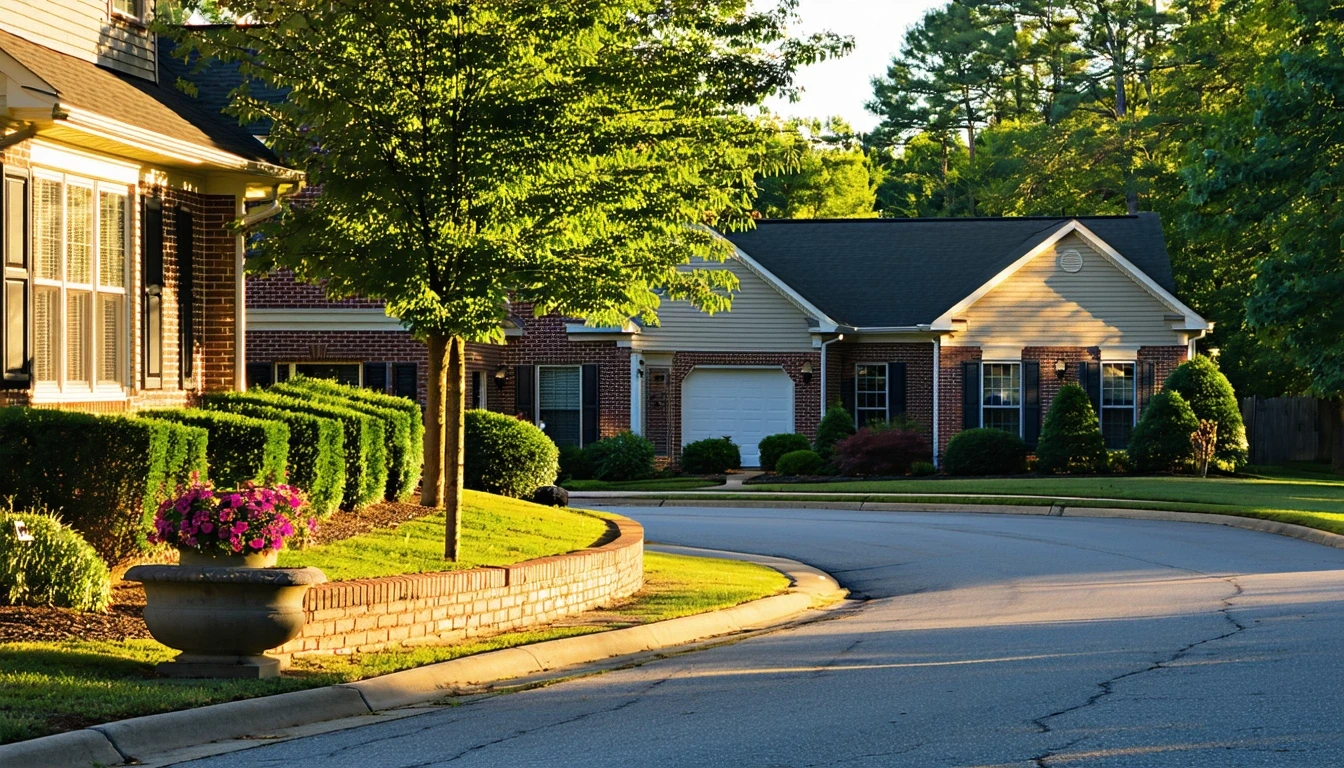
Apartment vs House in Charlotte — Monthly Cost Comparison
| Expense Category | Apartment | House |
|---|---|---|
| Base Housing Cost | Median rent $1,399/month covers structure and land | Mortgage on $312,800 median home (principal + interest only, before taxes/insurance) |
| Cooling (Summer Dominance) | Lower — smaller conditioned space, shared walls reduce heat gain | Higher — larger footprint, more exterior surface area, extended cooling season in humid subtropical climate |
| Heating (Winter Supplement) | Minimal — mild winters, shared walls provide thermal buffer | Moderate — standalone structure loses heat faster during occasional cold snaps |
| Maintenance & Upkeep | Landlord-covered for structure; tenant handles interior only | Owner-funded for all systems, roof, HVAC, exterior; humid climate accelerates wear on siding and seals |
| Governance & Fees | Lease terms fixed short-term; some complexes include water/trash | Property taxes, homeowner insurance, possible HOA (prevalence varies by neighborhood); longer financial commitment |
| Location & Access | Concentrated in walkable pockets and near rail; errands broadly accessible without driving | More common in low-rise areas; car dependency increases outside urban core despite notable bike infrastructure |
Methodology note: This table reflects cost behavior differences driven by Charlotte’s urban form (more vertical core with mixed-use walkable pockets vs low-rise suburban edges), humid subtropical climate (year-round cooling dominance, mild winters), and infrastructure patterns (rail present but limited, high pedestrian-to-road ratio in core). Categories omitted (e.g., water, trash) either don’t vary meaningfully by housing type in Charlotte or lack feed-backed data to justify inclusion. No totals are provided because ownership costs depend on down payment, loan terms, tax rates, and insurance quotes not present in the feed.
The Housing Market in Charlotte Today
Charlotte’s housing market reflects its dual identity: a major banking and finance center with a vertical urban core, surrounded by low-rise suburban development that still dominates the metro footprint. The median home value of $312,800 positions Charlotte as accessible compared to coastal metros, but that figure alone doesn’t capture how cost structure shifts depending on where you live within the region.
What newcomers often misunderstand is that Charlotte’s walkable pockets—areas with high pedestrian-to-road ratios, rail access, and broadly accessible errands—are geographically limited. The city has invested in transit (rail service is present) and urban infill, creating neighborhoods where car ownership becomes optional rather than mandatory. But step outside these zones, and the experience flips: commutes lengthen, errands require driving, and housing costs drop but operational costs rise.
The presence of both college students and retirees adds demand diversity. Rental inventory concentrates near universities, hospitals, and the urban core, where the more vertical building character supports multifamily development. Single-family homes dominate the suburban ring, where lot sizes increase but access to daily needs without a car diminishes.
Charlotte’s economic base—anchored by financial services—creates income stability (unemployment sits at 3.7%) but also wage stratification. The median household income of $74,070 per year supports homeownership for many, but the gap between that income and the home value suggests that buyers are stretching or relying on dual incomes. For renters, $1,399 per month median gross rent consumes a significant share of that same income, especially for single earners.
The regional price parity index of 97 indicates that overall costs in Charlotte run slightly below the national baseline, but housing itself doesn’t follow that discount uniformly. Desirable urban neighborhoods command premiums for walkability and transit access, while outer suburbs offer lower entry prices in exchange for car dependency and longer commutes.
Renting in Charlotte
Renting in Charlotte means navigating a market segmented by access. At $1,399 per month median gross rent, the figure reflects a blend of urban apartments near rail stops and Uptown, older suburban complexes along major corridors, and newer builds in mixed-use developments. That median doesn’t distinguish between a one-bedroom in a walkable pocket and a two-bedroom in a car-dependent suburb, so renters face a tradeoff: pay more to live where errands are broadly accessible and transit is viable, or pay less and absorb the cost and time of driving everywhere.
Rental pressure in Charlotte comes less from scarcity and more from sorting. The urban core has limited land, and the more vertical building character there supports higher-density housing, but that inventory fills quickly with young professionals, hospital workers, and college-affiliated renters. Suburban apartment complexes offer more availability but fewer walkable amenities, and commute times stretch as you move outward—average commute in the metro is 30 minutes, with 22% of workers facing long commutes.
Lease terms in Charlotte typically run 12 months, and rent adjustments at renewal reflect both market pressure and property-level factors like renovations or management changes. Renters in high-demand walkable areas face steeper increases, while those in car-oriented suburbs see slower growth but must account for transportation costs that homeowners in the same areas also face.
Utilities often aren’t included in rent. Electricity at 15.05¢/kWh and natural gas at $25.54/MCF mean that tenants in older buildings or poorly insulated units will feel the impact of Charlotte’s extended cooling season—hot, humid summers drive air conditioning costs for months, while mild winters keep heating bills modest. Apartments with shared walls and smaller square footage reduce exposure compared to standalone houses, but renters should still expect cooling to dominate their utility profile.
For renters deciding where money goes each month, Charlotte’s rental market rewards those who can afford proximity to the urban core or rail corridors. Those who can’t must plan for car ownership, fuel, and time costs that offset any savings on base rent.
Owning a Home in Charlotte
Owning a home in Charlotte means committing to a market where the $312,800 median home value is only the starting point. Buyers face property taxes (rates vary by county and municipality), homeowner insurance (which must account for occasional severe weather and humidity-driven maintenance), and the possibility of HOA fees in newer subdivisions and planned communities. None of these costs are optional, and all of them grow over time in ways renters don’t experience directly.
Property taxes in North Carolina are assessed locally, and while the state doesn’t impose unusually high rates compared to the Northeast or Midwest, the tax burden still represents a permanent, recurring cost that rises with assessed value. Buyers in appreciating neighborhoods face higher tax bills even if their income stays flat. Homeowners in older, stable areas see slower growth, but they also face aging infrastructure and deferred maintenance that eventually demands capital investment.
Homeowner insurance in Charlotte must account for the region’s exposure to summer storms, high humidity, and occasional ice events in winter. Policies cost more than in arid or temperate climates because the risk of water intrusion, mold, and wind damage is higher. Buyers in flood-prone areas near creeks or low-lying zones face additional insurance requirements that can substantially increase monthly obligations.
HOAs are common in newer developments, especially in suburban areas where planned communities dominate recent construction. Fees vary widely—some cover only common area landscaping, while others include trash, water, and recreational facilities. Buyers should verify what’s included and whether the HOA has a history of special assessments, which can arrive without warning and require lump-sum payments for repairs or improvements.
Maintenance and upkeep in Charlotte are shaped by climate. The extended cooling season and high humidity accelerate wear on HVAC systems, exterior paint, siding, and roof shingles. Homes with poor drainage or inadequate ventilation develop mold and moisture problems that require costly remediation. Buyers of older homes should budget for deferred maintenance, especially if the property hasn’t been updated in the past decade.
Ownership in Charlotte also means choosing a location strategy. Homes in walkable pockets near rail or Uptown command higher prices but reduce transportation costs and time. Homes in suburban areas cost less upfront but require car ownership, longer commutes, and more driving for daily errands. The urban form of Charlotte—vertical core, low-rise periphery—means that buyers can’t assume uniform access across the metro.
For buyers weighing renting vs owning, the decision hinges on how long they plan to stay and whether they value control over predictability. Ownership locks in a base housing cost (the mortgage principal and interest) but exposes buyers to taxes, insurance, maintenance, and market risk. Renters avoid those exposures but face lease renewals and less control over their living situation.
Utilities & Upkeep Differences
Utilities in Charlotte behave differently depending on housing type, and the gap widens because of the region’s climate. Hot, humid summers create a long cooling season that dominates electricity bills, while mild winters mean heating remains a secondary concern. Apartments benefit from smaller conditioned spaces and shared walls that reduce heat gain, while standalone houses face higher exposure due to larger footprints and more exterior surface area.
For illustrative context, a typical household using 1,000 kWh per month would face a bill around $150 for electricity at Charlotte’s rate of 15.05¢/kWh, before fees and taxes. Apartments often fall below that usage threshold because of their size and thermal efficiency, while houses—especially older or poorly insulated ones—can exceed it significantly during peak summer months. Natural gas at $25.54/MCF remains a minor cost for most households, used primarily for water heating or supplemental heating during brief cold snaps.
Upkeep costs in Charlotte are driven by humidity and storm exposure. Houses require regular maintenance on roofs, gutters, siding, and HVAC systems—all of which degrade faster in a humid subtropical climate. Exterior paint and wood trim need more frequent attention to prevent rot and mold. Apartment dwellers avoid these costs entirely, as landlords or HOAs handle structural maintenance.
The presence of integrated green space and water features throughout Charlotte (park density exceeds high thresholds) is an amenity, but it also signals a landscape where drainage and moisture management matter. Homeowners in low-lying areas or near creeks face higher risk of water intrusion and must invest in grading, sump pumps, or foundation waterproofing. Apartment complexes typically handle site drainage at the property level, insulating tenants from these concerns.
For homeowners, the operational cost difference between an apartment and a house isn’t just about square footage—it’s about exposure. Houses in Charlotte face year-round climate stress, require active maintenance to prevent humidity-driven damage, and demand more energy to cool and heat. Apartments reduce that exposure but offer less space and less control.
Rent vs Buy: Long-Term Exposure in Charlotte
The rent-versus-buy decision in Charlotte isn’t a math problem with a single answer—it’s a tradeoff between predictability and control, shaped by how long you plan to stay and what kind of cost exposure you’re willing to accept.
Renters face lease renewals that can bring sudden increases, especially in high-demand walkable areas near rail or Uptown. But they avoid property taxes, insurance, maintenance, and the risk that a major system (HVAC, roof, foundation) fails and requires a five-figure repair. Renters can leave when the lease ends without selling, without transaction costs, and without exposure to market downturns.
Homeowners lock in a base housing cost—the mortgage principal and interest—but take on every other expense that comes with the property. Property taxes rise over time as assessments increase. Insurance premiums adjust with risk and claims history. Maintenance costs are unpredictable and unavoidable: a failing HVAC system in Charlotte’s humid climate isn’t optional, and replacement costs don’t wait for a convenient budget year. HOA fees, where applicable, can increase or trigger special assessments without owner input.
Over time, ownership builds equity, but only if the market cooperates and only if the owner stays long enough to recover transaction costs (closing costs, agent fees, moving expenses). In a city like Charlotte, where the urban core is walkable but the metro is car-oriented, location determines whether a home appreciates quickly or slowly. Homes in neighborhoods with rail access, high pedestrian infrastructure, and broadly accessible errands tend to hold value better than those in car-dependent suburbs where commutes are long and amenities are sparse.
Renters in Charlotte maintain flexibility and avoid the long-term financial exposure that comes with ownership, but they sacrifice control over their housing situation and miss out on equity accumulation. Owners gain control and potential equity growth but accept volatility in taxes, insurance, and maintenance, along with the risk that the market turns or that the neighborhood’s access advantages erode.
For households planning to stay in Charlotte for five years or more, ownership becomes more viable—not because it’s cheaper, but because the control and equity potential outweigh the cost volatility. For those with shorter timelines, uncertain job situations, or a preference for liquidity, renting avoids the risks and responsibilities that come with owning in a market shaped by climate exposure and infrastructure tradeoffs.
FAQs About Housing Costs in Charlotte
Is Charlotte affordable for first-time homebuyers?
Charlotte’s median home value of $312,800 is accessible compared to coastal metros, but affordability depends on income, down payment, and tolerance for ownership costs beyond the mortgage. Buyers must budget for property taxes, insurance, maintenance, and possibly HOA fees—all of which grow over time. First-time buyers with stable incomes and long-term plans can find entry points, especially in suburban areas, but those seeking walkable neighborhoods near rail or Uptown will face higher prices and more competition.
How does rent in Charlotte compare to mortgage payments?
Median gross rent of $1,399 per month is comparable to the principal and interest portion of a mortgage on a median-priced home, but ownership adds property taxes, insurance, maintenance, and HOA fees that renters don’t pay. Renters also avoid the upfront costs of a down payment and closing. The comparison depends on location: renting in the urban core may cost more than owning in a suburban area, but the reverse is often true in high-demand walkable neighborhoods.
What drives utility costs for homeowners in Charlotte?
Charlotte’s extended cooling season dominates utility bills. Hot, humid summers mean air conditioning runs for months, and electricity at 15.05¢/kWh adds up quickly in larger homes or poorly insulated structures. Heating costs remain modest due to mild winters. Homeowners in older houses or those with aging HVAC systems face higher bills and more frequent repairs, while apartment dwellers benefit from smaller spaces and shared walls that reduce energy demand.
Are HOA fees common in Charlotte neighborhoods?
HOA fees are prevalent in newer suburban developments and planned communities, but less common in older urban neighborhoods. Fees vary widely depending on what’s covered—some include only landscaping, while others bundle trash, water, and amenities like pools or fitness centers. Buyers should verify fee history and ask whether the HOA has issued special assessments, which can require large, unexpected payments.
Does Charlotte’s climate affect home maintenance costs?
Yes. High humidity and summer heat accelerate wear on roofs, siding, HVAC systems, and exterior paint. Homes in Charlotte require more frequent maintenance to prevent mold, rot, and moisture intrusion than homes in arid or temperate climates. Buyers should budget for HVAC servicing, drainage improvements, and exterior upkeep as recurring costs, not one-time expenses.
Making Housing Choices in Charlotte
Housing costs in Charlotte are shaped by location, climate, and infrastructure in ways that don’t reduce to a single affordability number. The city’s walkable pockets offer transit access, broadly accessible errands, and a more vertical urban form, but they come with higher rents and home prices. The suburban ring offers lower entry costs but requires car ownership, longer commutes, and more driving for daily needs.
Renters gain flexibility and avoid the long-term cost exposure that comes with ownership, but they face lease renewals and less control. Homeowners lock in a base housing cost but take on taxes, insurance, maintenance, and market risk—all of which grow over time in ways that are hard to predict.
For households planning to stay long-term, ownership in Charlotte can build equity and provide stability, especially in neighborhoods with strong access to transit, parks, and daily amenities. For those with shorter timelines or uncertain plans, renting avoids the financial and operational risks that come with owning in a humid climate with car-oriented infrastructure outside the urban core.
Charlotte’s housing market rewards those who understand the tradeoffs between location, access, and cost structure. Whether renting or buying, the decision should reflect not just what you can afford today, but what kind of exposure you’re willing to accept over time. For more on what a budget has to handle in Charlotte, see our breakdown of monthly expenses across categories. And if you’re planning a move, compare moving company costs and options to manage logistics and upfront expenses.