

Ask most people which Austin suburb costs more to live in, and you’ll hear the same myth: Cedar Park must be pricier because it’s closer to Austin and has better amenities. But the reality in 2026 is more nuanced. While Cedar Park does carry a higher housing entry barrier—median home values sit at $427,800 compared to Georgetown’s $361,700, and median rent runs $1,677 versus $1,575—the decision isn’t about which city is “cheaper overall.” It’s about where cost pressure shows up, how predictable it is, and which household type feels it most. Cedar Park’s median household income of $118,903 per year is significantly higher than Georgetown’s $87,465, which changes the context of those housing numbers entirely. Both cities sit in the Austin metro, share identical utility rates and gas prices, and face the same triple-digit summer heat. But the way daily life is structured—how you move, where you shop, what you pay upfront versus over time—differs in ways that matter more than any single price tag.
This article explains how cost structure differs between Cedar Park and Georgetown in 2026, focusing on where expenses concentrate, which households feel pressure most acutely, and what tradeoffs define the decision. It does not calculate total cost of living, declare a winner, or tell you which city is “more affordable.” Instead, it breaks down housing, utilities, groceries, taxes, transportation, and lifestyle fit so you can see where your household’s specific sensitivities align with each city’s cost behavior.
Housing Costs
Housing is the primary differentiator between Cedar Park and Georgetown, but not in the way most people assume. Cedar Park’s median home value of $427,800 is $66,100 higher than Georgetown’s $361,700, and median gross rent is $102 per month higher at $1,677 versus $1,575. These aren’t small gaps, but they don’t exist in isolation. Cedar Park’s median household income is $31,438 higher annually, which means the housing entry barrier is steeper in absolute terms but arrives in a different income context. For renters, the $102 monthly difference translates to $1,224 annually—a meaningful gap for households managing tight budgets, but less significant for dual-income professionals prioritizing proximity to transit or walkable errands. For buyers, the $66,100 home value difference affects down payment requirements, mortgage qualification, and ongoing property tax exposure, but it also reflects differences in housing stock, lot sizes, and neighborhood infrastructure that some households value and others don’t need.
The structure of housing costs also differs. Cedar Park’s housing market reflects demand driven partly by its rail transit access, walkable pockets, and integrated green space—features that show up in the experiential signals data and suggest households are paying for infrastructure density alongside square footage. Georgetown’s lower entry costs may reflect a different housing form: more reliance on car-oriented access, fewer transit options, and less infrastructure concentration. This doesn’t make Georgetown “worse,” but it does mean the cost savings come with tradeoffs in daily logistics. Renters in Georgetown may find more single-family rental options at lower price points, while Cedar Park’s rental market skews toward apartments and townhomes in areas with higher pedestrian infrastructure density. Buyers in Georgetown may get more land or interior space for the same price, but they’re also more likely to face longer commutes, higher transportation time costs, and less walkable access to errands.
For first-time buyers, the $66,100 difference in median home value is a down payment gap of roughly $13,000 to $20,000 depending on loan type, which can delay homeownership by months or years for households still building savings. For families prioritizing school access and playgrounds, Cedar Park’s strong family infrastructure signals suggest those amenities are more densely available, which may justify the higher entry cost. For retirees or empty nesters downsizing, Georgetown’s lower home values may offer more flexibility to buy outright or reduce mortgage obligations, especially if transit access and walkability aren’t daily priorities. The housing cost difference isn’t about one city being universally more expensive—it’s about whether the household values what the higher cost buys, or whether the lower cost aligns better with their actual daily needs.
Housing takeaway: Cedar Park’s housing costs are higher in both rent and purchase price, but they arrive in a higher-income market and reflect denser infrastructure. Georgetown’s lower housing entry costs appeal to households prioritizing space and upfront savings over transit access and walkable errands. Renters sensitive to monthly cash flow may prefer Georgetown; buyers prioritizing family infrastructure, rail connectivity, and integrated parks may find Cedar Park’s higher entry barrier worth the tradeoff. The decision depends on whether the household’s daily life benefits from the infrastructure Cedar Park’s housing premium supports, or whether Georgetown’s lower entry cost better fits a car-oriented, space-prioritizing lifestyle.
Utilities and Energy Costs
Utilities behave identically in Cedar Park and Georgetown from a rate perspective: both cities face the same 16.11¢/kWh electricity rate and $30.71/MCF natural gas price. This makes sense—they’re both in the Austin metro, served by the same regional energy infrastructure, and exposed to the same Texas summer heat and mild winter conditions. The cost difference doesn’t come from the rates; it comes from how much energy households use, which is driven by home size, age, insulation quality, and cooling habits during the extended air conditioning season that dominates utility bills from May through September. In both cities, cooling costs are the primary driver of utility volatility, with electricity usage spiking during triple-digit heat and tapering off in the mild winter months when heating needs are minimal.
Where Cedar Park and Georgetown diverge is in housing stock and infrastructure patterns that indirectly affect utility exposure. Cedar Park’s experiential signals suggest a mix of low-rise residential development with some mixed land use, which often correlates with newer construction, better insulation standards, and smaller average unit sizes in walkable pockets. Newer homes and apartments tend to have more efficient HVAC systems, better-sealed windows, and programmable thermostats, all of which reduce baseline cooling costs. Georgetown’s lower median home values may reflect a higher share of older single-family homes on larger lots, which often means higher square footage, older HVAC systems, and greater cooling exposure. A 2,500-square-foot home built in the 1990s will cost more to cool than a 1,400-square-foot townhome built in 2015, even at identical electricity rates. This doesn’t make Georgetown’s utility costs universally higher, but it does mean households in older, larger homes face more volatility and less control over seasonal spikes.
Household size and daily routines also shape utility exposure differently in each city. Single adults or couples in smaller apartments—more common in Cedar Park’s corridor-clustered errands areas—may see summer electricity bills stay relatively predictable because cooling a 900-square-foot unit is less expensive than cooling a full house. Families in Georgetown managing larger homes may see utility bills swing more dramatically between seasons, especially if they’re running multiple zones, keeping thermostats lower during the day, or managing older appliances. The predictability difference matters more than the rate difference: households on fixed incomes or tight budgets prefer stable, lower bills over volatile ones, even if the annual average is similar. Cedar Park’s denser infrastructure and newer housing stock may offer more predictability; Georgetown’s larger, older homes may offer more space but less control over seasonal cost swings.
Utility takeaway: Cedar Park and Georgetown face identical utility rates, so the cost difference is driven by home size, age, and cooling exposure rather than price. Cedar Park’s newer, denser housing stock may offer more predictable utility costs for smaller households; Georgetown’s larger, older homes may introduce more volatility for families managing bigger square footage. Households sensitive to seasonal spikes and seeking tighter control over utility bills may prefer Cedar Park’s infrastructure; those prioritizing space and willing to manage higher cooling exposure may find Georgetown’s housing form acceptable. The decision is about predictability versus flexibility, not about which city has cheaper utilities.
Groceries and Daily Expenses
Grocery costs in Cedar Park and Georgetown are shaped by the same regional price parity index (98) and identical derived grocery estimates—bread at $1.80/lb, milk at $3.97/half-gallon, ground beef at $6.55/lb, and eggs at $2.66/dozen. Derived estimate based on national baseline adjusted by regional price parity; not an observed local price. These numbers reflect baseline pricing, but the real cost difference comes from where you shop, how often you drive to get there, and whether your daily routine makes it easy to comparison-shop or forces you into convenience spending. Cedar Park’s experiential signals show corridor-clustered food and grocery accessibility with high food establishment density and medium grocery density, which suggests a mix of chain grocers, discount options, and prepared food concentrated along major corridors. This structure supports households that can plan weekly trips and comparison-shop, but it also introduces convenience spending temptation when walkable errands aren’t practical and quick stops become frequent.
Georgetown lacks experiential signals data, so we can’t make direct infrastructure comparisons, but the lower median household income ($87,465 versus $118,903) suggests grocery spending pressure may feel more acute for a larger share of households. Families managing tighter budgets are more sensitive to price differences between discount grocers and premium chains, and they’re more likely to prioritize bulk buying, meal planning, and avoiding prepared foods. Cedar Park’s higher income context may mean more households tolerate convenience spending—grabbing takeout, buying pre-cut vegetables, or shopping at stores with higher per-unit prices but better selection. This doesn’t make Cedar Park “more expensive” for groceries; it means the same grocery basket can feel like a different level of pressure depending on whether the household is stretching $87,000 or managing $119,000 in gross income.
Daily expenses beyond groceries—coffee runs, household goods, personal care items, dining out—also behave differently depending on infrastructure and income context. Cedar Park’s corridor-clustered food density means restaurants, cafes, and quick-service options are concentrated and accessible, which can drive up frequency of dining out if households aren’t disciplined about cooking at home. Georgetown’s lower income median may correlate with fewer discretionary dining trips and more reliance on home cooking, which reduces convenience spending but increases time cost. Single adults and couples in Cedar Park may find it easier to grab lunch or coffee on the way to work, which adds up over time. Families in Georgetown managing larger grocery volumes may save on convenience spending but face higher time costs driving to discount grocers or bulk stores. The tradeoff is between cash cost and time cost, and which one matters more depends on the household’s income level, schedule flexibility, and daily routine.
Grocery and daily expenses takeaway: Cedar Park and Georgetown share the same baseline grocery pricing, but cost pressure differs based on income context, infrastructure access, and convenience spending habits. Cedar Park’s higher income and corridor-clustered food density may support more convenience spending and dining out; Georgetown’s lower income context may drive more disciplined grocery planning and home cooking. Households sensitive to per-unit grocery prices and willing to plan weekly trips may find Georgetown’s lower income baseline forces better habits; those prioritizing time savings and tolerating higher convenience spending may prefer Cedar Park’s infrastructure. The decision is about whether you’re managing cash cost or time cost, and which one your household can afford to spend.
Taxes and Fees
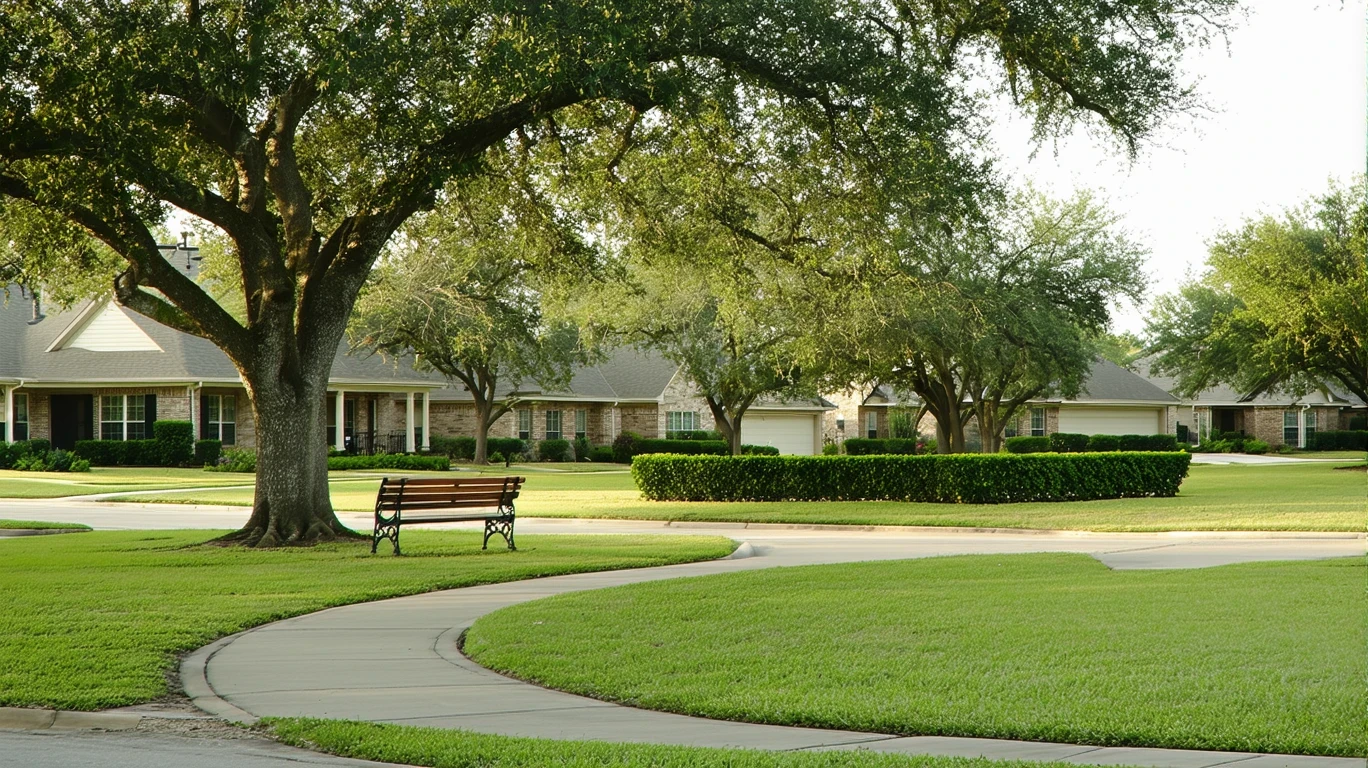
Neither Cedar Park nor Georgetown provides specific tax rate data in the input feed, so this section focuses on structural differences and how taxes and fees behave in each city based on housing costs and typical Texas municipal patterns. Texas has no state income tax, which means property taxes and sales taxes carry the primary revenue burden for cities, school districts, and counties. Both Cedar Park and Georgetown are subject to Texas’s 6.25% state sales tax plus local add-ons, which typically bring the combined rate to around 8.25% in the Austin metro area. This affects all households equally on everyday purchases, but it hits lower-income households harder as a share of total spending because consumption taxes are regressive. Georgetown’s lower median household income means the same sales tax rate represents a larger proportional burden for more households.
Property taxes are where the structural difference becomes more visible. Cedar Park’s median home value of $427,800 is $66,100 higher than Georgetown’s $361,700, which translates directly into higher annual property tax bills for homeowners, assuming similar effective tax rates. Texas property taxes are among the highest in the nation, often ranging from 1.8% to 2.5% of assessed value depending on school district, city, and county levies. A $66,100 difference in home value could mean an additional $1,200 to $1,650 in annual property taxes, or roughly $100 to $140 per month. This is an ongoing cost that doesn’t go away, and it increases over time as home values appreciate and local jurisdictions adjust rates. For long-term homeowners, property tax exposure is one of the most predictable but least controllable costs, and it compounds with every year of ownership. Georgetown’s lower home values reduce this exposure, which may appeal to retirees, fixed-income households, or buyers planning to stay in place for decades.
Fees and assessments also differ based on housing type and neighborhood structure. Cedar Park’s experiential signals suggest mixed land use and denser infrastructure, which may correlate with more HOA-managed communities, especially in newer developments with shared amenities like pools, parks, or landscaping. HOA fees can range from $50 to $300+ per month depending on what’s included, and they represent a fixed cost that doesn’t fluctuate with usage. Georgetown’s lower home values and larger lot sizes may mean fewer HOA-managed neighborhoods and more individual responsibility for yard maintenance, trash service, and utilities. This shifts cost from predictable monthly fees to variable, household-managed expenses—lower if you do the work yourself, higher if you hire out. Renters in both cities typically don’t pay property taxes directly, but they absorb them indirectly through rent, and they may face separate fees for trash, water, or parking depending on lease terms. The fee structure difference matters most for homeowners deciding between predictable HOA bundling and self-managed flexibility.
Taxes and fees takeaway: Cedar Park’s higher home values translate into higher annual property tax exposure for homeowners, which compounds over time and represents an ongoing cost that’s difficult to control. Georgetown’s lower home values reduce property tax burden, which may appeal to long-term residents and fixed-income households. HOA fees and service bundling may be more common in Cedar Park’s denser, mixed-use neighborhoods; Georgetown’s larger lots may offer more self-managed flexibility but require more time and effort. Renters feel tax differences indirectly through rent levels, but they’re more exposed to fee variability depending on lease terms. The decision depends on whether the household prioritizes lower ongoing tax exposure or accepts higher taxes in exchange for denser infrastructure and amenities.
Transportation & Commute Reality
Transportation costs in Cedar Park and Georgetown are shaped less by gas prices—both cities face the same $2.46/gal rate—and more by how daily life is structured around mobility. Cedar Park’s experiential signals show rail transit presence, walkable pockets with high pedestrian-to-road ratios, and some cycling infrastructure in medium-density areas. This doesn’t mean Cedar Park is a car-free city, but it does mean households have options: rail connectivity for commutes into Austin, walkable errands in certain neighborhoods, and the ability to reduce car dependency for some trips. Georgetown lacks experiential signals data, so we can’t make direct infrastructure comparisons, but the absence of rail transit and the lower median income suggest a more car-oriented daily pattern with fewer alternatives for households that want to reduce driving.
Commute patterns matter more than gas prices when evaluating transportation pressure. A household driving 25 miles round trip daily at 25 MPG uses about one gallon per day, or roughly $2.46 at current prices. Over a month, that’s $74 in gas alone, before factoring in maintenance, insurance, or parking. But the real cost isn’t just cash—it’s time. A 30-minute commute each way is 10 hours per week, or 40 hours per month, which is an entire work week spent in the car. Cedar Park’s rail presence means some households can trade driving time for transit time, which may be longer in minutes but allows for reading, working, or resting instead of focusing on traffic. Georgetown’s car dependence means commute time is almost always driving time, which is less flexible and more stressful, especially during peak hours on congested corridors.
For single adults and dual-income couples, the transportation tradeoff is between time cost and cash cost. Cedar Park’s rail and walkable pockets may reduce the need for a second car, which saves on insurance, registration, and maintenance even if gas costs stay similar. Georgetown’s car-oriented structure may require two vehicles for most households, which increases fixed costs but offers more schedule flexibility and faster point-to-point travel. Families managing school drop-offs, extracurricular activities, and grocery runs face higher transportation complexity in both cities, but Cedar Park’s denser infrastructure may reduce the number of trips needed per week. The decision isn’t about which city has cheaper gas—it’s about whether the household values time savings, schedule flexibility, or the ability to reduce car dependency, and which city’s infrastructure supports that priority.
Transportation takeaway: Cedar Park’s rail transit and walkable pockets offer alternatives to car dependency for some households, which may reduce the need for a second vehicle and lower fixed transportation costs. Georgetown’s car-oriented structure requires more driving for most daily needs, which increases time cost and vehicle dependency. Households prioritizing transit access and walkability may find Cedar Park’s infrastructure reduces transportation pressure; those prioritizing schedule flexibility and faster point-to-point travel may prefer Georgetown’s car-oriented patterns. The decision is about time cost versus cash cost, and whether the household’s daily routine benefits from transit alternatives or requires full car dependency.
Cost Structure Comparison
Housing dominates the cost experience in both Cedar Park and Georgetown, but the pressure shows up differently. Cedar Park’s higher median home value and rent create a steeper entry barrier, which matters most for first-time buyers building down payments and renters managing monthly cash flow. Georgetown’s lower housing costs reduce upfront pressure but arrive in a lower-income context, which means the same rent or mortgage payment may feel tighter for households earning $87,465 instead of $118,903. The housing difference isn’t just about price—it’s about what the price buys. Cedar Park’s higher costs reflect rail transit access, walkable pockets, and integrated green space, which reduce transportation time costs and improve daily logistics for households that value those features. Georgetown’s lower costs may reflect more car-oriented infrastructure and larger lot sizes, which appeal to households prioritizing space and willing to manage longer commutes and higher vehicle dependency.
Utilities introduce similar volatility in both cities because they share identical electricity and natural gas rates, but the exposure differs based on home size and age. Cedar Park’s denser, newer housing stock may offer more predictable utility costs for smaller households in apartments and townhomes. Georgetown’s larger, older single-family homes may face higher seasonal swings during the extended cooling season, which matters more for families managing bigger square footage and tighter budgets. The utility difference isn’t about rates—it’s about control and predictability, and whether the household can absorb seasonal spikes or needs more stable monthly bills.
Groceries and daily expenses behave similarly in both cities from a pricing standpoint, but spending patterns differ based on income context and infrastructure. Cedar Park’s higher median income and corridor-clustered food density may support more convenience spending and dining out, which increases daily expenses for households that don’t plan carefully. Georgetown’s lower income baseline may drive more disciplined grocery shopping and home cooking, which reduces convenience spending but increases time cost. The grocery difference isn’t about per-unit prices—it’s about whether the household manages cash cost or time cost, and which one their income and schedule can afford.
Transportation patterns matter more in Cedar Park because the infrastructure offers alternatives, while Georgetown’s car dependency makes transportation a fixed cost for nearly all households. Cedar Park’s rail transit and walkable pockets allow some households to reduce vehicle dependency, which lowers insurance, maintenance, and time costs. Georgetown’s car-oriented structure requires more driving for daily needs, which increases both cash cost and time cost. For households sensitive to commute friction and schedule complexity, the transportation difference is one of the most meaningful cost structure gaps between the two cities.
The better choice depends on which costs dominate the household. Households sensitive to housing entry barriers and willing to trade upfront savings for denser infrastructure may prefer Cedar Park. Those prioritizing lower housing costs and willing to manage car dependency and larger home utility exposure may find Georgetown a better fit. The decision isn’t about which city is cheaper overall—it’s about where cost pressure concentrates, how predictable it is, and whether the household’s income, schedule, and daily routine align with each city’s structure.
How the Same Income Feels in Cedar Park vs Georgetown
Single Adult
For a single adult, housing becomes the first non-negotiable cost, and the $102 monthly rent difference or $66,100 home value gap shapes everything downstream. In Cedar Park, higher rent or mortgage payments leave less room for discretionary spending, but rail transit access and walkable errands in some neighborhoods reduce the need for a second car or frequent long drives. In Georgetown, lower housing costs free up cash flow, but car dependency becomes mandatory, and commute time eats into flexibility for errands, socializing, or side work. The tradeoff is between front-loaded housing pressure with more infrastructure support, or lower housing costs with higher transportation time and vehicle dependency.
Dual-Income Couple
For a dual-income couple, the income gap between the two cities matters more than the housing gap. Cedar Park’s higher median household income suggests more couples earning enough to absorb the steeper rent or mortgage without feeling squeezed, and the rail transit and walkable pockets may allow one partner to reduce driving while the other commutes by car. In Georgetown, lower housing costs help, but the lower income context means fewer couples have the cushion to tolerate convenience spending or unexpected utility spikes. Flexibility exists in Georgetown if both partners are disciplined about grocery planning and home cooking, but it disappears quickly if commute times stretch or vehicle maintenance costs spike.
Family with Kids
For families, non-negotiable costs pile up fast: housing, utilities for a larger home, groceries for multiple people, and transportation for school, activities, and errands. In Cedar Park, higher housing costs are offset partly by strong family infrastructure—dense school and playground access reduces driving time and makes daily logistics more predictable. In Georgetown, lower housing entry costs help with the down payment or monthly rent, but car dependency becomes unavoidable, and managing a larger, older home increases utility volatility during the cooling season. The role of commute friction and errands accessibility becomes critical: Cedar Park’s denser infrastructure reduces trip frequency and time cost, while Georgetown’s car-oriented structure requires more driving and more schedule coordination, which compounds as kids get older and activities multiply.
Decision Matrix: Which City Fits Which Household?
| Decision factor | If you’re sensitive to this… | Cedar Park tends to fit when… | Georgetown tends to fit when… |
|---|---|---|---|
| Housing entry + space needs | You’re managing down payment savings or monthly rent limits | You prioritize infrastructure density and transit access over lower upfront cost | You prioritize lower entry cost and larger lot sizes over walkable infrastructure |
| Transportation dependence + commute friction | You want to reduce car dependency or avoid long daily commutes | You value rail transit and walkable errands enough to pay higher housing costs | You accept full car dependency and prioritize schedule flexibility over transit alternatives |
| Utility variability + home size exposure | You need predictable monthly bills and can’t absorb seasonal spikes | You prefer newer, smaller housing stock with tighter utility control | You’re willing to manage higher cooling exposure in exchange for more interior space |
| Grocery strategy + convenience spending creep | You need to control per-unit grocery costs and avoid impulse dining | You can tolerate corridor-clustered food access and plan weekly trips carefully | You prioritize disciplined grocery planning and home cooking over convenience access |
| Fees + friction costs (HOA, services, upkeep) | You want predictable monthly fees or prefer self-managed flexibility | You accept HOA bundling in exchange for maintained amenities and less self-managed work | You prefer self-managed yard and service costs over fixed HOA fees |
| Time budget (schedule flexibility, errands, logistics) | You need to minimize trip frequency and reduce time spent on daily logistics | You value denser infrastructure that reduces driving time and trip complexity | You prioritize faster point-to-point car travel and accept higher trip frequency |
Lifestyle Fit
Cedar Park and Georgetown offer distinct lifestyle textures that extend beyond cost structure and shape how daily life feels. Cedar Park’s experiential signals show integrated green space access with high park density and water features present, which suggests outdoor recreation is woven into the residential fabric rather than requiring long drives to access. The city’s strong family infrastructure—both schools and playgrounds meeting density thresholds—means families can manage drop-offs, pickups, and weekend activities without excessive driving or complex logistics. Rail transit presence and walkable pockets in parts of the city create opportunities for car-free errands and commutes, which appeals to households prioritizing time savings and reduced vehicle dependency. The low-rise building character and mixed land use suggest a suburban texture with pockets of denser, more urban-feeling neighborhoods where restaurants, shops, and services cluster along corridors.
Georgetown’s lifestyle character is harder to define precisely without experiential signals data, but the lower median home value, larger lot sizes, and absence of rail transit suggest a more traditional suburban pattern: single-family homes on bigger parcels, car-oriented daily routines, and more self-managed outdoor space rather than shared parks. This appeals to households prioritizing privacy, yard space, and the ability to customize their property without HOA restrictions. The lower median household income may correlate with a quieter, less commercially dense environment, which some households prefer for raising kids or enjoying a slower pace. Without walkable pockets or rail connectivity, Georgetown’s lifestyle depends more heavily on driving, which means errands, socializing, and recreation require more planning and time but offer more control over when and where you go.
Both cities face the same climate exposure—triple-digit summer heat, mild winters, and extended air conditioning seasons—but the way households experience that climate differs based on housing stock and outdoor access. Cedar Park’s integrated parks and water features offer more options for outdoor activity during cooler parts of the day, which can reduce reliance on indoor entertainment and lower discretionary spending on paid activities. Georgetown’s larger private yards offer more space for home-based outdoor recreation, but they also require more maintenance and water usage, which adds to ongoing costs and time commitments. For families, Cedar Park’s dense school and playground infrastructure reduces the friction of managing kids’ schedules, while Georgetown’s car-oriented structure may require more driving but offers more space for backyard play and fewer shared-space conflicts.
Cedar Park’s hospital presence and pharmacy access mean healthcare needs can be managed locally without long drives, which matters for families with young kids, aging parents, or chronic conditions requiring frequent appointments. Georgetown’s lower cost of entry may appeal to retirees or empty nesters who prioritize reducing housing expenses and don’t need daily access to dense infrastructure. The lifestyle fit decision isn’t about which city is “better”—it’s about whether the household values infrastructure density, transit alternatives, and integrated outdoor access enough to pay Cedar Park’s higher housing costs, or whether Georgetown’s lower entry barrier, larger lots, and car-oriented flexibility better match their daily priorities and long-term plans.
Frequently Asked Questions
Is Cedar Park or Georgetown more affordable for renters in 2026?
Georgetown’s median gross rent of $1,575 per month is $102 lower than Cedar Park’s $1,677, which translates to $1,224 in annual savings. For renters managing tight monthly budgets, that difference is meaningful and may determine whether they can afford a one-bedroom or need to find roommates. However, Cedar Park’s higher rent reflects access to rail transit, walkable pockets, and corridor-clustered errands, which may reduce transportation costs and time spent driving. Renters who prioritize lower monthly rent and are willing to manage full car dependency may find Georgetown a better fit; those who value transit access and walkable infrastructure may find Cedar Park’s higher rent worth the tradeoff in reduced vehicle costs and commute flexibility.
How do housing costs in Cedar Park compare to Georgetown for first-time buyers in 2026?
Cedar Park’s median home value of $427,800 is $66,100 higher than Georgetown’s $361,700, which affects down payment requirements, mortgage qualification, and ongoing property tax exposure. For first-time buyers saving for a down payment