
Carrollton is considered moderately priced in 2026, with a median home value of $327,300 and median rent of $1,555 per month. The main exposure is housing entry cost balanced against transportation flexibility—rail access and walkable pockets reduce car dependence more than typical Texas suburbs.
Overall Cost of Living Snapshot
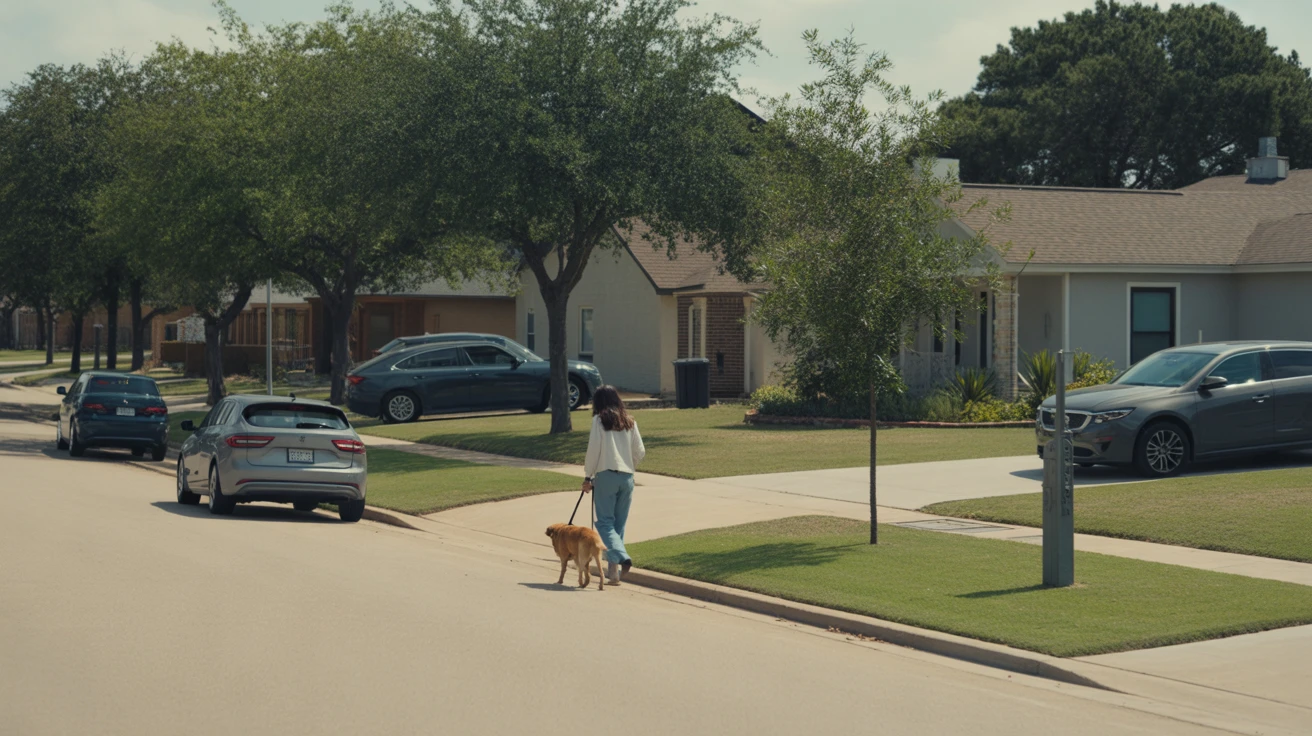
Carrollton sits in the Dallas metro with a regional price parity index of 103, meaning the overall cost structure runs slightly above the national baseline. Housing dominates the expense profile, but the city’s infrastructure creates meaningful cost tradeoffs: rail transit presence, high-density grocery and food access, and integrated park networks reduce the need for constant vehicle use and long errand loops that define many suburban Texas markets.
The unemployment rate stands at 4.1%, and median household income reaches $95,380 per year. Electricity costs 16.11¢/kWh, natural gas runs $30.71/MCF, and gas prices sit at $2.42/gallon. The average commute is 24 minutes, with 36.5% of workers facing long commutes and only 3.1% working from home.
Driver verdict: Housing entry cost is the primary gate, but transportation structure—not transportation price—shapes the ongoing expense load. Surprises come from rail viability, walkable errands infrastructure, and property tax exposure rather than utility volatility or grocery premiums.
Housing Costs (Primary Driver)
At $327,300, the median home value positions Carrollton as accessible compared to many Dallas-area alternatives, but it still requires significant upfront capital and exposes owners to Texas property tax structures, which fund local services without state income tax. Median rent of $1,555 per month offers a lower-barrier entry point, though renters sacrifice equity accumulation and face renewal volatility in a market where landlords can adjust rates annually without the friction of sale transactions.
Ownership makes sense for households planning multi-year stability and able to absorb maintenance, insurance, and tax variability. Renting suits those prioritizing flexibility, testing neighborhood fit, or lacking down-payment reserves. The city functions as both a long-term anchor and a transitional base depending on household trajectory.
| Housing Type | Cost Anchor | What That Buys You |
|---|---|---|
| Median Home Purchase | $327,300 | Equity exposure, tax/maintenance responsibility, neighborhood stability |
| Median Rental | $1,555/month | Flexibility, lower entry barrier, landlord-managed repairs, renewal risk |
Conclusion: Carrollton is a buying city for households with capital and income stability, and a viable renting city for those prioritizing mobility or building savings.
Utilities & Energy Risk
Electricity at 16.11¢/kWh reflects Texas summer cooling dominance—triple-digit heat drives sustained air conditioning loads from June through September, making electricity the primary utility expense for most households. Natural gas at $30.71/MCF (roughly 100 therms) plays a smaller role, relevant mainly for homes with gas heating, water heating, or cooking appliances during the brief heating season.
Utility volatility here is moderate: summer bills spike predictably, but the city’s infrastructure and housing stock don’t introduce the extreme swings seen in older, poorly insulated markets or regions with heating oil dependence. Households can manage exposure through programmable thermostats, attic insulation, and strategic cooling schedules, but the baseline summer load remains unavoidable.
Risk classification: Moderate. Seasonal swings are predictable and manageable, but summer cooling is a non-negotiable recurring cost.
Groceries & Daily Costs
Carrollton benefits from high-density food and grocery infrastructure—stores such as Kroger, Walmart, Aldi, and regional chains create competitive pricing pressure and reduce the need for long drives to access affordable options. The regional price parity of 103 suggests grocery costs run slightly above the national baseline, but the difference is modest and reflects broader Dallas metro pricing rather than Carrollton-specific premiums.
For context, derived estimates suggest bread around $1.89/lb, eggs near $2.79/dozen, and ground beef approximately $6.89/lb, adjusted for regional price parity. These figures are illustrative and reflect national baselines adjusted for local cost structure—not observed Carrollton prices.
Household impact: Families with multiple dependents or specific dietary needs face higher absolute grocery bills, but the city’s infrastructure ensures access without requiring bulk-buying trips to distant warehouse stores. Singles and couples experience lower pressure, with everyday errands manageable on foot or via short drives in many neighborhoods.
Transportation Reality
The average commute of 24 minutes masks significant variation: 36.5% of workers face long commutes, often into Dallas or other metro employment centers, while rail transit presence offers an alternative to solo driving for those near stations. Only 3.1% of residents work from home, meaning most households must budget for commuting costs—whether fuel, vehicle maintenance, or transit fares.
Gas at $2.42/gallon keeps per-mile costs relatively low, but the city’s structure creates a choice rather than a mandate: walkable pockets and rail access mean some households can reduce vehicle dependency, while others in car-oriented sections face the full suburban transportation load. The presence of cycling infrastructure in limited areas adds marginal flexibility but doesn’t replace car ownership for most.
Transportation as recurring exposure: High for households in car-dependent zones with long commutes; moderate for those near rail or within walkable pockets; low only for the small remote-work population. Vehicle count per household directly determines transportation cost intensity.
Cost Exposure Profiles
Carrollton’s cost structure creates distinct exposure patterns based on housing choice, transportation access, and household composition. The city’s infrastructure—rail transit, walkable errands corridors, and integrated parks—means that where people live within Carrollton determines cost pressure as much as income level.
Low-exposure situations: Renters near rail stations with walkable errands access, no vehicle or single-vehicle households, remote workers or short commuters, singles or couples without dependents. These households avoid the compounding costs of car dependency, long commutes, and housing maintenance while benefiting from the city’s accessible daily infrastructure.
High-exposure situations: Homeowners in car-dependent pockets far from rail, multi-vehicle households with long commutes into Dallas, families with school-age children requiring activity transportation, households sensitive to summer utility swings. These profiles face the full suburban cost load—mortgage or rent, property taxes, vehicle operation, and seasonal utility spikes—without the offsetting convenience of transit or walkable errands.
The difference isn’t about who can afford Carrollton, but rather which cost levers dominate daily life. A household earning $95,380 (the city median) experiences Carrollton very differently depending on whether they’re a single renter near a rail stop or a family of four owning a home in a car-only neighborhood. The city’s structure rewards proximity to transit and errands infrastructure, penalizes vehicle dependency, and treats housing entry cost as the primary gate rather than ongoing operational expenses.
Frequently Asked Questions
Is Carrollton more affordable than nearby Dallas in 2026? Carrollton generally offers lower housing entry costs than central Dallas neighborhoods, though it requires greater transportation planning for those commuting into the city core. The tradeoff is space and access to suburban amenities versus urban density and walkability.
What does a typical cost profile look like in Carrollton? Housing dominates, followed by transportation (vehicle operation or transit fares) and utilities during summer cooling months. Groceries and daily errands run slightly above national averages but remain manageable due to competitive retail density.
Do utilities cost more in Carrollton than nearby areas? Electricity rates at 16.11¢/kWh align with regional Texas pricing, and natural gas at $30.71/MCF is typical for the Dallas metro. The main driver is usage intensity during summer heat, not rate premiums.
What costs tend to surprise newcomers in Carrollton? Three stand out: (1) property tax exposure in Texas, which replaces state income tax and can shift annually; (2) the presence of rail transit and walkable pockets, which reduce car dependency more than expected in a suburban context; (3) summer cooling bills, which spike predictably but still catch those unfamiliar with extended triple-digit heat.
Are property taxes higher in Carrollton than nearby suburbs? Texas property taxes fund schools and local services statewide, so rates vary by district and appraisal rather than city boundaries. Carrollton sits within this structure, meaning tax bills depend on home value and local levies rather than a Carrollton-specific premium.
Can you live in Carrollton without a car? It’s possible near rail stations and within walkable pockets where grocery stores, parks, and daily errands are accessible on foot or by bike. Most of the city, however, remains car-dependent for work commutes and household logistics.
How does Carrollton compare to Plano or Irving for cost of living? All three cities share similar regional price structures, with differences emerging in housing stock age, school district funding, and transit access. Carrollton’s rail presence and walkable infrastructure distinguish it from more uniformly car-oriented alternatives.
Is Carrollton a good fit for families on a single income? It depends on housing choice and transportation needs. A single income at or above the city median of $95,380 can support ownership or rental, but families must account for vehicle costs, childcare, and activity transportation, which compound quickly in car-dependent areas.
How this article was built: In addition to public economic data, this article incorporates location-based experiential signals derived from anonymized geographic patterns—such as access density, walkability, and land-use mix—to reflect how day-to-day living actually feels in Carrollton, TX.