
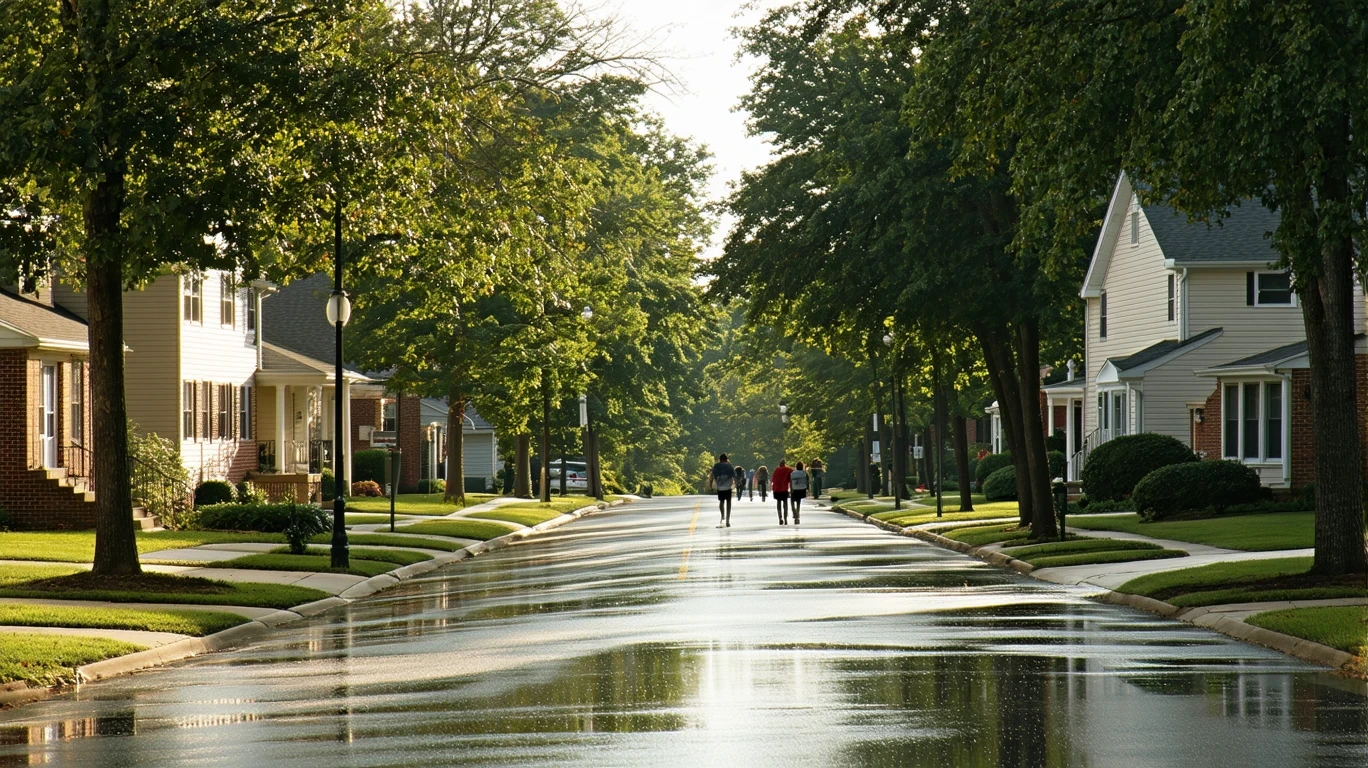
Carmel and Greenwood sit on opposite sides of the Indianapolis metro, and while they share the same utility rates and regional price environment, the way costs show up in daily life differs sharply. Carmel offers walkable pockets, integrated parks, and corridor-clustered errands—infrastructure that reduces car dependency for some households. Greenwood’s commute patterns tell a different story: longer drives, lower work-from-home rates, and transportation friction that becomes a daily cost factor. The decision between these two cities isn’t about which is cheaper overall—it’s about which cost pressures your household can absorb, and which lifestyle structure reduces friction in the areas that matter most to you in 2026.
Housing entry costs differ substantially between the two cities, and that gap shapes everything downstream. Carmel’s median home value sits at $425,900, with median rent at $1,499 per month. Greenwood’s median home value is $226,500, with rent at $1,200 per month. But housing isn’t just about the monthly obligation—it’s about what that obligation buys in terms of commute time, errands logistics, and daily movement patterns. Carmel’s higher housing costs come with pedestrian-to-road ratios that exceed high thresholds and bike infrastructure present throughout parts of the city. Greenwood’s lower entry point comes with a 26-minute average commute and nearly 40% of workers facing long commutes. The tradeoff isn’t just financial—it’s structural.
Median household income also diverges sharply: $132,859 per year in Carmel versus $75,398 per year in Greenwood. But income context doesn’t determine fit—it determines which cost pressures feel manageable and which feel binding. A household earning well above Greenwood’s median might still prefer Carmel’s walkable pockets if transportation time costs matter more than housing savings. A household earning near Carmel’s median might still choose Greenwood if housing entry flexibility and yard space outweigh commute friction. The better choice depends on which costs dominate your household’s daily reality, not which city has lower numbers on paper.
Housing Costs
Carmel’s housing market reflects its infrastructure and location advantages. The median home value of $425,900 represents a substantial entry barrier, but it also buys access to neighborhoods where pedestrian infrastructure density supports walking and cycling for some errands. Median rent at $1,499 per month positions Carmel as a higher-cost option for renters, but that cost comes with proximity to parks that exceed density thresholds and mixed land use that reduces the need for every trip to require a car. For households prioritizing walkability and shorter errands distances, Carmel’s housing premium may reduce transportation exposure enough to offset some of the difference.
Greenwood’s median home value of $226,500 offers a lower entry point, and median rent at $1,200 per month provides more breathing room for households managing tighter budgets. But Greenwood’s housing costs come with different tradeoffs: longer commutes, higher car dependency, and less infrastructure for walking or cycling. For households where housing entry flexibility matters more than daily movement friction, Greenwood’s lower costs create space for other priorities. For families seeking yard space and single-family homes without Carmel’s price tag, Greenwood delivers that structure—but it requires accepting that most daily errands and commutes will happen by car.
| Housing Type | Carmel | Greenwood |
|---|---|---|
| Median Home Value | $425,900 | $226,500 |
| Median Gross Rent | $1,499/month | $1,200/month |
First-time buyers face different barriers in each city. Carmel’s higher home values require larger down payments and higher monthly obligations, but they also buy into neighborhoods where hospital access, schools, and parks are present within shorter distances. Greenwood’s lower home values reduce the entry barrier, but they come with the expectation that commute time and fuel costs will be ongoing obligations. Renters in Carmel pay more per month but may find that walkable pockets reduce transportation costs and time costs enough to matter. Renters in Greenwood pay less per month but should plan for car dependency and longer drives to work, errands, and services.
Housing takeaway: Carmel’s housing costs are front-loaded and ongoing, but they buy infrastructure that reduces transportation friction for households who can absorb the entry barrier. Greenwood’s housing costs are lower and more accessible, but they come with transportation exposure and time costs that become daily obligations. Households sensitive to housing entry barriers and monthly obligations may find Greenwood more flexible. Households sensitive to commute time, car dependency, and errands logistics may find Carmel’s higher housing costs reduce friction in areas that matter more over time.
Utilities and Energy Costs
Both Carmel and Greenwood share the same electricity rate of 17.34¢/kWh and natural gas price of $14.78/MCF, so utility cost differences come down to housing stock, home size, and seasonal exposure rather than rate structure. Carmel’s mixed building height profile and integrated parks suggest a range of housing types, from apartments with lower baseline usage to larger single-family homes with higher cooling and heating loads. Greenwood’s housing stock skews toward single-family homes, which typically carry higher utility exposure due to larger square footage and older construction in some neighborhoods.
Cooling dominates summer utility bills in both cities, and heating drives winter exposure. But the intensity of that exposure depends on home age, insulation quality, and square footage. Newer construction in both cities tends to perform better, but older homes—common in parts of Greenwood—can experience higher heating costs during extended cold stretches. Carmel’s mixed urban form includes both newer developments and established neighborhoods, so utility predictability varies by location. Households in apartments or townhomes face lower baseline usage and more predictable bills. Households in larger single-family homes face higher seasonal swings and more volatility.
Utility cost exposure also varies by household size and daily routines. Single adults in smaller apartments face lower baseline usage and less seasonal volatility. Families in larger homes face higher cooling loads in summer, higher heating loads in winter, and more variability tied to home size and occupancy patterns. Greenwood’s longer commutes mean households spend less time at home during weekdays, which can reduce daytime heating and cooling usage. Carmel’s walkable pockets and shorter errands distances mean households may spend more time at home, which can increase baseline usage but also create more opportunities to manage thermostat settings and reduce waste.
Utility takeaway: Utility rates are identical, so cost differences come down to housing type, home age, and household routines. Carmel’s mixed housing stock creates a range of exposure levels, from predictable apartment bills to higher single-family volatility. Greenwood’s single-family dominance and longer commutes mean higher baseline exposure for most households, but less daytime usage during work hours. Households in newer, smaller homes face more predictable utility costs in both cities. Households in older, larger homes face more volatility, with Greenwood households slightly more exposed due to housing stock age and size.
Groceries and Daily Expenses
Grocery and daily spending pressure differs between Carmel and Greenwood not because of price differences—both cities share the same regional price environment—but because of how access, convenience, and household routines shape spending habits. Carmel’s corridor-clustered food and grocery density means that errands can often be combined or completed on shorter trips, reducing the temptation to rely on convenience spending when time is tight. Greenwood’s longer commutes and car-dependent structure mean that grocery trips often require dedicated time, and convenience spending—grabbing takeout, coffee, or prepared foods—can creep in when schedules feel compressed.
Big-box access exists in both cities, but the friction of getting there differs. Carmel’s mixed land use and walkable pockets mean that some households can access grocery options without long drives, while Greenwood’s structure means that most grocery trips require a car and often involve longer distances. For households managing larger grocery volumes—families with kids, households cooking most meals at home—Greenwood’s lower housing costs may create more budget flexibility for groceries, but the time cost of getting to stores and managing errands can add friction. Carmel’s higher housing costs leave less room for grocery flexibility, but shorter errands distances reduce the time burden.
Dining out and convenience spending also differ by lifestyle structure. Carmel’s corridor-clustered food density and mixed land use mean that restaurants, coffee shops, and takeout options are more accessible, which can increase spending for households who prioritize convenience. Greenwood’s longer commutes and car-dependent structure mean that dining out often requires intentional trips, which can reduce frequency but also concentrate spending when it happens. Single adults and couples in Carmel may find that convenience spending creeps higher due to access and proximity. Families in Greenwood may find that grocery planning and bulk shopping reduce per-unit costs, but time costs and commute friction make convenience spending more appealing when schedules tighten.
Groceries takeaway: Grocery prices don’t differ, but access friction and convenience spending patterns do. Carmel’s corridor-clustered errands accessibility reduces time costs but increases exposure to convenience spending for households who prioritize proximity. Greenwood’s car-dependent structure and longer commutes increase time costs for errands but may reduce convenience spending frequency. Households sensitive to time costs and errands logistics may prefer Carmel’s shorter distances. Households sensitive to convenience spending creep and prioritizing bulk shopping may prefer Greenwood’s structure, as long as they can absorb the time cost of longer trips.
Taxes and Fees
Property taxes, sales taxes, and local fees shape ongoing cost obligations in both cities, but the structure and predictability differ based on housing type and location. Carmel’s higher home values mean higher property tax bills in absolute terms, even if rates are similar, because the tax base is calculated from assessed value. Greenwood’s lower home values reduce the property tax burden, but homeowners should still expect annual increases tied to assessments and local budget needs. For renters, property taxes are embedded in rent, so the difference shows up indirectly—Carmel’s higher rent reflects higher property tax obligations passed through by landlords.
HOA fees and special assessments vary widely within both cities, but Carmel’s newer developments and mixed urban form mean that HOA fees are more common, especially in neighborhoods with shared amenities like pools, parks, or landscaping services. Greenwood’s single-family dominance means fewer HOA obligations in older neighborhoods, but newer subdivisions may carry similar fees. Households planning to stay several years should factor in the predictability of these fees—HOAs in both cities can raise dues annually, and special assessments for major repairs or improvements can create unexpected costs.
Sales taxes and consumption-based fees apply equally across both cities, so differences in tax exposure come down to property taxes and HOA structures rather than daily spending. Homeowners in Carmel face higher property tax bills due to higher home values, but they also benefit from infrastructure and services that those taxes fund—parks, schools, and hospital access. Homeowners in Greenwood face lower property tax bills, but they may also face higher transportation costs and time costs that offset some of the savings. Renters in both cities should assume that property taxes and HOA fees are embedded in rent, so the difference shows up in monthly obligations rather than as a separate line item.
Taxes and fees takeaway: Carmel’s higher home values drive higher property tax bills, and HOA fees are more common in newer developments. Greenwood’s lower home values reduce property tax exposure, but HOA fees still apply in newer subdivisions. Homeowners planning to stay long-term should factor in annual property tax increases and potential HOA assessments in both cities. Renters should assume that property taxes are embedded in rent, so Carmel’s higher rent reflects higher tax obligations passed through by landlords. Households sensitive to ongoing tax exposure may prefer Greenwood’s lower property tax base, but they should weigh that against higher transportation costs and time costs that come with longer commutes.
Transportation & Commute Reality
Transportation costs and commute friction differ sharply between Carmel and Greenwood, and those differences shape daily routines and household time budgets as much as they shape financial exposure. Greenwood’s average commute time sits at 26 minutes, with 39.1% of workers facing long commutes and only 6.1% working from home. That structure means most households depend on cars for daily commutes, and fuel costs, maintenance, and time costs become ongoing obligations. Gas prices in Greenwood average $2.77 per gallon, slightly lower than Carmel’s $2.83 per gallon, but the difference is marginal compared to the time and distance costs of longer commutes.
Carmel’s commute data isn’t available, but the city’s experiential signals tell a different story about daily movement. Pedestrian-to-road ratios exceed high thresholds, and bike-to-road ratios also exceed high thresholds, meaning that some households can reduce car dependency for errands, short trips, and even parts of their commute. Walkable pockets and corridor-clustered food and grocery density mean that daily errands don’t always require a car, which reduces fuel costs, wear and tear, and time spent driving. For households where one or both adults work from home or have flexible schedules, Carmel’s infrastructure reduces transportation friction in ways that Greenwood’s car-dependent structure cannot match.
Transit options in both cities are limited, so most households should plan for car ownership and the costs that come with it—insurance, registration, maintenance, and fuel. But the intensity of car dependency differs. Greenwood’s longer commutes and lower work-from-home rates mean that cars are essential for nearly every trip, and households should budget for higher annual mileage and more frequent maintenance. Carmel’s walkable pockets and bike infrastructure mean that some households can reduce car dependency for errands and short trips, which lowers annual mileage and reduces wear and tear. For households with two working adults, Greenwood’s commute structure may require two cars, while Carmel’s infrastructure may allow some households to manage with one car for longer trips and rely on walking or cycling for shorter errands.
Transportation takeaway: Greenwood’s longer commutes and car-dependent structure create ongoing transportation costs and time costs that affect daily routines and household schedules. Carmel’s walkable pockets and bike infrastructure reduce car dependency for some trips, which lowers fuel costs and time costs for households who can take advantage of that structure. Households sensitive to commute time and transportation friction may prefer Carmel’s infrastructure, even if housing costs are higher. Households prioritizing lower housing entry costs and willing to absorb longer commutes may prefer Greenwood, but they should plan for higher transportation exposure and time costs that become daily obligations.
Cost Structure Comparison
Housing dominates the cost experience in Carmel, with median home values and rent substantially higher than Greenwood. But that housing premium buys infrastructure that reduces friction in other areas—walkable pockets, integrated parks, corridor-clustered errands, and hospital access that shortens distances for daily needs. Greenwood’s lower housing costs create more entry flexibility and ongoing budget room, but they come with transportation friction and time costs that become daily obligations. For households where housing entry barriers matter most, Greenwood offers more breathing room. For households where daily movement friction and time costs matter most, Carmel’s higher housing costs may reduce exposure in areas that compound over time.
Utilities introduce similar exposure in both cities due to identical rates, but housing stock and home size shape how that exposure feels. Carmel’s mixed building height profile means some households face lower baseline usage in apartments or townhomes, while others face higher seasonal swings in larger single-family homes. Greenwood’s single-family dominance means most households face higher baseline usage and more seasonal volatility, especially in older homes. For households in newer, smaller homes, utility predictability is similar in both cities. For households in older, larger homes, Greenwood’s housing stock age and size create slightly more exposure.
Transportation patterns matter more in Greenwood, where longer commutes and car dependency create ongoing costs and time costs that affect daily routines. Carmel’s walkable pockets and bike infrastructure reduce transportation friction for some households, which lowers fuel costs, annual mileage, and time spent driving. For households with flexible schedules or work-from-home arrangements, Carmel’s infrastructure reduces transportation exposure in ways that Greenwood’s car-dependent structure cannot match. For households with traditional commutes and two working adults, Greenwood’s longer drives and lower work-from-home rates create transportation friction that becomes a daily cost factor.
Groceries and daily spending pressure differs not because of price differences, but because of how access and convenience shape spending habits. Carmel’s corridor-clustered errands accessibility reduces time costs for grocery trips but increases exposure to convenience spending due to proximity. Greenwood’s car-dependent structure increases time costs for errands but may reduce convenience spending frequency. For households sensitive to time costs and errands logistics, Carmel’s shorter distances reduce friction. For households sensitive to convenience spending creep and prioritizing bulk shopping, Greenwood’s structure may reduce frequency of convenience purchases, as long as they can absorb the time cost of longer trips.
The better choice depends on which costs dominate your household. Households sensitive to housing entry barriers and monthly obligations may prefer Greenwood’s lower costs and more flexible entry point. Households sensitive to commute time, transportation friction, and errands logistics may prefer Carmel’s infrastructure, even if housing costs are higher. Households prioritizing predictability and lower baseline exposure may prefer Carmel’s mixed housing stock and walkable pockets. Households prioritizing yard space and single-family homes may prefer Greenwood’s lower entry costs, as long as they can absorb the transportation time costs and car dependency that come with that structure.
How the Same Income Feels in Carmel vs Greenwood
Single Adult
In Carmel, housing becomes the non-negotiable cost first, with rent at $1,499 per month consuming a larger share of gross income. Flexibility exists in transportation, where walkable pockets and bike infrastructure reduce the need for a car for some errands, lowering fuel and maintenance exposure. In Greenwood, housing costs leave more room at $1,200 per month, but transportation becomes less flexible—car ownership and longer commutes create ongoing obligations that compress time and budget. The tradeoff is front-loaded housing pressure versus ongoing transportation friction.
Dual-Income Couple
In Carmel, housing costs remain the dominant pressure, but dual incomes create more room to absorb the higher rent or mortgage while taking advantage of shorter errands distances and reduced car dependency for one partner. Flexibility exists in daily routines, where walkable pockets and corridor-clustered errands reduce time costs and allow more control over convenience spending. In Greenwood, housing costs are more predictable and lower, but transportation friction increases—two working adults often mean two cars, longer commutes, and less time flexibility for errands. The tradeoff is higher housing costs with more infrastructure versus lower housing costs with more transportation exposure.
Family with Kids
In Carmel, housing costs dominate the budget, with median home values requiring substantial down payments and higher monthly obligations. Flexibility exists in daily logistics—integrated parks, schools within moderate density, and shorter errands distances reduce time costs for managing family routines. In Greenwood, housing costs are lower and more accessible, creating room for yard space and single-family homes, but transportation friction becomes a daily reality—school drop-offs, errands, and activities require longer drives and more car dependency. The tradeoff is higher housing costs with infrastructure that reduces daily friction versus lower housing costs with transportation and time costs that become ongoing obligations.
Decision Matrix: Which City Fits Which Household?
| Decision factor | If you’re sensitive to this… | Carmel tends to fit when… | Greenwood tends to fit when… |
|---|---|---|---|
| Housing entry + space needs | Down payment size, monthly obligation, yard space | You can absorb higher entry costs in exchange for walkable infrastructure and shorter errands distances | You prioritize lower entry barriers and yard space over proximity and walkability |
| Transportation dependence + commute friction | Commute time, car dependency, fuel costs, annual mileage | You value shorter errands distances, walkable pockets, and bike infrastructure that reduce car dependency for some trips | You can absorb longer commutes and higher car dependency in exchange for lower housing costs |
| Utility variability + home size exposure | Seasonal swings, baseline usage, home age, square footage | You prefer mixed housing stock with options for lower baseline usage in apartments or townhomes | You prioritize single-family homes and yard space, accepting higher baseline usage and seasonal volatility |
| Grocery strategy + convenience spending creep | Time costs for errands, convenience spending, bulk shopping | You value shorter errands distances and corridor-clustered access, even if proximity increases convenience spending exposure | You prefer bulk shopping and intentional grocery trips, accepting longer distances and time costs to reduce convenience spending frequency |
| Fees + friction costs (HOA, services, upkeep) | Property taxes, HOA dues, special assessments, predictability | You can absorb higher property taxes and more common HOA fees in exchange for infrastructure and services those fees fund | You prioritize lower property tax exposure and fewer HOA obligations, accepting that some infrastructure and services may be less accessible |
| Time budget (schedule flexibility, errands, logistics) | Commute time, errands logistics, daily movement friction | You value shorter distances, walkable pockets, and infrastructure that reduces time costs for daily routines | You can absorb longer commutes and car-dependent errands logistics in exchange for lower housing costs and more yard space |
Lifestyle Fit
Carmel’s lifestyle structure reflects its infrastructure: walkable pockets, integrated parks, and corridor-clustered errands create a rhythm where daily movement doesn’t always require a car. Pedestrian-to-road ratios exceed high thresholds, and bike-to-road ratios also exceed high thresholds, meaning that some households can walk or cycle for errands, short trips, and recreation. Park density exceeds high thresholds, and water features are present, creating outdoor access that’s woven into the city’s structure. Hospital access is present, along with pharmacies, which shortens distances for healthcare needs. For households prioritizing walkability, park access, and shorter errands distances, Carmel’s infrastructure reduces daily friction in ways that shape routines and time budgets.
Greenwood’s lifestyle structure reflects its commute patterns and car-dependent design. Average commute times sit at 26 minutes, with nearly 40% of workers facing long commutes and only 6.1% working from home. That structure means most households depend on cars for daily routines, and errands, activities, and services require intentional trips. For households prioritizing yard space, single-family homes, and lower housing entry costs, Greenwood delivers that structure—but it requires accepting that daily movement will be car-dependent and that time costs for commutes and errands will be ongoing obligations. For families seeking space and lower housing pressure, Greenwood’s structure fits, as long as transportation friction and time costs are manageable.
Recreation and outdoor access differ between the two cities. Carmel’s integrated parks and water features create outdoor options that are accessible within shorter distances, which reduces the need for long drives to reach green space. Greenwood’s outdoor access exists, but it often requires more intentional trips and longer distances. For households where outdoor access and park proximity matter for daily routines—dog walking, kids’ play, weekend recreation—Carmel’s infrastructure reduces friction. For households where outdoor access is more occasional and yard space at home matters more, Greenwood’s lower housing costs create room for private outdoor space without requiring proximity to public parks.
Carmel’s median household income sits at $132,859 per year, reflecting the higher housing costs and infrastructure that shape the city’s lifestyle structure. Greenwood’s median household income sits at $75,398 per year, reflecting the lower housing entry costs and car-dependent structure that define daily routines.
Frequently Asked Questions
Is Carmel or Greenwood cheaper for renters in 2026?
Greenwood’s median rent sits at $1,200 per month, compared to Carmel’s $1,499 per month, so Greenwood offers lower monthly housing costs for renters. But the difference isn’t just about rent—it’s about what that rent buys in terms of commute time, errands logistics, and daily movement friction. Carmel’s higher rent comes with walkable pockets, corridor-clustered errands, and integrated parks that reduce car dependency for some trips. Greenwood’s lower rent comes with longer commutes, higher car dependency, and more time costs for errands. Renters sensitive to monthly housing obligations may prefer Greenwood’s lower rent, but renters sensitive to transportation time costs and errands friction may find Carmel’s infrastructure reduces exposure in areas that matter more over time.
How do commute costs differ between Carmel and Greenwood in 2026?
Greenwood’s average commute time sits at 26 minutes, with 39.1% of workers facing long commutes and only 6.1% working from home, meaning most households depend on cars for daily commutes. Carmel’s commute data isn’t available, but the city’s walkable pockets and bike infrastructure suggest that some households can reduce car dependency for errands and short trips, which lowers fuel costs and annual mileage. Gas prices differ slightly—$2.77 per gallon in Greenwood versus $2.83 per gallon in Carmel—but the difference is marginal compared to the time and distance costs of longer commutes. Households sensitive to commute time and transportation friction may prefer Carmel’s infrastructure, even if housing costs are higher. Households prioritizing lower housing costs and willing to absorb longer commutes may prefer Greenwood, but they should plan for higher transportation exposure and time costs.
Which city is better for families with kids, Carmel or Greenwood, in 2026?
Carmel’s higher housing costs create a steeper entry barrier, but the city’s infrastructure—integrated parks, schools within moderate density, and shorter errands distances—reduces daily friction for managing family routines. Greenwood’s lower housing costs create more room for yard space and single-family homes, but transportation friction becomes a daily reality—school drop-offs, errands, and activities require longer drives and more car dependency. Families prioritizing walkability, park access, and shorter errands distances may prefer Carmel’s infrastructure, even if housing costs are higher. Families prioritizing yard space, lower housing entry costs, and single-family homes may prefer Greenwood, as long as they can absorb the transportation time costs and car dependency that come with that structure.
Do utility costs differ between Carmel and Greenwood in 2026?
Utility rates are identical in both cities—17.34¢/kWh for electricity and $14.78/MCF for natural gas—so cost differences come down to housing stock, home size, and seasonal exposure rather than rate structure. Carmel’s mixed building height profile means some households face lower baseline usage in apartments or townhomes, while others face higher seasonal swings in larger single-family homes. Greenwood’s single-family dominance means most households face higher baseline usage and more seasonal volatility, especially in older homes. Households in newer, smaller homes face similar utility predictability in both cities. Households in older, larger homes face slightly more exposure in Greenwood due to housing stock age and size.