
‘We moved to Canton for the schools, but stayed for the neighbors.’ That sentiment captures much of what defines life here—a place where the initial draw is often practical, but the emotional anchor becomes something quieter and more relational. Canton sits in the Detroit metro with a clear suburban identity, strong family infrastructure, and a vibe that rewards planning over spontaneity. It’s not a city that dazzles newcomers with walkable charm or nightlife energy, but it delivers reliability, space, and a sense of order that certain households find deeply satisfying.
Understanding whether Canton feels like a good fit requires looking past the surface amenities and into the emotional tradeoffs that shape daily life here. This is a place where people tend to feel content when their priorities align with what the city offers—and restless when they don’t.
The Emotional Landscape of Canton
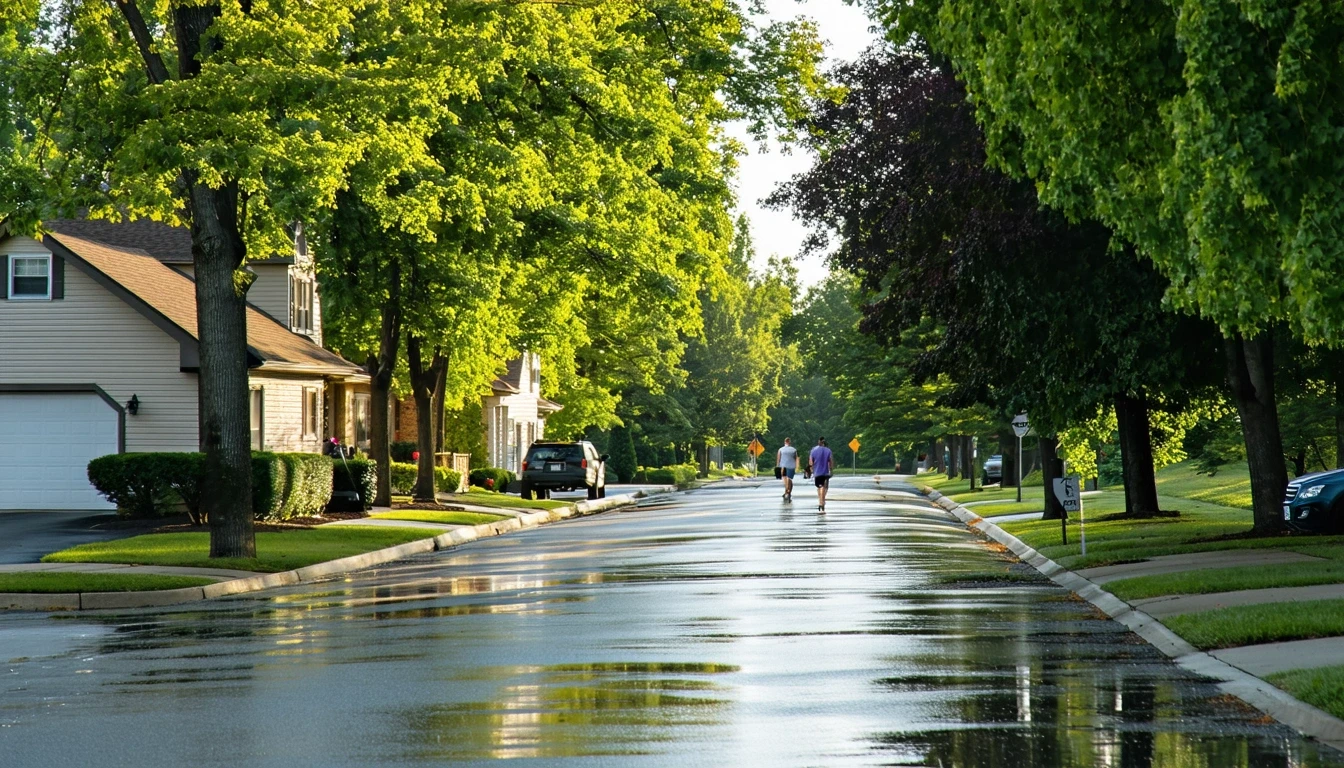
Canton’s vibe is rooted in suburban comfort with pockets of walkability that surprise newcomers. The city has invested in pedestrian infrastructure in certain areas, creating neighborhoods where sidewalks, parks, and schools feel accessible without a car. But beyond those pockets, the structure shifts back to car dependency, with grocery stores and services clustered along commercial corridors rather than woven into residential blocks.
This creates a split experience. Families living near well-connected sidewalks and parks often describe a sense of ease—kids can bike to friends’ houses, evening walks feel safe and pleasant, and the rhythm of daily life has a neighborhood texture. But for those in less connected areas, or for individuals who crave the ability to walk out the door and stumble into a coffee shop or bookstore, Canton can feel like it requires too much planning and too many car trips.
The city’s family orientation is unmistakable. Schools and playgrounds are plentiful, and the infrastructure that supports children—safe streets, recreational programs, community events—is strong. For parents, this often translates into emotional relief: the logistics of raising kids here feel manageable. But for young professionals, empty nesters, or remote workers seeking variety and third-place social spaces, Canton can feel a bit too quiet, a bit too sameness-oriented.
What People Talk About Online
Public discussion in Canton tends to circle around a few recurring themes: schools, traffic along Ford Road, the balance between growth and maintaining a suburban feel, and comparisons to nearby communities. On local social media and neighborhood platforms, the tone is often protective—residents value what they have and worry about losing it to overdevelopment or congestion.
“It’s not flashy, but it works. Good schools, safe streets, and you’re close to everything without being in the middle of it all.”
“I miss being able to walk to more places. Everything requires a drive, and the corridors get backed up during rush hour.”
“We looked at Northville and Plymouth, but Canton gave us more house for the money and the same access to good districts.”
The emotional undertone is pragmatic rather than passionate. People appreciate Canton for what it delivers—space, safety, solid public services—but few describe it as a place that sparks joy or surprise. The complaints tend to focus on monotony, traffic friction during peak times, and a sense that the city is still figuring out its identity as it grows.
How Local Coverage Frames the City
Local news and community coverage in Canton tends to focus on steady, incremental change rather than dramatic transformation. The tone is civic-minded, with an emphasis on infrastructure improvements, school district updates, and community programming. Headlines and story themes often reflect the tension between growth and preservation:
- “Community Debates What Growth Should Look Like”
- “New Retail and Dining Options Arrive Along Major Corridors”
- “Residents Weigh Convenience vs Quiet”
- “Parks and Trails Expansion Continues”
- “School District Investments Draw Attention from Families”
The framing is rarely alarmist or celebratory—it’s informational, focused on helping residents navigate change and understand what’s coming. This mirrors the city’s overall emotional tone: measured, forward-looking, but cautious about losing what makes it feel stable.
Review-Based Public Perception
On platforms like Google Reviews, Yelp, and Nextdoor-style forums, Canton earns steady praise from families and professionals who value predictability. The recurring positives include well-maintained parks, responsive local services, and a sense of safety that parents especially appreciate. The hospital presence also shows up in reviews as a point of reassurance—having access to emergency and routine care locally reduces anxiety for families and older residents.
But the critiques are consistent, too. People who moved from more walkable or culturally dense areas often describe Canton as “sterile” or “lacking personality.” The corridor-clustered errands structure means that running out for one item still requires a deliberate trip, and the dining and entertainment options skew toward chains rather than independent spots with character.
“Great for raising kids, but not much to do if you’re looking for nightlife or interesting local spots.”
“Everything is clean and safe, but it all looks the same after a while.”
“We love the parks and the school quality, but I do miss being able to walk to a coffee shop or bakery.”
Neighborhood variation exists but is often described in broad terms—newer planned developments feel more uniform and amenity-rich, while older pockets have more established trees and slightly more varied architecture. Neither extreme dominates the city’s character; instead, Canton sits comfortably in the middle, offering suburban reliability without much edge or surprise.
Comparison to Nearby Cities
| Dimension | Canton | Plymouth | Westland |
|---|---|---|---|
| Overall Vibe | Suburban, family-focused, steady | Walkable downtown, historic charm, pricier | Working-class, affordable, less polished |
| Walkability Feel | Pockets of walkability, mostly car-dependent | Strong downtown walkability, neighborhood texture | Car-dependent throughout |
| Dining & Nightlife | Chain-heavy, limited local flavor | Independent restaurants, evening activity | Budget-friendly chains, quieter evenings |
| Family Appeal | High—strong schools and parks | High—but housing costs more | Moderate—fewer amenities, more affordable |
| Emotional Tone | Reliable, predictable, a bit quiet | Charming, engaged, community-proud | Practical, no-frills, grounded |
Canton occupies a middle position in the metro’s suburban landscape. It offers more space and affordability than Plymouth, with similar school quality and family infrastructure, but less walkable charm and fewer independent businesses. Compared to Westland, Canton feels more polished and amenity-rich, with higher household incomes and more investment in parks and public spaces. For families prioritizing schools and safety over walkability and nightlife, Canton often wins. For young professionals or empty nesters seeking texture and spontaneity, Plymouth’s downtown or even Ann Arbor’s broader metro pull may feel more aligned.
What Locals Are Saying
“We moved here from Ann Arbor when we had kids. It’s quieter, more affordable, and the schools are solid. I do miss the walkability and the coffee shop culture, but that’s the tradeoff.”
“Canton is exactly what we needed—safe, clean, and close enough to Detroit for work without feeling urban. It’s not exciting, but that’s kind of the point.”
“I work remotely and honestly feel a bit isolated. There aren’t many third places to work from, and everything requires getting in the car. It’s fine, but I’m starting to crave more variety.”
“The parks here are fantastic. We’re at the playground or trails almost every weekend. For families, it’s hard to beat.”
“Traffic on Ford Road during rush hour is brutal. If you’re commuting or running errands at peak times, plan for delays.”
“It’s a great starter home area. We got more space than we could afford in Plymouth, and the neighborhood feels safe. But I can see us wanting something with more character eventually.”
“I’ve been here for 20 years and watched it grow. It’s lost some of the small-town feel, but the city has done a decent job keeping up with infrastructure and services.”
Does Canton Feel Like a Good Fit?
Canton works best for people whose priorities align with what it offers: family-friendly infrastructure, suburban predictability, and access to the Detroit metro without urban intensity. It tends to satisfy households who value planning over spontaneity, who appreciate safety and space, and who don’t mind driving to access most services. The walkable pockets provide relief for those lucky enough to live near them, but they’re not the city’s defining feature.
Canton tends to frustrate people seeking walkable texture throughout their daily lives, those craving independent dining and nightlife options, and remote workers or young professionals looking for third-place variety and social serendipity. It’s not a city that surprises you or pulls you into unexpected moments—it’s a city that delivers what it promises, reliably and without much flair.
If you’re trying to decide whether Canton fits your life, the question isn’t whether it’s “happy” or “good”—it’s whether the tradeoffs it requires match the rewards it offers. For families with children, commuters seeking suburban comfort, and households prioritizing housing tradeoffs that favor space over walkability, Canton often feels like a smart, stable choice. For those who need more texture, variety, or pedestrian freedom, the city may feel a bit too quiet, a bit too planned, and a bit too dependent on the car.
Understanding where money goes and how lifestyle needs shape daily satisfaction can help clarify whether Canton’s structure supports or strains your household’s rhythm.
How this article was built: In addition to public economic data, this article incorporates location-based experiential signals derived from anonymized geographic patterns—such as access density, walkability, and land-use mix—to reflect how day-to-day living actually feels in Canton, MI.
The perspectives shown reflect commonly expressed local sentiment and recurring themes in public discussion, rather than individual accounts.