
Is Canton expensive to live in? Canton is considered moderately priced in 2026, with a median home value of $329,900 and rent at $1,381 per month. The value proposition depends on housing entry cost versus car dependence and how well your household can navigate corridor-clustered errands.
Overall Cost of Living Snapshot
Canton sits just below the national price baseline, with a regional price parity index of 98, meaning the overall cost structure runs slightly lower than the U.S. average. That said, the shape of costs here is defined by three pressure points: housing entry, transportation dependence, and seasonal utility swings. Housing anchors the budget for most households, whether renting or buying, but it’s the combination of car ownership and winter heating exposure that separates low-cost situations from high-cost ones.
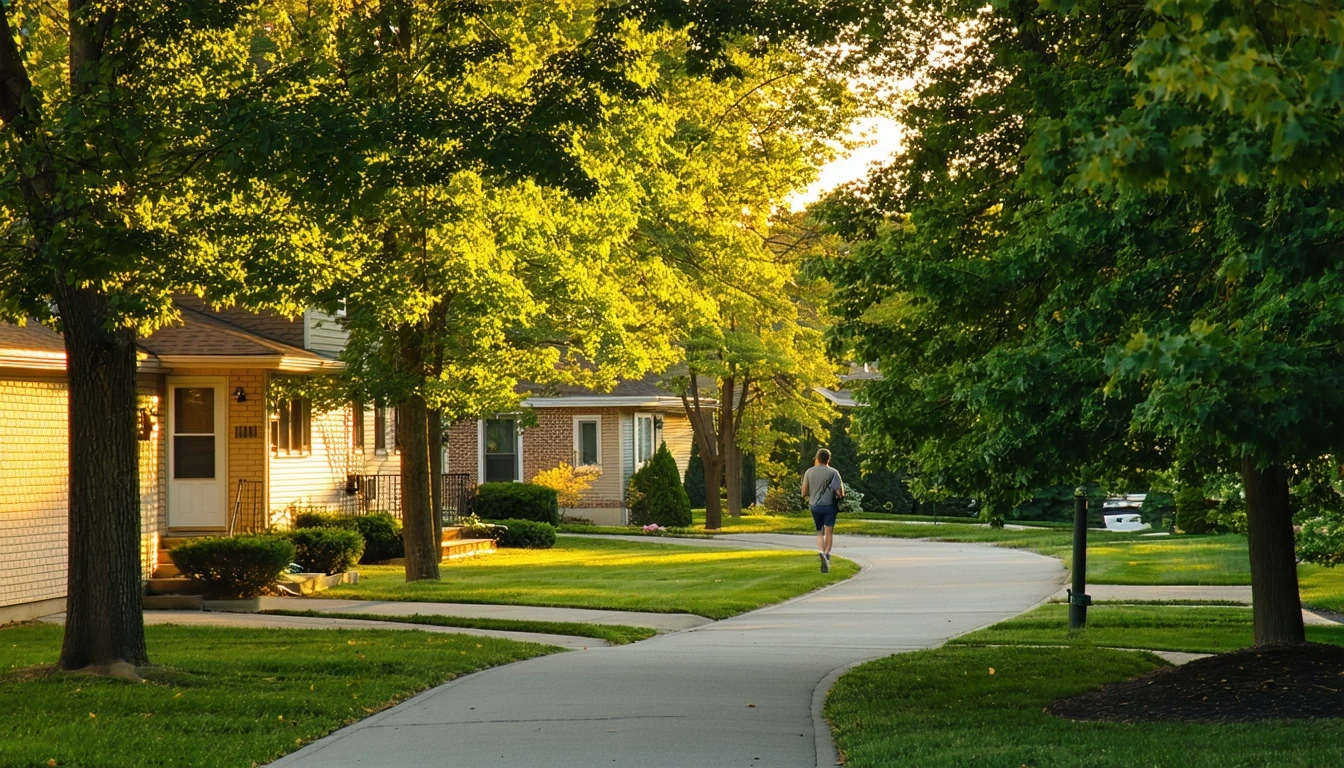
The city’s infrastructure creates a split experience. Walkable pockets exist, and pedestrian-to-road ratios exceed typical suburban thresholds, but food and grocery density remains corridor-clustered rather than broadly accessible. That means errands require planning in most areas, and car ownership remains non-negotiable for the majority of households. Family infrastructure is strong—schools and playgrounds meet density thresholds across the board—and a hospital is present, reducing healthcare logistics friction. But the convenience you gain in one dimension (family amenities, healthcare access) you lose in another (daily errands, transit viability).
Driver verdict: Housing entry cost dominates the budget, but transportation dependence and utility seasonality create the biggest surprises. The city rewards households that can lock in stable housing costs and minimize vehicle expenses.
Housing Costs (Primary Driver)
Housing is the single largest cost anchor in Canton. The median home value of $329,900 reflects a market that favors buyers with stable income and down payment capacity, while the median gross rent of $1,381 per month offers a viable alternative for households not ready to commit to ownership. The rental market here is not a fallback—it’s a legitimate long-term option, especially for households prioritizing flexibility or avoiding maintenance exposure.
Ownership brings predictability in monthly payments (assuming a fixed-rate mortgage) but introduces exposure to property taxes, insurance, and maintenance—all of which escalate over time. Renting caps that exposure but leaves you vulnerable to lease renewals and rent adjustments. The tradeoff is not about affordability in the abstract; it’s about which risks you’re willing to manage. Buyers gain equity and stability. Renters gain mobility and lower upfront costs.
Canton functions as a buying-oriented city with a strong rental option. The housing stock reflects mixed building heights and mixed land use, meaning you’ll find both single-family neighborhoods and denser residential pockets. That diversity supports different household types, but it also means finding a place that matches your logistics needs (walkability, school access, commute tolerance) requires intentional research.
| Housing Type | Cost Anchor | What That Buys You |
|---|---|---|
| Median Home Value | $329,900 | Ownership stability, equity build, maintenance exposure, tax/insurance escalation |
| Median Gross Rent | $1,381/month | Flexibility, capped maintenance risk, renewal exposure, no equity |
Utilities & Energy Risk
Utility costs in Canton are shaped by Michigan’s long heating season and the city’s electricity and natural gas pricing. Electricity runs at 19.94¢ per kWh, which sits near the national midpoint, while natural gas is priced at $11.89 per MCF (roughly equivalent to 100 therms). Winter heating dominates utility exposure here—current temperatures of 14°F (feels like 1°F) illustrate the kind of cold that drives sustained gas usage from November through March.
Summer cooling exists but doesn’t approach the intensity or duration of winter heating. Air conditioning runs intermittently, while furnaces run daily for months. That asymmetry means households with poor insulation, older HVAC systems, or larger square footage face disproportionate winter bills. Gas price volatility adds another layer of risk—prices can swing year-over-year based on supply conditions, and there’s no easy way to hedge that exposure beyond efficiency upgrades or usage reduction.
Risk classification: moderate. Utility costs won’t dominate your budget in the same way housing does, but winter heating creates a recurring seasonal spike that catches newcomers off guard. Households in older homes or those unfamiliar with extended cold-weather exposure should budget conservatively for heating months.
Groceries & Daily Costs
Grocery costs in Canton reflect the regional price parity index of 98, meaning food prices run slightly below the national baseline. Derived estimates suggest bread around $1.80 per pound, ground beef at $6.55 per pound, and eggs at $2.66 per dozen, though these figures are modeled rather than observed and should be treated as directional context rather than guarantees.
The bigger factor isn’t price—it’s access. Food and grocery density in Canton is corridor-clustered, meaning stores concentrate along main roads rather than distributing evenly across neighborhoods. That structure works fine if you live near a commercial corridor or don’t mind driving, but it adds friction for households trying to run quick errands on foot or by bike. The pedestrian infrastructure exists in pockets, but the grocery network doesn’t align with it consistently.
For most households, grocery shopping becomes a planned trip rather than a spontaneous errand. That’s not a cost problem—it’s a logistics problem. But logistics problems consume time, and time has a cost, especially for dual-income households or families managing school and work schedules.
Transportation Reality
Transportation in Canton is car-dependent for the majority of households, despite the presence of walkable pockets and moderate pedestrian infrastructure. The city’s structure—corridor-clustered errands, mixed land use in limited areas, and a lack of rail transit—means most daily trips require a vehicle. Gas prices currently sit at $2.95 per gallon, which is manageable in isolation but compounds quickly when you factor in commuting, errands, and household logistics.
The Detroit metro area is a commuter region, and while specific commute data for Canton isn’t available in the feed, the city’s role as a suburban hub means many residents travel to nearby employment centers. That creates recurring transportation exposure: fuel, maintenance, insurance, and depreciation all stack up over time. Households with two vehicles face double that exposure.
Cycling infrastructure exists in some pockets, and bike-to-road ratios fall in the medium band, but that infrastructure doesn’t substitute for car ownership—it supplements it. You might bike to a park or around your neighborhood, but you’re not biking to the grocery store or your job in most cases. Getting around here means owning a reliable vehicle and budgeting for the ongoing costs that come with it.
Cost Exposure Profiles
Cost exposure in Canton varies significantly based on housing tenure, vehicle count, and household logistics. The city doesn’t have a single “typical” cost profile—it has multiple profiles shaped by how well your situation aligns with the city’s infrastructure.
Low-exposure situations: Households that own their home with a fixed mortgage, live near a commercial corridor, work locally or remotely, and operate one fuel-efficient vehicle face the lowest cost pressure. Their housing costs are predictable, their transportation exposure is minimized, and their errands don’t require extensive driving. Utility seasonality remains a factor, but efficiency measures and stable usage patterns keep that exposure manageable.
High-exposure situations: Renters facing lease renewals, households with long commutes, families operating two or more vehicles, and those living in older homes with poor insulation face compounding cost pressure. Rent adjustments introduce housing volatility, commuting amplifies fuel and maintenance costs, and inefficient heating systems turn winter into a financial stress test. These households don’t just pay more—they face more unpredictability.
The difference isn’t about income sufficiency—it’s about structural alignment. Canton rewards households that can lock in stable housing, minimize vehicle dependence, and manage seasonal utility swings. It penalizes those who can’t.
Frequently Asked Questions
Is Canton more affordable than Detroit in 2026? Canton’s housing costs run higher than Detroit’s urban core, but the tradeoff comes in the form of family infrastructure, lower crime exposure, and access to suburban amenities. The cost structure favors stability over affordability.
What does a typical cost profile look like in Canton? Most households face moderate housing costs (either mortgage or rent around $1,400–$1,800), significant transportation exposure due to car dependence, and seasonal utility spikes during winter heating months. The profile is suburban and car-oriented.
Do utilities cost more in Canton than in nearby cities? Utility rates in Canton are comparable to the broader Detroit metro area, but the intensity of winter heating creates higher seasonal bills than you’d see in milder climates. Gas price volatility adds unpredictability.
What costs tend to surprise newcomers in Canton? Three things catch people off guard: the non-negotiable need for a car despite walkable pockets, the size of winter heating bills in older homes, and the ongoing costs of vehicle ownership (insurance, maintenance, depreciation) that stack up quickly.
Are property taxes higher in Canton than in Ann Arbor? Property tax structures vary by municipality and assessment practices, but Canton’s median home value of $329,900 is lower than Ann Arbor’s, which typically results in lower absolute tax bills. However, rates and millages differ, so direct comparison requires local tax data.
Is Canton a good place for renters long-term? Yes. The rental market here is viable for long-term tenants, with median gross rent at $1,381 per month. Renters gain flexibility and avoid maintenance exposure, though they remain vulnerable to lease renewal adjustments.
How much does car ownership add to monthly costs in Canton? Car ownership introduces recurring expenses beyond fuel—insurance, maintenance, registration, and depreciation all compound over time. For most households, transportation becomes the second-largest cost category after housing, especially if you’re operating multiple vehicles.
Does Canton’s cost structure favor families or singles? Canton’s strong family infrastructure (schools, playgrounds, hospital access) and housing stock favor families, but singles and couples can find value here if they prioritize space, stability, and suburban amenities over urban density and walkability.
How this article was built: In addition to public economic data, this article incorporates location-based experiential signals derived from anonymized geographic patterns—such as access density, walkability, and land-use mix—to reflect how day-to-day living actually feels in Canton, MI.
—