
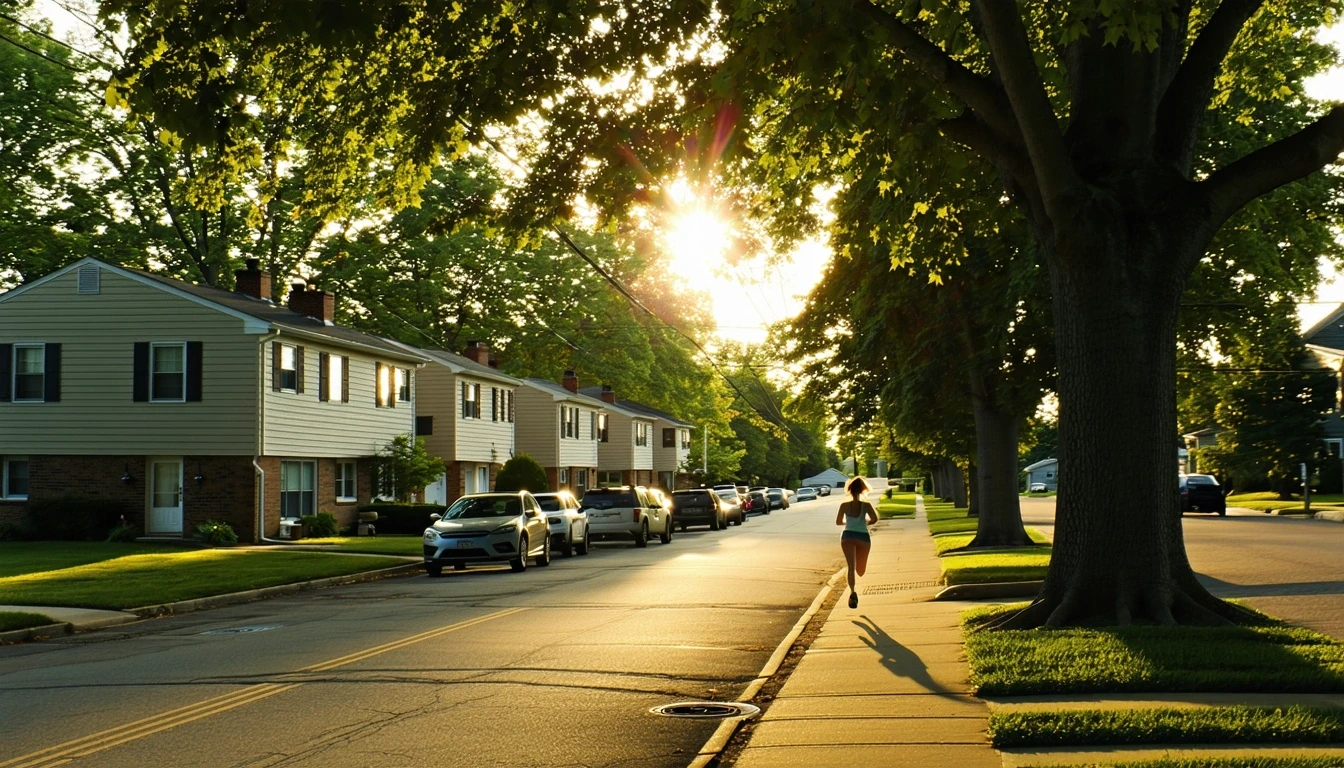
Canton and Ann Arbor sit just 15 miles apart in southeastern Michigan, both part of the Detroit metro area, yet they offer distinctly different cost structures and lifestyle tradeoffs. Canton draws families and professionals seeking suburban space with strong schools and hospital access, while Ann Arbor attracts households prioritizing walkability, transit options, and the cultural energy of a college town. The decision between them in 2026 isn’t about which city costs less overall—it’s about understanding where cost pressure concentrates, which expenses dominate your household budget, and how different infrastructure shapes your day-to-day spending patterns.
Both cities share the same regional price environment and weather patterns, but their housing markets, transportation infrastructure, and daily living friction differ substantially. Canton’s median home value of $329,900 and median rent of $1,381 per month create a lower entry barrier compared to Ann Arbor’s $416,500 median home value and $1,472 median rent. Yet housing cost is only one piece of the puzzle. Canton’s car-dependent layout and corridor-clustered errands create different ongoing expenses than Ann Arbor’s rail transit, notable bike infrastructure, and broadly accessible grocery and service options. For households sensitive to upfront housing costs, Canton offers more breathing room at entry. For those who value reducing car dependency and trip frequency, Ann Arbor’s infrastructure can offset its higher housing barrier over time.
The choice between Canton and Ann Arbor depends on which costs your household can absorb most easily and which lifestyle frictions matter most. Families prioritizing space, hospital access, and a higher median income environment may find Canton’s structure more predictable. Singles, couples, or students who value transit access, integrated parks, and walkable errands may find Ann Arbor’s higher housing cost worthwhile for the reduction in transportation dependence and daily logistics friction. This article breaks down how housing, utilities, groceries, transportation, taxes, and lifestyle factors create different cost experiences in each city—without declaring a universal winner.
Housing Costs
Housing represents the largest single cost difference between Canton and Ann Arbor, and it shows up most clearly at the entry point. Ann Arbor’s median home value sits nearly $87,000 higher than Canton’s, creating a substantially larger down payment requirement and monthly mortgage obligation for buyers. For renters, the gap is smaller but still meaningful—Ann Arbor’s median rent runs about $91 more per month than Canton’s. These differences reflect both market demand and housing stock composition: Ann Arbor’s college city status and walkable neighborhoods command premium pricing, while Canton’s suburban layout and larger lot sizes offer more space per dollar at entry.
The housing cost difference affects households differently depending on their stage of life and flexibility. First-time buyers in Canton face a lower barrier to ownership, which matters significantly for households trying to lock in predictable housing costs and build equity. Ann Arbor’s higher entry cost can delay ownership or push buyers toward smaller homes, condos, or properties farther from downtown. For renters, the monthly difference between the two cities is less dramatic, but Ann Arbor’s rental market also experiences more competition from students and university-affiliated households, which can tighten availability during peak leasing seasons. Canton’s rental market tends to attract families and professionals seeking more space, with less seasonal volatility.
Beyond the entry cost, ongoing housing expenses also differ in character. Canton’s suburban housing stock skews toward single-family homes on larger lots, which means higher property tax bills, more maintenance exposure, and greater utility usage due to home size. Ann Arbor’s mix includes more condos, townhomes, and smaller single-family properties, which can reduce maintenance and utility obligations but may introduce HOA fees or shared-cost structures. Families prioritizing yard space, garage storage, and room to grow often find Canton’s housing structure more aligned with their needs, even if it requires more upkeep. Households prioritizing lower maintenance, walkable access, and smaller footprints may find Ann Arbor’s housing mix more practical, despite the higher entry price.
| Housing Type | Canton | Ann Arbor |
|---|---|---|
| Median Home Value | $329,900 | $416,500 |
| Median Gross Rent | $1,381/month | $1,472/month |
| Typical Housing Form | Single-family suburban homes, larger lots | Mix of single-family, condos, townhomes, walkable neighborhoods |
Housing takeaway: Canton offers a lower entry barrier for both renters and buyers, which matters most for households prioritizing space, predictability, and family-oriented layouts. Ann Arbor front-loads significantly more housing cost, but its mix of property types and walkable access can reduce ongoing transportation and logistics friction. First-time buyers and families with space needs tend to find Canton’s structure more accessible. Singles, couples, and households willing to trade square footage for location flexibility may find Ann Arbor’s higher housing cost justified by reduced car dependency and daily convenience.
Utilities and Energy Costs
Utility costs in Canton and Ann Arbor are shaped more by housing size, age, and household behavior than by rate differences. Canton’s electricity rate sits at 19.94¢ per kWh, while Ann Arbor’s rate is slightly higher at 20.46¢ per kWh—a difference that matters less than the size and efficiency of the home you’re heating, cooling, and powering. Both cities experience Michigan’s cold winters and warm, humid summers, which means heating dominates utility bills from November through March, while air conditioning drives costs in July and August. Natural gas prices are identical across both cities at $11.89 per MCF, reflecting their shared regional energy infrastructure.
The bigger driver of utility exposure is housing form. Canton’s suburban housing stock skews toward larger single-family homes built across several decades, with older properties often lacking modern insulation, efficient HVAC systems, or updated windows. Heating a 2,000-square-foot home with older construction in Canton can create substantial winter bills, especially during extended cold snaps. Ann Arbor’s housing mix includes more condos, townhomes, and newer construction in walkable neighborhoods, which often means smaller conditioned square footage and shared-wall insulation benefits. However, Ann Arbor also has older housing stock near downtown and the university, where heating costs can spike in poorly insulated units.
Household size and occupancy patterns also shape utility predictability. Families in Canton with multiple occupants, larger homes, and higher baseline usage face more volatility during extreme weather months. Single adults or couples in Ann Arbor’s smaller units experience lower baseline usage but may still see seasonal spikes if their building’s heating system is inefficient or if they’re responsible for their own gas bills. Renters in both cities should clarify whether utilities are included in rent or billed separately, as this shifts both predictability and control. Homeowners in both cities can reduce exposure through weatherization, programmable thermostats, and insulation upgrades, but the payoff timeline depends on how long they plan to stay and how extreme their current usage is.
Utility takeaway: Utility cost differences between Canton and Ann Arbor are driven more by housing size, age, and household occupancy than by rate variations. Canton’s larger suburban homes create higher baseline usage and more seasonal volatility, especially for families. Ann Arbor’s smaller units and shared-wall housing can reduce exposure, but older properties near downtown still experience heating spikes. Households in newer construction or smaller footprints face more predictable utility costs in both cities. Those in older, larger homes should expect winter heating to dominate their annual utility budget, regardless of location.
Groceries and Daily Expenses
Grocery and daily spending pressure in Canton and Ann Arbor reflects differences in access density, store competition, and household shopping habits more than raw price differences. Both cities share the same regional price environment, with a Regional Price Parity index of 98, meaning costs track slightly below the national baseline. However, the structure of errands and convenience spending differs meaningfully. Canton’s food and grocery options are concentrated along commercial corridors, requiring intentional car trips and trip-chaining to minimize drive time. Ann Arbor’s broadly accessible errands mean more households can walk, bike, or make quick stops without committing to a full shopping expedition, which reduces friction but can also increase frequency of smaller, convenience-driven purchases.
For households that plan weekly grocery runs and buy in bulk, Canton’s corridor-clustered layout works well—big-box stores, discount grocers, and chain supermarkets are accessible by car, and parking is rarely an issue. Families managing larger grocery volumes, meal planning for multiple people, and stocking pantries tend to find Canton’s car-oriented shopping structure efficient. Ann Arbor’s walkable errands and integrated grocery access favor households that shop more frequently in smaller trips, value proximity over bulk savings, and prioritize reducing car dependency. Singles and couples who cook at home but don’t need to stock a large household often find Ann Arbor’s neighborhood grocery access more convenient, even if per-trip costs are slightly higher due to smaller package sizes or specialty store pricing.
Dining out and convenience spending also differ in character. Ann Arbor’s college city culture supports a denser concentration of cafes, restaurants, and takeout options, which increases the temptation for frequent small purchases—coffee runs, lunch out, casual dinners. Canton’s dining options are more spread out and car-dependent, which naturally limits impulse spending but requires more planning for meals away from home. Households sensitive to lifestyle creep and convenience spending may find Canton’s layout easier to control, while those who value spontaneous access to dining and social spaces may prefer Ann Arbor’s walkable restaurant density despite the higher frequency of small purchases.
Groceries takeaway: Canton’s corridor-clustered grocery access works best for households that plan trips, buy in bulk, and prioritize car-based efficiency. Ann Arbor’s broadly accessible errands reduce friction for frequent, smaller shopping trips and favor households that value walkability and proximity over bulk savings. Families managing larger grocery volumes tend to find Canton’s structure more cost-effective. Singles and couples who shop more often in smaller trips may find Ann Arbor’s access more convenient, though convenience spending on dining and takeout can add up faster in a walkable college town environment.
Taxes and Fees

Property taxes, local fees, and recurring municipal charges shape ongoing cost obligations differently in Canton and Ann Arbor, though specific rate data isn’t available in the current feed. Both cities rely on property taxes to fund schools, infrastructure, and services, but the assessed value of your home directly determines your annual tax bill. Ann Arbor’s higher median home values mean homeowners face larger absolute property tax obligations, even if millage rates are similar. Canton’s lower median home values reduce the baseline property tax burden, which matters significantly for households trying to keep fixed housing costs predictable over time.
Beyond property taxes, both cities impose local fees for services like water, sewer, and trash collection, though the structure and predictability of these fees can vary. Canton’s suburban layout often means larger lot sizes and more infrastructure to maintain per household, which can translate to higher water and sewer fees for single-family homeowners. Ann Arbor’s denser neighborhoods and mixed housing types may bundle some services into HOA fees for condo or townhome residents, shifting the cost structure from variable usage-based fees to fixed monthly assessments. Renters in both cities are often shielded from direct property tax exposure, but landlords typically pass these costs through in rent pricing, so the difference still affects affordability indirectly.
Homeowners planning to stay several years should consider how property tax obligations interact with home value appreciation. Ann Arbor’s higher entry cost and stronger demand from university-affiliated buyers can drive faster appreciation, which increases assessed value and property tax bills over time. Canton’s more stable suburban market may see slower appreciation, keeping property tax growth more predictable. Households planning to move within a few years may prioritize lower entry costs and tax exposure in Canton. Those planning to stay long-term may accept Ann Arbor’s higher taxes if they expect home value growth to offset the ongoing obligation.
Taxes and fees takeaway: Ann Arbor’s higher home values create larger absolute property tax obligations, even if rates are comparable. Canton’s lower median home values reduce baseline tax exposure, which matters most for households prioritizing predictable fixed costs. Homeowners in Ann Arbor face more front-loaded tax pressure but may benefit from stronger appreciation over time. Renters in both cities experience tax differences indirectly through rent pricing. Households planning to stay long-term should weigh tax predictability against potential home value growth when choosing between the two cities.
Transportation and Commute Reality
Transportation costs and commute friction differ substantially between Canton and Ann Arbor, driven primarily by infrastructure rather than fuel prices. Ann Arbor’s rail transit service and notable bike infrastructure create viable alternatives to car ownership for some households, particularly those living near transit corridors or working downtown. Canton’s walkable pockets and some bike infrastructure exist, but the absence of rail transit and corridor-clustered errands mean most households depend on cars for daily logistics. Ann Arbor’s gas price of $2.70 per gallon runs slightly lower than Canton’s $2.95 per gallon, but the real cost difference comes from how often you need to drive, not what you pay at the pump.
Ann Arbor’s average commute time sits at 25 minutes, reflecting a mix of local jobs, university employment, and regional commuters. The presence of rail transit and bike infrastructure means some households can reduce or eliminate car commuting entirely, which lowers not just fuel costs but also insurance, maintenance, parking fees, and vehicle depreciation. Canton’s lack of transit data in the current feed suggests fewer non-car options, and its suburban layout means most errands, work trips, and social activities require driving. Households in Canton should budget for full car ownership, including registration, insurance, routine maintenance, and the time cost of trip-chaining errands across dispersed commercial corridors.
The transportation difference matters most for households sensitive to time flexibility and logistics friction. Singles and couples in Ann Arbor who work near transit lines or bike to campus can avoid car ownership entirely, which eliminates a major fixed cost category. Families in Canton with multiple drivers, school drop-offs, and activity schedules face higher baseline transportation costs but benefit from easier parking, less congestion, and more predictable drive times for planned trips. Households that value spontaneous mobility and reduced car dependency will find Ann Arbor’s infrastructure more aligned with that priority. Those who prefer suburban driving patterns and don’t mind car reliance will find Canton’s layout more practical, even if it requires more frequent trips.
Transportation takeaway: Ann Arbor’s rail transit and notable bike infrastructure allow some households to reduce or eliminate car dependency, which lowers fixed transportation costs and daily friction. Canton’s car-dependent layout requires full vehicle ownership for most households, with higher baseline costs for insurance, maintenance, and fuel despite slightly higher gas prices in Ann Arbor. Households prioritizing non-car mobility and reduced logistics friction will find Ann Arbor’s infrastructure more valuable. Those comfortable with suburban driving patterns and trip-chaining errands will find Canton’s layout more predictable, even if it requires more frequent car use.
Cost Structure Comparison
Housing dominates the cost structure difference between Canton and Ann Arbor, but the gap shows up differently depending on whether you’re renting or buying. Ann Arbor’s higher median home value creates a substantially larger down payment requirement and monthly mortgage obligation, which matters most for first-time buyers or households with limited savings. Canton’s lower entry barrier allows more households to lock in predictable housing costs sooner, though ongoing maintenance and property size can increase long-term obligations. For renters, the monthly difference is smaller, but Ann Arbor’s rental market experiences more seasonal competition from students, which can tighten availability and push prices higher during peak leasing periods.
Utilities introduce more volatility in Canton due to larger suburban homes and older housing stock, while Ann Arbor’s smaller units and shared-wall construction can reduce baseline usage. However, both cities experience the same Michigan winters and humid summers, so heating and cooling exposure depends more on home size, age, and efficiency than on location. Families in larger homes should expect winter heating to dominate their utility budget in both cities, while singles and couples in smaller units face more predictable year-round costs.
Transportation patterns create the most meaningful ongoing cost difference after housing. Ann Arbor’s rail transit and bike infrastructure allow some households to reduce or eliminate car ownership, which removes a major fixed cost category. Canton’s car-dependent layout requires full vehicle ownership for most households, with higher baseline costs for insurance, maintenance, and fuel. The transportation difference compounds over time—households in Ann Arbor who avoid car ownership save not just on fuel, but on depreciation, parking, and time spent maintaining a vehicle. Those in Canton who rely on cars face predictable but unavoidable ongoing costs tied to suburban driving patterns.
Daily errands and grocery access differ in friction rather than price. Canton’s corridor-clustered layout works well for households that plan trips and buy in bulk, but it requires intentional trip-chaining and car dependency. Ann Arbor’s broadly accessible errands reduce friction for frequent, smaller shopping trips and favor walkability, though convenience spending on dining and takeout can add up faster in a college town environment. Households sensitive to lifestyle creep may find Canton’s layout easier to control, while those who value spontaneous access to services and dining may prefer Ann Arbor’s walkable density.
The better choice depends on which costs dominate your household and which frictions you’re most sensitive to. Households prioritizing lower housing entry costs, predictable suburban layouts, and car-based efficiency will find Canton’s structure more aligned with their needs. Those willing to absorb higher upfront housing costs in exchange for reduced car dependency, walkable errands, and integrated transit access will find Ann Arbor’s infrastructure more valuable over time. The decision isn’t about which city costs less overall—it’s about which cost structure fits your household’s income flexibility, lifestyle priorities, and tolerance for different types of friction.
How the Same Income Feels in Canton vs Ann Arbor
Single Adult
For a single adult, housing becomes the first non-negotiable cost, and Ann Arbor’s higher rent or mortgage payment absorbs a larger share of income upfront. Flexibility exists in transportation—Ann Arbor’s rail transit and bike infrastructure can eliminate car ownership entirely, which offsets some housing pressure. Canton requires full car ownership, which adds fixed costs for insurance, maintenance, and fuel, but the lower housing entry cost creates more breathing room in the monthly budget. The role of commute friction differs: Ann Arbor allows more spontaneous mobility and walkable errands, while Canton requires more intentional trip planning and car dependency, which adds time cost even when cash cost is lower.
Dual-Income Couple
For a dual-income couple, housing still dominates, but the ability to split costs makes Ann Arbor’s higher entry barrier more manageable. Flexibility exists in dining and convenience spending—Ann Arbor’s walkable restaurant density increases temptation for frequent small purchases, while Canton’s car-dependent layout naturally limits impulse spending. Transportation becomes more complex: if both partners work near transit lines in Ann Arbor, they can avoid a second car, which reduces fixed costs significantly. In Canton, most couples need two vehicles, which doubles insurance, maintenance, and parking obligations. The time cost of errands differs: Ann Arbor’s broadly accessible groceries and services reduce trip frequency, while Canton’s corridor-clustered layout requires more trip-chaining and planning.
Family with Kids
For families, housing space becomes non-negotiable first, and Canton’s lower entry cost for larger single-family homes creates more room for kids, storage, and yard space. Flexibility disappears in transportation—families in Canton need at least one car, often two, to manage school drop-offs, activities, and errands. Ann Arbor’s higher housing cost can push families toward smaller homes or condos, which reduces space but may lower utility and maintenance exposure. The role of commute friction and logistics becomes critical: Canton’s car-dependent layout requires more time spent driving kids to activities and chaining errands, while Ann Arbor’s integrated parks and walkable schools can reduce daily trip frequency. Grocery spending becomes more predictable in Canton’s bulk-shopping layout, while Ann Arbor’s walkable access increases convenience but also the frequency of smaller, less-planned purchases.
Decision Matrix: Which City Fits Which Household?
| Decision Factor | If You’re Sensitive to This… | Canton Tends to Fit When… | Ann Arbor Tends to Fit When… |
|---|---|---|---|
| Housing entry + space needs | Down payment size, monthly mortgage or rent, square footage per dollar | You prioritize lower entry cost, larger homes, and predictable suburban layouts | You’re willing to absorb higher upfront cost for walkable location and smaller footprint |
| Transportation dependence + commute friction | Car ownership costs, trip frequency, time spent driving, parking availability | You’re comfortable with full car dependency and prefer suburban driving patterns | You value reducing or eliminating car ownership through transit and bike infrastructure |
| Utility variability + home size exposure | Seasonal heating and cooling spikes, baseline usage, maintenance control | You accept higher utility volatility in exchange for more space and yard access | You prefer smaller conditioned square footage and shared-wall insulation benefits |
| Grocery strategy + convenience spending creep | Trip frequency, bulk buying, impulse dining and takeout, walkable access | You plan trips, buy in bulk, and prefer car-based shopping efficiency | You value frequent small trips, walkable errands, and spontaneous dining access |
| Fees + friction costs (HOA, services, upkeep) | Property taxes, water/sewer fees, HOA assessments, maintenance predictability | You prefer lower baseline property taxes and direct control over maintenance | You’re willing to accept higher property taxes or HOA fees for bundled services |
| Time budget (schedule flexibility, errands, logistics) | Trip-chaining burden, school drop-offs, activity schedules, spontaneous mobility | You have flexibility to plan trips and don’t mind car-based logistics coordination | You value reducing trip frequency and time spent coordinating household errands |
Lifestyle Fit
Canton and Ann Arbor offer distinctly different lifestyle textures that indirectly shape cost patterns and daily friction. Canton’s suburban character draws families and professionals seeking space, strong schools, and a quieter pace. The city’s strong family infrastructure—with both schools and playgrounds meeting density thresholds—supports households with kids, while the presence of a hospital adds practical convenience for medical needs. Walkable pockets exist throughout Canton, meaning some neighborhoods support pedestrian activity, but the overall layout still requires car ownership for most daily tasks. Parks and water features provide outdoor access, though the density sits in the moderate range rather than fully integrated into every neighborhood.
Ann Arbor’s college city energy creates a different cost and lifestyle equation. The presence of rail transit and notable bike infrastructure throughout the city means households near transit corridors or campus can genuinely reduce car dependency, which lowers both fixed transportation costs and daily logistics friction. Integrated park access and broadly accessible errands mean more households can walk to groceries, services, and green space without planning dedicated trips. The city’s cultural amenities—live music, independent bookstores, cafes, and university events—create more opportunities for spontaneous spending, which can add up for households sensitive to lifestyle creep. However, the same walkable density that increases convenience spending also reduces the time cost of errands and social activities, which matters for households juggling tight schedules.
The lifestyle difference affects costs indirectly but meaningfully. Canton’s car-dependent layout and larger homes increase baseline transportation and utility costs, but the suburban structure also limits impulse spending and provides more space for families to spread out. Ann Arbor’s walkable density and transit access reduce transportation costs for some households, but the college town culture and restaurant density increase temptation for frequent small purchases. Families prioritizing yard space, hospital access, and predictable suburban routines will find Canton’s lifestyle more aligned with their needs. Singles, couples, and students who value spontaneous mobility, cultural amenities, and reduced car dependency will find Ann Arbor’s lifestyle worth the higher housing cost and convenience spending risk.
Canton median household income: $113,609 per year (gross) Ann Arbor median household income: $78,546 per year (gross)
Canton unemployment rate: 5.5% Ann Arbor unemployment rate: 3.8%
Frequently Asked Questions
Is Canton or Ann Arbor cheaper for renters in 2026?
Canton’s median rent sits at $1,381 per month, while Ann Arbor’s median rent is $1,472 per month—a difference of about $91 monthly. However, the cost difference extends beyond rent: Canton requires full car ownership for most renters, which adds insurance, maintenance, and fuel costs. Ann Arbor’s rail transit and bike infrastructure allow some renters to reduce or eliminate car dependency, which can offset the higher rent for households living near transit corridors. Renters prioritizing lower upfront housing costs will find Canton more accessible, while those who value walkability and reduced transportation friction may find Ann Arbor’s higher rent justified by lower car-related expenses.
How do grocery costs compare between Canton and Ann Arbor in 2026?
Both cities share the same regional price environment, so raw grocery prices track similarly. The difference lies in access structure and shopping habits. Canton’s corridor-clustered grocery options work well for households that plan weekly trips and buy in bulk, requiring intentional car-based shopping. Ann Arbor’s broadly accessible errands mean more households can walk or bike to groceries, which reduces trip friction but can increase the frequency of smaller, convenience-driven purchases. Families managing larger grocery volumes tend to find Canton’s car-oriented layout more efficient, while singles and couples who shop more frequently in smaller trips may prefer Ann Arbor’s walkable access, even if convenience spending on dining and takeout adds up faster.
Which city is better for families with kids, Canton or Ann Arbor, in 2026?
Both cities show strong family infrastructure, with schools and playgrounds meeting density thresholds. Canton offers lower housing entry costs, larger single-family homes, and hospital access, which matters for families prioritizing space and medical convenience. Ann Arbor’s higher housing cost can push families toward smaller homes or condos, but the city’s integrated parks, walkable schools, and rail transit can reduce daily logistics friction and trip frequency. Families who value yard space, predictable suburban layouts, and lower upfront costs will find Canton more aligned with their needs. Those willing to trade square footage for walkable access, transit options, and cultural amenities may find Ann Arbor’s higher housing cost worthwhile for the reduction in car dependency and daily errands friction.
Can you live in Ann Arbor without a car in 2026?
Yes, some households in Ann Arbor can reduce or eliminate car ownership due to the city’s rail transit service and notable bike infrastructure. Singles, couples, or students living near transit corridors or campus, and working locally, can rely on transit, biking, and walkable errands for most daily needs. However, households with kids, multiple activity schedules, or jobs outside transit-accessible areas will still need a car. Canton’s lack of rail transit and corridor-clustered errands mean most households require full car ownership regardless of lifestyle. Ann