
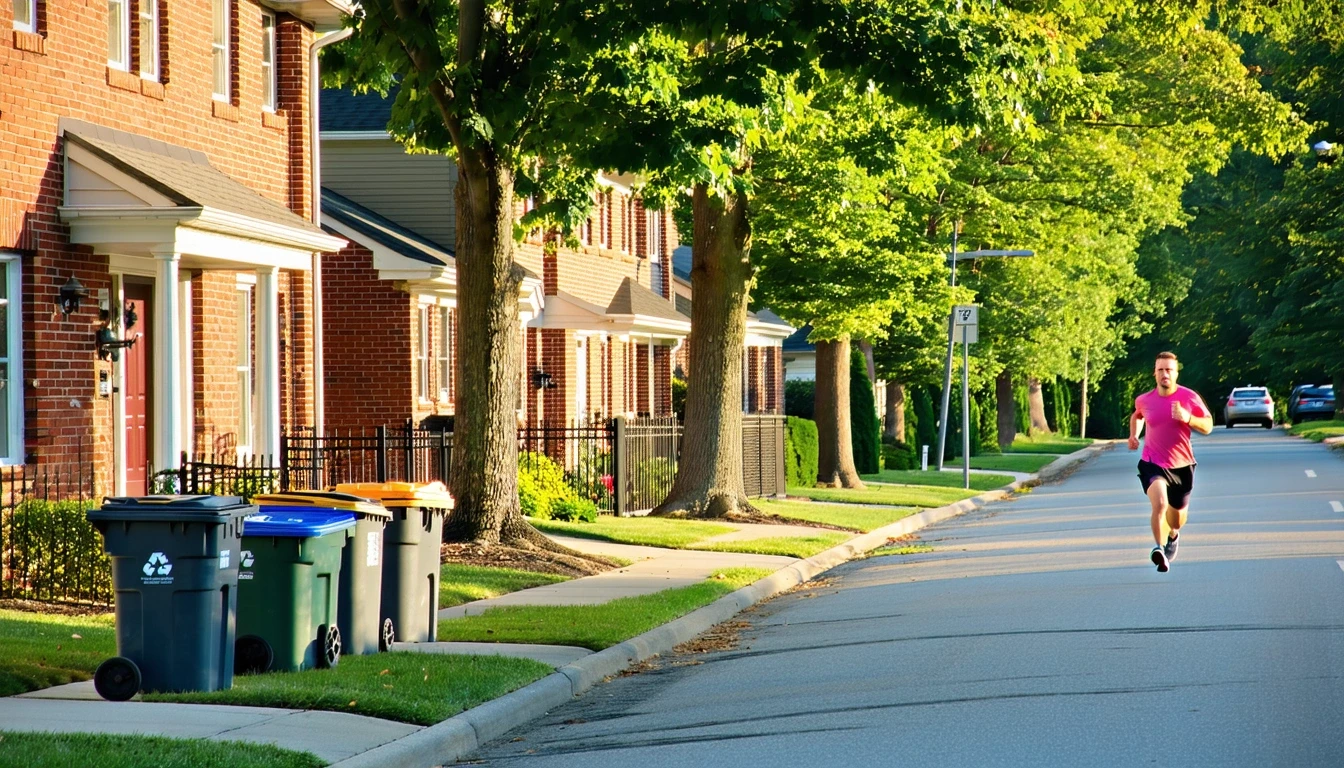
—
Canal Winchester vs Dublin: housing entry at $271,900 vs $478,400. Rent: $1,525 vs $1,541—nearly identical. Commute: both 30 minutes average. Utilities: same rates, same metro. The difference? Where cost pressure concentrates, how families navigate daily logistics, and what households trade housing savings for in access and infrastructure.
Both cities sit in the Columbus metro area, share the same regional price environment, and face similar commute realities. But the decision between Canal Winchester and Dublin in 2026 isn’t about which costs less overall—it’s about which cost structure fits the household making the choice. Families prioritizing space and school infrastructure face different tradeoffs than dual-income professionals prioritizing predictability and convenience. The same gross income feels different depending on where housing costs land, how errands flow, and what daily friction looks like.
This comparison explains where cost pressure shows up in each city, how household logistics differ, and which households feel those differences most acutely. No universal winner—just structural realities that matter differently depending on what drives your budget and your day.
Housing Costs
The most visible difference between Canal Winchester and Dublin appears at the point of purchase. Canal Winchester’s median home value sits at $271,900, while Dublin’s reaches $478,400—a substantial gap that shapes who can enter the ownership market and what ongoing obligations follow. For buyers, this isn’t just about monthly payments; it’s about down payment requirements, closing costs, property tax baselines, and insurance premiums that scale with home value. Households stretching to enter Dublin’s market face front-loaded costs that consume savings and reduce flexibility for years.
Rental markets tell a different story. Canal Winchester’s median gross rent stands at $1,525 per month, while Dublin’s reaches $1,541—a gap so narrow it disappears into normal market variation. Renters in both cities face nearly identical baseline obligations, meaning the housing decision for non-owners hinges less on cost and more on unit availability, neighborhood fit, and proximity to work or schools. For renters, the two cities function as near-substitutes within the same metro rental pool.
The housing stock in Canal Winchester reflects a low-rise, mixed-use character with both residential and commercial land use present. This suggests a range of single-family homes and smaller multifamily buildings, typical of outer-ring suburbs where land costs allow more space per household. Dublin’s higher home values suggest a market dominated by larger single-family homes, newer construction, and neighborhoods with premium finishes and amenities. Buyers in Dublin aren’t just paying for square footage—they’re paying for perceived school quality, neighborhood reputation, and resale confidence that comes with established suburban prestige.
| Housing Type | Canal Winchester | Dublin |
|---|---|---|
| Median Home Value | $271,900 | $478,400 |
| Median Gross Rent | $1,525/month | $1,541/month |
| Typical Ownership Entry Barrier | Moderate; accessible for middle-income buyers | High; requires substantial savings or dual income |
| Rental Market Pressure | Comparable to Dublin; availability varies by season | Comparable to Canal Winchester; tight in high-demand zones |
For first-time buyers, Canal Winchester offers a meaningfully lower entry barrier. The difference in median home value translates directly into smaller down payments, lower closing costs, and reduced monthly obligations for mortgage, taxes, and insurance. Buyers who can afford Dublin may choose Canal Winchester to preserve cash reserves, avoid stretching their budget, or maintain flexibility for other goals. For families prioritizing space, Canal Winchester’s lower price point often means more square footage, larger yards, and room to grow without maxing out the budget.
Dublin’s housing market fits households with established income, dual earners, or those prioritizing long-term resale value and neighborhood stability. The higher entry cost acts as a filter, concentrating households with similar income profiles and reducing turnover. For renters, the decision between the two cities hinges less on cost and more on unit type, lease flexibility, and proximity to work or schools. Neither city offers a rental cost advantage; both require similar monthly obligations and deposit structures.
Housing takeaway: Ownership costs in Dublin concentrate pressure at entry, requiring substantial upfront capital and ongoing obligations that scale with home value. Canal Winchester reduces that barrier significantly, making ownership accessible to middle-income buyers and families prioritizing space over prestige. Renters face nearly identical costs in both cities, meaning the housing decision for non-owners depends on availability, unit type, and neighborhood fit rather than price. Households sensitive to front-loaded costs and down payment strain will find Canal Winchester more forgiving; those prioritizing neighborhood reputation and resale confidence may absorb Dublin’s premium willingly.
Utilities and Energy Costs
Canal Winchester and Dublin share identical utility rate structures: 17.85¢ per kWh for electricity and $23.03 per MCF for natural gas. Both cities sit in the same regional service territory, meaning the cost per unit of energy consumed remains constant regardless of which city a household chooses. The difference in utility exposure comes not from rates but from how much energy households actually use—and that depends on home size, age, insulation quality, and household behavior.
In Canal Winchester, the low-rise building character and mixed land use suggest a housing stock that includes older single-family homes, newer subdivisions, and smaller multifamily buildings. Older homes in particular tend to have less efficient insulation, single-pane windows, and HVAC systems that work harder to maintain comfort during Ohio’s cold winters and warm, humid summers. Families in larger single-family homes face higher baseline usage simply due to square footage; heating and cooling a 2,500-square-foot house costs more than a 1,200-square-foot apartment, even at identical rates. Households in newer construction benefit from modern insulation standards and energy-efficient appliances, reducing exposure to seasonal spikes.
Dublin’s higher home values suggest a market dominated by larger, newer single-family homes with premium finishes and modern construction standards. Newer homes typically feature better insulation, high-efficiency HVAC systems, and double-pane windows that reduce heating and cooling loads. However, the larger square footage common in Dublin’s housing stock means baseline energy consumption remains high even with efficiency gains. A 3,500-square-foot home with excellent insulation still uses more energy than a 1,800-square-foot home with average efficiency. Families in Dublin may experience more predictable utility bills due to newer infrastructure, but the absolute cost remains elevated due to home size.
Seasonality drives utility volatility in both cities. Ohio winters require sustained heating from November through March, with natural gas costs spiking during cold snaps. Summers bring humidity and heat, pushing air conditioning usage from June through August. Households in older homes or those with poor insulation face sharper seasonal swings, while those in newer construction experience more gradual increases. Renters in apartments benefit from smaller square footage and shared-wall insulation, reducing both heating and cooling loads compared to detached single-family homes.
Utility exposure by household type: Single adults and couples in apartments face the lowest utility costs due to smaller square footage and shared-wall efficiency. Families in single-family homes—especially older or larger homes—face the highest exposure, with heating dominating winter bills and cooling driving summer costs. Households in newer construction experience more predictable bills with fewer extreme spikes, while those in older homes must budget for seasonal volatility. Renters generally face lower utility costs than owners, but landlords may pass through rate increases or charge flat utility fees that reduce transparency.
Utility takeaway: Both cities share identical energy rates, meaning utility cost differences come entirely from home size, age, and efficiency rather than location. Canal Winchester’s mixed housing stock includes both older homes with higher exposure and newer builds with better efficiency; Dublin’s newer, larger homes offer predictability but higher baseline usage due to square footage. Households in older single-family homes face the most volatility, regardless of city. Renters in apartments experience the lowest exposure. Families prioritizing predictable utility costs should focus on home age and insulation quality rather than city choice; those prioritizing lower absolute costs should consider smaller square footage and newer construction.
Groceries and Daily Expenses
Canal Winchester and Dublin sit in the same regional price environment, with a regional price parity index of 95—slightly below the national baseline. This means grocery staples, household goods, and everyday purchases cost roughly the same in both cities when shopping at comparable retailers. The difference in daily spending pressure comes not from prices but from how households access food, how often they rely on convenience options, and what shopping infrastructure exists within practical reach.
In Canal Winchester, grocery and food establishment density sits in the medium band, with options concentrated along commercial corridors rather than distributed evenly across neighborhoods. This corridor-clustered pattern means some households enjoy walkable access to grocery stores, while others depend on driving to reach full-service supermarkets. Families managing weekly shopping trips face predictable costs when sticking to big-box stores and discount grocers, but convenience spending creeps in when time pressure pushes households toward prepared foods, takeout, or quick stops at smaller, pricier stores. Single adults and couples with flexible schedules can optimize around sales and bulk purchases; families with kids often sacrifice price sensitivity for speed and convenience.
Dublin’s higher median household income suggests a market where convenience spending plays a larger role in daily expenses. Households with more income often prioritize time savings over price optimization, leading to higher spending on prepared foods, dining out, and specialty grocery items. The presence of upscale grocery options and a broader restaurant scene means households can easily spend more without feeling constrained, but that same infrastructure makes it harder to maintain strict grocery discipline. Families in Dublin may face similar baseline grocery costs as those in Canal Winchester when shopping at the same chains, but the temptation to upgrade—organic produce, pre-prepped meals, frequent dining out—adds up quickly.
Price sensitivity varies sharply by household size and income. Single adults can control grocery spending tightly by cooking at home, buying in bulk, and avoiding convenience traps. Couples face similar dynamics but with slightly higher baseline costs due to volume. Families with kids experience the sharpest pressure: larger grocery volumes, less flexibility to shop around, and higher reliance on convenience options when schedules collide. Households earning closer to median income feel every dollar spent on dining out or premium grocery items; those earning well above median treat convenience spending as a time-saving tool rather than a budget risk.
Daily spending takeaway: Grocery prices remain comparable in both cities due to shared regional pricing and access to the same retail chains. The difference lies in how households shop and how much convenience spending creeps into the budget. Canal Winchester’s corridor-clustered grocery access means some households drive for weekly shopping, while others enjoy walkable options depending on neighborhood. Dublin’s higher-income profile and broader restaurant scene create more opportunities for convenience spending, which adds up quickly for families prioritizing time over price. Households sensitive to grocery costs should focus on shopping discipline, bulk buying, and minimizing prepared food purchases regardless of city. Families managing tight budgets will feel daily spending pressure more acutely in Dublin if convenience spending becomes habitual.
Taxes and Fees
Property taxes represent the largest tax-related cost difference between Canal Winchester and Dublin, though the gap stems from assessed home values rather than dramatically different millage rates. In Ohio, property taxes fund schools, local services, and infrastructure, with rates varying by school district and municipality. Dublin’s median home value of $478,400 means homeowners face higher absolute property tax bills than those in Canal Winchester, where the median sits at $271,900. Even if effective tax rates were identical, Dublin homeowners would pay substantially more annually simply due to higher assessed values.
Beyond property taxes, both cities likely impose local income taxes—a common feature in Ohio municipalities—though rates and structures vary. Local income taxes typically apply to residents and, in some cases, to non-residents working within city limits. Households working outside their city of residence may receive partial credits, but the mechanics vary by jurisdiction. Renters and homeowners alike face local income tax obligations, meaning this cost affects all residents regardless of housing tenure. Households considering a move should verify current local income tax rates for both cities, as these can shift with municipal budget needs.
Fees for city services—trash collection, water, sewer, stormwater management—add recurring costs that vary by provider and service model. Some municipalities bundle these into property tax bills; others bill separately. Homeowners in neighborhoods with homeowners associations (HOAs) face additional monthly or annual fees that cover landscaping, shared amenities, and exterior maintenance. HOA fees in Dublin’s higher-value neighborhoods may run higher due to premium amenities and stricter maintenance standards, while Canal Winchester’s mixed housing stock includes both HOA-governed subdivisions and standalone homes without such obligations.
Sales taxes in Ohio apply uniformly at the state level, with counties and transit authorities adding incremental amounts. Both Canal Winchester and Dublin sit in Franklin County, meaning sales tax rates remain identical for most purchases. This eliminates any meaningful difference in consumption-based tax exposure between the two cities. Households spending more on taxable goods—furniture, electronics, home improvement materials—pay the same rate regardless of location.
Tax and fee exposure by household type: Homeowners in Dublin face the highest absolute property tax bills due to elevated home values, even if rates remain comparable to Canal Winchester. First-time buyers stretching to afford Dublin’s housing market must budget for ongoing property tax obligations that scale with purchase price. Renters avoid direct property tax bills but may see costs passed through in rent increases over time. Households in HOA-governed neighborhoods face additional fees that reduce flexibility and add predictable monthly obligations. Long-term residents benefit from Ohio’s property tax limitations on assessment growth, while recent buyers face higher initial assessments based on purchase price.
Taxes and fees takeaway: Property taxes represent the largest structural difference, with Dublin homeowners facing higher absolute bills due to elevated home values rather than dramatically different rates. Local income taxes affect all residents regardless of housing tenure, and households should verify current rates for both cities. HOA fees add recurring costs in some neighborhoods, with Dublin’s premium subdivisions likely charging more for amenities and maintenance standards. Sales taxes remain identical due to shared county jurisdiction. Homeowners sensitive to ongoing tax obligations will feel the difference in Dublin more acutely; renters face similar exposure to local income taxes in both cities. Households planning to stay long-term should factor in property tax growth tied to home value appreciation, which compounds faster in higher-value markets.
Transportation & Commute Reality
Both Canal Winchester and Dublin report an average commute time of 30 minutes, suggesting similar regional positioning within the Columbus metro area. However, commute time alone doesn’t capture how households experience transportation costs and logistics. The share of workers commuting from home differs slightly: 4.7% in Canal Winchester versus 2.8% in Dublin. This gap suggests Canal Winchester households may have marginally more flexibility to avoid daily commutes, reducing fuel costs and vehicle wear over time. Meanwhile, 25.0% of Canal Winchester workers face long commutes (typically defined as 45 minutes or more), compared to 23.3% in Dublin—a modest difference that still signals slightly higher time and fuel exposure for some Canal Winchester households.
Gas prices sit at $2.58 per gallon in both cities, reflecting shared regional fuel markets. The cost per mile driven remains identical, meaning transportation expense differences come entirely from how much households drive, not what they pay per gallon. Households commuting daily to Columbus or other metro employment centers face ongoing fuel costs that add up quickly, especially for those driving alone in less fuel-efficient vehicles. Families managing multiple commutes—two working adults, kids to school or activities—see transportation costs multiply, with each trip adding incremental fuel, maintenance, and vehicle depreciation.
Canal Winchester’s mobility texture registers as mixed, with pedestrian infrastructure present but not dominant. Bus service exists, offering some transit access, but the corridor-clustered pattern of grocery and daily errands means most households depend on cars for routine tasks. Bike infrastructure appears in pockets, providing options for recreational riding or short trips in limited areas, but not as a reliable car replacement for most households. The practical reality: Canal Winchester functions as a car-dependent suburb where transit exists as a supplementary option rather than a primary mode. Households without reliable vehicles face friction accessing jobs, groceries, and services.
Dublin lacks detailed experiential signals in the provided data, but its higher median income and home values suggest a similar or even stronger car-dependent profile. Affluent suburbs typically prioritize single-family home access and private vehicle convenience over transit infrastructure. Without contrary evidence, it’s reasonable to expect Dublin households rely heavily on personal vehicles for commuting, errands, and daily logistics. The slightly lower share of long commutes in Dublin may reflect proximity to higher-paying employment clusters or more residents working in professional roles with flexible schedules.
Transportation exposure by household type: Single adults commuting alone face the most direct fuel cost exposure, with daily round trips adding up over weeks and months. Couples with two commuters double that exposure, especially if work locations differ and carpooling isn’t practical. Families managing school drop-offs, activity shuttles, and grocery runs see transportation costs extend beyond commuting into daily household logistics. Households able to work from home—even part-time—reduce fuel costs and vehicle wear significantly. Those facing long commutes bear the highest time and cost burden, with each additional mile driven increasing both fuel expense and maintenance frequency.
Transportation takeaway: Commute times and gas prices remain nearly identical in both cities, meaning transportation cost differences come from how much households drive and whether they can avoid daily commutes. Canal Winchester shows a slightly higher share of remote workers and a slightly higher share of long commuters, suggesting more variability in transportation exposure. Both cities function as car-dependent suburbs where transit exists but doesn’t replace the need for personal vehicles. Households sensitive to fuel costs and vehicle maintenance should prioritize proximity to work, carpool opportunities, or remote work flexibility rather than choosing between these two cities. Families managing multiple daily trips will feel transportation costs similarly in both locations, with the primary difference being housing costs rather than commuting expenses.
Cost Structure Comparison
The clearest cost difference between Canal Winchester and Dublin concentrates at the point of housing entry. Dublin’s median home value sits substantially higher, creating a front-loaded barrier that requires larger down payments, higher closing costs, and elevated ongoing obligations for mortgage, property taxes, and insurance. Canal Winchester’s lower median home value reduces that entry barrier significantly, making ownership accessible to middle-income buyers and families prioritizing space over neighborhood prestige. For renters, the two cities function as near-substitutes, with median gross rent differing by only $16 per month—a gap too narrow to drive decision-making on cost alone.
Utilities introduce identical rate structures in both cities, meaning cost differences come entirely from home size, age, and efficiency rather than location. Dublin’s newer, larger homes offer predictability through modern insulation and HVAC systems, but higher baseline usage due to square footage keeps absolute costs elevated. Canal Winchester’s mixed housing stock includes both older homes with higher seasonal volatility and newer builds with better efficiency. Families in older single-family homes face the sharpest utility swings regardless of city, while renters in apartments experience the lowest exposure due to smaller square footage and shared-wall insulation.
Daily spending on groceries and household goods remains comparable due to shared regional pricing and access to the same retail chains. The difference lies in convenience spending habits shaped by income levels and shopping infrastructure. Canal Winchester’s corridor-clustered grocery access means some households drive for weekly shopping, while others enjoy walkable options depending on neighborhood. Dublin’s higher-income profile and broader restaurant scene create more opportunities for convenience spending, which compounds quickly for families prioritizing time over price discipline. Households managing tight budgets feel daily spending pressure more acutely when convenience becomes habitual.
Transportation costs mirror each other closely, with identical gas prices and similar average commute times. Both cities function as car-dependent suburbs where transit exists but doesn’t replace the need for personal vehicles. Canal Winchester shows a slightly higher share of remote workers, offering marginal fuel savings for some households, but also a slightly higher share of long commuters facing elevated time and cost exposure. The practical reality: transportation expenses depend more on household commute patterns and work flexibility than on city choice.
Taxes and fees scale with housing costs, meaning Dublin homeowners face higher absolute property tax bills due to elevated assessed values. Local income taxes affect all residents regardless of housing tenure, and HOA fees add recurring obligations in some neighborhoods, with Dublin’s premium subdivisions likely charging more for amenities and maintenance standards. Canal Winchester’s lower home values translate into lower property tax baselines, reducing ongoing obligations for homeowners.
Where cost pressure concentrates: In Dublin, housing dominates the cost experience, with elevated entry barriers and ongoing obligations that require substantial income to absorb comfortably. Households earning well above median can treat the housing premium as a trade for neighborhood stability and resale confidence. In Canal Winchester, housing costs remain moderate, freeing up budget flexibility for other priorities, but families must navigate corridor-clustered errands access and mixed housing stock that includes both efficient and inefficient homes. For households sensitive to front-loaded costs and down payment strain, Canal Winchester offers a more forgiving entry point. For those prioritizing predictability and willing to absorb higher housing costs, Dublin’s newer housing stock and established neighborhoods provide that structure—at a price.
How the Same Income Feels in Canal Winchester vs Dublin
Single Adult
For a single adult, rent consumes a similar share of gross monthly income in both cities, leaving comparable room for utilities, transportation, and discretionary spending. In Canal Winchester, the corridor-clustered grocery access means some neighborhoods require driving for routine errands, adding incremental fuel costs and time friction. Dublin’s slightly lower remote work share suggests more single adults commute daily, but the predictability of newer housing stock reduces utility volatility. The primary difference isn’t cash flow—it’s whether the household prioritizes lower housing entry costs for future ownership in Canal Winchester or accepts higher rent in Dublin for perceived neighborhood stability and convenience infrastructure.
Dual-Income Couple
A dual-income couple faces nearly identical rental costs in both cities, but the decision to buy shifts the calculus dramatically. In Dublin, the elevated home value requires both incomes to comfortably cover mortgage, property taxes, and insurance, leaving less flexibility for savings or discretionary spending. Canal Winchester’s lower entry barrier allows one income to cover housing while the other funds savings, travel, or other goals. Daily logistics feel similar in both cities—both require cars for commuting and errands—but Dublin’s higher-income environment creates more temptation for convenience spending that compounds over time. Couples prioritizing financial flexibility and future optionality may find Canal Winchester’s lower housing costs create breathing room that Dublin’s premium neighborhoods don’t offer.
Family with Kids
For families, Canal Winchester’s strong school and playground infrastructure becomes a non-negotiable asset, with density exceeding high thresholds for playgrounds and medium-band density for schools. This infrastructure reduces friction in daily logistics—drop-offs, pickups, after-school activities—without requiring long drives or complex scheduling. Dublin’s higher home values mean families must allocate a larger share of gross income to housing, leaving less room for childcare, activities, and unexpected expenses. Both cities require cars for daily errands and school runs, but Canal Winchester’s lower housing costs allow families to absorb transportation and grocery expenses more comfortably. The tradeoff: families in Dublin may access newer homes with lower utility volatility, while those in Canal Winchester gain budget flexibility at the cost of navigating mixed housing stock and corridor-based errands access.
Decision Matrix: Which City Fits Which Household?
| Decision Factor | If You’re Sensitive to This… | Canal Winchester Tends to Fit When… | Dublin Tends to Fit When… |
|---|---|---|---|
| Housing entry + space needs | Down payment strain, closing costs, ongoing mortgage obligations | You prioritize lower entry barriers and more space per dollar spent | You can absorb higher upfront costs for neighborhood prestige and resale confidence |
| Transportation dependence + commute friction | Daily fuel costs, vehicle wear, time spent commuting | You have flexibility to work remotely part-time or tolerate slightly longer commutes | You prioritize proximity to higher-paying employment clusters and shorter commute variability |
| Utility variability + home size exposure | Seasonal bill spikes, heating and cooling costs, home efficiency | You can navigate mixed housing stock and prioritize newer builds or smaller square footage | You value predictability from newer construction and accept higher baseline usage due to home size |
| Grocery strategy + convenience spending creep | Weekly shopping discipline, prepared food temptation, dining out frequency | You maintain strict grocery discipline and tolerate corridor-based shopping access | You prioritize time savings over price optimization and accept higher convenience spending |
| Fees + friction costs (HOA, services, upkeep) | Recurring monthly obligations, property tax scaling, HOA rules | You prefer lower property tax baselines and mixed housing stock without mandatory HOA fees | You accept higher property taxes and HOA fees for premium amenities and neighborhood standards |
| Time budget (schedule flexibility, errands, logistics) | Daily errand friction, school drop-offs, activity shuttles | You benefit from strong family infrastructure and accept car-dependent errands patterns | You prioritize predictable logistics and accept higher costs for perceived convenience infrastructure |
Lifestyle Fit
Canal Winchester and Dublin offer distinct lifestyle textures shaped by infrastructure, housing form, and daily logistics. Canal Winchester’s mixed mobility texture and corridor-clustered errands access mean households depend on cars for most trips, but strong family infrastructure—with playground density exceeding high thresholds and school density in the medium band—reduces friction for families managing kids’ schedules. Parks and water features provide outdoor access without requiring long drives, and the low-rise building character creates a suburban feel with room to spread out. Families prioritizing space, school proximity, and outdoor play options find Canal Winchester’s infrastructure well-suited to daily routines.
Dublin’s higher home values and income levels suggest a lifestyle centered on established neighborhoods, premium amenities, and perceived stability. Without detailed experiential signals, it’s reasonable to expect Dublin functions similarly to other affluent Columbus suburbs: car-dependent, with access to upscale dining, shopping, and recreational options that cater to higher-income households. The slightly lower share of long commutes hints at proximity to professional employment clusters, reducing time spent in traffic for some residents. Households prioritizing neighborhood reputation, resale confidence, and access to premium services may find Dublin’s lifestyle infrastructure worth the elevated housing costs.
Both cities experience Ohio’s seasonal extremes—cold winters requiring sustained heating and warm, humid summers driving air conditioning usage. This shared climate reality means lifestyle decisions around outdoor activities, home maintenance, and seasonal routines feel similar in both locations. Families in either city plan around school calendars, manage winter weather logistics, and navigate summer heat with similar strategies. The difference lies not in climate but in how housing costs and infrastructure shape daily routines and long-term flexibility.
Quick facts: Canal Winchester’s strong family infrastructure includes playground density exceeding high thresholds, making it easier for families to access outdoor play without long drives. Dublin’s median household income of $158,363 reflects a higher-income resident base, shaping the types of amenities, services, and retail options available locally.
Frequently Asked Questions
Is it cheaper to rent in Canal Winchester or Dublin in 2026?
Rental costs in Canal Winchester and Dublin sit nearly identical, with median gross rent at $1,525 in Canal Winchester and $1,541 in Dublin—