
Campbell’s housing market in 2025 reflects Silicon Valley’s structural cost pressure: median home values sit at $1,473,700, while median gross rent reaches $2,619 per month. With median household income at $141,794 per year, the market rewards dual-income tech households and established owners trading within the region, but presents steep entry barriers for single earners and first-time buyers without significant equity or financial support.
What distinguishes Campbell from other Silicon Valley suburbs is the combination of rail transit access, walkable errands infrastructure, and strong school density. These factors don’t lower absolute costs—they shift how households experience them. Renters near transit corridors can reduce car dependency, while families in walkable pockets simplify daily logistics without long drives to groceries or schools. Ownership here isn’t just about affording the mortgage; it’s about managing long-term exposure to property taxes, maintenance on older housing stock, and the tradeoffs between proximity and space.
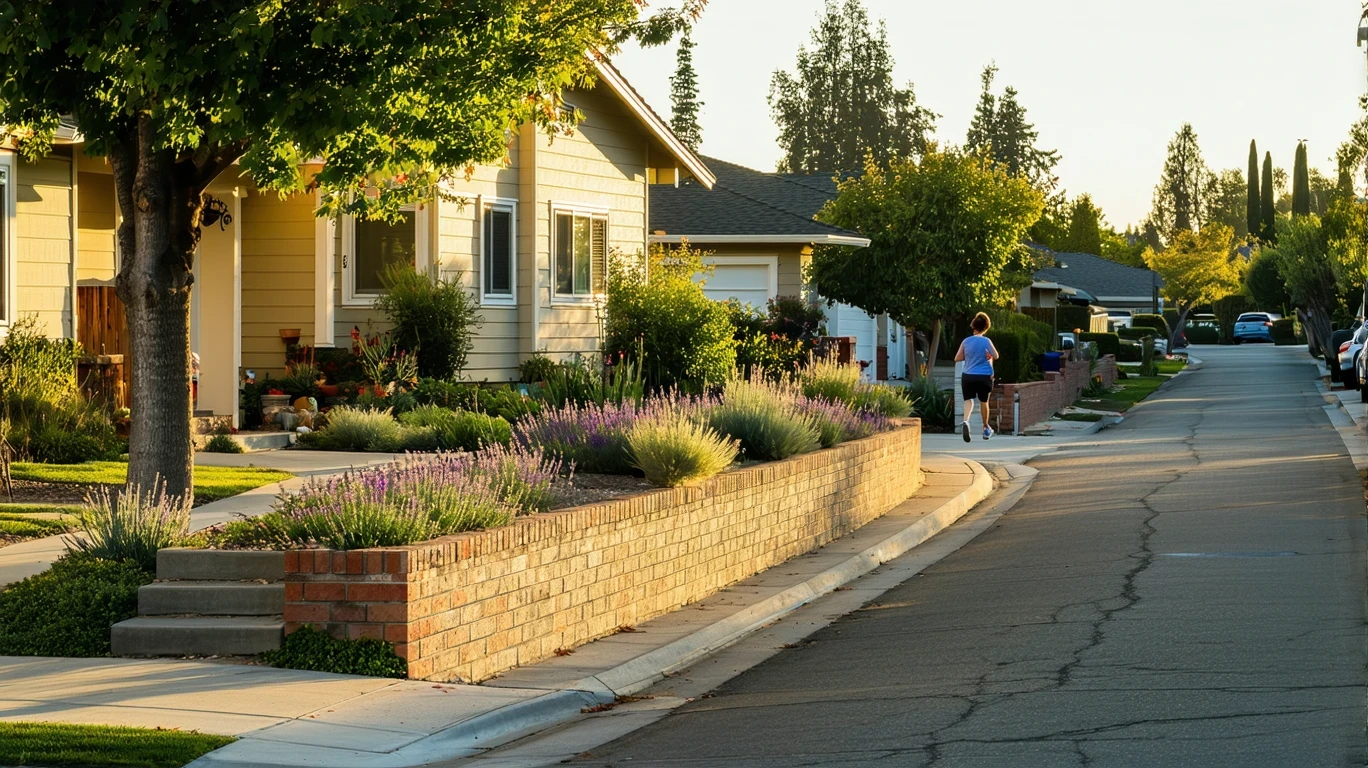
The Housing Market in Campbell Today
Campbell’s housing market is shaped by its position within Silicon Valley’s job core, its access to regional rail transit, and its inventory of established single-family neighborhoods built decades ago. Unlike newer suburban developments farther from employment centers, Campbell’s housing stock reflects mid-century construction patterns, with limited new supply and strong demand from households prioritizing commute time and school quality over square footage.
The $1.47 million median home value reflects competition from buyers who already own property in the region and are trading up, as well as dual-income tech workers who can absorb the entry cost. For renters, the $2,619 median gross rent represents not just shelter, but proximity to jobs, transit options, and the ability to run errands on foot or by bike in parts of the city. Newcomers often underestimate how much of Campbell’s cost structure is driven by access rather than the housing unit itself.
Regional job density and limited housing construction keep upward pressure on both rent and purchase prices. The unemployment rate of 4.1% signals a stable but competitive labor market, and with only 6.4% of workers fully remote, most households still prioritize commute access. Campbell’s 25-minute average commute reflects its centrality, but that advantage comes at a premium in both rental and ownership markets.
Renting in Campbell
Renting in Campbell means navigating a market where proximity to transit, walkable errands, and school access drive significant variation in cost and availability. The $2,619 median gross rent reflects the broader Silicon Valley rental pressure, but within Campbell, location determines whether a household can reduce car dependency or must budget for parking, fuel, and longer trips to daily necessities.
Apartments near rail stations and commercial corridors offer the strongest access to transit and high-density food and grocery options, allowing renters to minimize transportation costs even as they pay a proximity premium. In contrast, rentals in quieter residential blocks may offer more space or lower rent, but often require a car for errands and commuting, shifting costs from rent to fuel, insurance, and parking.
Rental availability in Campbell is constrained by the same factors that drive purchase prices: limited new construction, strong demand from tech workers, and competition from households who would prefer to buy but lack the equity or income to enter ownership. Lease renewals tend to track regional job market conditions and housing supply, meaning renters face volatility tied to factors beyond their control. For households prioritizing flexibility or uncertain about long-term plans, renting offers mobility and lower upfront costs, but at the expense of predictability and control over annual increases.
Owning a Home in Campbell
Ownership in Campbell requires not just the ability to finance a $1.47 million purchase, but the capacity to manage ongoing exposure to property taxes, maintenance, and insurance. California’s Prop 13 structure limits annual property tax increases for existing owners, but new buyers face assessments based on purchase price, locking in a higher baseline that rises modestly each year. For households trading up from another California property, this structure offers some continuity; for out-of-state buyers or first-time purchasers, it represents a significant and permanent cost layer.
Maintenance exposure in Campbell is shaped by the age of the housing stock. Many homes were built in the mid-20th century, and deferred maintenance—roofing, plumbing, electrical systems—often surfaces after purchase. Unlike newer developments where systems are under warranty, older homes require owners to budget for unpredictable repairs and upgrades. Homeowners associations in denser pockets or townhome communities add another governance layer, with fees and rules that vary widely depending on the development.
Ownership in Campbell offers control and predictability over the long term, but it demands financial reserves and tolerance for lumpy expenses. Property taxes, insurance, and maintenance don’t follow a smooth monthly curve—they arrive in waves, and households without liquidity or emergency funds face stress when multiple costs converge. For families prioritizing school stability and long-term roots, ownership provides security. For households stretching to afford the entry price, the ongoing cost exposure can overwhelm the initial financing achievement.
Apartment vs House in Campbell — Cost Behavior Comparison
The cost structure of apartments versus houses in Campbell diverges not just in price, but in how expenses behave, what risks households assume, and how place structure affects daily logistics. The table below isolates the distinctions that matter specifically in Campbell, omitting categories where the difference would be generic or unsupported by local conditions.
| Expense Category | Apartment | House |
|---|---|---|
| Base Rent / Mortgage Exposure | Median $2,619/month; renewals track regional job market and housing supply; no equity accumulation | Median value $1,473,700; property tax baseline locked at purchase under Prop 13; equity builds but liquidity is constrained |
| Utilities (Heating/Cooling) | Smaller footprint and shared walls reduce heating and cooling load; mild climate limits seasonal spikes | Larger footprint and detached structure increase heating and cooling exposure; older homes may lack efficient insulation |
| Maintenance Responsibility | Landlord or property management handles repairs; tenant exposure limited to damage beyond normal wear | Owner assumes all repair and replacement costs; older housing stock increases likelihood of deferred maintenance surfacing |
| Parking and Storage | Often limited or assigned; street parking in denser areas can be constrained; less storage space for bulk purchases | Typically includes garage or driveway; more storage for tools, seasonal items, and bulk goods |
| Errands and Car Dependency | Apartments near transit and commercial corridors benefit from high food and grocery density; walkable errands reduce need for frequent car trips | Houses in quieter residential blocks often require car for errands; larger yards and school access trade off against walkability |
Why these categories: The distinctions above reflect Campbell’s specific combination of older housing stock, mild climate, transit access, and walkable errands infrastructure in certain pockets. Categories like insurance and HOA fees were omitted because no feed data supports local differentiation, and including them would produce generic comparisons applicable to any city. The table is designed to explain how cost behavior and household logistics differ in Campbell, not to enumerate every possible expense.
Utilities & Upkeep Differences
Utility and maintenance exposure in Campbell diverges between apartments and houses primarily due to building size, age, and insulation quality. Campbell’s mild climate—with limited heating and cooling seasons—keeps baseline utility costs moderate compared to regions with temperature extremes, but older single-family homes often lack modern insulation and efficient HVAC systems, leading to noticeable seasonal increases during summer heat or winter cold snaps.
Apartments, especially those in newer or recently renovated buildings, benefit from smaller footprints and shared walls, which reduce heating and cooling load. Renters typically see lower and more predictable utility bills, though landlords may pass through water, trash, or common-area electricity costs depending on lease structure. Houses, particularly older detached homes, expose owners to higher baseline usage and greater sensitivity to weather. A poorly insulated house in Campbell won’t face the extreme exposure seen in triple-digit desert heat or extended freezing winters, but the cost difference between an efficient and inefficient home remains meaningful over time.
Maintenance exposure is where ownership in Campbell becomes more complex. Many homes were built decades ago, and systems like roofing, plumbing, and electrical panels reach end-of-life on unpredictable schedules. Owners must budget not just for routine upkeep—landscaping, gutter cleaning, HVAC servicing—but for large, lumpy expenses like water heater replacement, foundation work, or pest remediation. Apartments shift this burden to landlords or property management, insulating renters from both the cost and the logistics of coordinating repairs.
Rent vs Buy: Long-Term Exposure in Campbell
The long-term cost difference between renting and owning in Campbell is less about total dollars paid and more about volatility, control, and exposure to external forces. Renters face annual lease renewals that track regional housing supply and job market strength, meaning costs can rise sharply in tight markets or stabilize during downturns. Owners lock in a property tax baseline under California’s Prop 13 structure, but assume responsibility for insurance, maintenance, and repairs that arrive unpredictably and can overwhelm households without financial reserves.
Renting offers flexibility and lower upfront costs, but it leaves households exposed to displacement risk and rent increases they cannot control. For families prioritizing school stability or long-term community roots, this volatility creates planning difficulty. Ownership provides stability and the ability to build equity, but it demands liquidity to handle lumpy expenses and tolerance for the illiquidity of home equity. Selling a house to access equity takes months and incurs transaction costs; renters can move with a few months’ notice.
In Campbell specifically, the tradeoff is sharpened by the city’s walkable errands infrastructure and transit access. Renters near rail stations and commercial corridors can reduce car dependency, lowering transportation costs and simplifying logistics, but they pay a proximity premium in rent. Owners in quieter residential blocks gain space and school access but often require a car for daily errands, shifting costs from rent to fuel, parking, and vehicle maintenance. Over time, ownership in Campbell rewards households with stable income, financial reserves, and long-term plans, while renting fits those prioritizing flexibility, uncertain about career trajectory, or unable to absorb the entry cost and ongoing exposure of ownership.
How Place Structure Shapes Housing Costs in Campbell
Campbell’s housing cost structure is inseparable from how the city is physically organized. The presence of rail transit, the concentration of food and grocery options in walkable pockets, and the integration of parks and schools throughout residential neighborhoods all affect how much households spend—not just on rent or mortgage, but on transportation, time, and daily logistics.
For renters, proximity to transit and high-density errands infrastructure means fewer car trips, lower fuel costs, and the ability to manage daily life without parking stress or long drives to groceries. Apartments near commercial corridors benefit from both residential and commercial land use mixing, allowing households to walk or bike to necessities rather than planning around car availability. This doesn’t eliminate transportation costs, but it shifts the burden from ownership and operation of a vehicle to the rent premium paid for location.
For homeowners, the tradeoff is different. Houses in quieter blocks offer larger yards, proximity to schools, and more space, but they often require a car for errands and activities. Families with children benefit from Campbell’s strong school density and moderate playground access, which reduces the need for long drives to extracurriculars, but the car remains essential for grocery runs, appointments, and commuting. The integrated park density and presence of water features add quality-of-life value, but they don’t reduce the logistical complexity of managing a household in a car-dependent block.
The city’s walkable pockets and notable cycling infrastructure create a cost advantage for households willing to prioritize access over space. Renters and owners in these areas pay more per square foot, but they gain the ability to reduce car dependency, simplify errands, and absorb transportation volatility more easily. For households stretched thin by Campbell’s high housing costs, the ability to eliminate a second car or reduce fuel and parking expenses can make the difference between financial stress and stability.
FAQs About Housing Costs in Campbell
What is the median home price in Campbell, CA?
The median home value in Campbell is $1,473,700. This figure reflects competition from dual-income tech households, established owners trading within Silicon Valley, and limited new housing construction. Entry into ownership requires significant equity, down payment capacity, or financial support beyond what typical first-time buyers can access on single incomes.
How much does it cost to rent an apartment in Campbell?
Median gross rent in Campbell is $2,619 per month. Actual rent varies significantly based on proximity to rail transit, walkable errands infrastructure, and school access. Apartments near commercial corridors and transit stations command higher rent but allow renters to reduce car dependency and transportation costs.
Is it better to rent or buy in Campbell, CA?
The decision depends on income stability, financial reserves, and long-term plans. Ownership in Campbell offers control, predictability, and equity accumulation, but requires the ability to manage property taxes, maintenance, and insurance on older housing stock. Renting provides flexibility and lower upfront costs but exposes households to annual lease renewals and rent increases tied to regional market conditions. Households prioritizing school stability and long-term roots benefit from ownership; those uncertain about career trajectory or lacking liquidity fit better as renters.
How does Campbell’s housing market compare to nearby Silicon Valley cities?
Campbell’s housing costs reflect its position within Silicon Valley’s job core, but its combination of rail transit access, walkable errands infrastructure, and strong school density distinguishes it from more car-dependent suburbs. Compared to cities farther from employment centers, Campbell commands a premium for proximity and access. Compared to denser urban cores, it offers more single-family housing stock and quieter residential blocks, though at similar or higher price points.
What drives property taxes in Campbell for new homeowners?
California’s Prop 13 structure limits annual property tax increases for existing owners, but new buyers face assessments based on purchase price. A home purchased at $1.47 million locks in a higher property tax baseline than a comparable home owned for decades. This structure rewards long-term ownership but penalizes new entrants, creating a permanent cost layer that rises modestly each year but never resets downward.
Making Housing Choices in Campbell
Housing costs in Campbell are driven by access, not just shelter. The $1.47 million median home value and $2,619 median rent reflect competition for proximity to Silicon Valley jobs, rail transit, walkable errands, and strong schools. Households that succeed here—whether renting or owning—are those who understand the tradeoffs between space and access, predictability and flexibility, and upfront cost versus long-term exposure.
Renters in Campbell gain mobility and lower entry costs, but they face volatility in lease renewals and limited control over annual increases. Owners gain stability and equity, but they assume responsibility for property taxes, maintenance, and repairs that arrive unpredictably. The decision between renting and owning isn’t about which costs less—it’s about which risk profile fits a household’s income, liquidity, and long-term plans.
For households considering Campbell, the city’s place structure matters as much as its price points. Walkable pockets near transit and commercial corridors allow renters and owners to reduce car dependency, simplifying logistics and lowering transportation costs. Quieter residential blocks offer space and school access but require a car for daily errands. Understanding how Campbell’s infrastructure shapes cost behavior is essential to making housing decisions that fit both budget and lifestyle.
For more context on how housing costs fit into broader monthly expenses, see Your Monthly Budget in Campbell: Where It Breaks. To understand how housing pressure interacts with other cost categories, explore The Real Cost Pressures in Campbell. And for households planning a move, see our 2025 moving company picks for logistics and cost guidance.
How this article was built: In addition to public economic data, this article incorporates location-based experiential signals derived from anonymized geographic patterns—such as access density, walkability, and land-use mix—to reflect how day-to-day living actually feels in Campbell, CA.