
“We moved to Burnsville for the schools, but stayed for the neighbors.” That sentiment captures much of what defines life here: a Twin Cities suburb where the initial draw might be practical, but the emotional texture comes from a blend of outdoor access, suburban predictability, and pockets of mixed-use convenience that keep daily life from feeling entirely car-bound.
Burnsville sits in the inner ring of the Minneapolis-St. Paul metro, a place where mature neighborhoods, lake access, and corridor-style commercial zones create a vibe that’s neither purely residential nor densely urban. It’s a city where park density is genuinely high and hospital access is local, but where getting around without a car requires planning, and where errands tend to cluster along certain routes rather than spreading evenly across every block.
Understanding whether Burnsville feels like a good fit depends less on whether it’s “happy” in some universal sense and more on whether its particular tradeoffs align with what you need day-to-day. Some households find the balance between green space and suburban structure exactly right. Others feel the friction of limited transit options or the logistics of corridor-clustered errands.
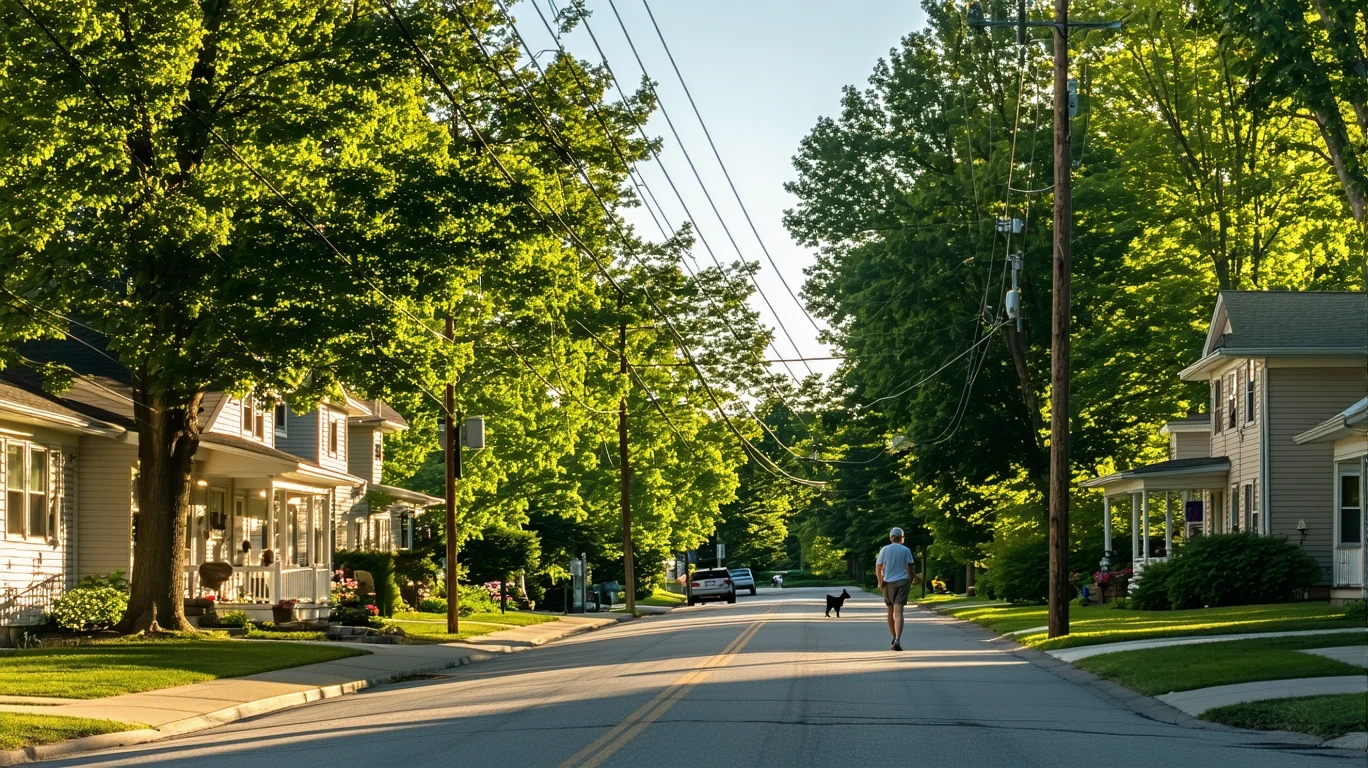
The Emotional Landscape of Burnsville
Burnsville tends to reward people who value outdoor access and don’t mind driving to get things done. The city’s park infrastructure is genuinely integrated into daily life—not just weekend destinations, but spaces woven into neighborhoods. Water features add texture, and the density of green space means that for families with kids or adults who prioritize trails and open air, the city delivers on that promise consistently.
At the same time, the mobility structure here leans car-oriented. Pedestrian infrastructure exists in pockets, and some blocks support walking errands or evening strolls, but the overall texture is mixed rather than uniformly walkable. Bus service is present, but without rail transit, households that prefer or need car-free living will find Burnsville limiting. Cycling infrastructure appears in some areas, but it’s not extensive enough to serve as a primary transportation mode for most people.
Errands and groceries tend to concentrate along commercial corridors rather than being evenly distributed, which means some neighborhoods feel more self-contained while others require short drives for daily needs. This isn’t unusual for inner-ring suburbs, but it does shape how people experience convenience: it’s there, but it’s not always next door.
Healthcare access is a local strength. The presence of a hospital and pharmacies means that routine and urgent care don’t require long drives, which matters especially for families with young children, older adults, or anyone managing chronic conditions. That reduces one layer of logistical friction that some suburban areas impose.
School density signals are more limited, which may mean longer school commutes for some families or fewer nearby options depending on district boundaries. This doesn’t speak to school quality—which isn’t covered here—but it does suggest that families should plan for the possibility that the closest school might not be the one around the corner.
Social Media Buzz in Burnsville
Conversations about Burnsville on platforms like Reddit, Facebook groups, and neighborhood forums tend to circle around a few recurring themes: the value of lake access, the tension between suburban quiet and the desire for more walkable amenities, and a protective pride in the city’s parks and green spaces.
“It’s not flashy, but it works. We’ve got trails, decent grocery options, and we’re close enough to the Cities when we need more.” That kind of sentiment shows up often—people who feel the city delivers on practical needs without pretending to be something it’s not.
There’s also a thread of mild frustration around transit and walkability: “I wish I could walk to more places, but honestly, most of what I need is a five-minute drive.” For some, that’s fine. For others, it’s a daily reminder that the city’s structure assumes car ownership.
Another common emotional note is the sense of stability. Long-time residents often express appreciation for the lack of dramatic upheaval, while newcomers sometimes describe the city as “steady” or “predictable”—which reads as either comforting or uninspiring depending on what you’re looking for.
Local News Tone
Coverage of Burnsville tends to frame the city through the lens of incremental change and community identity. Headlines and story angles often reflect themes like:
- “New Retail and Dining Options Arrive Along Major Corridors”
- “Residents Weigh Development Plans and Neighborhood Character”
- “City Celebrates Expanded Trail Network and Lake Access”
- “Community Debates What Growth Should Look Like”
- “Local Healthcare Expansion Brings Services Closer to Home”
The tone is rarely alarmist or celebratory in extremes. Instead, it reflects a city managing the tension between maintaining suburban comfort and adapting to regional growth pressures. There’s a recurring focus on outdoor amenities and infrastructure improvements, which aligns with what residents tend to value most.
Review-Based Public Perception
On platforms like Google Reviews, Yelp, and Nextdoor-style forums, Burnsville’s public perception splits along expectation lines. People who wanted suburban structure, green space, and proximity to the Twin Cities without urban density tend to express satisfaction. Those who hoped for walkable urbanism, nightlife variety, or car-free convenience often describe disappointment.
Positive themes include praise for parks, trail systems, and the presence of familiar grocery and retail chains. “Everything I need is here, and the parks are actually great” is a common refrain. Families with young children frequently highlight playground access and the sense that outdoor play is easy to incorporate into daily routines.
Neutral-to-critical feedback often centers on the need to drive for most errands, limited dining variety compared to denser urban neighborhoods, and the sense that evening entertainment options are sparse. “It’s quiet, maybe too quiet if you’re used to city energy” captures a recurring sentiment from younger professionals or recent transplants from more urban settings.
Neighborhood variation exists but is often described in broad terms: newer planned areas versus older pockets, lakefront access versus inland blocks. The differences are real but not stark—Burnsville doesn’t have the dramatic neighborhood-to-neighborhood contrast of larger cities.
Comparison to Nearby Cities
| Aspect | Burnsville | Eagan | Apple Valley |
|---|---|---|---|
| Walkability | Mixed; pockets of pedestrian infrastructure | Similar; car-oriented with some walkable zones | More car-dependent overall |
| Transit Access | Bus service present, no rail | Bus routes available, limited rail reach | Bus service, more limited frequency |
| Outdoor Access | High park density, lake features integrated | Strong park system, less water access | Good parks, more spread out |
| Errands Accessibility | Corridor-clustered; short drives common | Similar corridor model | More dispersed; longer drives typical |
| Healthcare | Hospital and pharmacies present locally | Hospital access nearby | Clinics present; hospital farther |
Burnsville, Eagan, and Apple Valley share a similar suburban DNA, but the distinctions matter for quality of life factors depending on priorities. Burnsville’s edge is its integrated outdoor access—park density and water features are genuinely woven into the city’s fabric, not just amenities on the periphery. If daily access to trails and green space ranks high, Burnsville delivers more consistently than Apple Valley and competes well with Eagan.
Eagan offers a comparable mix of walkable pockets and car-oriented structure, with slightly more commercial density in some areas. Apple Valley skews more car-dependent and spread out, which can feel more isolating for households without reliable transportation but may appeal to those seeking more space and quiet.
Transit access is limited across all three cities, so if car-free living is a priority, none of these suburbs will feel fully supportive. But for households comfortable with driving, Burnsville’s corridor-clustered errands model and local hospital access reduce some of the logistical friction that more dispersed suburbs impose.
What Locals Are Saying
“We’ve been here eight years, and honestly, the parks are what keep us. Our kids are outside constantly, and we’re five minutes from trails. It’s not walkable like Uptown, but that’s not what we wanted anyway.”
— Family with young children
“I work remotely, so the lack of transit doesn’t affect me much. What I appreciate is that errands don’t take long, and I’m close enough to Minneapolis when I want more options. It’s a good balance.”
— Remote worker, early 30s
“I moved here from a denser neighborhood, and I miss being able to walk to coffee or dinner. Everything here requires getting in the car. The parks are nice, but the vibe is pretty quiet.”
— Young professional, recent transplant
“Burnsville has everything we need without feeling too crowded. The hospital being local is a big deal for us—my mom lives with us, and knowing we don’t have to drive far for healthcare gives us peace of mind.”
— Multigenerational household
“It’s a solid suburb. Not exciting, but solid. If you’re looking for nightlife or walkable urbanism, you’ll be frustrated. If you want space, parks, and predictability, it works.”
— Long-time resident, empty nester
“We chose Burnsville because it felt more affordable than Edina or Minnetonka but still had good access to the metro. The tradeoff is less walkability, but we knew that going in.”
— Couple in their 40s, first-time homebuyers
“I bike when I can, but the infrastructure isn’t consistent. Some routes are fine, others feel like an afterthought. If you’re serious about cycling as transportation, it’s limiting.”
— Cycling enthusiast, mid-30s
Does Burnsville Feel Like a Good Fit?
Burnsville tends to work well for households that prioritize outdoor access, value suburban structure, and are comfortable with car dependency. The city’s integrated park system and local healthcare infrastructure reduce certain kinds of daily friction, and for families with young children or adults who want green space without sacrificing proximity to the Twin Cities, the alignment can feel strong.
It tends to frustrate people who need or prefer transit-dependent living, those seeking dense walkable urbanism, or anyone hoping for extensive nightlife and cultural variety. The city’s corridor-clustered errands model and mixed walkability mean that convenience exists, but it’s not evenly distributed or always next door.
The emotional profile here is steady rather than dramatic. Burnsville doesn’t promise transformation or excitement, but it does offer a version of suburban life where outdoor access is genuinely prioritized and where day-to-day costs align with a median household income that supports moderate comfort without excess. Whether that feels like home depends on whether you’re looking for predictability and green space, or texture and spontaneity.
If you’re still weighing whether Burnsville fits your needs, exploring housing tradeoffs and understanding how the city’s structure shapes daily logistics can help clarify whether the balance here matches what you’re looking for.
How this article was built: In addition to public economic data, this article incorporates location-based experiential signals derived from anonymized geographic patterns—such as access density, walkability, and land-use mix—to reflect how day-to-day living actually feels in Burnsville, MN.
The perspectives shown reflect commonly expressed local sentiment and recurring themes in public discussion, rather than individual accounts.