
Burnsville sits in the southern arc of the Minneapolis–St. Paul metro, where housing costs reflect both suburban accessibility and the realities of a long Minnesota heating season. The median home value here is $315,700, and median rent runs $1,443 per month—figures that look moderate on paper but carry different weight depending on whether you’re renting short-term, buying into ownership exposure, or trying to balance commute access with household needs. What surprises many newcomers is not the sticker price, but the ongoing cost structure: property taxes that adjust annually, heating bills that dominate winter months, and governance layers—HOAs, city ordinances, and maintenance expectations—that shift the true cost of housing well beyond the lease or mortgage payment.
This article explains how housing costs actually behave in Burnsville: what drives rent pressure, what ownership exposes you to, and how the choice between renting and buying plays out over time in a climate and market like this one.
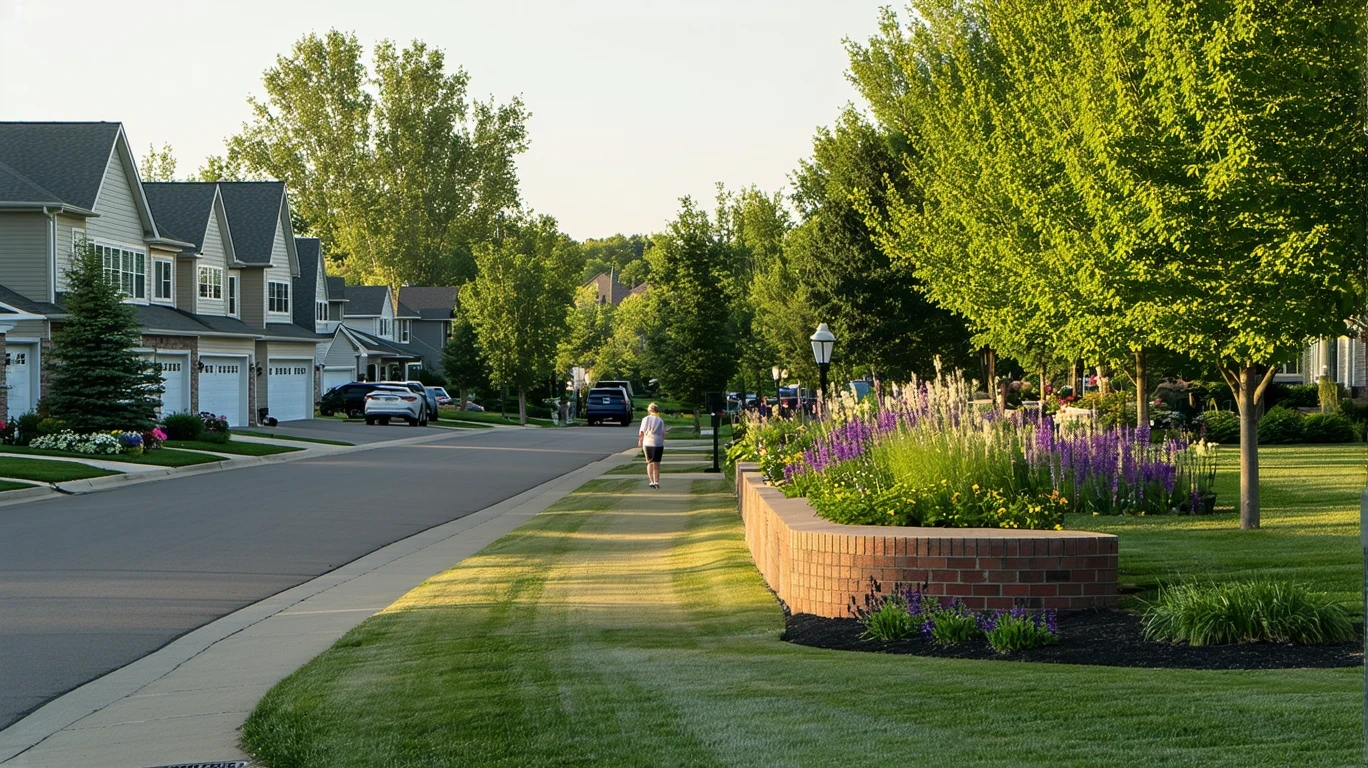
The Housing Market in Burnsville Today
Burnsville’s housing market is shaped by its role as a commuter suburb with mixed infrastructure. The city offers bus service and moderate pedestrian infrastructure, but errands and groceries cluster along corridors rather than spreading evenly across neighborhoods. That means housing location matters—not just for commute time, but for how much friction you’ll face running daily errands without a car. The experiential texture here is neither fully car-dependent nor walkable; it’s somewhere in between, and that creates cost variability by block that doesn’t show up in median figures.
The median household income in Burnsville is $85,801 per year, and unemployment sits at 2.7%, reflecting a stable but not booming labor market. Home values at $315,700 represent roughly 3.7 times median income—a ratio that suggests entry is possible but not effortless. Rent at $1,443 per month consumes about 20% of gross median income, which is below the conventional 30% threshold but still represents significant monthly outflow, especially for households earning below the median or managing student debt, childcare, or vehicle costs.
What distinguishes Burnsville from peer suburbs is its high park density and integrated green space, which adds livability value without raising housing costs to the levels seen in closer-in neighborhoods. However, school density is low, meaning families often weigh outdoor access against school proximity—a tradeoff that influences where people choose to live and how much they’re willing to pay.
Renting in Burnsville
At $1,443 per month, median rent in Burnsville reflects the cost of access to the metro without living in the urban core. Renters here are paying for space, parking, and proximity to highways, but they’re also absorbing the inefficiencies of a corridor-clustered errands landscape. If your apartment isn’t near one of those corridors, you’ll likely need a car for groceries, pharmacies, and routine tasks—adding transportation costs on top of rent.
Rental stock in Burnsville includes both apartment complexes and single-family rentals, with building heights in the mixed range—neither uniformly low-rise nor dominated by taller structures. That diversity means rent can vary significantly depending on unit type, age, and location relative to transit and parks. Renters near bus lines or within walking distance of green space often face higher rent or faster lease-up times, while units farther from those amenities may sit longer or offer concessions.
Lease renewals in Burnsville follow metro-wide patterns, where increases tend to track regional demand rather than hyperlocal conditions. That means your rent exposure is partly shaped by what’s happening across the Twin Cities, not just in Burnsville. Renters should expect annual adjustments, and those adjustments are harder to predict than ownership costs because they’re driven by landlord strategy, vacancy rates, and competitive pressure—not by a fixed tax bill or mortgage term.
Owning a Home in Burnsville
Buying a home in Burnsville at $315,700 puts you into a market where ownership is accessible to dual-income households and established buyers, but where the total cost of ownership extends well beyond the purchase price. The primary exposures are property taxes, heating costs, and maintenance—all of which behave differently than rent and require different planning.
Property taxes in Minnesota are assessed annually and adjust with home value, meaning your tax bill can rise even if you don’t move or improve the property. Burnsville’s tax structure isn’t provided in the data, but the statewide system means homeowners face ongoing exposure to valuation changes and levy increases. Unlike rent, which resets at lease renewal, property taxes are a recurring obligation that compounds over time, and they’re not optional or negotiable.
Heating costs dominate the utility picture. Burnsville experiences a long, cold heating season, and natural gas—the primary heating fuel—is priced at $7.99 per MCF. Owners of single-family homes face higher heating exposure than apartment renters, both because of square footage and because they’re responsible for the full cost of the system, including furnace maintenance, ductwork, and insulation performance. A poorly insulated home or an aging furnace can turn a moderate gas price into a dominant winter expense.
Some Burnsville neighborhoods are governed by homeowners associations (HOAs), which add another layer of cost and control. HOA fees can cover landscaping, snow removal, or shared amenities, but they also represent a fixed monthly obligation that doesn’t disappear if you pay off your mortgage. More importantly, HOAs can impose rules about exterior modifications, parking, and maintenance standards—restrictions that limit your autonomy even as you’re building equity.
Ownership in Burnsville is best suited to households that value control, stability, and access to green space, and who are prepared to manage the seasonal cost swings and governance complexity that come with it.
Apartment vs House in Burnsville — Cost Behavior Comparison
The table below reflects cost behavior differences that are specific to Burnsville’s climate, infrastructure, and housing stock. Rows are included only where the distinction is meaningful in this market.
| Expense Category | Apartment | House |
|---|---|---|
| Heating (winter months) | Lower exposure; shared walls reduce heat loss, landlord often covers or caps cost | Dominant expense; full square footage, owner responsible for system efficiency and fuel cost |
| Property tax | Not directly billed; embedded in rent, opaque | Billed annually; visible, recurring, adjusts with assessed value |
| Maintenance control | Landlord handles; no cost but no control over timing or quality | Owner handles; full cost and full control, includes deferred risk |
| Parking | Often included or minimal fee; assigned or open lot | Garage or driveway; no recurring cost but adds to purchase price and maintenance |
| Access to parks | Proximity varies; less control over location relative to green space | More choice in location; can prioritize park access, but may pay premium |
Why these categories? Burnsville’s long heating season makes winter utility exposure the primary cost differentiator between apartments and houses. Property tax visibility matters because Minnesota’s annual assessment system creates ongoing exposure for owners that renters never see directly. Maintenance control is included because Burnsville’s housing stock is mixed in age, and deferred maintenance risk is higher in older single-family homes. Parking and park access reflect the city’s infrastructure: corridor-clustered errands and high park density mean location choices have cost consequences that vary by housing type.
Categories like electricity, internet, and trash were excluded because they don’t vary meaningfully by housing type in Burnsville—they’re either comparable or too dependent on individual usage to generalize.
Utilities & Upkeep Differences
In Burnsville, heating is the dominant utility cost, and it behaves very differently in an apartment versus a house. Natural gas at $7.99 per MCF is moderate by regional standards, but the length and intensity of the heating season mean that even moderate rates translate into substantial winter bills for single-family homeowners. Apartments benefit from shared-wall insulation and smaller square footage, and many landlords either include heat or cap tenant exposure, which shifts the volatility away from the renter.
Electricity, priced at 15.67¢ per kWh, is less seasonal but still relevant for homeowners running electric water heaters, well pumps, or supplemental heating. Apartment dwellers typically see lower and more predictable electric bills because their systems are smaller and their usage is constrained by unit size.
Maintenance exposure in Burnsville is shaped by climate stress—freeze-thaw cycles, snow load, and ice damming all accelerate wear on roofs, siding, and foundations. Homeowners face these costs directly and must budget for both routine upkeep (furnace servicing, gutter cleaning) and episodic failures (roof replacement, foundation repair). Apartment renters are insulated from these costs, though they may experience delays or quality issues when landlords defer maintenance to control expenses.
The upkeep difference is not just financial—it’s also a time and attention burden. Homeowners in Burnsville must plan for seasonal tasks (snow removal, lawn care, storm prep) that renters can ignore, and that burden is more intense in a climate with distinct, demanding seasons.
Rent vs Buy: Long-Term Exposure in Burnsville
The choice between renting and buying in Burnsville is not a simple math problem—it’s a tradeoff between predictability and control, and the right answer depends on how long you plan to stay, how much cost volatility you can absorb, and whether you value autonomy over flexibility.
Renting in Burnsville means accepting annual lease adjustments that you can’t control, but it also means avoiding property tax exposure, heating system failures, and the transaction costs of buying and selling. Renters can leave when a lease ends without worrying about market timing, and they’re not exposed to the risk that home values stagnate or fall. In a metro market like the Twin Cities, where rent pressure is driven by regional demand, Burnsville renters are somewhat insulated from hyperlocal shocks, but they’re also vulnerable to metro-wide trends they can’t predict.
Owning in Burnsville means locking in your housing payment (if you have a fixed-rate mortgage), but it also means taking on property tax risk, maintenance cost, and climate exposure. Your tax bill will adjust over time, your furnace will eventually fail, and your roof will need replacement—all costs that renters never see. Ownership also ties you to a specific location, which matters in a city where errands cluster along corridors and school density is low. If you buy in the wrong spot, you may face higher transportation costs or longer drives to access the amenities you need.
Over time, ownership in Burnsville rewards households that stay long enough to absorb transaction costs and build equity, and who are prepared to manage the seasonal and structural cost swings that come with a cold climate and a suburban infrastructure. Renting rewards households that value mobility, simplicity, and insulation from maintenance risk, even if it means less control and no equity accumulation.
Neither path is universally better. The right choice depends on whether you’re optimizing for stability or flexibility, and whether you’re prepared to manage the hidden costs—taxes, heating, upkeep—that define ownership in this market.
FAQs About Housing Costs in Burnsville
Is $315,700 affordable for a median-income household in Burnsville?
At roughly 3.7 times median household income, a $315,700 home is within reach for dual-income households or established buyers, but it’s not effortless. Affordability depends on down payment, debt load, and whether you’re prepared for the total cost of ownership—property taxes, heating, and maintenance—which extend well beyond the mortgage payment.
How much does heating cost in a Burnsville home during winter?
Heating cost depends on home size, insulation quality, and furnace efficiency, but the long, cold heating season means natural gas exposure is substantial. Owners of single-family homes face higher bills than apartment renters, both because of square footage and because they’re responsible for the full cost of the system. Expect heating to be a dominant winter expense, not a minor line item.
Do most Burnsville neighborhoods have HOAs?
HOA prevalence varies by neighborhood and housing type. Some areas—especially newer developments or townhome communities—are governed by HOAs that add monthly fees and impose rules about exterior modifications and maintenance. Other areas have no HOA at all. It’s essential to verify governance structure before buying, because HOA fees and restrictions don’t disappear even after you pay off your mortgage.
Is renting in Burnsville cheaper than owning over time?
It depends on how long you stay and how costs evolve. Renting avoids property tax exposure, maintenance risk, and transaction costs, but it also means accepting annual lease adjustments you can’t control. Ownership builds equity and locks in your base housing payment, but it exposes you to heating costs, tax increases, and episodic maintenance failures. Over a long enough timeline, ownership typically costs less per year, but only if you stay long enough to absorb the upfront and ongoing expenses.
Does Burnsville’s park density affect housing costs?
Yes, indirectly. Burnsville’s high park density and integrated green space add livability value, and homes near parks or trails often command higher prices or rent faster. However, the city’s low school density means families must weigh outdoor access against school proximity, and that tradeoff influences where people choose to live and how much they’re willing to pay.
Making Housing Choices in Burnsville
Housing costs in Burnsville are shaped by suburban infrastructure, a long heating season, and a mixed-density landscape that rewards location choices but penalizes poor planning. Renters at $1,443 per month face moderate pressure and limited control, but they’re insulated from the property tax, heating, and maintenance exposure that defines ownership. Buyers at $315,700 gain stability and equity, but they take on recurring costs and climate risk that don’t show up in the purchase price.
The right choice depends on whether you value flexibility or control, whether you’re prepared to manage seasonal cost swings, and whether you’re staying long enough to make ownership exposure worthwhile. Burnsville rewards households that understand the total cost structure—not just the rent or mortgage, but the taxes, utilities, and governance layers that shape the true cost of living here.
For more on monthly expenses and how they interact with housing costs, or a broader look at Burnsville affordability, explore the related guides. If you’re planning a move, the moving companies guide offers practical logistics support.
How this article was built: In addition to public economic data, this article incorporates location-based experiential signals derived from anonymized geographic patterns—such as access density, walkability, and land-use mix—to reflect how day-to-day living actually feels in Burnsville, MN.