
Burnsville is considered moderately priced in 2026, with a median home value of $315,700 and median rent of $1,443 per month anchoring the cost structure. The value proposition depends on housing entry cost versus car dependence, with transportation and seasonal utility exposure creating secondary pressure points beyond the initial housing decision.
Overall Cost of Living Snapshot
Burnsville’s cost structure reflects a suburban Twin Cities pattern: housing entry costs dominate the financial landscape, followed by transportation dependency and utility seasonality. With a regional price parity index of 98, the city tracks near the national baseline, but that average masks where pressure actually concentrates.
The primary cost driver is housing—whether you’re navigating a $315,700 median home value or committing to $1,443 monthly rent. Both paths lock in substantial recurring exposure before groceries, utilities, or transportation enter the equation. The unemployment rate of 2.7% signals a tight labor market, but cost pressure here isn’t about job availability—it’s about the structural expenses required to live in a car-dependent suburb with long heating seasons.
What surprises most newcomers: the cumulative weight of vehicle dependency (not just ownership, but the necessity of driving for nearly every errand), the intensity and duration of heating season costs, and the gap between modest day-to-day prices and the high threshold required to enter the housing market. Burnsville isn’t expensive in every category—it’s expensive where it counts most.
Housing Costs (Primary Driver)
Housing is the dominant financial reality in Burnsville. A $315,700 median home value positions ownership as a significant capital commitment, requiring substantial down payment reserves and long-term financing capacity. For renters, $1,443 per month represents a recurring baseline that doesn’t include utilities, parking, or renters insurance—expenses that add friction even when rent itself feels manageable.
The renting-versus-owning decision here isn’t about lifestyle preference—it’s about capital access and timeline. Ownership offers stability against rent increases and builds equity, but demands liquidity and tolerance for maintenance unpredictability. Renting preserves flexibility and offloads repair risk, but subjects households to lease-renewal volatility and offers no hedge against long-term [housing pressure](https://indexyard.com/best-moving-companies-guide/).
Burnsville functions as a suburban ownership market with a rental segment serving transitioners and those prioritizing mobility over equity accumulation. Neither path is cheap; both require clear-eyed assessment of capital position and timeline.
| Housing Type | Cost Anchor | What That Buys You |
|---|---|---|
| Median Home | $315,700 | Suburban single-family ownership with equity-building potential and maintenance responsibility |
| Median Rent | $1,443/month | Flexibility and repair offload, with lease-renewal exposure and no equity capture |
Utilities & Energy Risk
Utility costs in Burnsville are shaped by Minnesota’s climate extremes. Electricity runs 15.67¢ per kilowatt-hour—a moderate baseline that supports year-round lighting, appliances, and summer cooling. Natural gas is priced at $7.99 per thousand cubic feet, and this is where seasonal volatility enters the picture.
Heating dominates the utility profile. Long, cold winters mean furnaces run for extended periods, and natural gas consumption spikes accordingly. Homes with older insulation, larger square footage, or inefficient HVAC systems face steeper exposure. Electricity costs remain more predictable, though air conditioning during warm months adds incremental load.
The risk classification here is moderate: not catastrophic, but meaningful enough to require planning. Households that budget only for summer utility baselines will encounter surprise when heating season arrives. The exposure is recurring, seasonal, and difficult to avoid without structural upgrades (insulation, window replacement, furnace efficiency improvements).
Groceries & Daily Costs
Grocery costs in Burnsville track close to national norms, reflecting the regional price parity index of 98. Derived estimates suggest bread around $1.80 per pound, chicken $1.98 per pound, and eggs $2.66 per dozen—figures that indicate modest day-to-day pricing without significant premiums or discounts.
For households, this translates to predictable weekly shopping costs, though the structure of errands accessibility matters as much as price. Food and grocery establishments cluster along commercial corridors rather than distributing evenly across neighborhoods, meaning most trips require intentional driving rather than walkable convenience. The cost isn’t in the groceries themselves—it’s in the time, fuel, and logistics required to access them regularly.
Grocery pressure in Burnsville is low on a per-item basis but compounded by the transportation dependency required to shop efficiently. Bulk buying and trip consolidation become practical necessities, not optional strategies.
Transportation Reality
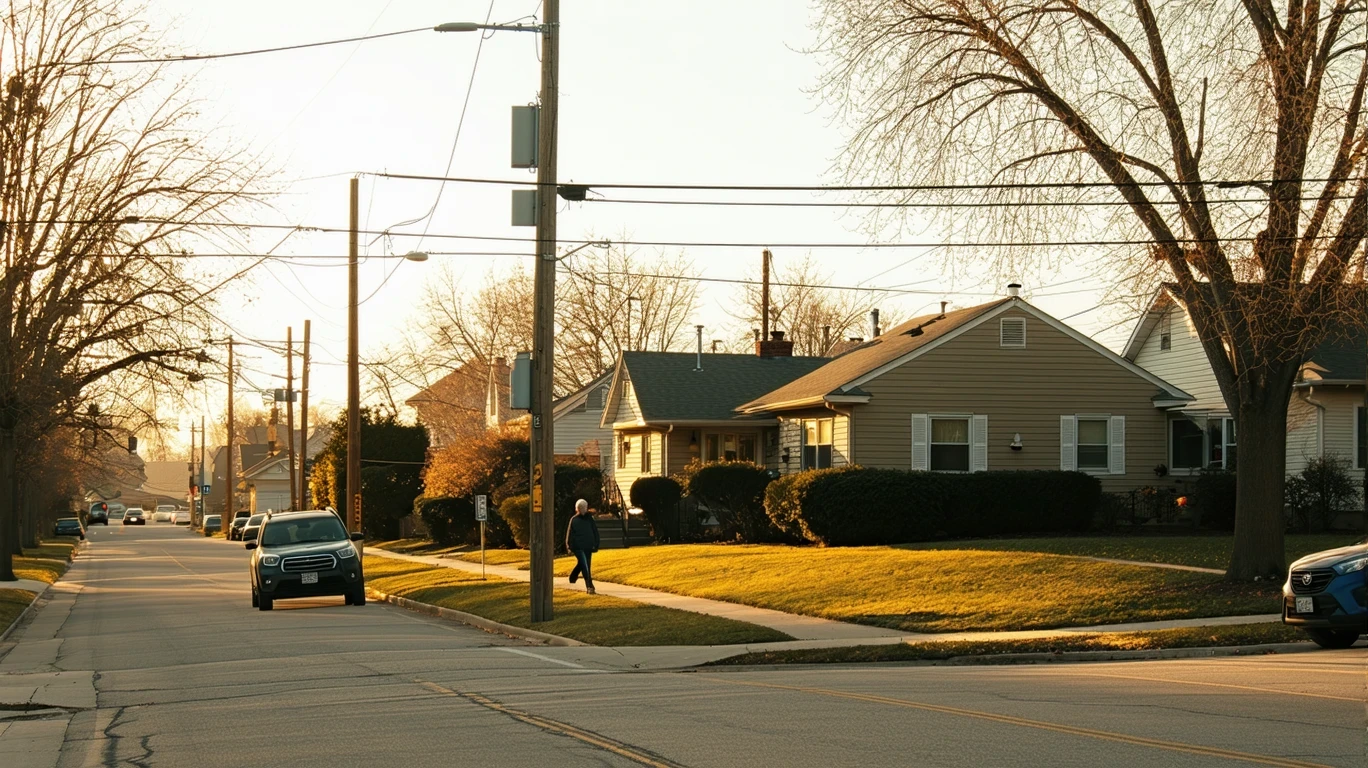
Transportation in Burnsville is a structural cost, not a discretionary one. The city’s layout—mixed pedestrian infrastructure, bus service without rail, and corridor-clustered commercial zones—means car ownership is functionally required for employment access, errands, and household logistics.
Gas prices currently sit at $2.61 per gallon, a moderate rate that nonetheless accumulates quickly when driving is the only viable option for most trips. Commuters face recurring fuel costs, maintenance intervals, insurance premiums, and vehicle depreciation. The absence of rail transit and limited bus coverage mean households cannot substitute public transportation for car ownership; they can only supplement it selectively.
The transportation exposure here isn’t catastrophic—it’s pervasive. Every household decision (where to work, where to shop, how to manage errands) must account for vehicle dependency. Single-car households face scheduling friction; multi-car households face doubled insurance and maintenance costs. Either way, transportation becomes a recurring financial obligation that rivals or exceeds grocery spending.
Cost Exposure Profiles
Cost exposure in Burnsville concentrates in three areas: housing entry, transportation dependency, and utility seasonality. The intensity of each varies by household structure, but all three are unavoidable.
Low-exposure situations: Renters with short commutes, fuel-efficient vehicles, and well-insulated apartments face the most predictable cost profile. Monthly rent is fixed, transportation costs are contained, and utility swings remain modest. The tradeoff is zero equity accumulation and lease-renewal risk.
High-exposure situations: Homeowners with long commutes, older homes, and multiple vehicles face compounded pressure. Mortgage payments anchor the budget, heating season creates seasonal spikes, and transportation costs multiply with each additional car. Maintenance unpredictability (roof, furnace, vehicle repairs) adds volatility on top of baseline expenses.
The difference isn’t about income sufficiency—it’s about exposure surface area. Households with fewer dependencies (shorter commutes, smaller homes, single vehicles) face fewer simultaneous cost pressures. Those with larger footprints (bigger homes, longer commutes, multi-car logistics) face overlapping exposures that require deeper reserves and more active management.
How Day-to-Day Living Actually Works Here
Burnsville’s infrastructure shapes daily routines in specific ways. The mixed pedestrian texture and corridor-clustered grocery accessibility mean most errands require driving—not because distances are extreme, but because walkable access doesn’t extend to most residential areas. Bus service exists and provides a baseline transit option, but without rail connections, it functions as a supplement rather than a primary mobility solution for most households.
This structure creates a rhythm: trips are batched, routes are planned, and spontaneity has a fuel cost. Grocery runs, pharmacy stops, and retail errands become deliberate outings rather than casual detours. For families managing school drop-offs, work commutes, and activity schedules, the logistics load is high—not because any single trip is burdensome, but because the cumulative planning and driving add up.
The integrated park network offers a counterbalance. High park density and water features provide accessible outdoor options without requiring long drives, which reduces recreational transportation costs and creates neighborhood-level amenity access. But for daily necessities—food, healthcare, services—the car remains the primary tool, and that dependency is baked into the cost structure.
Frequently Asked Questions
Is Burnsville more affordable than Minneapolis in 2026? Burnsville typically offers lower housing entry costs than Minneapolis, but transportation dependency offsets some of that advantage. The tradeoff is suburban space and ownership accessibility versus urban walkability and transit access.
What does a typical cost profile look like in Burnsville? Housing dominates, followed by transportation (vehicle ownership, fuel, insurance) and utilities (especially heating season). Groceries and day-to-day expenses track near national averages and represent smaller shares of total pressure.
Do utilities cost more in Burnsville than in nearby suburbs? Utility rates are consistent across the metro area; the bigger variable is home size, insulation quality, and heating system efficiency. Burnsville’s costs reflect Minnesota’s seasonal extremes more than local rate differences.
What costs tend to surprise newcomers in Burnsville? Heating season intensity, the necessity of car ownership for nearly all errands, and the gap between modest grocery prices and high housing entry thresholds surprise those expecting uniform affordability.
Are property taxes higher in Burnsville than Bloomington? Property tax rates vary by jurisdiction and are not included in this dataset, but both cities are subject to Minnesota’s statewide property tax structure. Differences are typically modest and driven by local levies and assessed home values.
Is Burnsville a good value for families in 2026? Burnsville offers suburban space, strong park access, and hospital presence, but requires car dependency and delivers moderate family infrastructure density. Value depends on whether vehicle logistics and heating season exposure align with household priorities.
How does Burnsville compare to St. Paul for cost of living? Burnsville generally offers lower housing costs than St. Paul, but transportation dependency is higher due to suburban layout. St. Paul provides denser transit and walkable errands access; Burnsville provides more space and lower entry costs with car-dependent logistics.
What’s the biggest cost difference between renting and owning in Burnsville? Ownership requires significant upfront capital and exposes households to maintenance volatility, but builds equity and stabilizes monthly housing costs. Renting preserves flexibility and offloads repair risk, but subjects households to lease-renewal increases without equity capture.
How this article was built: In addition to public economic data, this article incorporates location-based experiential signals derived from anonymized geographic patterns—such as access density, walkability, and land-use mix—to reflect how day-to-day living actually feels in Burnsville, MN.
—