
You’re standing in your kitchen on Sunday afternoon, planning meals for the week ahead. Chicken for Monday, ground beef tacos Tuesday, maybe a stir-fry Wednesday. You mentally tally what’s already in the pantry—rice, a few cans, half a loaf of bread—and start building your shopping list. In Buena Park, this weekly ritual plays out against a grocery landscape shaped by competitive store density, household income that sits comfortably above many inland California cities, and a food retail environment dense enough that store choice becomes a real lever, not just a convenience. For families, grocery costs scale quickly and store tier matters. For singles and couples earning near the city’s median household income of $101,586 per year, food spending pressure feels moderate but not negligible. Understanding how grocery prices behave here—and how your shopping habits interact with the local retail structure—helps you control one of the few cost categories where daily decisions genuinely move the needle.
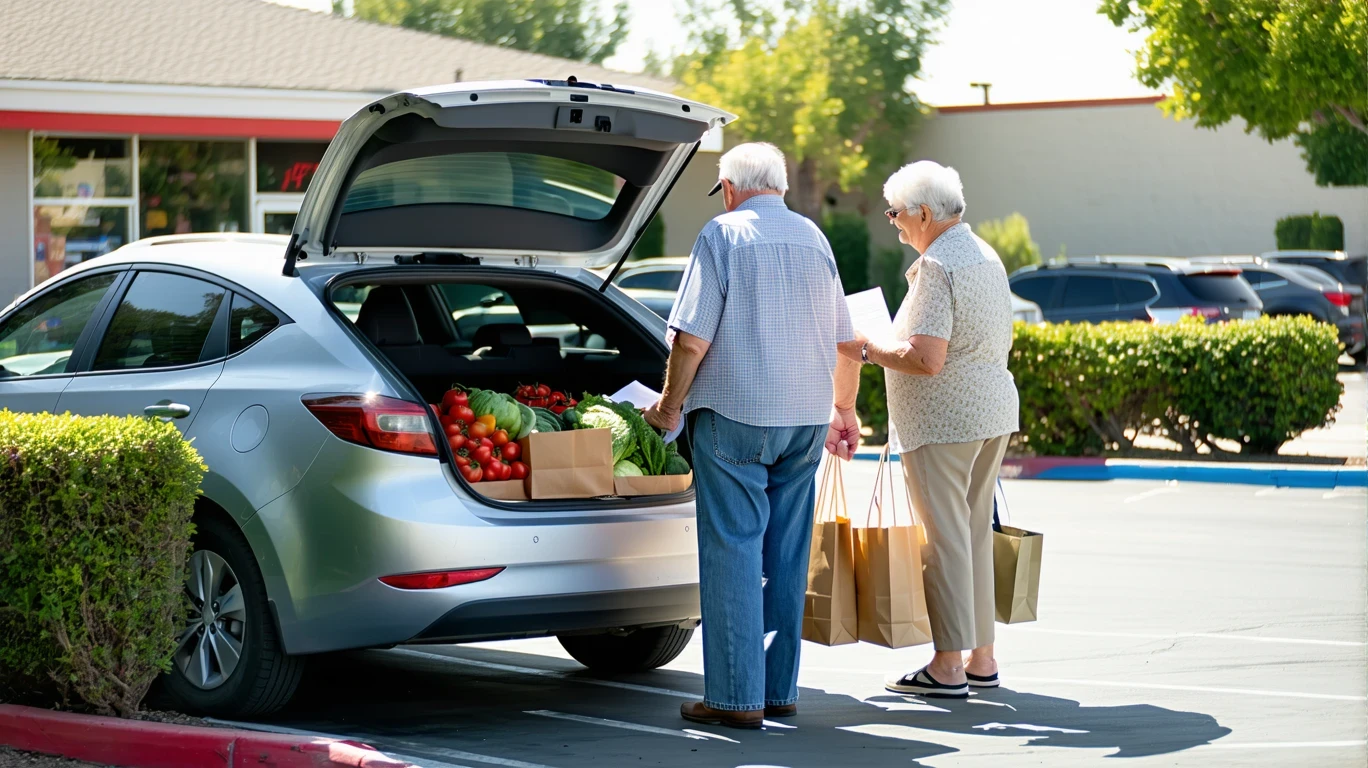
How Grocery Costs Feel in Buena Park
Buena Park sits at the national baseline for regional price parity, meaning grocery prices here don’t carry the dramatic markup seen in coastal metros or the relief found in lower-cost inland regions. The city’s grocery environment feels neither cheap nor punishing—it reflects a middle position where household income provides cushion for many, but where families with multiple dependents notice food spending accumulate week over week. The pressure isn’t driven by a single expensive staple; it’s the compounding effect of feeding more people, more meals, more often. A household of two adults might navigate grocery costs with flexibility and room for organic upgrades or convenience purchases. A household of four or five faces a different calculus, where every shopping trip requires intentionality and where store choice stops being about preference and starts being about budget survival.
What makes Buena Park distinct is the density and accessibility of its food retail infrastructure. Grocery establishment density exceeds high thresholds, and food establishment density follows the same pattern. This isn’t a city where you drive fifteen minutes to reach the nearest supermarket or settle for whatever’s closest. The competitive environment created by this density means pricing varies meaningfully across store tiers, and households that treat store choice as a strategic decision—rather than a default—gain real control over their monthly food spending. The accessibility also reduces friction: shorter trips, more frequent top-ups, and the ability to compare prices across multiple stores without burning an afternoon.
For budget-constrained households, this structure matters even more. Rail transit is present in Buena Park, and the pedestrian-to-road ratio exceeds high thresholds in parts of the city, meaning car-free grocery shopping is viable for some residents. That’s not universal—plenty of Buena Park still requires a vehicle for practical errands—but the infrastructure exists in pockets, and for households managing tight budgets without reliable car access, that makes a tangible difference in how grocery costs feel day to day.
Grocery Price Signals (Illustrative)
These prices illustrate how staple items tend to compare locally—not a full shopping list, and not a guarantee of what you’ll pay at checkout this week. They’re derived estimates based on national baselines adjusted by regional price parity, useful for understanding relative positioning but not for receipt-level accuracy. Actual prices vary by store, season, brand, and promotion.
| Item | Price |
|---|---|
| Bread | $1.83/lb |
| Cheese | $4.73/lb |
| Chicken | $2.02/lb |
| Eggs | $2.71/dozen |
| Ground Beef | $6.69/lb |
| Milk | $4.05/half-gallon |
| Rice | $1.08/lb |
Ground beef at $6.69 per pound and cheese at $4.73 per pound represent the higher end of staple pricing—items that add up quickly when you’re feeding a family or building meals around protein and dairy. Chicken at $2.02 per pound offers a more budget-friendly anchor, and rice at $1.08 per pound remains one of the most cost-efficient staples available. Eggs at $2.71 per dozen and milk at $4.05 per half-gallon sit in the middle—not cheap, but manageable for most households earning near the city’s median income. Bread at $1.83 per pound reflects baseline carbohydrate costs, though brand and type (white, whole wheat, artisan) shift that number significantly.
These numbers don’t tell you what your grocery bill will be. They tell you where price sensitivity lives. If your household leans heavily on ground beef, cheese, and dairy, your weekly spending will feel the pressure more than a household building meals around chicken, rice, and eggs. Store tier choice amplifies or dampens these differences, and that’s where the real control lies.
Store Choice & Price Sensitivity
Grocery price pressure in Buena Park varies more by store tier than by any single “average” experience. Discount-tier stores—warehouse clubs, no-frills grocers, and value chains—offer the lowest per-unit pricing, especially on bulk staples like rice, canned goods, and frozen proteins. These stores strip out convenience (limited selection, larger pack sizes, fewer prepared options) in exchange for lower checkout totals. For families managing tight budgets or feeding multiple dependents, discount-tier shopping isn’t optional—it’s the baseline strategy that makes weekly grocery spending sustainable.
Mid-tier stores—regional supermarkets and mainstream chains—balance price and convenience. You’ll find broader selection, smaller pack sizes, and more prepared or grab-and-go options, but you’ll pay a premium over discount pricing. For households earning near Buena Park’s median income, mid-tier stores represent the default: accessible, familiar, and flexible enough to accommodate both budget-conscious staples and occasional convenience purchases. The pricing here won’t shock you, but it won’t deliver the savings that discount-tier stores provide either.
Premium-tier stores—specialty grocers, organic-focused chains, and upscale markets—cater to households prioritizing quality, sourcing, or dietary preferences over price. Organic produce, grass-fed meats, and artisan staples carry markups that can double or triple the cost of conventional equivalents. For singles and couples with discretionary income, premium-tier shopping feels manageable and aligns with lifestyle priorities. For families, it’s a selective indulgence rather than a weekly habit—maybe organic milk and eggs, but conventional everything else.
Buena Park’s high grocery density means you’re not locked into one tier. The same household might buy bulk rice and canned goods at a discount store, pick up fresh produce and proteins at a mid-tier supermarket, and grab specialty items at a premium grocer when needed. That flexibility is a structural advantage, but it requires intentionality. Households that default to the closest store without comparing options leave money on the table every week.
What Drives Grocery Pressure Here
Income interaction explains much of how grocery costs feel in Buena Park. At $101,586 per year, the city’s median household income provides cushion for discretionary food spending—organic upgrades, convenience purchases, occasional premium-tier shopping—without creating financial stress. But that cushion shrinks quickly for households below the median, especially those supporting dependents. A household earning $60,000 or $70,000 annually faces the same staple prices as a household earning $120,000, but the former group feels every dollar spent on groceries in a way the latter does not. Food spending is regressive in that sense: it doesn’t scale with income, but its impact on household budgets does.
Household size sensitivity is the other major driver. A single adult or couple can navigate grocery costs with flexibility, adjusting meal complexity, shopping frequency, and store choice based on preference rather than necessity. A family of four or five loses that flexibility. Meals must be planned, quantities must be scaled, and waste must be minimized. The difference between feeding two people and feeding five isn’t just volume—it’s the loss of spontaneity and the constant need to optimize every shopping decision. In Buena Park, where staple prices sit near the national baseline, this pressure doesn’t come from extreme costs; it comes from repetition and scale.
Regional distribution and access patterns also shape how grocery costs feel. Buena Park’s high grocery density and mixed land-use environment mean most residents live within a short drive—or, in some areas, a short walk—of multiple grocery options. That reduces the time cost of shopping and makes price comparison practical rather than theoretical. For car-dependent households, this accessibility still requires vehicle access, but the distances are manageable. For households relying on transit or walking, the city’s rail presence and pedestrian infrastructure in certain pockets create viable car-free grocery routines, though this isn’t universal across Buena Park.
Seasonal variability affects grocery costs here as it does everywhere, though the mechanisms differ by category. Fresh produce prices fluctuate with growing seasons and supply chain disruptions. Proteins and dairy remain more stable but still respond to feed costs, fuel prices, and processing capacity. Households that build meal plans around seasonal availability and substitute flexibly when prices spike gain an edge, but that requires both knowledge and time—resources not every household has in equal measure.
Practical Ways People Manage Grocery Costs
Store rotation is one of the most effective levers households use to control grocery spending in Buena Park. Buy bulk staples—rice, pasta, canned goods, frozen proteins—at discount-tier stores where per-unit pricing is lowest. Pick up fresh produce, dairy, and proteins at mid-tier supermarkets where selection and pack sizes are more flexible. Reserve premium-tier stores for specific items where quality or sourcing justifies the markup. This approach requires planning and multiple stops, but in a city with high grocery density, the time cost is manageable, and the savings compound week over week.
Meal planning reduces waste and eliminates impulse purchases, two of the biggest drivers of inflated grocery bills. Households that plan meals before shopping—matching recipes to what’s already in the pantry, building shopping lists around planned meals, and resisting the urge to buy ingredients “just in case”—spend less and throw away less. This strategy works best when paired with flexible substitution: if chicken thighs are cheaper than breasts this week, adjust the recipe. If bell peppers are expensive, swap in zucchini or carrots. Flexibility within a plan delivers more control than rigid adherence to a specific menu.
Bulk buying works when storage and usage align. A household of five that goes through rice, pasta, and canned tomatoes quickly can justify warehouse club pricing and large pack sizes. A single adult or couple without pantry space or consistent usage patterns ends up with waste that negates the per-unit savings. The calculus depends on household size, storage capacity, and meal variety. In Buena Park, where discount-tier stores are accessible, bulk buying is a viable strategy for families, but it’s not universally advantageous.
Generic and store-brand substitution delivers consistent savings without sacrificing quality for most staples. Canned goods, dry pasta, rice, frozen vegetables, and dairy products often perform identically to name-brand equivalents at 20–40% lower prices. Premium-tier stores sometimes offer their own house brands that split the difference—better sourcing or quality than discount generics, but cheaper than national brands. Households that default to name brands out of habit rather than preference leave money on the table every trip.
Seasonal and sale-driven shopping requires attention but pays off. Stock up on canned goods, pasta, and frozen proteins when they’re on promotion. Buy produce when it’s in season and prices drop. Rotate proteins based on what’s discounted that week rather than defaulting to the same options every time. This approach works best when paired with flexible meal planning—you’re not locked into specific recipes, so you can adapt to what’s affordable this week.
Groceries vs Eating Out (Directional)
The tradeoff between cooking at home and eating out isn’t purely financial—it’s about time, energy, and convenience. Cooking at home almost always costs less per meal than restaurant dining or takeout, but it requires planning, shopping, prep time, and cleanup. For households with predictable schedules and time to cook, groceries offer the better value. For households managing irregular work hours, long commutes, or caregiving responsibilities, the time cost of cooking sometimes outweighs the financial savings, and prepared food becomes a practical necessity rather than a luxury.
In Buena Park, where food establishment density is high and both quick-service and sit-down dining options are broadly accessible, the temptation to substitute restaurant meals for home cooking is real. A single meal out might cost what two or three home-cooked meals would, but it eliminates the labor and time investment. For singles and couples with discretionary income, that tradeoff feels manageable. For families, it doesn’t—eating out for a household of four or five quickly becomes unsustainable as a regular habit, and groceries remain the only practical path to feeding everyone without financial strain.
The key is recognizing when convenience is worth the premium and when it’s not. A busy weeknight when no one has time to cook? Takeout makes sense. A weekend evening with time to prepare a meal? Cooking at home delivers better value. Households that treat restaurant meals as intentional exceptions rather than default solutions keep grocery spending in check while still preserving flexibility when life demands it.
FAQs About Grocery Costs in Buena Park (2026)
Is it cheaper to shop in bulk in Buena Park? Bulk buying works when household size and storage capacity align with large pack sizes—families that go through staples quickly benefit, while singles or couples without pantry space may end up with waste that negates per-unit savings. Buena Park’s accessible discount-tier stores make bulk purchasing practical for those who can use it.
Which stores in Buena Park are best for low prices? Discount-tier stores—warehouse clubs and no-frills grocers—offer the lowest per-unit pricing, especially on bulk staples. Mid-tier supermarkets balance price and convenience, while premium-tier stores cater to quality and sourcing priorities at higher cost. Store choice is a real lever here, and the city’s high grocery density makes comparison shopping practical.
How much more do organic items cost in Buena Park? Organic produce, dairy, and proteins typically carry premiums that can double or triple the cost of conventional equivalents, though exact markups vary by item and store. For households prioritizing organic options, selective purchasing—organic milk and eggs, conventional everything else—helps manage costs without abandoning quality preferences entirely.
How do grocery costs for families in Buena Park compare to singles or couples? Families face steeper grocery pressure because food spending scales with household size but doesn’t benefit from income scaling in the same way. A household of five spends significantly more than a household of two, and the loss of flexibility—meal planning becomes mandatory, not optional—amplifies the pressure. Singles and couples earning near the city’s median income navigate grocery costs with more discretion and less constraint.
How do households in Buena Park think about grocery spending when cooking at home? Cooking at home consistently costs less per meal than eating out, but it requires time, planning, and energy. Households with predictable schedules and time to cook treat groceries as the baseline strategy for managing food costs. Those managing irregular hours, long commutes, or caregiving responsibilities sometimes find the time cost of cooking outweighs the financial savings, and prepared food becomes a practical necessity rather than a discretionary choice.
Does Buena Park’s grocery density make price comparison easier? Yes—grocery establishment density here exceeds high thresholds, meaning most residents live within a short drive or, in some areas, a short walk of multiple grocery options. That accessibility reduces the time cost of comparing prices across store tiers and makes strategic shopping practical rather than theoretical. Households that rotate between discount, mid-tier, and premium stores based on what they’re buying gain real control over weekly spending.
Can you shop for groceries without a car in Buena Park? In some parts of the city, yes—rail transit is present, and pedestrian infrastructure in certain areas supports car-free grocery shopping. This isn’t universal across Buena Park, and many residents still rely on vehicles for practical errands, but the infrastructure exists in pockets. For budget-constrained households without reliable car access, that makes a tangible difference in how grocery costs feel day to day.
How Groceries Fit Into the Cost of Living in Buena Park
Groceries represent one of the few cost categories where daily decisions genuinely move the needle. Unlike housing, which locks you into a lease or mortgage, or utilities, which fluctuate with weather and usage patterns you can only partially control, grocery spending responds directly to the choices you make every week: which store you shop at, what’s on your list, how much you’re willing to substitute or plan ahead. In Buena Park, where median household income provides cushion for many but where families and budget-constrained households still feel food spending accumulate, that control matters.
Relative to housing and utilities, groceries feel more manageable—not because they’re cheap, but because they’re flexible. You can’t negotiate your rent down or eliminate your electricity bill, but you can rotate stores, plan meals around sales, and substitute generics for name brands. The city’s high grocery density and competitive retail environment amplify that flexibility, giving households more options and more leverage than they’d have in a city with sparse food retail infrastructure. That doesn’t make groceries trivial—they’re still a significant line item, especially for larger households—but it does mean the pressure is controllable if you’re willing to treat shopping as a strategic activity rather than a default routine.
For a complete picture of how grocery costs interact with housing, transportation, utilities, and other expenses, see Your Monthly Budget in Buena Park: Where It Breaks. That article walks through the full cost structure and helps you understand where grocery spending fits relative to the larger financial pressures of living here. Groceries are one piece of the puzzle, but they’re a piece you can control—and in a city where housing and transportation costs dominate household budgets, that control is worth taking seriously.
How this article was built: In addition to public economic data, this article incorporates location-based experiential signals derived from anonymized geographic patterns—such as access density, walkability, and land-use mix—to reflect how day-to-day living actually feels in Buena Park, CA.