
Is Brooklyn Park the kind of place you grow roots—or just pass through? The answer depends less on what the city offers and more on what you’re willing to trade. Brooklyn Park sits northwest of Minneapolis, close enough to feel the pull of the Twin Cities metro but far enough that getting there requires intention. It’s a place where parks outnumber gathering spots, where diversity is celebrated but nightlife is sparse, and where affordability comes with the understanding that convenience often means getting in the car. For some, that’s exactly the balance they’re looking for. For others, it’s a daily reminder of what’s missing.
What Brooklyn Park Feels Like
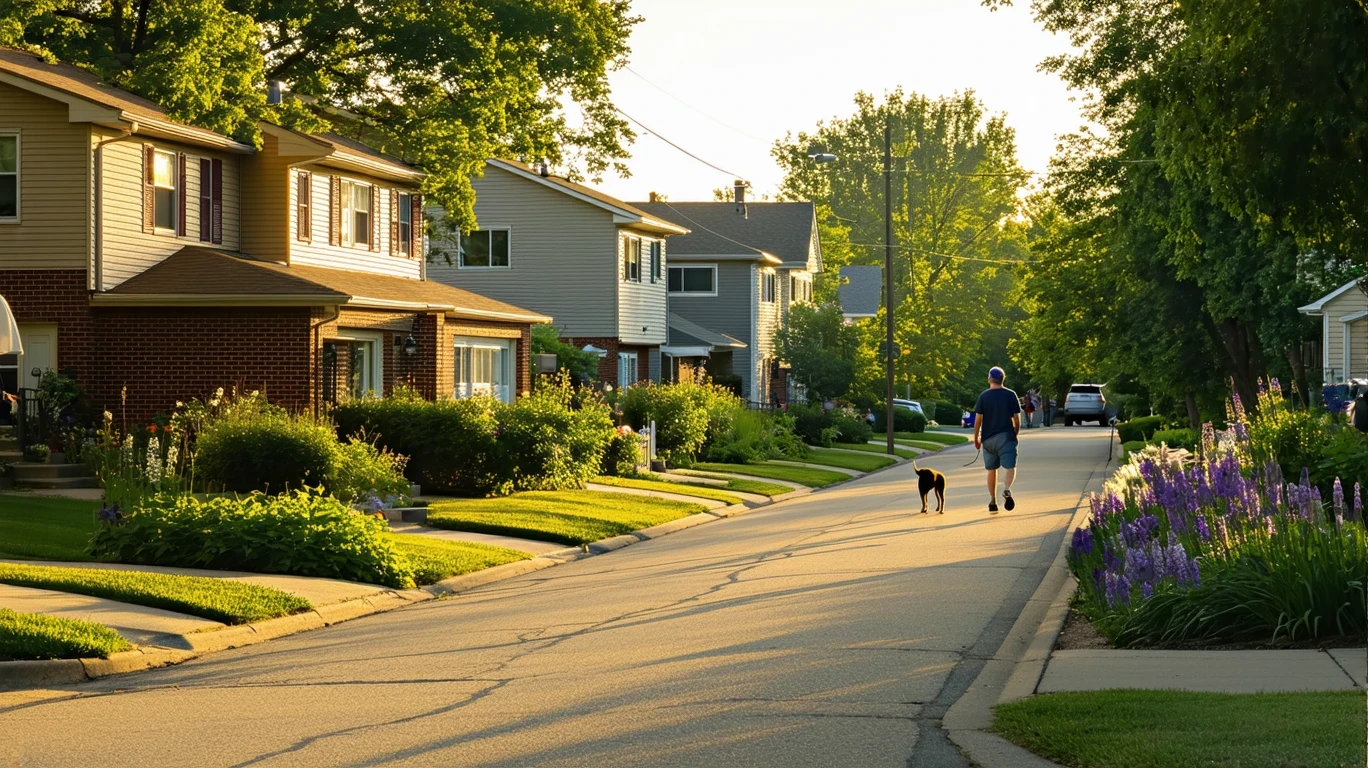
Brooklyn Park tends to reward people who value space, greenery, and a quieter pace over spontaneity and walkable texture. The city has invested heavily in parks and trails—residents consistently point to green space as one of the most tangible quality-of-life anchors here. You can bike along well-maintained paths, let kids run in open fields, and find pockets of natural calm without leaving city limits. That access feels abundant, and for families or outdoor enthusiasts, it’s a meaningful daily win.
But the city’s structure reveals its tradeoffs quickly. Errands cluster along commercial corridors rather than spreading through neighborhoods, so grabbing groceries or meeting a friend for coffee usually means driving to a strip or shopping center. Bus service connects Brooklyn Park to the broader metro, but without rail access, transit-dependent households face longer, less flexible commutes. The result is a place that works beautifully for people with cars and flexible schedules, but can feel isolating for those who rely on transit or prefer spontaneous, walkable routines.
Brooklyn Park’s diversity is one of its defining characteristics, and many residents express genuine pride in the city’s multicultural identity. You’ll hear people describe it as a place where different backgrounds coexist comfortably, where cultural festivals and community events reflect a broader range of experiences than many suburban peers. That sense of representation matters deeply to those who’ve felt invisible elsewhere. At the same time, some residents note that the infrastructure doesn’t always match the population’s needs—whether that’s transit access, healthcare options, or the density of family-oriented amenities like schools and playgrounds, which fall below what you’d expect given the city’s family-focused reputation.
Social Media Buzz in Brooklyn Park
Online conversations about Brooklyn Park tend to circle around a few recurring tensions: affordability versus amenities, proximity versus connectivity, and identity versus infrastructure. On neighborhood Facebook groups and local Reddit threads, you’ll see residents defending the city’s value proposition—lower [housing pressure](/brooklyn-park-mn/housing-costs/) compared to inner-ring suburbs, access to nature, and a welcoming community vibe. But you’ll also see frustration about commute times, limited dining variety, and the sense that Brooklyn Park is still figuring out what kind of place it wants to be as it grows.
“It’s affordable, and the parks are genuinely great. But if you don’t have a car, good luck getting anywhere without planning your whole day around the bus schedule.”
“I love that my kids see so many different cultures here. It feels like the real world, not some bubble. But I wish there were more local spots to just hang out—everything closes early or you have to drive to find it.”
“People complain, but where else can you get this much space, this close to the Cities, without breaking the bank? You just have to accept it’s not going to feel urban.”
The tone is rarely angry, but it’s often wistful—people appreciate what Brooklyn Park offers while quietly wishing it offered a bit more texture, a bit more spontaneity, a bit more of the metro energy they moved here to be near.
Local News Tone
Coverage of Brooklyn Park tends to frame the city through the lens of growth, change, and community identity. Headlines and story angles often reflect ongoing conversations about what the city is becoming as new development arrives and demographics shift. The tone is rarely celebratory or critical in isolation—it’s more observational, capturing the city in transition.
- “Community Debates What Growth Should Look Like”
- “New Retail Corridors Bring Convenience, Raise Questions About Character”
- “Residents Weigh Suburban Calm Against Metro Connectivity”
- “Parks and Trails Expansion Continues as Signature Investment”
- “Diverse Population Seeks Greater Representation in Local Services”
The framing reflects a city that’s still negotiating its identity—no longer a bedroom community on the edge, not quite a destination in its own right. For readers trying to gauge the emotional climate, the takeaway is that Brooklyn Park feels like a work in progress, which can be energizing or exhausting depending on whether you want to be part of shaping something or simply settle into something already defined.
Review-Based Public Perception
On Google reviews, Nextdoor posts, and Yelp commentary, Brooklyn Park earns praise for what it delivers reliably: affordability, safety in many neighborhoods, and abundant green space. Families moving from pricier inner suburbs or from other states often express pleasant surprise at how much house they can afford and how accessible the parks feel. The city meets expectations for people who wanted suburban comfort and were prepared for the car dependency that comes with it.
Disappointment tends to surface when expectations were set by proximity to Minneapolis and St. Paul. People who assumed “near the Cities” would mean easy metro access, diverse dining, or walkable errands often feel let down. The complaint isn’t that Brooklyn Park is bad—it’s that it doesn’t deliver the urban-adjacent lifestyle some newcomers imagined. You’ll see comments like “great for families, but boring for singles” or “safe and quiet, but you have to drive everywhere” repeated in various forms.
Neighborhood variation exists, though it’s often described in broad strokes: newer planned developments with tidy yards and HOA-maintained aesthetics versus older pockets with more character and variability. Neither is framed as definitively better—it’s more about whether you want uniformity and newness or a bit more texture and individuality. What’s consistent across areas is that errands, dining, and social life require intentional trips to commercial corridors rather than being woven into the neighborhood fabric.
Comparison to Nearby Cities
| Aspect | Brooklyn Park | Maple Grove | Blaine |
|---|---|---|---|
| Overall Vibe | Diverse, park-rich, car-dependent suburban calm | Polished, retail-heavy, family-oriented suburbia | Spacious, quiet, lake-focused residential feel |
| Walkability | Pockets of pedestrian infrastructure, mostly car-oriented | Some walkable retail districts, largely car-dependent | Minimal walkable texture, very car-oriented |
| Dining & Nightlife | Limited local variety, corridor-based options | More chain dining, some local spots, livelier | Sparse, mostly chains, very quiet evenings |
| Community Feel | Multicultural, evolving identity, community pride | Established suburban identity, family-centric | Quieter, more insular, lake recreation focus |
| Transit Access | Bus service, no rail, longer metro commutes | Bus service, similar metro connectivity limits | Bus service, even more car-dependent |
Brooklyn Park, Maple Grove, and Blaine all occupy similar suburban roles in the northwest Twin Cities metro, but their emotional textures differ in subtle ways. Maple Grove feels more polished and retail-rich, with a stronger sense of established suburban identity—it’s where you go if you want the “complete” suburban package with more dining and shopping options close by. Blaine leans even quieter, with a stronger focus on lake recreation and residential calm; it’s ideal for people who want maximum space and minimal social buzz. Brooklyn Park sits somewhere in between: more affordable than Maple Grove, more diverse than Blaine, and more park-focused than either—but also more in flux, still figuring out its identity as it grows.
If you value cultural diversity and want to stretch your housing dollar further, Brooklyn Park offers something its neighbors don’t. If you want a more predictable, polished suburban experience with better retail convenience, Maple Grove might feel more complete. If you want the quietest, most spacious option and prioritize lake access over parks, Blaine could be the better fit. None of these cities will satisfy someone seeking urban walkability or vibrant nightlife—that requires moving closer to Minneapolis or St. Paul and accepting the higher cost that comes with it.
What Locals Are Saying
“We moved here from South Minneapolis because we wanted a yard and better schools without leaving the metro entirely. The parks are honestly incredible—we’re outside every weekend. But I do miss being able to walk to a coffee shop or just pop out for dinner without it being a whole thing.”
“As a person of color, I appreciate that Brooklyn Park feels more representative than a lot of suburbs. My kids see people who look like them, and that matters. I just wish the city invested as much in transit and local services as it does in maintaining the parks.”
“It’s a solid place to raise kids if you have two cars and don’t mind driving. Everything is clean, safe, and affordable compared to Edina or Minnetonka. But if you’re single or don’t drive, I can see how it would feel pretty isolating.”
“I’ve been here twenty years, and the city has changed a lot. It’s more crowded, more developed, but also more interesting. I like the diversity. I just hope the infrastructure catches up—traffic on the main corridors is getting worse, and the bus system isn’t really built for people who rely on it full-time.”
“Honestly, it’s boring. I work remotely, and there’s just not much to do here after 8 p.m. I end up driving into Minneapolis most weekends, which kind of defeats the purpose of living in the suburbs. But the rent is manageable, so I’m staying for now.”
“The trails are why we stay. We bike as a family all the time, and the parks feel safe and well-maintained. It’s not flashy, but it’s exactly what we needed after years in a cramped apartment closer to downtown.”
“If you’re looking at [what a budget has to handle in Brooklyn Park](/brooklyn-park-mn/monthly-budget/), just know that you’ll save on rent but spend more on gas and car maintenance than you might expect. Everything requires driving, and that adds up.”
Does Brooklyn Park Feel Like a Good Fit?
Brooklyn Park works best for people who value affordability, green space, and a multicultural community, and who are prepared to drive for most errands, social outings, and metro access. It’s a place where parks and trails deliver consistent quality-of-life rewards, where housing costs stay more manageable than inner suburbs, and where diversity feels genuine rather than performative. If those priorities align with yours, and you have reliable transportation, Brooklyn Park can feel like a smart, grounded choice.
It tends to frustrate people who expected more walkable texture, more spontaneous social options, or easier transit access to Minneapolis and St. Paul. The city’s infrastructure—particularly around family amenities, healthcare, and transit—hasn’t fully caught up with its population growth, and that gap shows up in daily routines. If you need a hospital nearby, want to live without a car, or crave a vibrant local dining and nightlife scene, Brooklyn Park will likely feel limiting.
The city is still figuring out its identity as it grows, and that in-between quality can feel either promising or unsettled depending on your perspective. For some, it’s a place to build a life with space to breathe and room to save. For others, it’s a stepping stone—close enough to the metro to stay connected, affordable enough to make it work, but not quite the place they’ll stay forever. Understanding [living comfortably in Brooklyn Park: what ‘enough’ actually means](/brooklyn-park-mn/lifestyle-requirements/) can help clarify whether the tradeoffs here match what you’re willing to give up—and what you’re hoping to gain.
How this article was built: In addition to public economic data, this article incorporates location-based experiential signals derived from anonymized geographic patterns—such as access density, walkability, and land-use mix—to reflect how day-to-day living actually feels in Brooklyn Park, MN.
The perspectives shown reflect commonly expressed local sentiment and recurring themes in public discussion, rather than individual accounts.