
Brooklyn Park is considered moderately priced in 2026, with median home values at $289,400 and rent at $1,244 per month. The value proposition depends on housing entry cost versus car dependence and seasonal utility exposure.
You’re weighing a move to Brooklyn Park, and the numbers feel slippery. Rent looks manageable until you factor in the car you’ll need. The home price seems reasonable until you think about February heating bills. You’re not asking whether you can technically afford it—you’re asking where the financial pressure actually lives, and whether the tradeoffs make sense for how you live.
This article maps the cost structure of Brooklyn Park in 2026, identifying which expenses dominate, where volatility hides, and how different household types encounter different financial realities depending on mobility needs, housing tenure, and seasonal exposure.
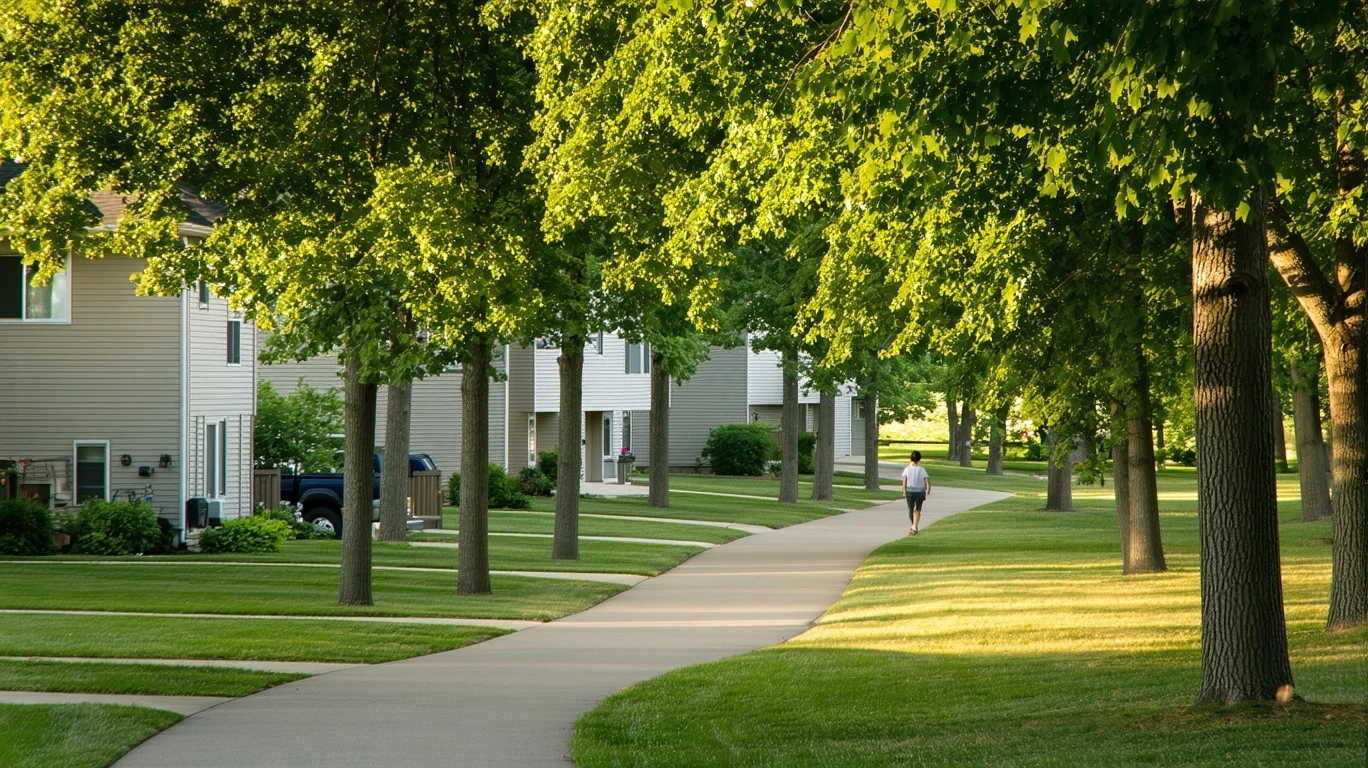
Overall Cost of Living Snapshot
Brooklyn Park sits just below the national price baseline, with a regional price parity index of 98. That signals a modest cost advantage relative to the broader U.S., but it doesn’t mean expenses are low—it means the pressure is distributed differently than in higher-cost metros.
Housing anchors the cost structure. Median home values rest at $289,400, while median rent reaches $1,244 per month. Both figures sit in the moderate range for the Minneapolis-St. Paul metro, but they represent the largest single outflow for most households. Ownership offers long-term stability; renting introduces flexibility but limits inventory in a city where single-family homes dominate the housing stock.
Transportation is the second structural driver. Brooklyn Park’s infrastructure supports car travel as the primary mode. Bus service exists, and bike-to-road ratios exceed high thresholds in parts of the city, but the pedestrian-to-road ratio and corridor-clustered grocery density mean most errands and commutes still require a vehicle. That recurring exposure—fuel, insurance, maintenance—adds up quietly and consistently.
Utilities introduce seasonal volatility. Electricity rates stand at 15.67¢/kWh, and natural gas prices reach $9.99 per MCF. Brooklyn Park experiences long, cold winters, which means heating dominates utility bills for several months. Cooling costs remain modest by comparison, but the winter exposure is significant and unavoidable.
Driver verdict: Housing entry cost dominates upfront pressure. Car dependency drives recurring monthly exposure. Utility seasonality creates predictable but sharp winter spikes. The surprises come not from day-to-day prices, but from the compounding effect of car reliance and heating season length.
Housing Costs (Primary Driver)
Housing is the largest single cost category in Brooklyn Park, and the structure of that cost depends entirely on tenure.
For buyers, the median home value of $289,400 represents a moderate entry point within the metro. Ownership locks in principal and interest payments, insulates against rent increases, and builds equity over time. Property taxes, insurance, and maintenance remain variable, but the core housing cost stabilizes. Ownership makes sense for households planning to stay long enough to absorb transaction costs and benefit from price appreciation or at least inflation protection.
For renters, the median gross rent of $1,244 per month includes some utilities in many cases, but the rental stock skews toward single-family homes and smaller apartment complexes rather than large multifamily buildings. That limits flexibility and creates tighter inventory during high-demand periods. Rent offers mobility and lower upfront cost, but it also means exposure to annual increases and less control over long-term housing expenses.
Brooklyn Park functions as a homeownership-oriented suburb. Renters face fewer options and less competition-driven pricing. Buyers gain stability but take on maintenance risk and property tax exposure. The city is not a transitional rental market—it’s a place where people buy to stay.
| Housing Type | Cost Anchor | What That Buys You |
|---|---|---|
| Owned home | $289,400 median value | Stable monthly principal and interest, equity accumulation, exposure to tax and maintenance variability |
| Rental unit | $1,244/month median rent | Lower entry cost, mobility, exposure to annual increases, limited inventory |
Conclusion: Brooklyn Park is a buying city. Renting works for short-term stays or households prioritizing flexibility, but the value proposition tilts toward ownership for anyone planning to stay more than a few years.
Utilities & Energy Risk
Utility costs in Brooklyn Park are shaped by climate, not just rates. Electricity runs 15.67¢ per kWh, which sits near the state average. Natural gas costs $9.99 per MCF (roughly 100 therms), and that’s where the exposure concentrates.
Brooklyn Park endures long, cold winters. Heating a home through December, January, and February requires sustained natural gas or electric heating system usage. Even well-insulated homes face elevated bills during these months. Cooling costs remain modest—summer heat exists but doesn’t approach the intensity or duration of winter cold.
The risk here is not rate volatility—it’s seasonal inevitability. You can reduce heating costs through efficiency upgrades, programmable thermostats, and insulation improvements, but you cannot eliminate the expense. Winter utility bills will be meaningfully higher than summer bills, and that gap is structural.
Risk classification: Moderate to major. Households heating larger homes or older, less-efficient structures face the highest exposure. Renters in units with included heat avoid direct billing but may see that cost reflected in rent. Owners bear the full seasonal swing and should budget for it explicitly.
Groceries & Daily Costs
Grocery costs in Brooklyn Park track closely with the regional price baseline. The city’s regional price parity index of 98 suggests a modest cost advantage relative to the national average, and that extends to food and household goods.
Food and grocery establishments cluster along commercial corridors rather than distributing evenly across neighborhoods. That means most households drive to grocery shop, even if a store sits within a few miles. The corridor-clustered accessibility pattern reflects the city’s car-oriented design—grocery runs are routine and manageable, but they require planning and vehicle access.
For households accustomed to walking to a corner store or having multiple grocery options within a few blocks, Brooklyn Park will feel less convenient. For households already driving for errands, the experience aligns with typical suburban patterns. Grocery pressure here is moderate and stable, without the price spikes seen in higher-cost urban cores or the scarcity seen in rural areas.
Transportation Reality
Brooklyn Park is car-dependent for most households, despite the presence of bus service and notable cycling infrastructure in parts of the city. The pedestrian-to-road ratio exceeds high thresholds in some areas, but those walkable pockets don’t extend citywide. Most errands, commutes, and daily trips require a vehicle.
Gas prices currently sit at $2.63 per gallon, which is moderate but not low. Fuel costs accumulate quickly for households commuting to Minneapolis, St. Paul, or other metro employment centers. Even local trips—groceries, medical appointments, school drop-offs—add mileage. A household running two vehicles faces compounding exposure: fuel, insurance, registration, maintenance, and depreciation.
Bus service exists and connects Brooklyn Park to the broader metro transit network, but frequency and coverage limitations mean most residents still default to driving. Cycling infrastructure supports recreational riding and some commuting, but winter weather and distance constraints limit year-round bike commuting for most people.
Transportation as recurring exposure: Car ownership is not optional for most households in Brooklyn Park. That makes transportation a fixed, recurring cost layer that rivals or exceeds utility spending. Households able to reduce vehicle count—through remote work, carpooling, or proximity to employment—gain significant cost relief. Those commuting long distances or managing multiple vehicles face sustained financial pressure that doesn’t fluctuate much month to month but never disappears.
Cost Exposure Profiles
Brooklyn Park’s cost structure creates different financial realities depending on housing tenure, transportation needs, and household composition.
Low-exposure households: Homeowners with stable mortgages, short commutes, and efficient heating systems face predictable costs. Their largest expenses—housing and transportation—remain relatively fixed. Seasonal utility swings are manageable, and grocery costs stay stable. These households benefit from Brooklyn Park’s moderate baseline pricing and ownership stability.
High-exposure households: Renters facing annual increases, long-distance commuters operating multiple vehicles, and families heating older or larger homes encounter compounding pressure. Rent increases, fuel costs, and winter heating bills all hit simultaneously during the coldest months. These households experience Brooklyn Park as more expensive because their cost structure lacks the stabilizing anchors of ownership and proximity.
The city’s infrastructure amplifies these differences. Walkable pockets exist, but they’re limited. Grocery and errands accessibility clusters along corridors, meaning households without easy car access face friction. Family infrastructure—schools and playgrounds—registers as limited in density, which may require more driving for activities and childcare logistics.
Brooklyn Park rewards households that can lock in housing costs, minimize vehicle dependency, and manage heating efficiently. It penalizes those facing rent volatility, long commutes, and older housing stock. The cost of living here is not uniform—it’s highly dependent on how your household structure aligns with the city’s infrastructure and housing stock.
Frequently Asked Questions
Is Brooklyn Park more affordable than Minneapolis in 2026? Yes, housing costs in Brooklyn Park tend to run lower than in Minneapolis, particularly for single-family homes. However, transportation costs may offset some of that savings if you’re commuting into the city regularly.
What does a typical cost profile look like in Brooklyn Park? Most households face moderate housing costs, recurring car-related expenses, and seasonal utility swings. The largest financial pressure comes from housing entry (buying or renting) and ongoing vehicle dependency, with winter heating adding predictable but significant spikes.
Do utilities cost more in Brooklyn Park than in nearby suburbs? Utility rates are comparable to other Minnesota suburbs, but the long heating season means total winter utility spending can feel high. The cost is driven more by climate than by rate differences.
What costs tend to surprise newcomers in Brooklyn Park? Winter heating bills and the necessity of owning a car catch many people off guard. Even households coming from other cold climates may underestimate the duration of heating season, and those from walkable cities often don’t anticipate how much driving daily life requires.
Are property taxes higher in Brooklyn Park than in neighboring cities? Property tax rates vary across the metro, and Brooklyn Park’s rates sit in the middle range. The bigger factor is assessed home value—higher-value homes pay more in absolute terms, even if the rate is moderate.
Can you live in Brooklyn Park without a car? It’s difficult. Bus service exists, and some areas have good bike infrastructure, but grocery stores, medical facilities, and employment centers are spread out. Most households find car ownership necessary for day-to-day logistics.
Is Brooklyn Park a good value compared to St. Paul? Brooklyn Park generally offers lower housing entry costs than St. Paul, but you trade some walkability and transit access for that savings. The value depends on whether you prioritize housing pressure relief or mobility convenience.
How much do groceries cost compared to the national average? Grocery costs in Brooklyn Park track slightly below the national average, reflecting the regional price parity index of 98. The bigger factor is access—you’ll likely need to drive to shop, which adds indirect cost.
How this article was built: In addition to public economic data, this article incorporates location-based experiential signals derived from anonymized geographic patterns—such as access density, walkability, and land-use mix—to reflect how day-to-day living actually feels in Brooklyn Park, MN.