
What’s Comfort Worth?
Comfort isn’t a number—it’s the space between your income and the moment your choices start narrowing. In Brandon, that space depends less on what you earn and more on how your household operates, where you live within the community, and whether your expectations match the texture of daily life here.
Brandon sits in the Tampa metro with a median household income of $71,156 per year and a regional price level about 3% above the national average. Housing costs anchor most budgets: median rent runs $1,570 per month, while the median home value is $266,400. But income pressure doesn’t distribute evenly—it concentrates in specific tradeoffs that feel different depending on household size, commute patterns, and proximity to the commercial corridors where errands cluster.
This article explains where income pressure surfaces in Brandon, how the same earnings feel different across household types, and what separates households that feel comfortable from those constantly managing tradeoffs. It won’t tell you a required income figure—it will help you judge whether your situation fits the reality here.
What “Living Comfortably” Means in Brandon
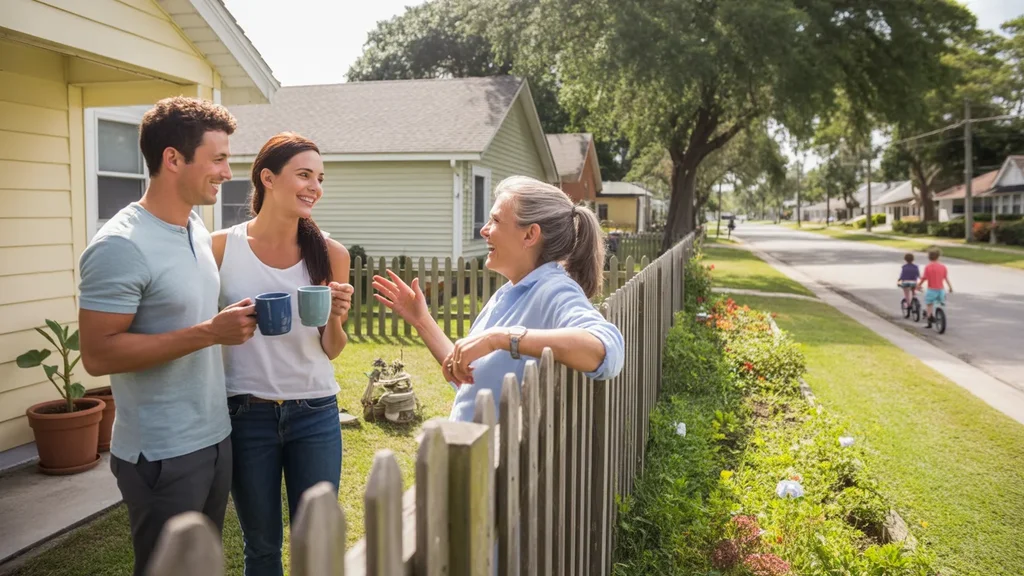
Comfort in Brandon means your housing doesn’t force a 40-minute commute, your cooling bills don’t dictate thermostat behavior all summer, and running errands doesn’t require tactical planning around which corridor you’re near. It means discretionary spending exists after fixed costs, and an unexpected $500 expense doesn’t cascade into other tradeoffs.
Locally, comfort also means time flexibility. Brandon’s average commute is 28 minutes, but 44% of workers face longer trips—often because affordable housing and job centers don’t align. Comfort means you’re not spending 10+ hours a week in the car just to make the rent math work.
Climate shapes expectations too. Extended heat and humidity mean air conditioning isn’t optional—it’s a fixed cost that swings with the season. Comfort means absorbing a summer utility spike without cutting elsewhere or sweating through August to avoid a high bill.
For families, comfort includes proximity to the limited school and playground infrastructure detected in Brandon’s residential areas, or the ability to drive kids to activities without that time becoming a second job. For singles or couples, it might mean living in one of the walkable pockets where some errands don’t require a car, reducing both transportation costs and the mental load of constant driving.
Comfort is contextual. What feels spacious and manageable for one household can feel stretched and reactive for another at the same income level.
Where Income Pressure Shows Up First
Income pressure in Brandon concentrates in three areas: housing tradeoffs, utility volatility, and transportation friction.
Housing Tradeoffs
At $1,570 per month, median rent consumes a significant share of gross income for households near or below the median. For renters earning $60,000 annually (about $5,000 gross per month), rent alone approaches one-third of income before utilities, transportation, or food. That leaves little room for discretionary spending or savings, and any rent increase at renewal tightens the budget immediately.
Homeownership shifts the pressure but doesn’t eliminate it. A $266,400 home requires a substantial down payment and monthly costs that include property taxes, insurance (rising in Florida), and maintenance. Ownership builds equity but reduces monthly flexibility, and insurance volatility has become a wildcard for many Florida homeowners in recent years.
The tradeoff many households face: live closer to work and pay more for housing, or move farther out and absorb the time and fuel cost of a longer commute. Neither option is obviously better—it depends on whether time or money is your limiting resource.
Utility Volatility
Electricity in Brandon costs 15.70¢ per kWh, and cooling dominates summer bills. A typical household using 1,000 kWh per month in peak season faces a bill around $157 before fees and taxes—but usage often climbs higher when outdoor temperatures stay in the 90s for weeks. Households in larger homes or older construction with less efficient systems can see significantly higher consumption.
This isn’t a one-time cost—it’s a recurring seasonal pressure that lasts months. Comfort means absorbing that swing without adjusting the thermostat to uncomfortable levels or skipping other expenses. Households operating close to their income limit often feel this pressure acutely.
Transportation Time vs Money
Brandon’s structure creates a tension between car dependency and convenience. While some neighborhoods have walkable pockets with higher pedestrian infrastructure relative to roads, and grocery density is strong along certain corridors, most daily life still requires a vehicle. Bus service exists, but without rail transit, flexibility is limited.
For households where both adults commute, transportation costs multiply: fuel at $2.78 per gallon, insurance, maintenance, and the time cost of 28-minute average commutes (or much longer for the 44% facing extended trips). A 25-mile round-trip commute at 25 MPG costs about $2.78 daily in fuel alone—over $50 per month for one commuter, double that for two.
The pressure point: if you choose housing based solely on rent, you may end up in a location where every errand requires driving and commutes stretch long. If you prioritize proximity to work or the commercial corridors where errands cluster, you pay more in rent. Either way, something gives.
Family-Specific Pressure
Families face compounded logistics. School and playground density in Brandon falls below thresholds that would allow walkable access for most households, meaning parents drive kids to activities, playdates, and school events. Childcare costs, extracurriculars, and the need for larger housing all layer onto the baseline pressures every household faces.
For families, comfort isn’t just about affording the rent—it’s about affording the rent plus the time and money required to manage a child’s daily life in a car-dependent environment.
How the Same Income Feels Different by Household
Income pressure is relative. A single adult, a couple, and a family can all earn similar amounts and experience vastly different financial realities in Brandon.
Single Adults
A single adult earning near the median household income has the most flexibility. Rent is the dominant cost, but one person can often fit comfortably in a smaller unit, reducing both rent and utility exposure. If they live in one of Brandon’s walkable pockets near a commercial corridor, some errands become less car-dependent, trimming transportation costs.
The pressure point for singles: rent still takes a large share of income, and without a second earner to split costs, any income disruption or rent increase hits harder. Savings can be difficult to build if rent, utilities, and transportation consume most of the budget.
Couples Without Kids
Two incomes change the math significantly. A couple earning a combined $70,000–$80,000 can split rent, utilities, and transportation costs, creating more breathing room. They can afford to prioritize location—choosing proximity to work or the grocery-dense corridors that reduce daily driving—without stretching the budget as thin.
Couples also have more flexibility to absorb one partner’s longer commute if it means better housing or lower rent. Discretionary spending becomes more feasible, and saving for a down payment or emergency fund is more realistic.
The pressure point: if one partner loses income or if the couple moves toward homeownership, the buffer shrinks quickly. And if they plan to have children, the cost structure changes entirely.
Families with Children
Families face the highest pressure. Rent or mortgage costs rise with the need for more space. Utility bills increase in larger homes. Transportation costs multiply with school drop-offs, activity shuttles, and errands that can’t be consolidated because of Brandon’s corridor-clustered layout.
Families also face costs that don’t exist for other households: childcare, school supplies, extracurriculars, and the time cost of managing a child’s schedule in an area where limited school and playground density means most activities require driving.
A family earning $70,000 in Brandon often operates much closer to the edge than a couple earning the same amount. Comfort for families typically requires income well above the median, or significant tradeoffs in housing location, space, or lifestyle.
The Comfort Threshold (Qualitative)
The comfort threshold in Brandon isn’t a single income number—it’s the point where tradeoffs stop dictating daily decisions.
Below the threshold, households make constant adjustments: rent limits housing choice, utility bills influence thermostat settings, commute length is driven by affordability rather than preference, and errands require careful planning around which commercial corridor is accessible. Discretionary spending is rare, and unexpected expenses create stress.
Above the threshold, choices expand. Housing location becomes a matter of preference, not necessity. Utility swings are noticeable but absorbable. Transportation is about convenience, not constraint. Saving becomes possible, and an emergency car repair or medical bill doesn’t force cuts elsewhere.
For single adults, the threshold might be reached at an income modestly above the median, especially if they live in a walkable pocket and keep transportation costs low. For couples, combined income above $80,000 often provides enough buffer to feel comfortable. For families, the threshold typically sits higher—often requiring two incomes well above the individual median to cover housing, utilities, transportation, and child-related costs without constant tradeoffs.
The threshold also depends on expectations. A household accustomed to urban walkability and frequent dining out will feel more pressure in Brandon than one comfortable with car dependency and home cooking. A family expecting private school or extensive extracurriculars will need significantly more income than one using public schools and free activities.
Comfort is the point where your income matches your lifestyle expectations and Brandon’s cost structure without friction. That point is different for everyone.
Why Online Cost Calculators Get Brandon Wrong
Most cost-of-living calculators produce a single number: “You need $X to live in Brandon.” That number is nearly always misleading.
Calculators typically use national averages for spending categories, adjusted by a regional price index. But they don’t account for how costs actually behave in Brandon. They don’t know that grocery stores cluster along specific corridors, making location within the city a significant factor in daily convenience. They don’t capture that 44% of workers face long commutes, or that cooling costs dominate utility bills for months at a time.
They also don’t differentiate between households. A calculator might say “$60,000 is enough,” but it won’t tell you that $60,000 feels very different for a single renter in a walkable neighborhood than for a family of four in a car-dependent area with a long commute.
Calculators give you a total. What you need is a breakdown of where pressure concentrates and whether your household type and lifestyle align with Brandon’s structure. Totals mislead because they hide the tradeoffs.
How to Judge Whether Your Income Fits Brandon
Instead of asking “Is my income enough?”, ask these questions:
- How sensitive am I to housing tradeoffs? Can you absorb a long commute to access lower rent, or do you need to live near work even if it costs more?
- Can I handle seasonal utility swings? Will a summer cooling bill that’s $100+ higher than winter create stress, or can you absorb it without adjusting behavior?
- Is time or money my limiting factor? If saving $200/month on rent means spending an extra hour per day commuting, is that a trade you’re willing to make?
- How much does proximity matter for errands? Are you comfortable planning grocery trips around specific corridors, or do you need walkable access to daily needs?
- How much flexibility do I expect month to month? Do you need discretionary income for dining out, entertainment, and travel, or are you comfortable with a tighter budget focused on essentials?
- If I have kids, can I absorb the logistics cost? Driving to schools, activities, and playdates in an area with limited walkable family infrastructure takes time and money—do you have both?
Your answers to these questions matter more than a median income figure. Brandon works well for households whose income and expectations align with its cost structure and spatial layout. It’s harder for those who need urban walkability, minimal car dependency, or a large discretionary budget after fixed costs.
FAQs About Living Comfortably in Brandon
Is the median household income enough to live comfortably in Brandon?
It depends entirely on household type and expectations. A couple splitting costs at the median income can live comfortably with modest discretionary spending. A family at the median income will face tighter tradeoffs, especially if they need larger housing and manage child-related logistics. A single adult at half the median income will find rent and transportation consume most of their budget, leaving little flexibility.
What’s the biggest financial surprise people face after moving to Brandon?
Two things: utility costs during the extended cooling season, and the time-money tradeoff in transportation. Many people underestimate how much summer electricity bills rise, and how much daily car dependency affects both fuel costs and schedule flexibility. Location within Brandon matters more than people expect—proximity to the commercial corridors where errands cluster can significantly reduce driving.
Can you live in Brandon without a car?
It’s difficult. While some neighborhoods have walkable pockets with decent pedestrian infrastructure and bus service exists, most daily errands, work commutes, and family activities require a vehicle. Households without cars face significant limitations in job access, grocery shopping, and healthcare (clinics are present, but no hospital). A car isn’t legally required, but it’s functionally necessary for most people.
How does Brandon compare to nearby Tampa for income pressure?
Brandon typically offers lower housing costs than central Tampa, but that savings often comes with longer commutes and greater car dependency. Tampa has more transit options and denser walkable neighborhoods, which can reduce transportation costs for some households. The tradeoff: pay more for housing in Tampa and potentially spend less on transportation and time, or pay less in Brandon and absorb higher driving costs and commute time. Neither is universally better—it depends on your household’s priorities.
What income level makes homeownership realistic in Brandon?
There’s no single answer, but households considering a home near the $266,400 median value typically need combined income well above $70,000 to manage the mortgage, property taxes, insurance, and maintenance comfortably. Lenders often approve buyers at higher debt-to-income ratios than what leaves room for discretionary spending or savings. Homeownership becomes comfortable when monthly housing costs—including all ownership expenses—don’t force tradeoffs in other areas. For many families, that requires income in the $85,000–$100,000+ range, depending on down payment size and other debts.
Does living in a walkable pocket in Brandon actually save money?
It can, but not automatically. Living near one of the commercial corridors where grocery stores and services cluster reduces the frequency of car trips, which trims fuel and vehicle wear costs. But those areas may also command higher rent. The savings depend on how much you drive otherwise, how far you commute to work, and whether the rent premium exceeds the transportation savings. For some households—especially singles or couples who work nearby—it’s a net win. For others, the rent difference outweighs the convenience.
How this article was built: In addition to public economic data, this article incorporates location-based experiential signals derived from anonymized geographic patterns—such as access density, walkability, and land-use mix—to reflect how day-to-day living actually feels in Brandon, FL.
Brandon can work well for some households—but only if expectations match reality. Comfort here isn’t about hitting a specific income number. It’s about understanding where pressure concentrates, how your household type interacts with the city’s cost structure and spatial layout, and whether the tradeoffs required fit the life you want to live.