
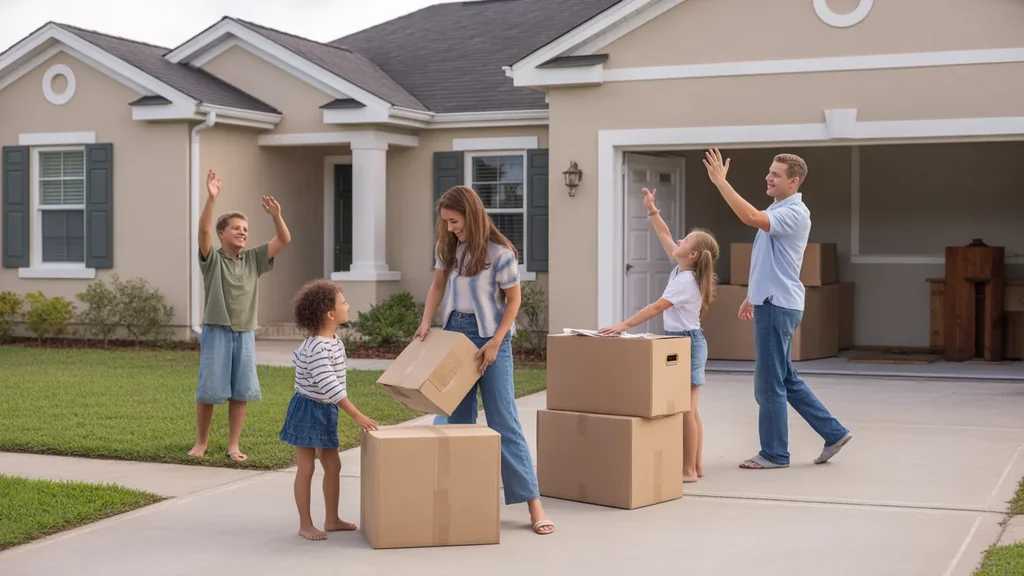
Brandon and Tampa sit just miles apart in the Tampa Bay metro, but the cost pressures households face in each city diverge in ways that matter for day-to-day decision-making in 2026. Brandon functions primarily as a residential suburb with corridor-based retail and longer average commutes, while Tampa operates as the region’s urban core—a college city with denser job distribution and more varied housing stock. The choice between them isn’t about which costs less overall; it’s about which cost structure aligns with how a household earns, spends, and moves through daily life.
Families prioritizing space and homeownership entry often gravitate toward Brandon, where single-family homes dominate and neighborhoods are built around car-based access. Singles, couples, and renters frequently find Tampa’s apartment inventory and urban proximity more practical, especially when minimizing monthly obligations or avoiding long commutes. Both cities share the same utility rates, gas prices, and regional price environment, so differences emerge not from price variation but from how housing form, commute patterns, and errands infrastructure shape household exposure.
This comparison explains where cost pressure concentrates in each city, how the same income feels different depending on housing type and transportation dependence, and which households experience more predictability versus volatility. It does not calculate total cost of living or declare a winner—it clarifies the tradeoffs that determine fit.
Housing Costs
Brandon’s median home value sits at $266,400, while Tampa’s reaches $333,200—a difference that reflects Tampa’s broader housing mix, proximity to downtown employment, and appeal to buyers prioritizing walkable access over yard space. For households pursuing homeownership, Brandon presents a lower entry barrier, particularly for families seeking single-family homes with garages and private outdoor space. Tampa’s higher home values correspond to a more competitive market where condos, townhomes, and older single-family stock coexist, and where proximity to universities, hospitals, and cultural amenities commands a premium.
Rental markets reverse this pattern. Brandon’s median gross rent stands at $1,570 per month, compared to Tampa’s $1,422 per month. This reflects Brandon’s housing stock, which skews toward larger single-family rentals and newer apartment complexes designed for families or roommate groups. Tampa’s rental inventory includes more studios, one-bedrooms, and older multifamily buildings that serve students, young professionals, and cost-conscious renters. For households prioritizing lower monthly obligations over space, Tampa’s rental market offers more flexibility. For those who need multiple bedrooms or prefer newer construction, Brandon’s rental costs reflect that housing form.
Brandon’s low-rise building character and limited mixed-use development mean most rental options sit in dedicated apartment complexes rather than integrated neighborhood buildings. Tampa’s urban form supports a wider range of rental types, from high-rise apartments near downtown to converted duplexes in older neighborhoods. This structural difference affects not just rent but also what comes with it—parking availability, walkability to errands, and whether a second car becomes necessary. Renters in Brandon typically plan for car dependency and corridor-based shopping trips, while Tampa renters in certain neighborhoods can reduce transportation friction by living closer to work or daily destinations.
| Housing Type | Brandon | Tampa |
|---|---|---|
| Median Home Value | $266,400 | $333,200 |
| Median Gross Rent | $1,570/month | $1,422/month |
| Typical Housing Form | Single-family, newer apartments | Mixed—condos, townhomes, older stock |
First-time buyers sensitive to down payment requirements and monthly mortgage obligations may find Brandon more accessible, especially if they’re willing to accept longer commutes in exchange for more square footage. Established buyers prioritizing resale value, walkability, or shorter commutes may prefer Tampa despite the higher entry cost. Renters without children or those working in Tampa’s urban core often experience lower monthly housing costs in Tampa, while families renting in Brandon pay more but gain space and access to newer construction. The decision hinges on whether a household values front-loaded affordability (Brandon homeownership) or ongoing monthly flexibility (Tampa rentals).
Utilities and Energy Costs
Both Brandon and Tampa operate under identical utility rate structures—15.70¢ per kWh for electricity and $32.82 per MCF for natural gas. This means differences in utility costs arise not from pricing but from housing characteristics, household size, and cooling exposure. Florida’s extended cooling season dominates energy usage in both cities, with air conditioning running from late spring through early fall and occasional use even in winter months. Heating needs remain minimal, limited to brief cold snaps where natural gas or electric heat may run for a few days.
Brandon’s housing stock skews toward single-family homes, many built in the past two decades with standard insulation and central air systems. Larger homes with more square footage and higher ceilings require more energy to cool, and families with multiple occupants generate higher baseline usage through appliances, laundry, and water heating. Renters in Brandon’s apartment complexes may see more predictable bills due to smaller unit sizes, but those in single-family rentals face the same cooling exposure as homeowners. Tampa’s mix of older apartments, mid-rise buildings, and single-family homes introduces more variability—older units with less efficient HVAC systems or poor insulation can drive higher cooling costs, while smaller apartments in newer buildings may offer lower baseline usage.
Households in single-family homes—whether in Brandon or Tampa—experience more volatility during peak summer months, when daily high temperatures and humidity levels push air conditioning systems to run continuously. Apartment dwellers, particularly those in interior units or buildings with shared walls, benefit from passive cooling and reduced exposure to direct sun, which moderates energy usage. Families with flexible schedules can manage costs by adjusting thermostat settings during the day, but households with young children, elderly members, or work-from-home arrangements often prioritize comfort over cost control, leading to higher bills regardless of location.
Utility cost exposure in both cities depends more on housing type and household behavior than on geography. A family in a Brandon single-family home and a family in a comparable Tampa single-family home will face similar cooling costs, assuming similar square footage and insulation quality. The difference emerges when comparing a Brandon renter in a large apartment complex to a Tampa renter in an older duplex—the former benefits from newer construction and shared-wall efficiency, while the latter may face higher costs due to aging HVAC systems and less efficient building envelopes. Households prioritizing predictability should consider housing age and unit size over city choice when evaluating utility exposure.
Groceries and Daily Expenses
Brandon and Tampa share the same regional price environment, with a regional price parity index of 103, meaning grocery staples and everyday goods cost roughly the same in both cities when comparing identical items at similar store types. The difference lies not in prices but in how errands infrastructure shapes shopping behavior, convenience spending, and time costs. Brandon’s corridor-clustered grocery access means most households plan intentional trips to shopping centers along major roads, while Tampa’s denser and more varied retail distribution allows some residents to incorporate errands into daily routines without dedicated car trips.
Brandon’s retail landscape centers on big-box grocery stores, chain pharmacies, and strip mall clusters that require driving and parking. Families benefit from bulk shopping options and competitive pricing at stores such as Publix, Walmart, and Target, but the structure discourages frequent small trips. This setup works well for households with storage space, meal planning habits, and flexible schedules, but it increases friction for singles or couples who prefer picking up fresh ingredients on the way home from work. Tampa’s mix of neighborhood grocery stores, urban markets, and big-box options provides more flexibility—some residents can walk or make quick stops, while others still drive to larger stores for weekly hauls.
Convenience spending pressure differs based on access patterns. In Brandon, the separation between residential areas and retail corridors means fewer impulse stops for coffee, takeout, or prepared meals, which can reduce spending creep for disciplined households but increase reliance on dining out when cooking feels inconvenient. Tampa’s denser commercial presence, particularly near downtown and university areas, creates more opportunities for casual spending—grabbing lunch between errands, stopping for coffee, or picking up prepared foods becomes easier, which can either save time or increase costs depending on household habits. Families managing larger grocery volumes may find Brandon’s structure more efficient, while singles and couples prioritizing flexibility may prefer Tampa’s shorter errand loops.
Price sensitivity matters more than location for most grocery spending. Both cities offer access to discount chains, ethnic markets, and premium grocers, so households willing to shop strategically can control costs regardless of where they live. The structural difference lies in how much time and planning grocery shopping requires—Brandon households typically consolidate trips and plan around driving, while some Tampa households can reduce time costs by integrating errands into existing travel patterns. For households where one adult manages most shopping, Brandon’s layout adds predictable time overhead. For dual-income households juggling schedules, Tampa’s flexibility may reduce logistical friction even if per-item prices remain identical.
Taxes and Fees

Brandon and Tampa operate under Florida’s state tax structure, which eliminates personal income tax but relies heavily on property taxes, sales taxes, and local fees to fund services. Both cities fall within Hillsborough County, meaning property tax rates and assessment practices apply uniformly across the metro. Homeowners in both locations face the same millage rates, though the higher median home value in Tampa translates to higher absolute property tax bills for comparable housing types. A home valued at $333,200 in Tampa generates more property tax revenue than a $266,400 home in Brandon, even though the rate structure remains identical.
Renters in both cities indirectly pay property taxes through rent, but the pass-through effect varies by housing type and landlord structure. Large apartment complexes in Brandon and Tampa often absorb property tax increases within broader operating budgets, while single-family rental landlords may adjust rent more directly in response to tax changes. Florida’s homestead exemption and Save Our Homes cap limit annual assessment increases for owner-occupied properties, providing long-term homeowners with predictable tax growth. Recent buyers and investors without homestead protection face more volatility, particularly in Tampa’s competitive housing market where assessed values rise faster.
Sales tax applies uniformly across both cities at the county and state level, meaning everyday purchases—groceries, gas, household goods—carry the same tax burden regardless of location. Local fees introduce more variation. Brandon’s residential character means fewer city-specific fees for parking, permits, or special assessments, though homeowners in planned communities may face HOA fees that bundle services like landscaping, trash collection, and shared amenities. Tampa’s urban infrastructure generates more fee exposure—street parking meters, residential parking permits in dense neighborhoods, and higher water and sewer base charges tied to older municipal systems. Renters in Tampa’s downtown or near-campus areas may encounter fees that don’t exist in Brandon’s suburban apartment complexes.
HOA fees represent a significant structural difference. Brandon’s newer developments often include mandatory HOAs that charge $50 to $200 per month, covering lawn care, pool maintenance, and community amenities. These fees add predictability—homeowners know what’s included—but they also represent a fixed cost that doesn’t fluctuate with usage. Tampa’s older neighborhoods typically lack HOAs, giving homeowners more control over maintenance spending but also more responsibility for upkeep and repairs. For households planning to stay several years, Brandon’s HOA fees may feel like forced savings, while Tampa’s fee-free ownership offers more flexibility for those willing to manage their own property.
Homeowners in both cities face similar tax structures, but Tampa’s higher home values increase absolute property tax exposure. Renters experience more fee-related differences, with Tampa’s urban infrastructure introducing costs that Brandon’s suburban layout avoids. Households prioritizing predictable, bundled costs may prefer Brandon’s HOA-inclusive communities, while those valuing control and flexibility may find Tampa’s older neighborhoods more appealing despite the added responsibility.
Transportation & Commute Reality
Brandon’s average commute time sits at 28 minutes, with 44.0% of workers facing commutes long enough to meaningfully affect daily schedules, fuel costs, and time flexibility. Only 7.8% of Brandon residents work from home, meaning the vast majority depend on cars for daily commuting. This reflects Brandon’s role as a residential suburb where most jobs sit elsewhere—either in Tampa’s urban core, along interstate corridors, or in scattered office parks. The commute structure isn’t just about time; it’s about predictability. Morning and evening traffic on I-75, I-4, and Crosstown Expressway introduces variability, turning a 25-minute drive into 40 minutes depending on timing and incidents.
Tampa’s commute data isn’t available in the feed, but its function as the region’s employment center and its designation as a college city suggest shorter average commutes for residents working locally. Households living and working within Tampa’s urban core face fewer miles and more route options, reducing both time and fuel exposure. However, Tampa residents commuting outward to suburban job centers or neighboring counties may experience similar or longer commutes than Brandon residents, depending on direction and traffic patterns. The key difference lies in job density—Tampa offers more opportunities to live near work, while Brandon’s residential character assumes most workers will commute elsewhere.
Both cities share the same gas price—$2.78 per gallon—so fuel cost differences arise from mileage, not pricing. A Brandon household with two working adults, each commuting 25 miles round trip five days a week, accumulates roughly 250 miles weekly per vehicle. A Tampa household where one adult walks to work and the other drives 10 miles round trip cuts weekly mileage significantly, reducing both fuel spending and vehicle wear. The cost isn’t just cash—it’s time. Brandon’s longer commutes compress morning and evening schedules, affecting childcare pickup windows, errands flexibility, and household logistics.
Transit options in both cities remain limited. Brandon has bus service, but routes and frequency reflect suburban demand rather than urban coverage, making transit practical only for specific corridors and schedules. Tampa’s transit network serves downtown, the university, and major corridors more effectively, but most residents still rely on cars for daily mobility. Neither city supports car-free living for most households, but Tampa’s denser layout allows some residents to reduce vehicle dependency by combining walking, biking, and occasional transit use. Brandon’s structure assumes two-car households, with limited alternatives for those seeking to minimize transportation costs.
Cost Structure Comparison
Housing pressure dominates the cost experience in both cities, but the nature of that pressure differs. Brandon’s higher home values create a lower entry barrier for buyers seeking single-family ownership, while Tampa’s higher home values reflect urban proximity and mixed housing stock. Renters face the opposite dynamic—Brandon’s rental costs run higher due to larger units and newer construction, while Tampa’s rental market offers more affordable options for those prioritizing lower monthly obligations over space. Households sensitive to upfront costs versus ongoing obligations must weigh whether they value ownership entry (Brandon) or rental flexibility (Tampa).
Utilities introduce similar exposure in both cities due to identical rate structures, but housing type determines actual costs. Single-family homes in either city face higher cooling costs than apartments, and older construction increases volatility regardless of location. The difference lies in housing stock distribution—Brandon’s suburban character means more residents live in single-family homes with higher baseline usage, while Tampa’s mix includes more apartment dwellers with lower per-unit exposure. Families in comparable housing types will see similar utility bills, but Tampa offers more opportunities to reduce exposure by choosing smaller or more efficient units.
Transportation patterns matter more in Brandon, where longer commutes and car dependency add both time and fuel costs. Tampa’s denser job distribution allows some households to reduce commuting friction, though this advantage applies primarily to those living and working within the urban core. For households where both adults commute to suburban job centers, location matters less than route and timing. The structural difference lies in optionality—Tampa provides more paths to reduce transportation costs, while Brandon assumes car-based commuting as the default.
Daily living costs—groceries, errands, convenience spending—remain similar in price but differ in access structure. Brandon’s corridor-clustered retail requires intentional trips and planning, which can reduce impulse spending but increases time overhead. Tampa’s denser commercial presence allows shorter errand loops for some residents, reducing time costs but potentially increasing convenience spending. Families managing bulk shopping may find Brandon’s layout more efficient, while singles and couples juggling schedules may prefer Tampa’s flexibility.
The better choice depends on which costs dominate the household. For families prioritizing homeownership, space, and predictable housing costs, Brandon’s structure aligns with those goals despite longer commutes. For renters, singles, and couples prioritizing lower monthly obligations and shorter commutes, Tampa’s rental market and urban density reduce friction. Households sensitive to time costs—childcare logistics, dual-income scheduling, errands flexibility—must evaluate whether Brandon’s space advantages outweigh the added commute burden, or whether Tampa’s proximity benefits justify higher home values and potential convenience spending creep.
How the Same Income Feels in Brandon vs Tampa
Single Adult
For a single adult, Tampa’s lower rental costs and denser job distribution create more breathing room when housing and commuting represent the largest fixed expenses. A one-bedroom apartment in Tampa costs less per month than a comparable unit in Brandon, and shorter commutes reduce both fuel spending and time lost to traffic. Flexibility emerges in how much discretionary income remains after covering rent, utilities, and transportation—Tampa’s structure allows more margin for dining out, entertainment, or savings, while Brandon’s higher rent and longer commutes compress that margin. The tradeoff lies in space versus access: Brandon offers newer, larger apartments but requires more driving, while Tampa provides smaller, older units with less commute friction.
Dual-Income Couple
A dual-income couple experiences cost pressure differently depending on where both adults work. If both commute to Tampa’s urban core, living in Tampa eliminates the time and fuel costs that Brandon residents face daily. If one works in Tampa and the other in a suburban office park, the couple must decide whose commute matters more. Tampa’s rental market offers lower monthly obligations, freeing up income for dining, travel, or saving for a down payment. Brandon’s higher rent reflects larger units and newer construction, which may feel more valuable for couples planning to stay long-term or start a family. The decision hinges on whether the couple prioritizes minimizing ongoing costs (Tampa) or maximizing space and ownership readiness (Brandon).
Family with Kids
For families, Brandon’s housing structure aligns with the need for multiple bedrooms, yards, and proximity to schools, even though rental costs run higher and commutes add logistical complexity. The non-negotiable costs become housing, childcare, and transportation—Brandon’s single-family rentals or entry-level homes provide the space families need, but the 28-minute average commute compresses morning and evening schedules, affecting pickup and drop-off windows. Tampa’s lower rental costs matter less when families require three bedrooms and private outdoor space, which narrows the affordability gap. Flexibility disappears when both adults work full-time and manage school schedules—Brandon’s structure assumes car dependency and planning, while Tampa’s denser layout offers limited relief unless the family lives near work and schools. The choice depends on whether space and ownership entry outweigh the time costs of longer commutes and corridor-based errands.
Decision Matrix: Which City Fits Which Household?
| Decision factor | If you’re sensitive to this… | Brandon tends to fit when… | Tampa tends to fit when… |
|---|---|---|---|
| Housing entry + space needs | Down payment size, square footage, yard access | You prioritize homeownership entry and single-family space over proximity | You prioritize lower monthly rent and accept smaller units or older stock |
| Transportation dependence + commute friction | Daily drive time, fuel costs, schedule compression | You accept longer commutes in exchange for residential character and space | You work locally or value shorter commutes and reduced time overhead |
| Utility variability + home size exposure | Cooling costs, seasonal bill swings, unit efficiency | You choose newer construction and accept higher baseline usage in larger homes | You prioritize smaller units or shared-wall efficiency to moderate cooling costs |
| Grocery strategy + convenience spending creep | Errand planning, bulk shopping, impulse stops | You plan consolidated shopping trips and value big-box access over proximity | You prefer shorter errand loops and accept potential convenience spending |
| Fees + friction costs (HOA, services, upkeep) | Predictable bundled costs versus control over spending | You value HOA-included services and predictable monthly fees | You prefer managing your own upkeep and avoiding mandatory fees |
| Time budget (schedule flexibility, errands, logistics) | Childcare windows, dual-income coordination, daily friction | You have flexible schedules or one stay-at-home adult to manage logistics | You need tight coordination and shorter travel loops to manage dual schedules |
Lifestyle Fit
Brandon’s residential character and low-rise suburban form create a lifestyle centered on family routines, private outdoor space, and car-based access to shopping, dining, and recreation. Neighborhoods feature single-family homes with driveways, garages, and yards, and most daily activities require driving to dedicated destinations—grocery stores, restaurants, gyms, and parks sit along commercial corridors rather than within walking distance. This structure works well for families with young children, households that value quiet streets and predictable surroundings, and those who prioritize space over spontaneous access to urban amenities. Brandon’s average commute of 28 minutes reflects its role as a bedroom community, and 44.0% of workers face long commutes, meaning most residents accept time spent in the car as part of the tradeoff for residential comfort.
Tampa’s urban density and mixed-use character support a lifestyle where work, errands, and recreation can overlap more fluidly. The city’s designation as a college town introduces a younger demographic, more nightlife options, and a broader range of dining and entertainment venues. Residents living near downtown, the university, or established neighborhoods can walk to coffee shops, restaurants, and parks, reducing reliance on cars for daily errands. Tampa’s older housing stock and varied architectural styles create more visual diversity than Brandon’s newer subdivisions, and the presence of cultural institutions, sports venues, and waterfront access adds recreational options that don’t exist in suburban settings. For singles, couples, and households without school-age children, Tampa’s structure reduces logistical friction and increases spontaneous access to social and cultural activities.
Lifestyle factors indirectly affect costs in both cities. Brandon’s car-dependent structure increases transportation spending through fuel, maintenance, and the need for multiple vehicles, but it reduces convenience spending by separating residential areas from commercial temptations. Tampa’s walkable pockets and denser retail presence can lower transportation costs for some households while increasing opportunities for casual dining, coffee stops, and impulse purchases. Families in Brandon benefit from newer housing stock that moderates utility costs through better insulation and efficient HVAC systems, while Tampa residents in older buildings may face higher cooling costs but gain access to smaller, more affordable units that reduce baseline energy usage. Both cities share the same regional price environment and utility rates, so lifestyle fit determines which cost pressures dominate daily experience.
Frequently Asked Questions
Is it cheaper to rent in Brandon or Tampa in 2026?
Tampa’s median gross rent sits at $1,422 per month, compared to Brandon’s $1,570 per month, making Tampa more affordable for renters prioritizing lower monthly obligations. Brandon’s higher rent reflects larger units and newer construction, which appeal to families or roommate groups needing multiple bedrooms. Tampa’s rental inventory includes more studios and one-bedrooms in older buildings, which serve singles and couples seeking to minimize housing costs. The choice depends on whether space or monthly flexibility matters more.
How do commute costs differ between Brandon and Tampa?
Brandon’s average commute time of 28 minutes and the fact that 44.0% of workers face long commutes mean most residents spend more time and fuel getting to work than Tampa residents who live and work within the urban core. Both cities share the same gas price at $2.78 per gallon, so fuel cost differences arise from mileage rather than pricing. Households with two working adults in Brandon typically accumulate more weekly miles than comparable Tampa households with shorter commutes, increasing both fuel spending and vehicle wear.
Which city has lower utility bills, Brandon or Tampa?
Both cities operate under identical utility rates—15.70¢ per kWh for electricity and $32.82 per MCF for natural gas—so utility cost differences arise from housing type, size, and efficiency rather than location. Single-family homes in either city face higher cooling costs than apartments due to more square footage and direct sun exposure. Tampa’s mix of older apartments and newer buildings introduces more variability, while Brandon’s suburban housing stock skews toward larger, newer homes with higher baseline usage. Households in comparable housing types will see similar bills regardless of city.
Do groceries cost more in Brandon or Tampa in 2026?
Both cities share the same regional price parity index of 103, meaning grocery staples and everyday goods cost roughly the same when comparing identical items at similar store types. The difference lies in access structure rather than prices—Brandon’s corridor-clustered retail requires driving to shopping centers, while Tampa’s denser commercial presence allows some residents to incorporate errands into daily routines. Households willing to shop strategically can control grocery costs in either city, but Brandon’s layout adds time overhead for planning and driving, while Tampa’s flexibility may reduce time costs or increase convenience spending depending on habits.
Is Brandon or Tampa better for families with kids?
Brandon’s housing structure aligns with family needs through single-family homes, yards, and newer construction, though limited school and playground density and longer commutes add logistical complexity. Tampa’s lower rental costs and denser job distribution reduce monthly housing obligations and commute friction, but finding family-sized housing with outdoor space becomes more difficult and expensive. Families prioritizing homeownership entry, space, and residential character often find Brandon more practical despite higher rent and commute costs, while families prioritizing lower monthly obligations and shorter commutes may prefer Tampa if they can secure adequate space.
Conclusion
Brandon and Tampa present distinct cost structures shaped by housing form, commute patterns, and errands infrastructure rather than price differences. Brandon’s lower home values and higher rents reflect its suburban character, where single-family homes and newer apartments serve families and households prioritizing space over urban access. Tampa’s higher home values and lower rents correspond to a denser, more varied housing market that appeals to renters, singles, and couples seeking proximity to jobs and amenities. Both cities share identical utility rates and regional pricing, so cost differences emerge from how housing type, commute length, and daily logistics interact with household needs.
Households pursuing homeownership with limited down payment funds may find Brandon’s entry barrier more manageable, while renters prioritizing lower monthly obligations often benefit from Tampa’s apartment inventory. Families with school-age children face tradeoffs between Brandon’s space advantages and the time costs of longer commutes, while singles and dual-income couples without children may prefer Tampa’s shorter commutes and denser job distribution. The decision depends on which cost pressures dominate the household—whether front-loaded affordability, ongoing monthly flexibility, time budget