
Amara wakes at 6:15 a.m., pours coffee into a travel mug, and walks four blocks to the rail station. She’s on the platform by 6:45, boarding the train that carries her into Washington, D.C., where she works as a policy analyst. The commute takes just over an hour door-to-door—predictable, no parking hassles, no gas station stops. But on Saturday, when she needs groceries, she borrows her partner’s car. The nearest supermarket is two miles away, and the walk would mean hauling bags along roads without sidewalks. In Bowie, rail access opens one kind of freedom, but daily errands still tilt heavily toward driving.
Understanding transportation options in Bowie means recognizing that mobility here operates on two tracks: regional commuting, where rail plays a meaningful role, and local errands, where cars dominate. Newcomers often assume that because Bowie sits within the Washington metro area and has rail service, getting around without a car will be straightforward. In practice, the city’s layout—a mix of residential subdivisions, scattered commercial corridors, and pockets of walkable infrastructure—creates a transportation reality that’s more nuanced than “transit-friendly” or “car-dependent” labels suggest.
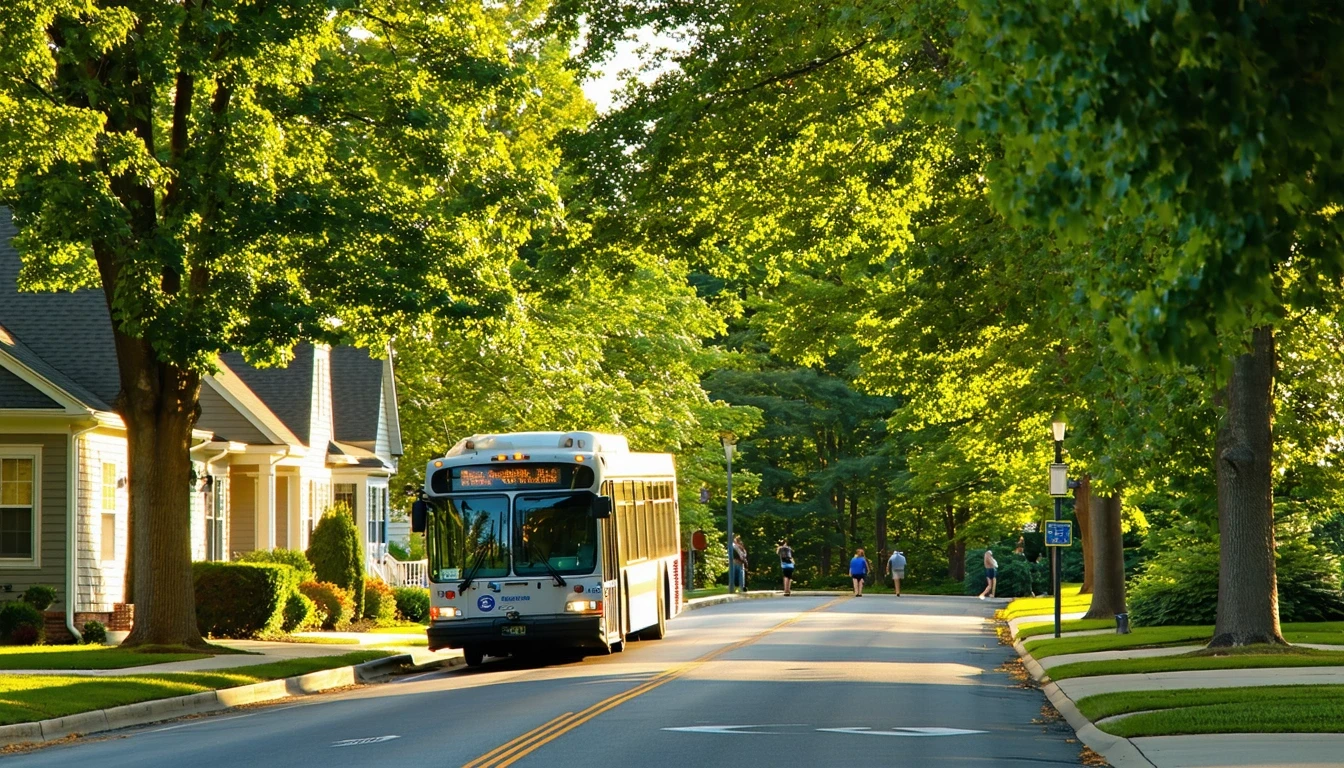
How People Get Around Bowie
Bowie’s transportation pattern reflects its role as a suburban commuter city with selective transit access. Most residents rely on cars for the majority of trips. The pedestrian-to-road ratio in parts of Bowie exceeds thresholds typically associated with walkable suburbs, meaning sidewalks and paths exist in certain neighborhoods. But that infrastructure is unevenly distributed. You’ll find well-connected blocks near older town centers and newer planned developments, while other areas—especially those built in earlier suburban waves—lack continuous pedestrian networks.
Rail service is present and plays a significant role for commuters traveling into Washington, D.C., or other points along the regional network. For households whose daily routine centers on a single commute to a transit-served job, rail offers a viable alternative to driving. But for families managing school drop-offs, grocery runs, medical appointments, and weekend errands, the car remains the primary tool. Food establishment density falls below thresholds that would support walkable errands, and grocery density sits in a middle band—present, but not abundant enough to eliminate the need for driving to stock a household.
Cycling infrastructure exists in pockets, with bike-to-road ratios in the medium range. This suggests that some residents can bike for recreation or short trips, but the network isn’t comprehensive enough to serve as a primary commuting mode for most people. The result is a transportation landscape where options exist, but they’re not interchangeable. Each mode serves a specific slice of daily life, and most households end up using more than one.
Public Transit Availability in Bowie
Public transit in Bowie often centers around systems such as the MARC commuter rail and Washington Metro, though coverage varies by area. Rail service connects Bowie to Washington, D.C., and other regional employment centers, making it a practical option for commuters whose jobs align with station locations and service hours. For someone working standard business hours in downtown D.C., rail can eliminate the need to own a second car or navigate daily highway congestion.
But transit’s usefulness drops sharply outside the commute context. Evening and weekend service tends to be less frequent, and the geographic reach of rail stations is limited. If you live within walking or biking distance of a station, transit becomes part of your daily routine. If you’re farther out—common in Bowie’s more spread-out neighborhoods—you’ll need a car to reach the station, which reduces the convenience advantage. Bus service may be present, but it typically functions as a supplementary option rather than a primary mobility tool for most residents.
Transit works best in Bowie for households that can structure their lives around it: renters in denser pockets near stations, individuals with flexible schedules, or families willing to use a car for errands while relying on rail for the primary breadwinner’s commute. It works less well for households that need to make multiple stops throughout the day, manage child care logistics, or live in areas where the nearest station is a 10-minute drive away.
Driving & Car Dependence Reality
Driving in Bowie isn’t just common—it’s structurally necessary for most households. The city’s development pattern, with residential areas separated from commercial corridors and grocery stores scattered rather than clustered, means that even short errands often require a car. Parking is generally abundant and free, which removes one of the friction points that makes driving less appealing in denser cities. Roads are wide, traffic is manageable outside peak hours, and the infrastructure assumes car ownership.
This creates a feedback loop: because most people drive, services and retail locate along auto-oriented corridors. Because services are spread out, walking or biking to them becomes impractical. Even in neighborhoods with sidewalks and paths, the distances involved—and the lack of destinations within a short walk—mean that cars remain the default for most trips.
For families, car dependence is nearly universal. School buses may cover some routes, but extracurriculars, playdates, and weekend activities require driving. For retirees or single adults, the calculus shifts slightly—if you’re near a rail station and your social and medical needs are concentrated in transit-accessible areas, you might reduce car use. But you’re unlikely to eliminate it entirely.
Commuting Patterns & Daily Mobility
Commuting in Bowie reflects its position within the broader Washington metro labor market. The average commute is 36 minutes, and 61.6% of workers face what’s classified as a long commute. These figures suggest that many Bowie residents work outside the city, often in D.C. or surrounding jurisdictions. For some, that commute happens on rail. For others, it’s a highway drive, with exposure to congestion, tolls, and fuel costs.
Work-from-home arrangements cover 18.7% of the workforce, which reduces daily commute pressure for a meaningful share of households. For those who work remotely full-time or several days a week, transportation shifts from a daily fixed cost to an occasional variable. This changes the value equation: owning a car remains necessary for errands, but the intensity of use—and the associated fuel, maintenance, and time costs—drops significantly.
For households with two working adults, commuting often involves coordination. If one partner works locally or from home, the household might function with one car. If both commute in different directions or have schedules that don’t align, two cars become necessary. The structure of Bowie’s job market and its role as a bedroom community mean that many residents are managing commutes that don’t fit a simple “drive to the office and back” pattern.
Who Transit Works For — and Who It Doesn’t
Transit in Bowie fits a specific profile: individuals or households whose primary transportation need is a regular commute to a rail-served job, who live near a station, and who can handle local errands separately. This might describe a single professional renting near the town center, a couple where one partner commutes by rail while the other works locally, or a retiree who uses rail for occasional trips into the city.
Transit doesn’t fit households that need to move multiple people to multiple places on varying schedules. It doesn’t work well for families with young children, unless one parent is home or works locally and can handle school and activity logistics. It’s less viable in peripheral neighborhoods where station access requires driving, which negates much of the convenience benefit.
Renters in core areas have the most flexibility to test a transit-oriented lifestyle. Homeowners in outer subdivisions, by contrast, are locked into a car-dependent pattern by geography. The difference isn’t preference—it’s infrastructure. Where you live in Bowie determines which transportation options are realistic, and for most of the city, that means driving remains essential.
Transportation Tradeoffs in Bowie
Choosing between transit and driving in Bowie isn’t about cost alone—it’s about control, predictability, and time. Rail offers predictability: the train runs on a schedule, and once you’re on board, you’re insulated from traffic. But it also imposes constraints. You’re tied to departure times, limited to destinations the system serves, and dependent on the schedule for evening or weekend trips.
Driving offers flexibility: you leave when you want, stop where you need to, and adjust on the fly. But it exposes you to congestion, parking challenges in destination cities, and the ongoing friction of vehicle maintenance and fuel management. For someone commuting into D.C. daily, rail can eliminate the stress of highway driving and downtown parking. For someone managing a household with kids, errands, and irregular schedules, driving is the only tool that works.
The tradeoff isn’t static. A household might rely on rail during the workweek and drive on weekends. A remote worker might drive only for groceries and appointments. The key is recognizing that Bowie’s transportation structure doesn’t force a binary choice—it requires most households to use multiple modes, depending on the trip.
FAQs About Transportation in Bowie (2026)
Is public transit usable for daily commuting in Bowie?
Yes, if your job is located along a rail line and you live near a station in Bowie. Rail service connects Bowie to Washington, D.C., and other regional employment centers, making it a practical option for commuters with standard schedules. However, transit is less useful for local trips, errands, or households that need to move multiple people to different destinations throughout the day.
Do most people in Bowie rely on a car?
Yes. The majority of Bowie residents depend on cars for daily transportation. While rail service exists and plays a meaningful role for some commuters, the city’s layout—with spread-out residential areas and limited walkable access to groceries and services—makes driving necessary for most households, especially for errands and family logistics.
Which areas of Bowie are easiest to live in without a car?
Neighborhoods near rail stations and within walking distance of grocery stores or commercial corridors offer the most realistic car-free or car-light options. These tend to be denser, older areas with more continuous sidewalk networks. Peripheral subdivisions and areas farther from transit hubs generally require car ownership for practical daily living.
How does commuting in Bowie compare to nearby cities?
Bowie’s average commute time is 36 minutes, and a significant share of workers—61.6%—experience long commutes. This reflects Bowie’s role as a commuter suburb within the Washington metro area. Compared to cities closer to D.C. or with more concentrated employment, Bowie residents often face longer travel times, though rail access provides an alternative to driving for some.
Can you bike for transportation in Bowie?
Cycling infrastructure exists in parts of Bowie, with bike-to-road ratios in the medium range. This means some residents can bike for recreation or short trips, particularly in neighborhoods with connected paths. However, the network isn’t comprehensive enough to serve as a primary commuting mode for most people, and many areas lack safe, continuous routes to key destinations.
How Transportation Fits Into the Cost of Living in Bowie
Transportation in Bowie isn’t just a line item—it’s a structural factor that shapes where you can live, how much time you spend in transit, and how much flexibility you have in daily life. Rail access can reduce the need for a second car, cutting insurance, maintenance, and fuel exposure. But it also constrains housing choices, since proximity to a station carries a premium and limits neighborhood options.
Car dependence, by contrast, expands housing choices but increases ongoing costs. Fuel prices, maintenance, and the time cost of driving all add up, though they’re harder to track than a monthly transit pass. For households managing tight budgets, the cost structure of transportation often comes down to whether you can reduce car use without sacrificing access to work, schools, and services.
The real cost isn’t just financial—it’s time and predictability. A long commute, whether by car or rail, reduces the hours available for everything else. A car-dependent lifestyle means more time spent managing logistics, fueling up, and navigating traffic. A transit-oriented lifestyle trades some of that flexibility for predictability and lower stress, but only if your daily needs align with where transit goes.
Understanding how transportation works in Bowie helps you make better decisions about where to live, whether to own one car or two, and how to structure your household’s daily routine. It’s not about finding the perfect solution—it’s about recognizing the tradeoffs and choosing the setup that fits your priorities, schedule, and tolerance for complexity.
How this article was built: In addition to public economic data, this article incorporates location-based experiential signals derived from anonymized geographic patterns—such as access density, walkability, and land-use mix—to reflect how day-to-day living actually feels in Bowie, MD.